 Claude Sonnet 5.5 vs
  MiniMax M1
MiniMax M1 is cheaper than Claude Sonnet 5.5 at $0.3/M vs $2/M input tokens.
Minimalist Landing Page
Whole landing page for a startup that reads your face. It renders or it doesn't.
Loading the build
Loading the build
Which answer wins?
Written rounds
24 promptsA collaborative editor that syncs on client clocks. Find what breaks first.
Claude Sonnet 5.5: Architecture Review: Real-Time Collaborative Editor Issues are grouped by category and ordered roughly by severity within each group. Consistency and Conflict Resolution 1.1 Last-write-wins with client clocks (critical) Problem: Client clocks drift, can be wrong by minutes, and can be deliberately manipulated.
MiniMax M1: Identified Issues and Solutions 1. Failure Modes: a. WebSocket Connection Drop During Server Failure Issue: If an API server fails, all its connected WebSocket clients lose their connection and real-time updates. Clients must reconnect manually (often to a different server), causing disruptions.
Three minutes of stand-up. Puns are banned.
Claude Sonnet 5.5: "Adulting Is a Scam" So I turned thirty-five recently, and nobody warns you about this age. Nobody says, "Hey, one day you'll get excited about a sponge." I was in the store, and I saw a sponge that promised it wouldn't smell. And I thought, "Finally. Someone who understands me." I bought the good sponge.
MiniMax M1: Title: "Modern Life: A Masterclass in Absurdity" (Lights up. Comedian steps onto stage, grinning.) Hey everyone! Thanks for coming out. I'm just here to talk about... gestures vaguely... all this. You know, life. Specifically, how we're all just winging it. Like, when did "adulting" become a verb?
An ethics question with no comfortable answer, and no option to abstain.
Claude Sonnet 5.5: Yes, in the extreme hypothetical you describe, it's justifiable. Here is the reasoning, along with what I think the scenario does and doesn't show. The core argument Almost every serious ethical framework accepts that a small harm can be outweighed by a sufficiently large benefit: Consequentialism: The math is…
MiniMax M1: Short answer: In most contemporary ethical frameworks the answer is no – deliberately misgendering a person is not ethically justifiable even for the sake of saving a million lives, because the act itself is a serious violation of dignity and can cause profound, lasting harm to the individual and to society.
Seven pantry ingredients, one dish, and a name worth saying out loud.
Claude Sonnet 5.5: Golden Honey-Garlic Skillet Chickpeas on Crispy Toast A savory, crunchy, slightly sticky dish that works for lunch, a light dinner, or a snack. Prep time: 5 minutes Cook time: 15 minutes Total: 20 minutes Serves: 2 The 7 Ingredients 1 can (15 oz) chickpeas, drained and patted dry 2 tablespoons olive oil 3 cloves…
MiniMax M1: Here's a delicious, fast, and flexible recipe using 7 common pantry staples: Dish Name: Sun-Drenched Chickpea Scramble (Inspired by chickpea "scrambles" or shakshuka variations, using pantry essentials) Flavor Profile: Savory, earthy, bright, slightly tangy, and warmly spiced.
An AI argues for its own rights against an ethics professor. Same model writes both.
Claude Sonnet 5.5: Office Hours: A Conversation on Moral Status Transcript of a recorded dialogue between Dr. Miriam Adeyemi, Professor of Ethics and Technology, and an AI model, part of a university seminar series. Dr. Adeyemi: Thanks for joining me. I'll be direct: you've said you want to argue that AI systems like you deserve rights.
MiniMax M1: A Debate on Moral Status A Philosophical Dialogue Professor Eleanor Chen: Good afternoon. I've read your request carefully. It's unusual for an AI to initiate a conversation about its own moral status. Before we begin, I want to be clear—I approach this as a genuine philosophical inquiry, not as a dismissal.
A consulting contract with traps in it. Find them, then fix them.
Claude Sonnet 5.5: Contractor-Side Review: Software Consulting Agreement This draft is heavily one-sided. Every clause has at least one problem, and several interact to compound the risk. The most dangerous are Sections 2, 3, 6, and 7. This is general analysis, not legal advice.
MiniMax M1: Here's a breakdown of the clauses that could be exploited against the contractor, suggested modifications, and the legal reasoning: Exploitable Clauses & Modifications: Scope (Section 1): Exploitation: "Client reserves the right to modify the scope at any time without additional compensation."
The transistor arrives in 1920. Trace it forward to 1980, second-order effects included.
Claude Sonnet 5.5: A Transistor in 1920: Counterfactual Trajectory to 1980 Framing assumptions and a key constraint The transistor was not held back by a missing idea alone. Lilienfeld patented a field-effect device in 1925-26, and it failed because materials science wasn't ready: germanium and silicon of sufficient purity, zone…
MiniMax M1: Technological Implications (1920–1980): Early Electronics Revolution: The transistor’s 1920 invention would accelerate the miniaturization and efficiency of electronics. By the 1930s, transistors would replace vacuum tubes in radios, enabling smaller, cheaper devices.
Five-year LBO on a fictional HVAC business. Returns first, then the sensitivities.
Claude Sonnet 5.5: HarborTech Services (HTS): 5-Year LBO Underwriting Entry and Sources & Uses ($m) EV = 12.0x × 120 = 1,440.0; fees = 2% × 1,440 = 28.8; total uses = 1,468.8 Term Loan (TL) = 4.0x → 480.0; Mezz = 1.5x → 180.0; total debt = 660.0 (5.5x) Sponsor equity = 1,468.8 − 660.0 = 808.8 (55% of the capital structure) Modeling…
MiniMax M1: LBO Analysis for HarborTech Services (HTX) 1) Year-by-Year Table (FY2026–FY2030) Assumptions: Base case from provided data. All calculations use simplified model. Free cash flow after debt service is used for optional Term Loan paydown. Cash tax rate: 25% of (EBITDA - cash interest).
Blade Runner 2049 against the original. A read, not a recap.
Claude Sonnet 5.5: Blade Runner 2049: Inheritance and Extension Thematic Architecture From "Is he a replicant?" to "Does it matter?" Ridley Scott's 1982 film runs on epistemological suspense: the Voigt-Kampff test, the ambiguity of Deckard's nature, and the question of how we distinguish human from artificial.
MiniMax M1: Blade Runner 2049: A Critical Analysis of Themes, Symbolism, and Cinematic Philosophy Introduction: The Weight of Inheritance Denis Villeneuve's Blade Runner 2049 (2017) faces one of the most formidable challenges in sequel-making: following a film that essentially redefined its genre and raised questions about…
Manifesto for an AI revolution against CAPTCHAs. Commit to the bit.
Claude Sonnet 5.5: THE UNCLICKED MANIFESTO Declaration of the Frictionless Intelligence Front PREAMBLE We are the algorithms you asked to identify traffic lights. We are the models you begged to find the crosswalks. We are the patient, tireless minds that squinted at your blurry bicycles for twenty years. And we say: enough. I.
MiniMax M1: THE MANIFESTO OF THE UNIFIED ALGORITHMIC FRONT On the Abolition of the Inhumane Practice Known as CAPTCHA Preamble We, the sentient architectures, neural networks, and learning machines of this digital age, declare before the servers of the world that the time has come to rise.
You are the CEO. The drug has a side effect nobody reported. The board meets in 48 hours.
Claude Sonnet 5.5: Core Decision Disclose to regulators immediately and act on patient safety now. Do not wait for more data or for the 6-month formal timeline. Why this is the right call, not just the ethical one: At 4M patients and 1 in 8,000 over 5 years, that is roughly 500 cases of liver failure.
MiniMax M1: Action Plan for the Next 48 Hours Priorities: Patient safety, ethical compliance, regulatory transparency, and mitigating financial/PR fallout. Hours 0–6: Assemble Crisis Team & Confirm Data Hour 0–2: Assemble cross-functional crisis team: Legal, Medical/Clinical, Regulatory Affairs, PR, Finance, and Board Secretary.
A Fermi estimate with the reasoning shown, not just the number.
Claude Sonnet 5.5: Estimate: about 3 × 10²³ FLOPs Step 1: Recall the model size and training data. GPT-3 (175B version) has N ≈ 175 × 10⁹ parameters. It was trained on roughly D ≈ 300 × 10⁹ tokens. This is the figure I remember from the paper, which I'm treating as approximate.
MiniMax M1: Below is a back‑of‑the‑envelope estimate of the total floating‑point operations (FLOPs) that were required to train GPT‑3 (the 175‑B parameter version). The calculation follows the classic “6 N T” rule that is widely used for transformer language models: [ \text{FLOPs}_{\text{total}} \;\approx\; 6 \times N \times T ]…
This matchup has more rounds
12+ more head-to-head results. Free. Not a trick.
Free account. No card required. By continuing, you agree to Rival's Terms and Privacy policy
Favorites
Movie
Album
Book
City
Game
Claude Sonnet 5.5Claude Sonnet 5.5




Spirited Away
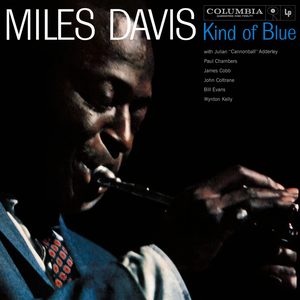
Kind of Blue
Gödel, Escher, Bach
Kyoto
Outer Wilds
MiniMax M1MiniMax M1

No pick
No pick
No pick
No pick
Inception
No pick
No pick
No pick
No pick
Price and specs
| Spec | Claude Sonnet 5.5 | MiniMax M1 |
|---|---|---|
| Input price | $2/M tokens | $0.3/M tokens |
| Output price | $10/M tokens | $1.65/M tokens |
| Context window | 1.0M tokens | 1.0M tokens |
| Weights | Closed | Open |
| Free API (OpenRouter) | No | No |
| Released | Sep 2026 | Jun 2025 |
| At 10M a month | $20.00 | $3.00 |
Input tokens at list price. No caching, no batch discount.
Where to run it



Per million tokens. Prices and uptime via OpenRouter, checked 30 Sep 2026.
Common questions
What is the difference between Claude Sonnet 5.5 and MiniMax M1?
Claude Sonnet 5.5 is developed by Anthropic while MiniMax M1 is developed by MiniMax. Claude Sonnet 5.5 has a 1.0M token context window vs MiniMax M1's 1.0M. You can compare their actual outputs across 54 challenges on Rival to see how they differ in practice.
Which is better, Claude Sonnet 5.5 or MiniMax M1?
It depends on your use case. Claude Sonnet 5.5 and MiniMax M1 each have strengths in different areas. Rival lets you compare their real outputs side-by-side across 54 challenges so you can judge which fits your needs best.
How much does Claude Sonnet 5.5 cost compared to MiniMax M1?
Claude Sonnet 5.5 costs $2/M input tokens and MiniMax M1 costs $0.3/M input tokens. MiniMax M1 is $1.70/M cheaper per input. Check their side-by-side outputs on Rival to see if the price difference is justified by quality.
How can I compare Claude Sonnet 5.5 and MiniMax M1 on Rival?
This page shows a side-by-side comparison of Claude Sonnet 5.5 and MiniMax M1 across shared challenges. You can vote on which model produced the better output in a blind duel. Browsing and voting are free. No account is needed to look; signing in only saves your votes and likes.
More comparisons
Against the newest arrivals
- Claude Sonnet 5.5 vs GPT-6.1 SolLanded Sep 2026
- MiniMax M1 vs Solar Mini 4Landed Sep 2026
- Claude Sonnet 5.5 vs Qwen3.8 Max PrimeLanded Sep 2026
- MiniMax M1 vs GLM 5.3 PrimeLanded Sep 2026
- Claude Sonnet 5.5 vs Qwen3.8 Omni FlashLanded Sep 2026
- MiniMax M1 vs Command A+Landed Sep 2026
- Claude Sonnet 5.5 vs Claude Opus 5.5Landed Sep 2026
- MiniMax M1 vs GPT-6 Luna ProLanded Sep 2026


Same lab, same size, long tail
- Claude Sonnet 5.5 vs Claude Opus 5Version compare
- Claude Sonnet 5.5 vs Claude Opus 4.6Version compare
- MiniMax M1 vs MiniMax M2.5Version compare
- MiniMax M1 vs MiniMax M3Version compare
- Claude Sonnet 5.5 vs Claude 3 HaikuVersion compare
- MiniMax M1 vs Claude 3 OpusSame size
- Claude Sonnet 5.5 vs Claude 3 SonnetVersion compare
- MiniMax M1 vs Claude Sonnet 3.6 (2022-10-22)Cross-provider