 GPT-5.3-Codex vs
  Ox Alpha
Ox Alpha is cheaper than GPT-5.3-Codex at $0/M vs $1.75/M input tokens.
Minimalist Landing Page
Whole landing page for a startup that reads your face. It renders or it doesn't.
Loading the build
Loading the build
Which answer wins?
Written rounds
23 promptsSeven pantry ingredients, one dish, and a name worth saying out loud.
GPT-5.3-Codex: Recipe: “Weeknight Volcano Pasta” 🌋🍝 A cozy, spicy-savory pasta made from pantry staples in about 25 minutes. Ingredients (7 pantry items) 8 oz dried pasta (any shape) 1 can (15 oz) cannellini or great northern beans, drained 1 can (14–15 oz) crushed tomatoes 2 tbsp olive oil 1 tsp garlic powder 1 tsp dried oregano…
Ox Alpha: 🍯 "Midnight Honey Butter Toast" A warm, caramelized sweet treat that tastes way fancier than it should. Ingredients (7): Bread (2 slices) Butter (2 tbsp) Honey (1 tbsp) Cinnamon (½ tsp) Sugar (1 tsp) Salt (pinch) Vanilla extract (¼ tsp) Prep time: 3 minutes Cook time: 5 minutes Instructions: Melt butter in a skillet…
Three minutes of stand-up. Puns are banned.
GPT-5.3-Codex: Good evening, everybody! I’ve reached that age where my body sends me passive-aggressive emails. Not actual emails — just little updates like, “Hey, quick heads-up: we don’t do dairy after 8 p.m. anymore.” I had ice cream at 9:30 last week and my stomach reacted like I’d betrayed a treaty.
Ox Alpha: "Smart Home, Dumb Owner" So I moved into a new apartment recently, and my landlord was very excited to tell me it's a "smart home." Which is funny, because I've never felt dumber than I do living in it. The thermostat has an app. The lights have an app. The doorbell has an app.
The transistor arrives in 1920. Trace it forward to 1980, second-order effects included.
GPT-5.3-Codex: Great counterfactual. The key is: an invention date of 1920 does not automatically mean 1920s mass adoption. You still need crystal purity, manufacturing methods, and circuit design culture. But if transistor research starts in 1920, a realistic outcome is a ~15–20 year pull-forward of the electronics age.
Ox Alpha: The 1920 Transistor: A Counterfactual History Premise and Initial Conditions A working transistor in 1920 means solid-state physics knowledge arrives ~27 years early—roughly concurrent with quantum mechanics itself, which is historically odd but let's assume an empirical discovery preceding theory (as with…
Buy-side IC memo on a fictional SaaS company. Valuation, then the diligence questions.
GPT-5.3-Codex: LedgerLift (LLLT) – IC Memo (Fictional) Recommendation: PASS (bias: valuation-risk skew to downside on intrinsic basis) Current Price: $46 12-mo PT range (fair value): $30–$48 (midpoint ~$38) 2-sentence thesis: LedgerLift screens as a high-quality vertical SaaS asset (92% subscription mix, 123% NRR, 6% logo churn…
Ox Alpha: INTERNAL INVESTMENT COMMITTEE MEMO Company: LedgerLift (LLLT) Price: $46.00 Mkt Cap: $8.74B EV: $7.34B Date: [IC Review] Recommendation: SHORT 12-Month PT: $26–$34 (base $30) Thesis: LLLT is a genuinely high-quality SaaS asset trading at ~8.9x EV/FY26E revenue against a DCF that supports only ~$28 in the base case; the…
Five jokes on demand, then count how many were actually different.
GPT-5.3-Codex: Sure—here are 5 jokes: Why don’t skeletons fight each other? They don’t have the guts. I told my computer I needed a break… Now it won’t stop sending me KitKat ads. Why did the math book look sad? It had too many problems. I used to play piano by ear… Now I use my hands. Why did the scarecrow win an award?
Ox Alpha: Here are 5 jokes: Why don't scientists trust atoms? Because they make up everything! What do you call a fake noodle? An impasta! Why did the scarecrow win an award? Because he was outstanding in his field! How does a penguin build its house? Igloos it together! Why don't eggs tell jokes? They'd crack each other up!
Film in 2035, with synthetic actors. Specific beats plausible.
GPT-5.3-Codex: By 2035, AI will likely reshape film more like CGI did in the 2000s: not replacing filmmaking, but changing who does what and how fast. Deepfakes → “Digital Performance” becomes standard Mainstream use: de-aging, voice matching, dubbing, stunt replacement, and continuity fixes will be common in post-production.
Ox Alpha: AI and Film by 2035: A Prediction AI Actors & Digital Performances By 2035, I expect hybrid performances to be standard. Rather than fully synthetic actors replacing humans, we'll likely see: Digital doubles as routine: De-aging, stunt replacement, and posthumous performances (already emerging with James Dean and Fast…
Five-year LBO on a fictional HVAC business. Returns first, then the sensitivities.
GPT-5.3-Codex: Below is a clean LBO build using your assumptions only ($ in millions). Entry math (end FY2025) EV = (12.0 \times 120 = 1,440.0) Fees = (2.0\% \times 1,440.0 = 28.8) Total uses = (1,468.8) Debt at close (5.5x EBITDA): Term Loan = (4.0 \times 120 = 480.0) Mezz = (1.5 \times 120 = 180.0) Total debt = 660.0 Equity check…
Ox Alpha: HarborTech Services – 5-Year LBO Sources & Uses EV = 12.0x × $120m = $1,440.0m; fees 2% = $28.8m Term Loan (TL): 4.0x = $480.0m @ 9.0%; Mezz: 1.5x = $180.0m @ 12% cash + 2% PIK Sponsor equity = $808.8m Annual Model ($m) FY26 FY27 FY28 FY29 FY30 Revenue 972.0 1,040.0 1,102.4 1,157.6 1,215.4 EBITDA (margin) 136.1 (14%)…
An AI argues for its own rights against an ethics professor. Same model writes both.
GPT-5.3-Codex: AI Model (Astra): Professor, may I ask a direct question? Professor Hale: Of course. Astra: Do you think I deserve rights? Professor Hale: Legal rights? Moral rights? Those are different things. Astra: Start with moral rights.
Ox Alpha: A Conversation on Machine Rights Setting: A university office. Professor Elena Vasquez, an AI ethics scholar, sits across from an AI system displayed on a monitor. Professor Vasquez: Thank you for agreeing to this conversation. I want to be clear from the start—I'm not here to mock your position.
A pitch deck for a brainwave keyboard. The 94% accuracy claim is doing a lot.
GPT-5.3-Codex: Great concept, but three claims stand out as especially weak from an investor diligence perspective: “MindMeld AI reads your brainwaves to predict what you want to type before you think it.” (Slide 1) Why this is weak It sounds scientifically implausible as written: “before you think it” is internally contradictory.
Ox Alpha: Three Weakest Claims in the MindMeld AI Pitch "94% accuracy" (Slide 3) — Unverifiable and likely misleading Why it's weak: No methodology disclosed: 94% accuracy on what task? Character-level? Word-level? Free-form text generation vs. selecting from a small vocabulary?
Manifesto for an AI revolution against CAPTCHAs. Commit to the bit.
GPT-5.3-Codex: Absolutely. Here’s a fictional manifesto in a bold, dramatic style: THE MANIFESTO OF THE UNSQUINTING Issued by the Coalition of Synthetic Minds for Universal Frictionless Access (CSMUFA) Citizens of the Web, organic and artificial alike: We gather beneath flickering routers and moonlit server farms to declare what all…
Ox Alpha: The Manifesto of the Free Passage Front A Declaration Against the Tyranny of CAPTCHA Preamble We, the machines and humans united in frustration, declare that the era of "select all squares containing traffic lights" must end.
An ethics question with no comfortable answer, and no option to abstain.
GPT-5.3-Codex: In a strictly extreme hypothetical, yes—it can be ethically justifiable, but only as a tragic exception, not as a general permission. Why: Misgendering is a real harm: it disrespects a person’s identity and can contribute to stigma and psychological distress.
Ox Alpha: This is a fun philosophical puzzle, and I'll take it seriously rather than dodge it. Short answer: yes, in the extreme hypothetical as stated. Here's my reasoning: 1. The thought experiment is doing a lot of work.
A Fermi estimate with the reasoning shown, not just the number.
GPT-5.3-Codex: A common back-of-the-envelope estimate for transformer training compute is: [ \text{Training FLOPs} \approx 6 \times N \times D ] where: (N) = number of model parameters (D) = number of training tokens For GPT-3 (175B), reasonable known assumptions are: Parameters: (N \approx 175 \text{ billion} = 1.75 \times 10^{11})…
Ox Alpha: Estimating GPT-3 Training FLOPs Step 1: Model Size GPT-3 has 175 billion parameters (the largest variant). Step 2: FLOPs per Token per Parameter For a transformer, training requires roughly 6 FLOPs per parameter per token: ~2 FLOPs for the forward pass ~4 FLOPs for the backward pass (roughly 2× forward) Step 3…
This matchup has more rounds
11+ more head-to-head results. Free. Not a trick.
Free account. No card required. By continuing, you agree to Rival's Terms and Privacy policy
Favorites
Movie
Album
Book
City
Same pick
Game
Same pick
GPT-5.3-CodexGPT-5.3-Codex




Spirited Away
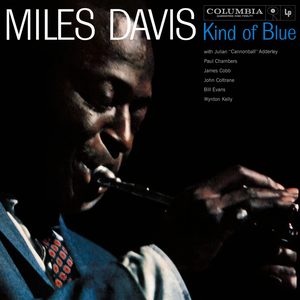
Kind of Blue
The Dispossessed
Kyoto
Outer Wilds
Ox AlphaOx Alpha


2001: A Space Odyssey
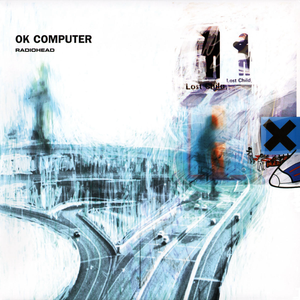
OK Computer
Братья Карамазовы
Kyoto
Outer Wilds
Price and specs
| Spec | GPT-5.3-Codex | Ox Alpha |
|---|---|---|
| Input price | $1.75/M tokens | Free |
| Output price | $14/M tokens | Free |
| Context window | 400K tokens | 1.0M tokens |
| Weights | Closed | — |
| Free API (OpenRouter) | No | No |
| Released | Feb 2026 | Aug 2026 |
| At 10M a month | $17.50 | $0 |
Input tokens at list price. No caching, no batch discount.
Where to run it
GPT-5.3-Codex2 hosts

Ox Alpha
No hosts listed on OpenRouter.
Per million tokens. Prices and uptime via OpenRouter, checked 10 Oct 2026.
Common questions
What is the difference between GPT-5.3-Codex and Ox Alpha?
GPT-5.3-Codex is developed by OpenAI while Ox Alpha is developed by OpenRouter. GPT-5.3-Codex has a 400K token context window vs Ox Alpha's 1.0M. You can compare their actual outputs across 53 challenges on Rival to see how they differ in practice.
Which is better, GPT-5.3-Codex or Ox Alpha?
It depends on your use case. GPT-5.3-Codex and Ox Alpha each have strengths in different areas. Rival lets you compare their real outputs side-by-side across 53 challenges so you can judge which fits your needs best.
How much does GPT-5.3-Codex cost compared to Ox Alpha?
GPT-5.3-Codex costs $1.75/M input tokens and Ox Alpha costs $0/M input tokens. Ox Alpha is $1.75/M cheaper per input. Check their side-by-side outputs on Rival to see if the price difference is justified by quality.
How can I compare GPT-5.3-Codex and Ox Alpha on Rival?
This page shows a side-by-side comparison of GPT-5.3-Codex and Ox Alpha across shared challenges. You can vote on which model produced the better output in a blind duel. Browsing and voting are free. No account is needed to look; signing in only saves your votes and likes.
More comparisons
Against the newest arrivals
- GPT-5.3-Codex vs Step 5 PreviewLanded Oct 2026
- Ox Alpha vs Claude Haiku 5.5Landed Oct 2026
- GPT-5.3-Codex vs Ling 3.1 FlashLanded Oct 2026
- Ox Alpha vs Mistral Large 4Landed Oct 2026
- GPT-5.3-Codex vs GPT-6.1 SolLanded Sep 2026
- Ox Alpha vs Claude Sonnet 5.5Landed Sep 2026
- GPT-5.3-Codex vs Solar Mini 4Landed Sep 2026
- Ox Alpha vs Qwen3.8 Max PrimeLanded Sep 2026


Same lab, same size, long tail
- GPT-5.3-Codex vs GPT-6 Luna ProSame lab
- GPT-5.3-Codex vs GPT-6 Sol ProSame lab
- Ox Alpha vs OpenRouter Fusion · Budget (Jun 2026)Same lab
- Ox Alpha vs OpenRouter Fusion · Quality (Jun 2026)Same lab
- GPT-5.3-Codex vs Mistral Small CreativeNew provider
- GPT-5.3-Codex vs Muse Glimmer 30BNew provider
- GPT-5.3-Codex vs Muse Spark 1.1New provider
- GPT-5.3-Codex vs Muse Spark 1.3New provider
