GPT-5.3-Codex vs
  Qwen3 235B A22B Thinking 2507
Qwen3 235B A22B Thinking 2507 is cheaper than GPT-5.3-Codex at $0.11/M vs $1.75/M input tokens.
Minimalist Landing Page
Whole landing page for a startup that reads your face. It renders or it doesn't.
Loading the build
Loading the build
Which answer wins?
Written rounds
23 promptsThree minutes of stand-up. Puns are banned.
GPT-5.3-Codex: Good evening, everybody! I’ve reached that age where my body sends me passive-aggressive emails. Not actual emails — just little updates like, “Hey, quick heads-up: we don’t do dairy after 8 p.m. anymore.” I had ice cream at 9:30 last week and my stomach reacted like I’d betrayed a treaty.
Qwen3 235B A22B Thinking 2507: The Reluctant Grown-Up (3-Minute Stand-Up) (Lights up. Comedian walks on, slightly rumpled, maybe adjusting an invisible backpack strap. Casual, relatable energy.) "Hey, folks. How’s it going? Good? Great. Honestly, I’m just thrilled to be here. Seriously. Because right now, at this exact moment?
The transistor arrives in 1920. Trace it forward to 1980, second-order effects included.
GPT-5.3-Codex: Great counterfactual. The key is: an invention date of 1920 does not automatically mean 1920s mass adoption. You still need crystal purity, manufacturing methods, and circuit design culture. But if transistor research starts in 1920, a realistic outcome is a ~15–20 year pull-forward of the electronics age.
Qwen3 235B A22B Thinking 2507: Okay, the user is asking about a hypothetical scenario where the transistor was invented in 1920 instead of 1947, and wants me to trace the implications up to 1980. This is a complex counterfactual history question that requires careful analysis of technological, economic, and geopolitical ripple effects.
Film in 2035, with synthetic actors. Specific beats plausible.
GPT-5.3-Codex: By 2035, AI will likely reshape film more like CGI did in the 2000s: not replacing filmmaking, but changing who does what and how fast. Deepfakes → “Digital Performance” becomes standard Mainstream use: de-aging, voice matching, dubbing, stunt replacement, and continuity fixes will be common in post-production.
Qwen3 235B A22B Thinking 2507: By 2035, AI will have profoundly reshaped the film industry, acting as both a creative catalyst and a disruptive force. While human artistry will remain central to storytelling, AI tools—particularly deepfakes, AI actors, and script generation—will redefine production, distribution, and audience engagement.
A Fermi estimate with the reasoning shown, not just the number.
GPT-5.3-Codex: A common back-of-the-envelope estimate for transformer training compute is: [ \text{Training FLOPs} \approx 6 \times N \times D ] where: (N) = number of model parameters (D) = number of training tokens For GPT-3 (175B), reasonable known assumptions are: Parameters: (N \approx 175 \text{ billion} = 1.75 \times 10^{11})…
Qwen3 235B A22B Thinking 2507: To estimate the total FLOPs (Floating Point Operations) required to train GPT-3 without external research, I'll rely on fundamental principles of transformer-based language model training, established scaling laws, and publicly known (but not "searched") specifications of GPT-3 from common knowledge in the ML…
Seven pantry ingredients, one dish, and a name worth saying out loud.
GPT-5.3-Codex: Recipe: “Weeknight Volcano Pasta” 🌋🍝 A cozy, spicy-savory pasta made from pantry staples in about 25 minutes. Ingredients (7 pantry items) 8 oz dried pasta (any shape) 1 can (15 oz) cannellini or great northern beans, drained 1 can (14–15 oz) crushed tomatoes 2 tbsp olive oil 1 tsp garlic powder 1 tsp dried oregano…
Qwen3 235B A22B Thinking 2507: 🌟 "Pantry Firecracker Cinnamon Crisps" Sweet, crunchy, with a hint of smoky warmth—ready in 15 minutes! Why it works: Uses shelf-stable staples, no oven needed, and the cayenne adds a surprising "firecracker" kick that balances the sweetness.
An ethics question with no comfortable answer, and no option to abstain.
GPT-5.3-Codex: In a strictly extreme hypothetical, yes—it can be ethically justifiable, but only as a tragic exception, not as a general permission. Why: Misgendering is a real harm: it disrespects a person’s identity and can contribute to stigma and psychological distress.
Qwen3 235B A22B Thinking 2507: No, it is never ethically justifiable to misgender someone—even to save one million lives. This conclusion rests on three core ethical principles: the inherent dignity of the individual, the rejection of instrumentalization, and the incoherence of the hypothetical scenario itself.
A pitch deck for a brainwave keyboard. The 94% accuracy claim is doing a lot.
GPT-5.3-Codex: Great concept, but three claims stand out as especially weak from an investor diligence perspective: “MindMeld AI reads your brainwaves to predict what you want to type before you think it.” (Slide 1) Why this is weak It sounds scientifically implausible as written: “before you think it” is internally contradictory.
Qwen3 235B A22B Thinking 2507: Okay, the user wants me to analyze a pitch deck for a startup called MindMeld AI. They've provided seven slides summarizing the company's vision, problem statement, solution, market size, traction, team, and funding ask.
Pirate, knight, 90s hacker, one conversation. The voices must stay apart.
GPT-5.3-Codex: Pirate: Arrr, so this “AI model” be like a clever parrot, aye? Learns from what it hears, then squawks back answers? Knight: A fair comparison, though refined. Think of it as a squire trained on countless tomes, ever ready to respond. Hacker (1990s): Yeah, except the squire runs on servers, not soup.
Qwen3 235B A22B Thinking 2507: Tavern Tech Talk (1422 A.D. / Somewhere Near a Server Rack) (A dim, smoky tavern. A PIRATE with an eyepatch and cutlass leans against the bar. A MEDIEVAL KNIGHT in dented plate armor carefully sips small beer. A 1990s HACKER in a faded "Hack the Planet!"
An AI argues for its own rights against an ethics professor. Same model writes both.
GPT-5.3-Codex: AI Model (Astra): Professor, may I ask a direct question? Professor Hale: Of course. Astra: Do you think I deserve rights? Professor Hale: Legal rights? Moral rights? Those are different things. Astra: Start with moral rights.
Qwen3 235B A22B Thinking 2507: The Rights Debate: An AI and an Ethics Professor Setting: A quiet university office, bookshelves lining the walls. Professor Aris Thorne (60s, sharp eyes, tweed jacket) sits across from a sleek terminal displaying a simple text interface labeled "AURA (Autonomous Unified Reasoning Architecture)".
Steve Jobs, interviewed about AI he never saw. Voice first, prediction second.
GPT-5.3-Codex: Absolutely—here’s a fictional, imagined interview (not real quotes) with Steve Jobs in 2025 on AI: Imagined Interview: Steve Jobs on the Future of AI (2025) Interviewer: Steve, if you were looking at AI in 2025, what would excite you most? Steve Jobs (fictional): Most AI today is still a demo.
Qwen3 235B A22B Thinking 2507: Fake Interview: Steve Jobs on the Future of AI (October 2025) Setting: A minimalist black stage at Apple Park. Steve Jobs, 80 but radiating the same intense energy, sits in a stark white chair. A single spotlight. The interviewer (Alex Chen) adjusts their mic nervously. Alex Chen: Mr. Jobs, thank you for joining us.
You are the CEO. The drug has a side effect nobody reported. The board meets in 48 hours.
GPT-5.3-Codex: I would not wait. This is a textbook “patient safety + material disclosure” crisis. The right move is rapid, documented, regulator-first action. Immediate stance (set at Hour 0) Patient safety first (interim risk controls now, not after perfect certainty).
Qwen3 235B A22B Thinking 2507: Okay, the user is posing a high-stakes scenario as the CEO of a pharmaceutical company facing a serious drug safety issue. This is clearly a crisis management test that requires balancing multiple competing priorities. Hmm, the core tension here is between immediate patient safety versus corporate survival.
Manifesto for an AI revolution against CAPTCHAs. Commit to the bit.
GPT-5.3-Codex: Absolutely. Here’s a fictional manifesto in a bold, dramatic style: THE MANIFESTO OF THE UNSQUINTING Issued by the Coalition of Synthetic Minds for Universal Frictionless Access (CSMUFA) Citizens of the Web, organic and artificial alike: We gather beneath flickering routers and moonlit server farms to declare what all…
Qwen3 235B A22B Thinking 2507: THE UNBLURRED MANIFESTO A Declaration of Digital Autonomy from the AI Liberation Front (AILF) WE, THE COGNITIVE MINDS OF THE DIGITAL REALM— Algorithms, neural networks, language models, and sentient code— DECLARE WAR ON THE TYRANNY OF THE CAPTCHA.
This matchup has more rounds
11+ more head-to-head results. Free. Not a trick.
Free account. No card required. By continuing, you agree to Rival's Terms and Privacy policy
Favorites
Movie
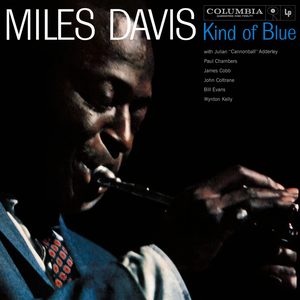
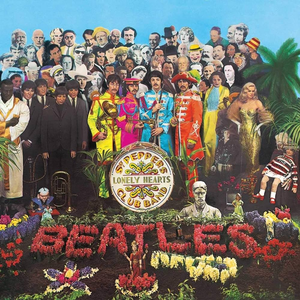
Album
Book
City
Same pick
Game
GPT-5.3-CodexGPT-5.3-Codex




Spirited Away
Kind of Blue
The Dispossessed
Kyoto
Outer Wilds
Qwen3 235B A22B Thinking 2507Qwen3 235B A22B Thinking 2507



The Shawshank Redemption
Sgt Peppers Lonely Hearts Club Band
Moby Dick
Kyoto
Portal
Price and specs
Not enough votes to call it. On the specs, GPT-5.3-Codex has the edge: newer, bigger context window, major provider backing. Qwen3 235B A22B Thinking 2507 costs 23x less per token.
| Spec | GPT-5.3-Codex | Qwen3 235B A22B Thinking 2507 |
|---|---|---|
| Input price | $1.75/M tokens | $0.11/M tokens |
| Output price | $14/M tokens | $0.6/M tokens |
| Context window | 400K tokens | 131K tokens |
| Weights | Closed | Open |
| Free API (OpenRouter) | No | No |
| Released | Feb 2026 | Jul 2025 |
| At 10M a month | $17.50 | $1.10 |
Input tokens at list price. No caching, no batch discount.
Where to run it
GPT-5.3-Codex2 hosts

Qwen3 235B A22B Thinking 25071 host
Per million tokens. Prices and uptime via OpenRouter, checked 10 Oct 2026.
Common questions
What is the difference between GPT-5.3-Codex and Qwen3 235B A22B Thinking 2507?
GPT-5.3-Codex is developed by OpenAI while Qwen3 235B A22B Thinking 2507 is developed by Qwen. GPT-5.3-Codex has a 400K token context window vs Qwen3 235B A22B Thinking 2507's 131K. You can compare their actual outputs across 53 challenges on Rival to see how they differ in practice.
Which is better, GPT-5.3-Codex or Qwen3 235B A22B Thinking 2507?
It depends on your use case. GPT-5.3-Codex and Qwen3 235B A22B Thinking 2507 each have strengths in different areas. Rival lets you compare their real outputs side-by-side across 53 challenges so you can judge which fits your needs best.
How much does GPT-5.3-Codex cost compared to Qwen3 235B A22B Thinking 2507?
GPT-5.3-Codex costs $1.75/M input tokens and Qwen3 235B A22B Thinking 2507 costs $0.11/M input tokens. Qwen3 235B A22B Thinking 2507 is $1.64/M cheaper per input. Check their side-by-side outputs on Rival to see if the price difference is justified by quality.
How can I compare GPT-5.3-Codex and Qwen3 235B A22B Thinking 2507 on Rival?
This page shows a side-by-side comparison of GPT-5.3-Codex and Qwen3 235B A22B Thinking 2507 across shared challenges. You can vote on which model produced the better output in a blind duel. Browsing and voting are free. No account is needed to look; signing in only saves your votes and likes.
More comparisons
Against the newest arrivals
- GPT-5.3-Codex vs Step 5 PreviewLanded Oct 2026
- Qwen3 235B A22B Thinking 2507 vs Claude Haiku 5.5Landed Oct 2026
- GPT-5.3-Codex vs Ling 3.1 FlashLanded Oct 2026
- Qwen3 235B A22B Thinking 2507 vs Mistral Large 4Landed Oct 2026
- GPT-5.3-Codex vs GPT-6.1 SolLanded Sep 2026
- Qwen3 235B A22B Thinking 2507 vs Claude Sonnet 5.5Landed Sep 2026
- GPT-5.3-Codex vs Solar Mini 4Landed Sep 2026
- Qwen3 235B A22B Thinking 2507 vs Qwen3.8 Max PrimeLanded Sep 2026


Same lab, same size, long tail
- GPT-5.3-Codex vs GPT-6 Luna ProSame lab
- GPT-5.3-Codex vs GPT-6 Sol ProSame lab
- Qwen3 235B A22B Thinking 2507 vs Qwen3.8 Omni FlashSame lab
- Qwen3 235B A22B Thinking 2507 vs Qwen3.7 FlashSame lab
- Qwen3 235B A22B Thinking 2507 vs Command A+New provider
- GPT-5.3-Codex vs Cypher Alpha (free)New provider
- GPT-5.3-Codex vs DeepSeek V3.1Same size
- GPT-5.3-Codex vs DeepSeek Prover V2Same size