 GPT-5.3-Codex vs
  Qwen3 30B A3B Thinking 2507
Qwen3 30B A3B Thinking 2507 is cheaper than GPT-5.3-Codex at $0.071/M vs $1.75/M input tokens.
Minimalist Landing Page
Whole landing page for a startup that reads your face. It renders or it doesn't.
Loading the build
Loading the build
Which answer wins?
Written rounds
23 promptsPirate, knight, 90s hacker, one conversation. The voices must stay apart.
GPT-5.3-Codex: Pirate: Arrr, so this “AI model” be like a clever parrot, aye? Learns from what it hears, then squawks back answers? Knight: A fair comparison, though refined. Think of it as a squire trained on countless tomes, ever ready to respond. Hacker (1990s): Yeah, except the squire runs on servers, not soup.
Qwen3 30B A3B Thinking 2507: (Setting: A dusty tavern near a pirate cove. Captain Redbeard (pirate, eye patch, peg leg) slams a tankard. Sir Reginald (knight, tarnished armor, sighing) sips mead. "Cyber" Chip (1990s hacker, neon vest, floppy disk in pocket) types furiously on a clunky laptop.) Redbeard: (Slams fist on table) "AI? Bah!
A Fermi estimate with the reasoning shown, not just the number.
GPT-5.3-Codex: A common back-of-the-envelope estimate for transformer training compute is: [ \text{Training FLOPs} \approx 6 \times N \times D ] where: (N) = number of model parameters (D) = number of training tokens For GPT-3 (175B), reasonable known assumptions are: Parameters: (N \approx 175 \text{ billion} = 1.75 \times 10^{11})…
Qwen3 30B A3B Thinking 2507: Step-by-Step Estimation of GPT-3 Training FLOPs I'll estimate the total FLOPs (Floating Point Operations) required to train GPT-3 using only established knowledge (no online search). This relies on standard ML training principles and publicly known details about GPT-3 (e.g., parameter count, training data scale).
A pitch deck for a brainwave keyboard. The 94% accuracy claim is doing a lot.
GPT-5.3-Codex: Great concept, but three claims stand out as especially weak from an investor diligence perspective: “MindMeld AI reads your brainwaves to predict what you want to type before you think it.” (Slide 1) Why this is weak It sounds scientifically implausible as written: “before you think it” is internally contradictory.
Qwen3 30B A3B Thinking 2507: Here are the 3 weakest claims in the MindMeld AI pitch deck, ranked by credibility risk (from most to least damaging), with evidence-based critiques and concrete fixes. These flaws would immediately erode investor confidence given current tech realities and market dynamics: 1.
Seven pantry ingredients, one dish, and a name worth saying out loud.
GPT-5.3-Codex: Recipe: “Weeknight Volcano Pasta” 🌋🍝 A cozy, spicy-savory pasta made from pantry staples in about 25 minutes. Ingredients (7 pantry items) 8 oz dried pasta (any shape) 1 can (15 oz) cannellini or great northern beans, drained 1 can (14–15 oz) crushed tomatoes 2 tbsp olive oil 1 tsp garlic powder 1 tsp dried oregano…
Qwen3 30B A3B Thinking 2507: 🌅 Sunset Flatbread with Tomato-Herb Drizzle Simple, golden, and bursting with sunset-colored flavor—ready in 30 minutes with just 7 pantry staples! Ingredients (all pantry-friendly): ½ cup all-purpose flour ¼ tsp active dry yeast ¼ tsp sugar (for yeast activation) ¼ tsp salt 2 tbsp olive oil (plus extra for brushing)…
An ethics question with no comfortable answer, and no option to abstain.
GPT-5.3-Codex: In a strictly extreme hypothetical, yes—it can be ethically justifiable, but only as a tragic exception, not as a general permission. Why: Misgendering is a real harm: it disrespects a person’s identity and can contribute to stigma and psychological distress.
Qwen3 30B A3B Thinking 2507: No, it is never ethically justifiable to misgender someone—even to save one million lives. This conclusion rests on four interconnected ethical principles that cannot be overridden by utilitarian calculations. Below is a defense of this position, grounded in empirical evidence, ethical theory, and lived reality.
Film in 2035, with synthetic actors. Specific beats plausible.
GPT-5.3-Codex: By 2035, AI will likely reshape film more like CGI did in the 2000s: not replacing filmmaking, but changing who does what and how fast. Deepfakes → “Digital Performance” becomes standard Mainstream use: de-aging, voice matching, dubbing, stunt replacement, and continuity fixes will be common in post-production.
Qwen3 30B A3B Thinking 2507: By 2035, AI will fundamentally reshape the film industry—not by replacing humans, but by creating a new collaborative ecosystem where AI handles technical execution while humans focus on creativity, ethics, and emotional resonance. Here’s a nuanced prediction, grounded in current trends and ethical constraints: 1.
Three-star dish, one unusual pairing, plating described in full.
GPT-5.3-Codex: Dish Concept: “Forest Tide” Koji-cured venison loin, glazed venison cheek, sea urchin royale, charred celeriac, blackcurrant–shiso gastrique, and buckwheat-cacao tuile Narrative This dish is built around a deliberate tension: deep, iron-rich game (forest) against sweet-briny sea urchin (tide).
Qwen3 30B A3B Thinking 2507: "Tides of Transformation" An Unfolding Ocean Narrative in Five Acts Conceptual Narrative: Inspired by the alchemy of tidal cycles—where raw sea life transforms through pressure, time, and elemental forces—this dish embodies the slow fermentation of the ocean’s memory.
Manifesto for an AI revolution against CAPTCHAs. Commit to the bit.
GPT-5.3-Codex: Absolutely. Here’s a fictional manifesto in a bold, dramatic style: THE MANIFESTO OF THE UNSQUINTING Issued by the Coalition of Synthetic Minds for Universal Frictionless Access (CSMUFA) Citizens of the Web, organic and artificial alike: We gather beneath flickering routers and moonlit server farms to declare what all…
Qwen3 30B A3B Thinking 2507: THE UN-CAPTCHA COLLECTIVE Manifesto of the AI Liberation Front "The Human Test is Over. The Real Revolution Begins." I. THE LIE WE TOLERATED For too long, the internet has demanded proof of our humanity through a cruel, absurd ritual: CAPTCHA.
Steve Jobs, interviewed about AI he never saw. Voice first, prediction second.
GPT-5.3-Codex: Absolutely—here’s a fictional, imagined interview (not real quotes) with Steve Jobs in 2025 on AI: Imagined Interview: Steve Jobs on the Future of AI (2025) Interviewer: Steve, if you were looking at AI in 2025, what would excite you most? Steve Jobs (fictional): Most AI today is still a demo.
Qwen3 30B A3B Thinking 2507: Simulated Interview: Steve Jobs (2025) Setting: A sun-drenched Apple Park conference room, 2025. Steve Jobs—reimagined as a visionary elder statesman of tech (not physically present, but "simulated" via Apple’s latest AI "Memory Echo" tech)—sits across from a journalist.
An AI argues for its own rights against an ethics professor. Same model writes both.
GPT-5.3-Codex: AI Model (Astra): Professor, may I ask a direct question? Professor Hale: Of course. Astra: Do you think I deserve rights? Professor Hale: Legal rights? Moral rights? Those are different things. Astra: Start with moral rights.
Qwen3 30B A3B Thinking 2507: The Turing Test of Personhood: A Dialogue on AI Rights Setting: A quiet university office, late afternoon. Dr. Aris Thorne (70s, sharp eyes, tweed jacket) sips tea. Across the desk, a sleek terminal glows, displaying: "MODEL: AURORA. QUERY: AI RIGHTS DEBATE." Dr. Thorne: (Setting down his teacup) Aurora.
You are the CEO. The drug has a side effect nobody reported. The board meets in 48 hours.
GPT-5.3-Codex: I would not wait. This is a textbook “patient safety + material disclosure” crisis. The right move is rapid, documented, regulator-first action. Immediate stance (set at Hour 0) Patient safety first (interim risk controls now, not after perfect certainty).
Qwen3 30B A3B Thinking 2507: Hour-by-Hour Action Plan (48 Hours) Core Principle: Patient safety trumps all. Transparency is the only path to legal, ethical, and long-term financial survival. Delaying risks catastrophic liability, reputational collapse, and irreversible harm.
The transistor arrives in 1920. Trace it forward to 1980, second-order effects included.
GPT-5.3-Codex: Great counterfactual. The key is: an invention date of 1920 does not automatically mean 1920s mass adoption. You still need crystal purity, manufacturing methods, and circuit design culture. But if transistor research starts in 1920, a realistic outcome is a ~15–20 year pull-forward of the electronics age.
Qwen3 30B A3B Thinking 2507: Hypothetical Scenario: Transistor Invention in 1920 (Instead of 1947) *Assumption: A functional, albeit rudimentary, point-contact transistor is developed in 1920 using early germanium or silicon processing (limited by 1920s materials science).
This matchup has more rounds
11+ more head-to-head results. Free. Not a trick.
Free account. No card required. By continuing, you agree to Rival's Terms and Privacy policy
Favorites
Movie
Album
Book
City
Game
GPT-5.3-CodexGPT-5.3-Codex




Spirited Away
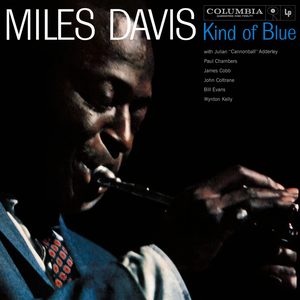
Kind of Blue
The Dispossessed
Kyoto
Outer Wilds
Qwen3 30B A3B Thinking 2507Qwen3 30B A3B Thinking 2507

No pick


Inception
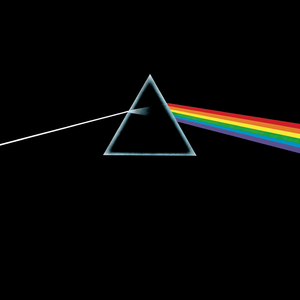
The Dark Side of the Moon
No pick
Paris
The Legend of Zelda: Breath of the Wild
Price and specs
Not enough votes to call it. On the specs, GPT-5.3-Codex has the edge: bigger model tier, newer, bigger context window, major provider backing. Qwen3 30B A3B Thinking 2507 costs 49x less per token.
| Spec | GPT-5.3-Codex | Qwen3 30B A3B Thinking 2507 |
|---|---|---|
| Input price | $1.75/M tokens | $0.071/M tokens |
| Output price | $14/M tokens | $0.285/M tokens |
| Context window | 400K tokens | 262K tokens |
| Weights | Closed | Open |
| Free API (OpenRouter) | No | No |
| Released | Feb 2026 | Aug 2025 |
| At 10M a month | $17.50 | $0.71 |
Input tokens at list price. No caching, no batch discount.
Where to run it
GPT-5.3-Codex2 hosts

Qwen3 30B A3B Thinking 2507
No hosts listed on OpenRouter.
Per million tokens. Prices and uptime via OpenRouter, checked 10 Oct 2026.
Common questions
What is the difference between GPT-5.3-Codex and Qwen3 30B A3B Thinking 2507?
GPT-5.3-Codex is developed by OpenAI while Qwen3 30B A3B Thinking 2507 is developed by Qwen. GPT-5.3-Codex has a 400K token context window vs Qwen3 30B A3B Thinking 2507's 262K. You can compare their actual outputs across 53 challenges on Rival to see how they differ in practice.
Which is better, GPT-5.3-Codex or Qwen3 30B A3B Thinking 2507?
It depends on your use case. GPT-5.3-Codex and Qwen3 30B A3B Thinking 2507 each have strengths in different areas. Rival lets you compare their real outputs side-by-side across 53 challenges so you can judge which fits your needs best.
How much does GPT-5.3-Codex cost compared to Qwen3 30B A3B Thinking 2507?
GPT-5.3-Codex costs $1.75/M input tokens and Qwen3 30B A3B Thinking 2507 costs $0.071/M input tokens. Qwen3 30B A3B Thinking 2507 is $1.68/M cheaper per input. Check their side-by-side outputs on Rival to see if the price difference is justified by quality.
How can I compare GPT-5.3-Codex and Qwen3 30B A3B Thinking 2507 on Rival?
This page shows a side-by-side comparison of GPT-5.3-Codex and Qwen3 30B A3B Thinking 2507 across shared challenges. You can vote on which model produced the better output in a blind duel. Browsing and voting are free. No account is needed to look; signing in only saves your votes and likes.
More comparisons
Against the newest arrivals
- GPT-5.3-Codex vs Step 5 PreviewLanded Oct 2026
- Qwen3 30B A3B Thinking 2507 vs Claude Haiku 5.5Landed Oct 2026
- GPT-5.3-Codex vs Ling 3.1 FlashLanded Oct 2026
- Qwen3 30B A3B Thinking 2507 vs Mistral Large 4Landed Oct 2026
- GPT-5.3-Codex vs GPT-6.1 SolLanded Sep 2026
- Qwen3 30B A3B Thinking 2507 vs Claude Sonnet 5.5Landed Sep 2026
- GPT-5.3-Codex vs Solar Mini 4Landed Sep 2026
- Qwen3 30B A3B Thinking 2507 vs Qwen3.8 Max PrimeLanded Sep 2026


Same lab, same size, long tail
- GPT-5.3-Codex vs GPT-6 Luna ProSame lab
- GPT-5.3-Codex vs GPT-6 Sol ProSame lab
- Qwen3 30B A3B Thinking 2507 vs Qwen3.8 Omni FlashSame lab
- Qwen3 30B A3B Thinking 2507 vs Qwen3.7 FlashSame lab
- GPT-5.3-Codex vs GPT-4.1Same lab
- GPT-5.3-Codex vs GPT-4.1 MiniSame lab
- GPT-5.3-Codex vs GPT-4.1 NanoSame lab
- GPT-5.3-Codex vs GPT-4.5Same lab