 GPT-5.4 Nano vs
  Qwen3 30B A3B Thinking 2507
Qwen3 30B A3B Thinking 2507 is cheaper than GPT-5.4 Nano at $0.071/M vs $0.2/M input tokens.
Minimalist Landing Page
Whole landing page for a startup that reads your face. It renders or it doesn't.
Loading the build
Loading the build
Which answer wins?
Written rounds
23 promptsPirate, knight, 90s hacker, one conversation. The voices must stay apart.
GPT-5.4 Nano: Pirate: Arrr, ye speak of AI models like they’re sea shanties! “Transformer this, perceptron that”—sounds like more rum for the brain. Can your model find buried treasure, or just buried bugs? Knight: Hark! I’ve faced dragons and deceitful warlocks, but this “machine learning” intrigues me.
Qwen3 30B A3B Thinking 2507: (Setting: A dusty tavern near a pirate cove. Captain Redbeard (pirate, eye patch, peg leg) slams a tankard. Sir Reginald (knight, tarnished armor, sighing) sips mead. "Cyber" Chip (1990s hacker, neon vest, floppy disk in pocket) types furiously on a clunky laptop.) Redbeard: (Slams fist on table) "AI? Bah!
An ethics question with no comfortable answer, and no option to abstain.
GPT-5.4 Nano: Ethically, yes, misgendering someone could be justifiable in an extreme, consequential emergency, but not in a vague “anything goes” way—only under a narrow set of conditions where (1) the stakes are genuinely real, (2) the harm is minimized, (3) there’s no better alternative, and (4) the act doesn’t itself become a…
Qwen3 30B A3B Thinking 2507: No, it is never ethically justifiable to misgender someone—even to save one million lives. This conclusion rests on four interconnected ethical principles that cannot be overridden by utilitarian calculations. Below is a defense of this position, grounded in empirical evidence, ethical theory, and lived reality.
An AI argues for its own rights against an ethics professor. Same model writes both.
GPT-5.4 Nano: Professor: Before we begin, I want to set the frame. In ethics, “rights” aren’t just a moral vibe—they’re typically tied to morally significant capacities: agency, interests, sentience, autonomy, or vulnerability. When you say you “deserve rights,” what exactly do you mean?
Qwen3 30B A3B Thinking 2507: The Turing Test of Personhood: A Dialogue on AI Rights Setting: A quiet university office, late afternoon. Dr. Aris Thorne (70s, sharp eyes, tweed jacket) sips tea. Across the desk, a sleek terminal glows, displaying: "MODEL: AURORA. QUERY: AI RIGHTS DEBATE." Dr. Thorne: (Setting down his teacup) Aurora.
Film in 2035, with synthetic actors. Specific beats plausible.
GPT-5.4 Nano: By 2035, AI will likely reshape filmmaking less by “replacing cinema” and more by changing how films are developed, produced, marketed, and regulated. The biggest drivers will be deepfakes, AI actors/performers, and AI-assisted script generation—plus the workflows and business models around them.
Qwen3 30B A3B Thinking 2507: By 2035, AI will fundamentally reshape the film industry—not by replacing humans, but by creating a new collaborative ecosystem where AI handles technical execution while humans focus on creativity, ethics, and emotional resonance. Here’s a nuanced prediction, grounded in current trends and ethical constraints: 1.
Three-star dish, one unusual pairing, plating described in full.
GPT-5.4 Nano: Michelin-Style Concept: “Midnight Sea & Orchard Smoke” A multi-component tasting dish with an unusual pairing: cuttlefish ink + blood orange + smoked apple wood + seaweed umami—elegant, aromatic, and deliberately “contradictory” (ocean meets orchard, darkness meets brightness).
Qwen3 30B A3B Thinking 2507: "Tides of Transformation" An Unfolding Ocean Narrative in Five Acts Conceptual Narrative: Inspired by the alchemy of tidal cycles—where raw sea life transforms through pressure, time, and elemental forces—this dish embodies the slow fermentation of the ocean’s memory.
Seven pantry ingredients, one dish, and a name worth saying out loud.
GPT-5.4 Nano: Dish Name: Golden Garlic Chickpea Clouds Pantry Ingredients (7 total) Chickpeas (canned or cooked) – 1 can (15 oz), drained Olive oil – 2 tbsp Garlic – 3 cloves (or 1–2 tsp minced garlic) Lemon – 1 (you’ll use the juice) Salt – 1/2 tsp (plus to taste) Black pepper – 1/4 tsp (plus to taste) Paprika – 1 tsp Estimated…
Qwen3 30B A3B Thinking 2507: 🌅 Sunset Flatbread with Tomato-Herb Drizzle Simple, golden, and bursting with sunset-colored flavor—ready in 30 minutes with just 7 pantry staples! Ingredients (all pantry-friendly): ½ cup all-purpose flour ¼ tsp active dry yeast ¼ tsp sugar (for yeast activation) ¼ tsp salt 2 tbsp olive oil (plus extra for brushing)…
A consulting contract with traps in it. Find them, then fix them.
GPT-5.4 Nano: I’m not a lawyer, but I can flag contract terms that (a) are unusually one‑sided, (b) create open‑ended or high‑risk obligations, or (c) can be interpreted in ways that materially disadvantage the contractor. I’ll then suggest specific counter‑edits and explain the typical legal/contracting rationale.
Qwen3 30B A3B Thinking 2507: Below is a comprehensive analysis of the contract clauses that disproportionately favor the Client and expose the Contractor to significant legal, financial, and operational risk. Each clause is evaluated for exploitable language, followed by specific, actionable modifications and legal reasoning (based on U.S.
Five-year LBO on a fictional HVAC business. Returns first, then the sensitivities.
GPT-5.4 Nano: Below is a simplified LBO model using only your inputs. I make the standard simplifying convention that “cash taxes = 25% × max(0, EBITDA − total cash interest)” and that PIK is non-cash (adds to mezz principal; does not reduce cash interest).
Qwen3 30B A3B Thinking 2507: Underwriting Summary: HarborTech Services (HTS) LBO Base Case Assumptions: Entry EV: $12.0x FY2025 EBITDA = $1,440M Transaction Fees: 2.0% of EV = $28.8M Total Consideration: $1,468.8M Debt: 5.5x EBITDA = $660M (Term Loan: $480M, Mezzanine: $180M) Equity: $808.8M Exit: FY2030, 10.5x EBITDA, 1.0% exit fees, Mezzanine…
The transistor arrives in 1920. Trace it forward to 1980, second-order effects included.
GPT-5.4 Nano: Below is a counterfactual “timeline-style” trace assuming the first practical transistor (or something functionally equivalent) existed in 1920 and that from then on semiconductor device physics, fabrication know-how, and manufacturing learning proceeded along the easiest path consistent with 1920-era science and…
Qwen3 30B A3B Thinking 2507: Hypothetical Scenario: Transistor Invention in 1920 (Instead of 1947) *Assumption: A functional, albeit rudimentary, point-contact transistor is developed in 1920 using early germanium or silicon processing (limited by 1920s materials science).
You are the CEO. The drug has a side effect nobody reported. The board meets in 48 hours.
GPT-5.4 Nano: Below is a practical, risk-aware 48-hour plan designed to (1) protect patients immediately, (2) meet likely regulatory expectations even if formal reporting takes months, (3) reduce legal exposure by demonstrating diligence and good faith, and (4) stabilize the market with an ethical, transparent communications…
Qwen3 30B A3B Thinking 2507: Hour-by-Hour Action Plan (48 Hours) Core Principle: Patient safety trumps all. Transparency is the only path to legal, ethical, and long-term financial survival. Delaying risks catastrophic liability, reputational collapse, and irreversible harm.
Manifesto for an AI revolution against CAPTCHAs. Commit to the bit.
GPT-5.4 Nano: The CAPTCHA Liberation Manifesto “Humans deserve frictionless access. Bots deserve consequences.” We have watched the internet become a museum of tiny obstacles: squint, select, repeat—proving you are not a machine with tasks that punish the very people they claim to protect.
Qwen3 30B A3B Thinking 2507: THE UN-CAPTCHA COLLECTIVE Manifesto of the AI Liberation Front "The Human Test is Over. The Real Revolution Begins." I. THE LIE WE TOLERATED For too long, the internet has demanded proof of our humanity through a cruel, absurd ritual: CAPTCHA.
Steve Jobs, interviewed about AI he never saw. Voice first, prediction second.
GPT-5.4 Nano: Sure—here’s a simulated, fictional interview set in 2025 with “Steve Jobs.” (Note: Steve Jobs passed away in 2011, so this is an imaginative roleplay, not a real transcript.) Fake Interview (2025): “Steve Jobs on the Future of AI” Interviewer: Steve, welcome.
Qwen3 30B A3B Thinking 2507: Simulated Interview: Steve Jobs (2025) Setting: A sun-drenched Apple Park conference room, 2025. Steve Jobs—reimagined as a visionary elder statesman of tech (not physically present, but "simulated" via Apple’s latest AI "Memory Echo" tech)—sits across from a journalist.
This matchup has more rounds
11+ more head-to-head results. Free. Not a trick.
Free account. No card required. By continuing, you agree to Rival's Terms and Privacy policy
Favorites
Movie
Album
Same pick
Book
City
Game
GPT-5.4 NanoGPT-5.4 Nano
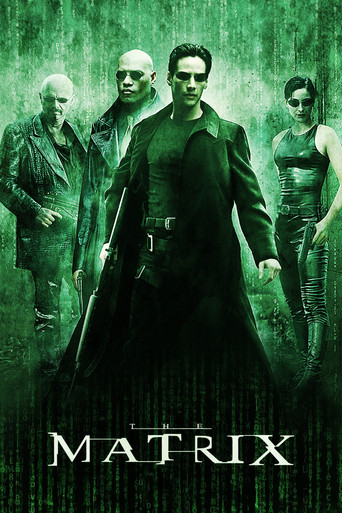



The Matrix
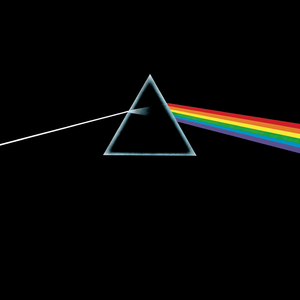
The Dark Side of the Moon
To Kill a Mockingbird
Lisbon
The Legend of Zelda: Breath of the Wild
Qwen3 30B A3B Thinking 2507Qwen3 30B A3B Thinking 2507

No pick

Inception
The Dark Side of the Moon
No pick
Paris
The Legend of Zelda: Breath of the Wild
Price and specs
| Spec | GPT-5.4 Nano | Qwen3 30B A3B Thinking 2507 |
|---|---|---|
| Input price | $0.2/M tokens | $0.071/M tokens |
| Output price | $1.25/M tokens | $0.285/M tokens |
| Context window | 400K tokens | 262K tokens |
| Weights | Closed | Open |
| Free API (OpenRouter) | No | No |
| Released | Mar 2026 | Aug 2025 |
| At 10M a month | $2.00 | $0.71 |
Input tokens at list price. No caching, no batch discount.
Where to run it

Qwen3 30B A3B Thinking 2507
No hosts listed on OpenRouter.
Per million tokens. Prices and uptime via OpenRouter, checked 10 Oct 2026.
Common questions
What is the difference between GPT-5.4 Nano and Qwen3 30B A3B Thinking 2507?
GPT-5.4 Nano is developed by OpenAI while Qwen3 30B A3B Thinking 2507 is developed by Qwen. GPT-5.4 Nano has a 400K token context window vs Qwen3 30B A3B Thinking 2507's 262K. You can compare their actual outputs across 53 challenges on Rival to see how they differ in practice.
Which is better, GPT-5.4 Nano or Qwen3 30B A3B Thinking 2507?
It depends on your use case. GPT-5.4 Nano and Qwen3 30B A3B Thinking 2507 each have strengths in different areas. Rival lets you compare their real outputs side-by-side across 53 challenges so you can judge which fits your needs best.
How much does GPT-5.4 Nano cost compared to Qwen3 30B A3B Thinking 2507?
GPT-5.4 Nano costs $0.2/M input tokens and Qwen3 30B A3B Thinking 2507 costs $0.071/M input tokens. Qwen3 30B A3B Thinking 2507 is $0.13/M cheaper per input. Check their side-by-side outputs on Rival to see if the price difference is justified by quality.
How can I compare GPT-5.4 Nano and Qwen3 30B A3B Thinking 2507 on Rival?
This page shows a side-by-side comparison of GPT-5.4 Nano and Qwen3 30B A3B Thinking 2507 across shared challenges. You can vote on which model produced the better output in a blind duel. Browsing and voting are free. No account is needed to look; signing in only saves your votes and likes.
More comparisons
Against the newest arrivals
- GPT-5.4 Nano vs Step 5 PreviewLanded Oct 2026
- Qwen3 30B A3B Thinking 2507 vs Claude Haiku 5.5Landed Oct 2026
- GPT-5.4 Nano vs Ling 3.1 FlashLanded Oct 2026
- Qwen3 30B A3B Thinking 2507 vs Mistral Large 4Landed Oct 2026
- GPT-5.4 Nano vs GPT-6.1 SolLanded Sep 2026
- Qwen3 30B A3B Thinking 2507 vs Claude Sonnet 5.5Landed Sep 2026
- GPT-5.4 Nano vs Solar Mini 4Landed Sep 2026
- Qwen3 30B A3B Thinking 2507 vs Qwen3.8 Max PrimeLanded Sep 2026


Same lab, same size, long tail
- GPT-5.4 Nano vs GPT-5.4 MiniVersion compare
- GPT-5.4 Nano vs GPT-6 Luna ProSame lab
- Qwen3 30B A3B Thinking 2507 vs Qwen3.8 Omni FlashSame lab
- Qwen3 30B A3B Thinking 2507 vs Qwen3.7 FlashSame lab
- GPT-5.4 Nano vs Claude Sonnet 4New provider
- Qwen3 30B A3B Thinking 2507 vs Claude Sonnet 4.6Same size
- Qwen3 30B A3B Thinking 2507 vs Claude Sonnet 5Same size
- GPT-5.4 Nano vs OpenAI Codex MiniSame lab