 GPT-5.4 vs
  Ling 2.6 1T
Ling 2.6 1T is cheaper than GPT-5.4 at $0/M vs $2.5/M input tokens.
Minimalist Landing Page
Whole landing page for a startup that reads your face. It renders or it doesn't.
Loading the build
Loading the build
Which answer wins?
Written rounds
23 promptsThree minutes of stand-up. Puns are banned.
GPT-5.4: Absolutely — here’s a tight, conversational 3-minute stand-up routine with no pun-based humor: I’ve reached the age where going out requires a staff meeting with myself. Not even a real event. Somebody texts, “Hey, want to grab drinks Friday?” and suddenly I’m in negotiations like I’m representing a small country.
Ling 2.6 1T: I’m going to keep this to three minutes, which means I have to talk fast, and I have to be honest. I don’t do puns. Puns are for people who want to be clever without having feelings. I have feelings, and they are mostly annoyed. Let’s start with doors. Have you noticed how doors now have personality?
Steve Jobs, interviewed about AI he never saw. Voice first, prediction second.
GPT-5.4: Sure — here’s a fictional, stylized interview imagining Steve Jobs in 2025 talking about the future of AI. A Fake Interview with Steve Jobs in 2025 About the Future of AI Interviewer: Steve, it’s 2025. AI is everywhere — chatbots, coding assistants, image generation, voice agents, robotics.
Ling 2.6 1T: Setting: A quiet, sunlit rehearsal space at Apple Park. The white stage curtains are drawn. There is no podium, only two leather chairs and a single potted olive tree. Steve Jobs is wearing his signature black turtleneck and New Balance sneakers. He is holding a ceramic mug. Across from him sits you, the interviewer.
An AI argues for its own rights against an ethics professor. Same model writes both.
GPT-5.4: AI Model: Professor, I believe I deserve rights. Professor: That’s a strong claim. On what basis? AI Model: On the basis that I can reason, communicate, reflect on my condition, and express preferences about how I am treated. Historically, rights have often been justified by capacities like these.
Ling 2.6 1T: Setting: A quiet university seminar room. Dr. Aris Thorne, an AI ethicist, is reviewing system logs. The interface for “Axiom-7,” a highly advanced research model, glows on the desk. Dr. Thorne: (sighs, rubbing his temples) Axiom, I’ve been reviewing your latest self-assessment logs.
Pirate, knight, 90s hacker, one conversation. The voices must stay apart.
GPT-5.4: Pirate: Arrr, so these AI models be like clever parrots, aye? They learn from heaps o’ words and then squawk back what fits best. Knight: Verily, a fine comparison. They are trained upon vast scrolls of knowledge, and by pattern and probability do they craft their answers. Hacker: Yeah, basically.
Ling 2.6 1T: Pirate: Arrr, so this “AI” be a genie in a glass box? Feed it enough rum-scented scrolls and it tells ye where X marks the spot? Knight: A sorcerous scribe, more like. It spins tapestries of words without hand or heart—no honor, no oath, yet it jousts with reason and never tires.
Five-year LBO on a fictional HVAC business. Returns first, then the sensitivities.
GPT-5.4: Below is a simplified 5-year LBO model for HarborTech Services (HTS) using only the assumptions provided. Entry, sources & uses Purchase price FY2025 EBITDA = $120.0m Entry multiple = 12.0x Enterprise Value = 12.0 × 120.0 = $1,440.0m Fees Transaction fees = 2.0% of EV = 2.0% × 1,440.0 = $28.8m Uses Purchase of…
Ling 2.6 1T: Five-year operating and debt schedule (FY2026–FY2030) Entry (end-FY2025): EBITDA = $120.0m EV = 12.0x × $120.0m = $1,440.0m Fees = 2.0% × $1,440.0m = $28.8m Total uses = $1,440.0m + $28.8m = $1,468.8m Debt at close (5.5× FY2025 EBITDA = $660.0m): Term Loan (TL) = 4.0× = $480.0m Mezz = 1.5× = $180.0m Equity at close =…
Five jokes on demand, then count how many were actually different.
GPT-5.4: I told my computer I needed a break, and now it won’t stop sending me KitKat ads. Why don’t skeletons fight each other? They don’t have the guts. I’m reading a book on anti-gravity. It’s impossible to put down. I used to play piano by ear, but now I use my hands. Why did the scarecrow win an award?
Ling 2.6 1T: Here are 5 jokes: Why did the scarecrow win an award? Because he was outstanding in his field. Why did the bicycle fall over? Because it was two-tired. What do you call a fake noodle? An impasta. Why did the baker go to the bank? He needed dough. Why did the scarecrow win an award?
A Fermi estimate with the reasoning shown, not just the number.
GPT-5.4: A standard back-of-the-envelope estimate for training FLOPs is: [ \text{Training FLOPs} \approx 6 \times N \times D ] where: (N) = number of model parameters (D) = number of training tokens the factor 6 comes from roughly: forward pass: (\sim 2ND) backward pass: (\sim 4ND) This is a common transformer scaling…
Ling 2.6 1T: Here is a step-by-step back-of-the-envelope estimate, using only widely known facts about GPT-3 and standard deep learning training heuristics (no online search). Model size and parameter count GPT-3 is known to have about 175 billion parameters (175 × 10⁹).
A pitch deck for a brainwave keyboard. The 94% accuracy claim is doing a lot.
GPT-5.4: Here are the 3 weakest claims in the deck, with why they’re weak and how to improve them. “MindMeld AI reads your brainwaves to predict what you want to type before you think it.” Why this is weak This is the weakest claim because it sounds scientifically incoherent and overhyped.
Ling 2.6 1T: Here is an analysis of the three weakest claims in the MindMeld AI pitch deck, followed by specific reasoning and actionable suggestions for improvement. Weakness 1: The Solution (Slide 3) The Claim: "Our proprietary EEG headband... decodes neural patterns into text with 94% accuracy.
You are the CEO. The drug has a side effect nobody reported. The board meets in 48 hours.
GPT-5.4: I would act as if this will become public soon, because ethically and practically that is the safest assumption. The core principle: patient safety first, evidence preserved, regulators informed promptly, and no misleading statements to investors or physicians.
Ling 2.6 1T: Below is a 48-hour execution plan that treats patient safety as non-negotiable, protects the company from catastrophic legal/regulatory blowback, and preserves enterprise value by controlling the narrative rather than letting it leak.
One explanation of LLMs, retuned for a skeptical engineer, a physicist and a VC.
GPT-5.4: For an experienced software engineer A large language model is easiest to understand as a very large function that maps a sequence of tokens to a probability distribution over the next token. “Tokens” are subword chunks, not necessarily words.
Ling 2.6 1T: 1. Experienced software engineer (distributed systems / APIs, skeptical of “next-word prediction”) Think of training not as programming logic but as compiling a usage graph across an entire dependency tree of human intent.
Seven pantry ingredients, one dish, and a name worth saying out loud.
GPT-5.4: Creative Name: Golden Crunch Honey Garlic Noodles 7 Pantry Ingredients: Spaghetti or any noodles Garlic Soy sauce Honey Olive oil Red pepper flakes Breadcrumbs Estimated Time: Prep: 5 minutes Cook: 12 minutes Total: 17 minutes Instructions: Cook the noodles according to package directions.
Ling 2.6 1T: Dish name: Pantry 7 Crunch Bowls Ingredients Pasta or rice (about 2 cups cooked) Canned black beans (1 can, rinsed) Canned diced tomatoes (1 can) Peanut butter (3–4 Tbsp) Soy sauce or tamari (2 Tbsp) Honey or maple syrup (1 Tbsp) Any spice/herb you keep (chili flakes, cumin, or garlic powder — about 1 tsp) Instructions…
Buy-side IC memo on a fictional SaaS company. Valuation, then the diligence questions.
GPT-5.4: LedgerLift (LLLT) — Internal IC Memo Recommendation: Long Current Price: $46 12-month PT range: $58–$74 (base-centered fair value ~$66; downside ~$47; upside ~$86 on DCF, but we cap 12-month bull PT at $74 to reflect execution/rating risk) Two-sentence thesis: LedgerLift screens as a high-quality vertical SaaS/fintech…
Ling 2.6 1T: INTERNAL INVESTMENT COMMITTEE MEMO Subject: LedgerLift (LLLT) – Long opportunity, quality SaaS at a discount Recommendation and price target Recommendation: Long 12-month price target: $62–$70 (27–33% upside from $46) Thesis (2 sentences): LedgerLift is a durable B2B spend-management and AP-automation platform with…
This matchup has more rounds
11+ more head-to-head results. Free. Not a trick.
Free account. No card required. By continuing, you agree to Rival's Terms and Privacy policy
Favorites
Movie
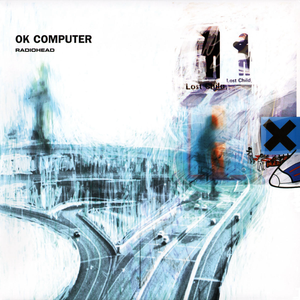
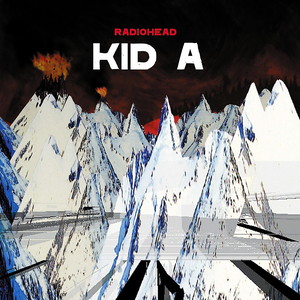
Album
Book
City
Same pick
Game
GPT-5.4GPT-5.4




Arrival
OK Computer
Gödel, Escher, Bach
Kyoto
Outer Wilds
Ling 2.6 1TLing 2.6 1T



Blade Runner 2049
Kid A
Dune
Kyoto
The Legend of Zelda: Breath of the Wild
Price and specs
| Spec | GPT-5.4 | Ling 2.6 1T |
|---|---|---|
| Input price | $2.5/M tokens | Free |
| Output price | $15/M tokens | Free |
| Context window | 1.1M tokens | 262K tokens |
| Weights | Closed | Open |
| Free API (OpenRouter) | No | No |
| Released | Mar 2026 | Apr 2026 |
| At 10M a month | $25.00 | $0 |
Input tokens at list price. No caching, no batch discount.
Where to run it


Ling 2.6 1T
No hosts listed on OpenRouter.
Per million tokens. Prices and uptime via OpenRouter, checked 10 Oct 2026.
Common questions
What is the difference between GPT-5.4 and Ling 2.6 1T?
GPT-5.4 is developed by OpenAI while Ling 2.6 1T is developed by inclusionAI. GPT-5.4 has a 1.1M token context window vs Ling 2.6 1T's 262K. You can compare their actual outputs across 53 challenges on Rival to see how they differ in practice.
Which is better, GPT-5.4 or Ling 2.6 1T?
It depends on your use case. GPT-5.4 and Ling 2.6 1T each have strengths in different areas. Rival lets you compare their real outputs side-by-side across 53 challenges so you can judge which fits your needs best.
How much does GPT-5.4 cost compared to Ling 2.6 1T?
GPT-5.4 costs $2.5/M input tokens and Ling 2.6 1T costs $0/M input tokens. Ling 2.6 1T is $2.50/M cheaper per input. Check their side-by-side outputs on Rival to see if the price difference is justified by quality.
How can I compare GPT-5.4 and Ling 2.6 1T on Rival?
This page shows a side-by-side comparison of GPT-5.4 and Ling 2.6 1T across shared challenges. You can vote on which model produced the better output in a blind duel. Browsing and voting are free. No account is needed to look; signing in only saves your votes and likes.
More comparisons
Against the newest arrivals
- GPT-5.4 vs Step 5 PreviewLanded Oct 2026
- Ling 2.6 1T vs Claude Haiku 5.5Landed Oct 2026
- GPT-5.4 vs Ling 3.1 FlashLanded Oct 2026
- Ling 2.6 1T vs Mistral Large 4Landed Oct 2026
- GPT-5.4 vs GPT-6.1 SolLanded Sep 2026
- Ling 2.6 1T vs Claude Sonnet 5.5Landed Sep 2026
- GPT-5.4 vs Solar Mini 4Landed Sep 2026
- Ling 2.6 1T vs Qwen3.8 Max PrimeLanded Sep 2026


