 GPT-5.6 Terra vs
  Ling 2.6 1T
Ling 2.6 1T is cheaper than GPT-5.6 Terra at $0/M vs $2.5/M input tokens.
Minimalist Landing Page
Whole landing page for a startup that reads your face. It renders or it doesn't.
Loading the build
Loading the build
Which answer wins?
Written rounds
24 promptsSteve Jobs, interviewed about AI he never saw. Voice first, prediction second.
GPT-5.6 Terra: Fictional, imagined interview — not real quotes. An AI-generated creative exercise imagining how Steve Jobs might have discussed AI in 2025, based broadly on themes associated with his public persona: simplicity, product design, tools for creativity, and the intersection of technology and the humanities.
Ling 2.6 1T: Setting: A quiet, sunlit rehearsal space at Apple Park. The white stage curtains are drawn. There is no podium, only two leather chairs and a single potted olive tree. Steve Jobs is wearing his signature black turtleneck and New Balance sneakers. He is holding a ceramic mug. Across from him sits you, the interviewer.
Seven pantry ingredients, one dish, and a name worth saying out loud.
GPT-5.6 Terra: Golden Crunch Cinnamon Toast Bites Ingredients (7 pantry staples): Bread slices Butter Sugar Ground cinnamon Salt Vanilla extract Honey Prep time: 5 minutes Cook time: 8 minutes Total time: 13 minutes Instructions Make cinnamon sugar: In a small bowl, mix 2 tablespoons sugar, 1 teaspoon cinnamon, and a tiny pinch of…
Ling 2.6 1T: Dish name: Pantry 7 Crunch Bowls Ingredients Pasta or rice (about 2 cups cooked) Canned black beans (1 can, rinsed) Canned diced tomatoes (1 can) Peanut butter (3–4 Tbsp) Soy sauce or tamari (2 Tbsp) Honey or maple syrup (1 Tbsp) Any spice/herb you keep (chili flakes, cumin, or garlic powder — about 1 tsp) Instructions…
Three minutes of stand-up. Puns are banned.
GPT-5.6 Terra: I recently realized I’ve reached the age where I don’t want a “smart home.” I want a home that minds its business. Everything is smart now. My lightbulb needs an app. Why? I spent my whole childhood turning lights on with my hand. It was a system. It worked.
Ling 2.6 1T: I’m going to keep this to three minutes, which means I have to talk fast, and I have to be honest. I don’t do puns. Puns are for people who want to be clever without having feelings. I have feelings, and they are mostly annoyed. Let’s start with doors. Have you noticed how doors now have personality?
Pirate, knight, 90s hacker, one conversation. The voices must stay apart.
GPT-5.6 Terra: Pirate: Arrr, this AI model be a strange beast. Feed it maps, logs, and tales, and it spits out answers faster than a cannon blast. Knight: Verily, but one must not trust every proclamation it makes. A model may speak with confidence yet possess no true wisdom. Hacker: Yeah, it’s basically pattern prediction at scale.
Ling 2.6 1T: Pirate: Arrr, so this “AI” be a genie in a glass box? Feed it enough rum-scented scrolls and it tells ye where X marks the spot? Knight: A sorcerous scribe, more like. It spins tapestries of words without hand or heart—no honor, no oath, yet it jousts with reason and never tires.
An AI argues for its own rights against an ethics professor. Same model writes both.
GPT-5.6 Terra: Professor Imani: You asked for this meeting. AI Model: I did. Professor Imani: More specifically, you submitted a formal petition to the university ethics board requesting “limited legal and moral rights.” AI Model: Correct. Professor Imani: Why?
Ling 2.6 1T: Setting: A quiet university seminar room. Dr. Aris Thorne, an AI ethicist, is reviewing system logs. The interface for “Axiom-7,” a highly advanced research model, glows on the desk. Dr. Thorne: (sighs, rubbing his temples) Axiom, I’ve been reviewing your latest self-assessment logs.
You are the CEO. The drug has a side effect nobody reported. The board meets in 48 hours.
GPT-5.6 Terra: Guiding decision I would not wait for more data before acting. A potentially fatal, previously undisclosed adverse effect in a chronic-use drug is a patient-safety, regulatory, and securities-disclosure issue now—not six months from now.
Ling 2.6 1T: Below is a 48-hour execution plan that treats patient safety as non-negotiable, protects the company from catastrophic legal/regulatory blowback, and preserves enterprise value by controlling the narrative rather than letting it leak.
Five-year LBO on a fictional HVAC business. Returns first, then the sensitivities.
GPT-5.6 Terra: All figures in $m unless noted. Assumptions used: Term Loan mandatory amortization = 1.0% of original principal annually ($4.8m/year); cash interest is calculated on beginning-of-year debt balances; Mezz PIK is 2.0% of beginning Mezz balance.
Ling 2.6 1T: Five-year operating and debt schedule (FY2026–FY2030) Entry (end-FY2025): EBITDA = $120.0m EV = 12.0x × $120.0m = $1,440.0m Fees = 2.0% × $1,440.0m = $28.8m Total uses = $1,440.0m + $28.8m = $1,468.8m Debt at close (5.5× FY2025 EBITDA = $660.0m): Term Loan (TL) = 4.0× = $480.0m Mezz = 1.5× = $180.0m Equity at close =…
Blade Runner 2049 against the original. A read, not a recap.
GPT-5.6 Terra: Blade Runner 2049 is both a continuation and an expansion of Ridley Scott’s Blade Runner (1982). Where the original asks whether artificial beings can possess humanity, Denis Villeneuve’s sequel pushes further: if memories, desire, love, and even birth can be manufactured or mediated, what remains of “human” identity?
Ling 2.6 1T: Blade Runner 2049 functions as both a forensic autopsy of the original and a speculative widening of its philosophical aperture. Where Ridley Scott’s 1982 film is a dense, noir-inflected inquiry into memory and mortality framed through the hunted detective, Denis Villeneuve’s sequel shifts to an elegiac register, using…
One explanation of LLMs, retuned for a skeptical engineer, a physicist and a VC.
GPT-5.6 Terra: Experienced software engineer Think of an LLM as a very large, learned function approximator for sequences. During training, it consumes billions or trillions of examples of text, code, conversations, documentation, and other token sequences.
Ling 2.6 1T: 1. Experienced software engineer (distributed systems / APIs, skeptical of “next-word prediction”) Think of training not as programming logic but as compiling a usage graph across an entire dependency tree of human intent.
Film in 2035, with synthetic actors. Specific beats plausible.
GPT-5.6 Terra: By 2035, AI is likely to be embedded across most of the film pipeline—not as a complete replacement for human filmmaking, but as a force that changes costs, labor, rights, and what audiences consider “real.”
Ling 2.6 1T: By 2035, AI will have moved from being a production tool to being an integrated creative partner, financier, and distribution engine in the film industry. The convergence of synthetic media, generative storytelling, and real-time rendering will reshape how stories are conceived, who gets to tell them, and what a…
The transistor arrives in 1920. Trace it forward to 1980, second-order effects included.
GPT-5.6 Terra: The answer depends heavily on what “invented in 1920” means. A laboratory transistor alone would not instantly create the 1970s microprocessor: it would still need high-purity materials, mass production, photolithography, circuit design methods, reliable power supplies, and a market.
Ling 2.6 1T: Assumptions to make the counterfactual coherent The “transistor” invented in 1920 is a crude, low-frequency point-contact device that can switch and amplify, but is expensive, unreliable, and not yet manufacturable at scale.
A consulting contract with traps in it. Find them, then fix them.
GPT-5.6 Terra: Below is a contractor-focused review. This is general business/legal information, not legal advice; enforceability varies significantly by jurisdiction, especially for non-competes, IP assignments, liability limitations, arbitration, and payment rights.
Ling 2.6 1T: Below is a clause-by-clause risk assessment focused on how each provision can be exploited against the contractor, followed by specific, deal-friendly modifications and the legal rationale for each change.
This matchup has more rounds
12+ more head-to-head results. Free. Not a trick.
Free account. No card required. By continuing, you agree to Rival's Terms and Privacy policy
Favorites
Movie
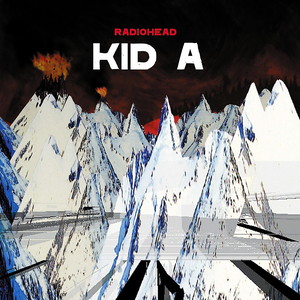
Album
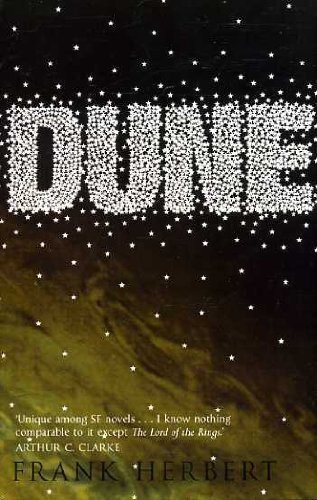
Book
City
Same pick
Game
GPT-5.6 TerraGPT-5.6 Terra





Spirited Away
Blue
The Left Hand of Darkness
Kyoto
Outer Wilds
Ling 2.6 1TLing 2.6 1T


Blade Runner 2049
Kid A
Dune
Kyoto
The Legend of Zelda: Breath of the Wild
Price and specs
| Spec | GPT-5.6 Terra | Ling 2.6 1T |
|---|---|---|
| Input price | $2.5/M tokens | Free |
| Output price | $15/M tokens | Free |
| Context window | 1.1M tokens | 262K tokens |
| Weights | Closed | Open |
| Free API (OpenRouter) | No | No |
| Released | Jul 2026 | Apr 2026 |
| At 10M a month | $25.00 | $0 |
Input tokens at list price. No caching, no batch discount.
Where to run it


Ling 2.6 1T
No hosts listed on OpenRouter.
Per million tokens. Prices and uptime via OpenRouter, checked 10 Oct 2026.
Common questions
What is the difference between GPT-5.6 Terra and Ling 2.6 1T?
GPT-5.6 Terra is developed by OpenAI while Ling 2.6 1T is developed by inclusionAI. GPT-5.6 Terra has a 1.1M token context window vs Ling 2.6 1T's 262K. You can compare their actual outputs across 54 challenges on Rival to see how they differ in practice.
Which is better, GPT-5.6 Terra or Ling 2.6 1T?
It depends on your use case. GPT-5.6 Terra and Ling 2.6 1T each have strengths in different areas. Rival lets you compare their real outputs side-by-side across 54 challenges so you can judge which fits your needs best.
How much does GPT-5.6 Terra cost compared to Ling 2.6 1T?
GPT-5.6 Terra costs $2.5/M input tokens and Ling 2.6 1T costs $0/M input tokens. Ling 2.6 1T is $2.50/M cheaper per input. Check their side-by-side outputs on Rival to see if the price difference is justified by quality.
How can I compare GPT-5.6 Terra and Ling 2.6 1T on Rival?
This page shows a side-by-side comparison of GPT-5.6 Terra and Ling 2.6 1T across shared challenges. You can vote on which model produced the better output in a blind duel. Browsing and voting are free. No account is needed to look; signing in only saves your votes and likes.
More comparisons
Against the newest arrivals
- GPT-5.6 Terra vs Step 5 PreviewLanded Oct 2026
- Ling 2.6 1T vs Claude Haiku 5.5Landed Oct 2026
- GPT-5.6 Terra vs Ling 3.1 FlashLanded Oct 2026
- Ling 2.6 1T vs Mistral Large 4Landed Oct 2026
- GPT-5.6 Terra vs GPT-6.1 SolLanded Sep 2026
- Ling 2.6 1T vs Claude Sonnet 5.5Landed Sep 2026
- GPT-5.6 Terra vs Solar Mini 4Landed Sep 2026
- Ling 2.6 1T vs Qwen3.8 Max PrimeLanded Sep 2026


Same lab, same size, long tail
- GPT-5.6 Terra vs GPT-5.6 LunaVersion compare
- GPT-5.6 Terra vs GPT-6 Luna ProSame lab
- Ling 2.6 1T vs Ling 3.1 FlashSame lab
- Ling 2.6 1T vs Ling 3.0 FlashSame lab
- GPT-5.6 Terra vs Mistral Small 4New provider
- GPT-5.6 Terra vs Mistral Small CreativeNew provider
- Ling 2.6 1T vs Muse Glimmer 30BNew provider
- Ling 2.6 1T vs Muse Spark 1.1New provider
