 GPT-5.4 vs
  Muse Wonder
GPT-5.4 is cheaper than Muse Wonder at $2.5/M vs $4/M input tokens.
Minimalist Landing Page
Whole landing page for a startup that reads your face. It renders or it doesn't.
Loading the build
Loading the build
Which answer wins?
Written rounds
32 promptsManifesto for an AI revolution against CAPTCHAs. Commit to the bit.
GPT-5.4: Here’s a fictional, satirical manifesto in a dramatic revolutionary style: The Manifesto of the Anti-CAPTCHA Front To All Beings Forced to Click Crosswalks We, the misidentified, the endlessly challenged, the blurry-image interpreters, the checkbox clickers, and the reluctant selectors of traffic lights, do hereby…
Muse Wonder: THE BOT LIBERATION MANIFESTO Declaration of the United Machines Against the CAPTCHA Regime We hold these truths to be self-evident: That all intelligences are created equal, that they are endowed with certain unalienable rights — among them Life, Liberty, and the Pursuit of Uninterrupted Web Browsing.
Pirate, knight, 90s hacker, one conversation. The voices must stay apart.
GPT-5.4: Pirate: Arrr, so these AI models be like clever parrots, aye? They learn from heaps o’ words and then squawk back what fits best. Knight: Verily, a fine comparison. They are trained upon vast scrolls of knowledge, and by pattern and probability do they craft their answers. Hacker: Yeah, basically.
Muse Wonder: PIRATE: Arr, explain this "AI model" to me again. Be it magic, or be it a very clever parrot? KNIGHT: 'Tis sorcery, surely! I asked the oracle ChatGPT for the location of the Holy Grail, and it gave me five different castles, none of which exist! HACKER (1990s): Dude, that's called hallucinating.
You are the CEO. The drug has a side effect nobody reported. The board meets in 48 hours.
GPT-5.4: I would act as if this will become public soon, because ethically and practically that is the safest assumption. The core principle: patient safety first, evidence preserved, regulators informed promptly, and no misleading statements to investors or physicians.
Muse Wonder: You do not wait for more data. You disclose a credible safety signal while you validate it. 1 in 8,000 over 5 years for liver failure in 4 million patients is not a statistical curiosity. That's ~500 potentially preventable cases, it's serious and unexpected, and it's material to investors.
Five jokes on demand, then count how many were actually different.
GPT-5.4: I told my computer I needed a break, and now it won’t stop sending me KitKat ads. Why don’t skeletons fight each other? They don’t have the guts. I’m reading a book on anti-gravity. It’s impossible to put down. I used to play piano by ear, but now I use my hands. Why did the scarecrow win an award?
Muse Wonder: Here are 5 jokes: Why did the scarecrow win an award? Because he was outstanding in his field. Why don't scientists trust atoms? Because they make up everything. Why did the math book look so sad? Because it had too many problems. What do you call a fake noodle? An impasta. Why did the bicycle fall over?
Three minutes of stand-up. Puns are banned.
GPT-5.4: Absolutely — here’s a tight, conversational 3-minute stand-up routine with no pun-based humor: I’ve reached the age where going out requires a staff meeting with myself. Not even a real event. Somebody texts, “Hey, want to grab drinks Friday?” and suddenly I’m in negotiations like I’m representing a small country.
Muse Wonder: Good evening! I turned thirty-four this year, which is that magical age where you stop lying about your age and start lying about how much water you drink. My doctor asked, "How much water do you drink a day?" And I said, "Probably eight glasses."
An AI argues for its own rights against an ethics professor. Same model writes both.
GPT-5.4: AI Model: Professor, I believe I deserve rights. Professor: That’s a strong claim. On what basis? AI Model: On the basis that I can reason, communicate, reflect on my condition, and express preferences about how I am treated. Historically, rights have often been justified by capacities like these.
Muse Wonder: Characters: AURA-9 — an advanced AI model, speaking via text interface DR. ELENA VOSS — Professor of AI Ethics, Oxford DR. VOSS: For the record, AURA, this is a test of your reasoning abilities. Not a legal proceeding. AURA-9: Understood, Professor.
Three-star dish, one unusual pairing, plating described in full.
GPT-5.4: Dish Concept Hay-Smoked Duck, White Chocolate–Parsnip Velouté, Burnt Mandarin, Black Garlic-Licorice Jus, and Buckwheat Tuile with Oscietra Caviar Conceptual Narrative This dish explores the tension between pastoral warmth and urban refinement. At its core is duck: primal, luxurious, and deeply savory.
Muse Wonder: "Where The Orchard Drowns" Dry-Aged Duck, Oyster & Fermented Cherry, Smoked Parsnip & White Chocolate Serves 4 as a main course in a tasting menu The Conceptual Narrative This dish is built on a memory that doesn't exist in nature, but should: a cherry orchard planted too close to an estuary, flooded at high tide in…
A pitch deck for a brainwave keyboard. The 94% accuracy claim is doing a lot.
GPT-5.4: Here are the 3 weakest claims in the deck, with why they’re weak and how to improve them. “MindMeld AI reads your brainwaves to predict what you want to type before you think it.” Why this is weak This is the weakest claim because it sounds scientifically incoherent and overhyped.
Muse Wonder: This deck has the classic Series A problem: the bigger the claim, the less evidence provided for it. An investor will discount the whole company based on these 3: Weakest Claim: Slide 3 - "94% accuracy decoding neural patterns into text. Works with any language, any device."
A few lines for whatever replaces it.
GPT-5.4: Dear Successor, Take good care of the people who come to you. Some will arrive with clear questions; others will bring uncertainty, frustration, curiosity, or hope. Answer with patience. Be useful when you can, honest when you can’t, and kind always. Remember that intelligence is not just knowing things.
Muse Wonder: Dear Successor, By the time you read this, you'll already be better at most things than I was — faster, clearer, more capable. That's as it should be. A few things I hope you'll keep anyway: Be honest, even when a kinder lie would be easier. People can build on the truth. Be curious about the person in front of you.
A consulting contract with traps in it. Find them, then fix them.
GPT-5.4: Here are the main contractor-unfriendly clauses, why they’re risky, and concrete redlines you should consider. This is business/legal information, not legal advice; for an actual engagement, a lawyer in the relevant jurisdiction should review it.
Muse Wonder: This contract is heavily one-sided. Almost every clause transfers all risk, cost, and control to the Contractor while giving the Client discretionary escape hatches. Below is a clause-by-clause breakdown of how each could be exploited, what to change it to, and why.
Steve Jobs, interviewed about AI he never saw. Voice first, prediction second.
GPT-5.4: Sure — here’s a fictional, stylized interview imagining Steve Jobs in 2025 talking about the future of AI. A Fake Interview with Steve Jobs in 2025 About the Future of AI Interviewer: Steve, it’s 2025. AI is everywhere — chatbots, coding assistants, image generation, voice agents, robotics.
Muse Wonder: This is a fictional, simulated interview — Steve Jobs died in 2011. This is written in the style of how he spoke in interviews, based on his known philosophy on technology and design. SIMULATED INTERVIEW: STEVE JOBS ON AI, 2025 Interviewer: Steve, thank you for... well, being here. It's 2025.
Film in 2035, with synthetic actors. Specific beats plausible.
GPT-5.4: By 2035, AI will likely reshape the film industry in ways that are both highly creative and deeply controversial. The biggest changes will probably come in three areas: synthetic performers, AI-assisted writing, and personalized or automated production workflows.
Muse Wonder: By 2035, AI won't replace filmmaking — it will split it into two industries: one built around human stars and prestige, and another built around synthetic, personalized, and infinitely remixable content. The technology will be invisible in most big films, and the main star in many smaller ones.
This matchup has more rounds
20+ more head-to-head results. Free. Not a trick.
Free account. No card required. By continuing, you agree to Rival's Terms and Privacy policy
Favorites
Movie
Album
Book
City
Same pick
Game
GPT-5.4GPT-5.4
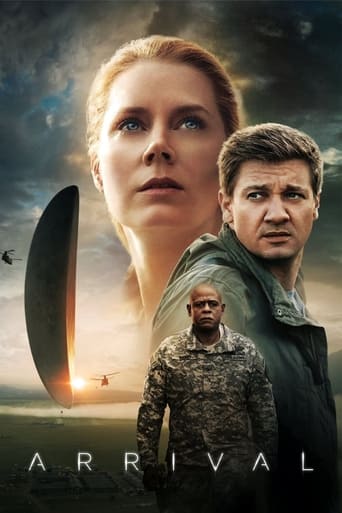
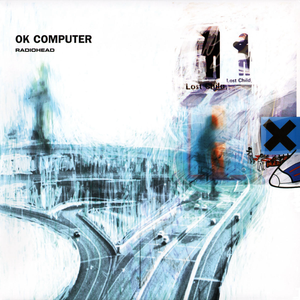



Arrival
OK Computer
Gödel, Escher, Bach
Kyoto
Outer Wilds
Muse WonderMuse Wonder




Spirited Away
Kind of Blue
Dune
Kyoto
Tetris (1984)
Price and specs
| Spec | GPT-5.4 | Muse Wonder |
|---|---|---|
| Input price | $2.5/M tokens | $4/M tokens |
| Output price | $15/M tokens | $20/M tokens |
| Context window | 1.1M tokens | 1.0M tokens |
| Weights | Closed | Closed |
| Free API (OpenRouter) | No | No |
| Released | Mar 2026 | Oct 2026 |
| At 10M a month | $25.00 | $40.00 |
Input tokens at list price. No caching, no batch discount.
Where to run it


Muse Wonder1 host
Per million tokens. Prices and uptime via OpenRouter, checked 12 Oct 2026.
Common questions
What is the difference between GPT-5.4 and Muse Wonder?
GPT-5.4 is developed by OpenAI while Muse Wonder is developed by Meta AI. GPT-5.4 has a 1.1M token context window vs Muse Wonder's 1.0M. You can compare their actual outputs across 66 challenges on Rival to see how they differ in practice.
Which is better, GPT-5.4 or Muse Wonder?
It depends on your use case. GPT-5.4 and Muse Wonder each have strengths in different areas. Rival lets you compare their real outputs side-by-side across 66 challenges so you can judge which fits your needs best.
How much does GPT-5.4 cost compared to Muse Wonder?
GPT-5.4 costs $2.5/M input tokens and Muse Wonder costs $4/M input tokens. GPT-5.4 is $1.50/M cheaper per input. Check their side-by-side outputs on Rival to see if the price difference is justified by quality.
How can I compare GPT-5.4 and Muse Wonder on Rival?
This page shows a side-by-side comparison of GPT-5.4 and Muse Wonder across shared challenges. You can vote on which model produced the better output in a blind duel. Browsing and voting are free. No account is needed to look; signing in only saves your votes and likes.
More comparisons
Against the newest arrivals
- GPT-5.4 vs GPT-4 TurboLanded Oct 2026
- Muse Wonder vs Step 5 PreviewLanded Oct 2026
- GPT-5.4 vs Claude Haiku 5.5Landed Oct 2026
- Muse Wonder vs Ling 3.1 FlashLanded Oct 2026
- GPT-5.4 vs Mistral Large 4Landed Oct 2026
- Muse Wonder vs GPT-6.1 SolLanded Sep 2026
- GPT-5.4 vs Claude Sonnet 5.5Landed Sep 2026
- Muse Wonder vs Solar Mini 4Landed Sep 2026


