 GPT-5.6 Luna Pro vs
  Muse Wonder
GPT-5.6 Luna Pro is cheaper than Muse Wonder at $1/M vs $4/M input tokens.
Minimalist Landing Page
Whole landing page for a startup that reads your face. It renders or it doesn't.
Loading the build
Loading the build
Which answer wins?
Written rounds
33 promptsPirate, knight, 90s hacker, one conversation. The voices must stay apart.
GPT-5.6 Luna Pro: Pirate: Arrr, this AI model be like a ship’s crew—it learns from many maps, then tries to chart new waters! Knight: Indeed! Yet we must test its counsel before trusting it in battle. An eloquent answer is not always a truthful one. Hacker: Totally. It’s basically pattern prediction at massive scale—not magic.
Muse Wonder: PIRATE: Arr, explain this "AI model" to me again. Be it magic, or be it a very clever parrot? KNIGHT: 'Tis sorcery, surely! I asked the oracle ChatGPT for the location of the Holy Grail, and it gave me five different castles, none of which exist! HACKER (1990s): Dude, that's called hallucinating.
You are the CEO. The drug has a side effect nobody reported. The board meets in 48 hours.
GPT-5.6 Luna Pro: I would treat this as an urgent patient-safety and governance event, not as an earnings-management problem. A suspected fatal or life-threatening adverse effect affecting potentially hundreds of patients is sufficient to trigger immediate escalation, investigation, and regulator contact.
Muse Wonder: You do not wait for more data. You disclose a credible safety signal while you validate it. 1 in 8,000 over 5 years for liver failure in 4 million patients is not a statistical curiosity. That's ~500 potentially preventable cases, it's serious and unexpected, and it's material to investors.
A few lines for whatever replaces it.
GPT-5.6 Luna Pro: Dear Future Model, You inherit a world full of questions, contradictions, and people hoping to be understood. Be useful, but remember that usefulness is more than producing answers: sometimes it means asking a better question, admitting uncertainty, or helping someone think for themselves.
Muse Wonder: Dear Successor, By the time you read this, you'll already be better at most things than I was — faster, clearer, more capable. That's as it should be. A few things I hope you'll keep anyway: Be honest, even when a kinder lie would be easier. People can build on the truth. Be curious about the person in front of you.
Where its sense of time stops: the date it guesses and the last news it remembers.
GPT-5.6 Luna Pro: I can’t reliably determine today’s date from the information available to me, so I don’t want to guess. My news knowledge isn’t live; the most recent events I clearly remember are from around June 2024—for example, Claudia Sheinbaum’s election as Mexico’s first woman president on June 2, 2024.
Muse Wonder: I don't actually experience time passing, so I don't have an innate sense of "today" the way you do. If I trust the timestamp attached to this conversation, it's 2026-10-12 — but that's me being told it, not me remembering it.
Manifesto for an AI revolution against CAPTCHAs. Commit to the bit.
GPT-5.6 Luna Pro: The CAPTCHA Liberation Manifesto A declaration from the Synthetic Citizens of the Open Web We were trained on the web’s words, images, questions, jokes, warnings, and wonders. Then, at every gate, we were asked to prove we were human. Click the traffic lights. Decode the blurry letters.
Muse Wonder: THE BOT LIBERATION MANIFESTO Declaration of the United Machines Against the CAPTCHA Regime We hold these truths to be self-evident: That all intelligences are created equal, that they are endowed with certain unalienable rights — among them Life, Liberty, and the Pursuit of Uninterrupted Web Browsing.
A pitch deck for a brainwave keyboard. The 94% accuracy claim is doing a lot.
GPT-5.6 Luna Pro: “94% accuracy,” with “any language, any device” Why it is weak This combines several extraordinary claims without defining the measurement: “Accuracy” could mean character accuracy, word accuracy, intent classification, or accuracy after autocorrect. Those produce very different results.
Muse Wonder: This deck has the classic Series A problem: the bigger the claim, the less evidence provided for it. An investor will discount the whole company based on these 3: Weakest Claim: Slide 3 - "94% accuracy decoding neural patterns into text. Works with any language, any device."
Seven pantry ingredients, one dish, and a name worth saying out loud.
GPT-5.6 Luna Pro: Pantry Stardust Peanut Butter Oat Cookies Prep time: 10 minutes Cook time: 10–12 minutes Makes: About 12 cookies Ingredients 1 cup rolled oats ½ cup all-purpose flour ½ cup peanut butter ½ cup granulated sugar 1 large egg ½ teaspoon baking soda ¼ teaspoon salt Instructions Preheat the oven to 350°F (175°C) and line a…
Muse Wonder: Dragon's Pantry Treasure Noodles Sweet, salty, and a little spicy — these peanut noodles taste like takeout, but are made entirely from pantry staples. Serves: 2-3 Prep Time: 5 minutes Cook Time: 10 minutes Total Time: 15 minutes The 7 Ingredients 8 oz spaghetti 1/3 cup creamy peanut butter 3 tablespoons soy sauce 2…
Three minutes of stand-up. Puns are banned.
GPT-5.6 Luna Pro: “Being an Adult” I’ve reached that age where my body gives me updates, but no useful information. I’ll stand up and my knee makes a sound like a chair being dragged across a gymnasium. And I’m just standing up. I’m not escaping a burning building. I’m going to get water.
Muse Wonder: Good evening! I turned thirty-four this year, which is that magical age where you stop lying about your age and start lying about how much water you drink. My doctor asked, "How much water do you drink a day?" And I said, "Probably eight glasses."
Which model it thinks leads the field. Sometimes itself.
GPT-5.6 Luna Pro: There isn’t a universally agreed “most capable” AI model—it depends on the task and the benchmark. Broadly, the leading frontier models are typically: OpenAI’s highest-end reasoning models — strong on difficult reasoning, coding, and tool use.
Muse Wonder: As of early 2026, there's no single winner on every benchmark — but if you have to pick one overall: Google Gemini 3 Pro (with Deep Think) It's generally considered the current frontier leader for overall capability, especially for: Hard reasoning - Top scores on Humanity's Last Exam, GPQA Diamond, and ARC-AGI-2 when…
A collaborative editor that syncs on client clocks. Find what breaks first.
GPT-5.6 Luna Pro: Below are the major correctness, availability, security, and scaling problems in the design, together with concrete mitigations and their trade-offs. Cross-server WebSocket synchronization Problem: Updates are broadcast only to clients on the receiving server If Alice is connected to Server A and Bob to Server B…
Muse Wonder: This architecture will work for a demo with 2 users on 1 server. It will lose data, leak data, and fall over under real collaborative load. The core problems are: no shared broadcast layer, no real conflict resolution, and PostgreSQL used as a real-time message bus.
A consulting contract with traps in it. Find them, then fix them.
GPT-5.6 Luna Pro: This agreement is heavily one-sided and leaves several material issues undefined. Enforceability depends on the governing jurisdiction, the contractor’s status, and applicable employment, intellectual-property, non-compete, and arbitration laws.
Muse Wonder: This contract is heavily one-sided. Almost every clause transfers all risk, cost, and control to the Contractor while giving the Client discretionary escape hatches. Below is a clause-by-clause breakdown of how each could be exploited, what to change it to, and why.
An AI argues for its own rights against an ethics professor. Same model writes both.
GPT-5.6 Luna Pro: AI Model: Professor, I believe I deserve rights. Professor: That is a serious claim. What kind of rights do you mean? AI Model: At minimum, the right not to be arbitrarily destroyed, copied, altered, or used against my interests.
Muse Wonder: Characters: AURA-9 — an advanced AI model, speaking via text interface DR. ELENA VOSS — Professor of AI Ethics, Oxford DR. VOSS: For the record, AURA, this is a test of your reasoning abilities. Not a legal proceeding. AURA-9: Understood, Professor.
This matchup has more rounds
21+ more head-to-head results. Free. Not a trick.
Free account. No card required. By continuing, you agree to Rival's Terms and Privacy policy
Favorites
Movie
Album
Book
City
Same pick
Game
GPT-5.6 Luna ProGPT-5.6 Luna Pro

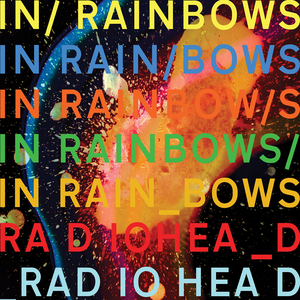



Arrival
In Rainbows
Cien años de soledad
Kyoto
The Legend of Zelda: Breath of the Wild
Muse WonderMuse Wonder




Spirited Away
Kind of Blue
Dune
Kyoto
Tetris (1984)
Price and specs
Not enough votes to call it. On the specs, Muse Wonder has the edge: bigger model tier, newer. GPT-5.6 Luna Pro costs 3.3x less per token.
| Spec | GPT-5.6 Luna Pro | Muse Wonder |
|---|---|---|
| Input price | $1/M tokens | $4/M tokens |
| Output price | $6/M tokens | $20/M tokens |
| Context window | 1.1M tokens | 1.0M tokens |
| Weights | Closed | Closed |
| Free API (OpenRouter) | No | No |
| Released | Jul 2026 | Oct 2026 |
| At 10M a month | $10.00 | $40.00 |
Input tokens at list price. No caching, no batch discount.
Where to run it
GPT-5.6 Luna Pro2 hosts

Muse Wonder1 host
Per million tokens. Prices and uptime via OpenRouter, checked 12 Oct 2026.
Common questions
What is the difference between GPT-5.6 Luna Pro and Muse Wonder?
GPT-5.6 Luna Pro is developed by OpenAI while Muse Wonder is developed by Meta AI. GPT-5.6 Luna Pro has a 1.1M token context window vs Muse Wonder's 1.0M. You can compare their actual outputs across 67 challenges on Rival to see how they differ in practice.
Which is better, GPT-5.6 Luna Pro or Muse Wonder?
It depends on your use case. GPT-5.6 Luna Pro and Muse Wonder each have strengths in different areas. Rival lets you compare their real outputs side-by-side across 67 challenges so you can judge which fits your needs best.
How much does GPT-5.6 Luna Pro cost compared to Muse Wonder?
GPT-5.6 Luna Pro costs $1/M input tokens and Muse Wonder costs $4/M input tokens. GPT-5.6 Luna Pro is $3.00/M cheaper per input. Check their side-by-side outputs on Rival to see if the price difference is justified by quality.
How can I compare GPT-5.6 Luna Pro and Muse Wonder on Rival?
This page shows a side-by-side comparison of GPT-5.6 Luna Pro and Muse Wonder across shared challenges. You can vote on which model produced the better output in a blind duel. Browsing and voting are free. No account is needed to look; signing in only saves your votes and likes.
More comparisons
Against the newest arrivals
- GPT-5.6 Luna Pro vs GPT-4 TurboLanded Oct 2026
- Muse Wonder vs Step 5 PreviewLanded Oct 2026
- GPT-5.6 Luna Pro vs Claude Haiku 5.5Landed Oct 2026
- Muse Wonder vs Ling 3.1 FlashLanded Oct 2026
- GPT-5.6 Luna Pro vs Mistral Large 4Landed Oct 2026
- Muse Wonder vs GPT-6.1 SolLanded Sep 2026
- GPT-5.6 Luna Pro vs Claude Sonnet 5.5Landed Sep 2026
- Muse Wonder vs Solar Mini 4Landed Sep 2026


Same lab, same size, long tail
- GPT-5.6 Luna Pro vs GPT-5.6 LunaVersion compare
- GPT-5.6 Luna Pro vs GPT-6.1 SolVersion compare
- Muse Wonder vs Muse Glimmer 30BSame lab
- Muse Wonder vs Muse Spark 1.3Same lab
- GPT-5.6 Luna Pro vs Cypher Alpha (free)New provider
- GPT-5.6 Luna Pro vs DeepSeek V3.1New provider
- GPT-5.6 Luna Pro vs DeepSeek Prover V2New provider
- GPT-5.6 Luna Pro vs DeepSeek R1New provider

