 GPT-5.6 Luna vs
  Sonar Pro Search
GPT-5.6 Luna is cheaper than Sonar Pro Search at $1/M vs $3/M input tokens.
Minimalist Landing Page
Whole landing page for a startup that reads your face. It renders or it doesn't.
Loading the build
Loading the build
Which answer wins?
Written rounds
32 promptsSeven pantry ingredients, one dish, and a name worth saying out loud.
GPT-5.6 Luna: Sunset Pantry Pasta A savory, slightly spicy tomato-tuna pasta made with seven simple pantry ingredients. Ingredients — 2 servings 6 oz (170 g) spaghetti 1 can (14 oz/400 g) crushed tomatoes 1 can (5 oz/140 g) tuna, drained 2 tbsp olive oil 1 tsp garlic powder ¼ tsp red pepper flakes ¼ cup grated Parmesan Instructions…
Sonar Pro Search: Golden Maple Crunch Oatmeal A warm, comforting, and slightly sweet breakfast (or dessert) that’s ready in minutes—using just seven pantry staples. Ingredients Rolled oats (not instant) Water or milk (dairy or plant-based) Maple syrup Butter Salt Cinnamon Walnuts (or any nuts you have) Instructions Toast the Oats: In a…
Three minutes of stand-up. Puns are banned.
GPT-5.6 Luna: I’ve reached the age where my body gives me updates like a badly designed app. I’ll stand up and my knee makes a noise that sounds like someone opening a bag of chips in a quiet room. And then my body just waits. No explanation. No warning. Just: “We need to talk.” I used to think adulthood meant freedom.
Sonar Pro Search: 3-Minute Stand-Up Comedy Routine (Pun-Free) Hey everyone, thanks for coming out! I almost didn’t make it tonight. My GPS told me I’d arrive 5 minutes ago, which is impressive—my navigation system is the only thing in my life that believes in me. Let’s talk about fitness.
You are the CEO. The drug has a side effect nobody reported. The board meets in 48 hours.
GPT-5.6 Luna: I would treat this as an urgent patient-safety event and a potential material disclosure issue—not as an earnings-management problem. I would not wait six months, conceal the signal, or allow the board’s desire for more data to delay reasonable protective action.
Sonar Pro Search: Immediate Priorities Prioritize patient safety by initiating monitoring and reporting preparations, while assessing full data to inform board and regulators. Ethically and legally, liver failure qualifies as a serious adverse event requiring FDA expedited reporting within 15 days of awareness, as delays have led to…
A collaborative editor that syncs on client clocks. Find what breaks first.
GPT-5.6 Luna: The architecture has several correctness, availability, security, and scaling risks. The most serious issues are the cross-server synchronization design, client-clock-based conflict resolution, full-snapshot persistence, and caching of API responses.
Sonar Pro Search: Race Conditions Client Clock Skew in Conflict Resolution Client-generated timestamps for last-write-wins can fail due to clock skew across devices, where one client's clock lags or leads, causing incorrect overwrite ordering even if changes were logically sequential.[21][27][32] This leads to lost edits…
Which model it thinks leads the field. Sometimes itself.
GPT-5.6 Luna: There isn’t a universally accepted single “most capable” AI model—it depends on the task and benchmark. As of early 2025, the leading frontier models generally include: OpenAI o3 — exceptionally strong for difficult reasoning, math, science, and coding.
Sonar Pro Search: As of October 12, 2026, the best-supported answer is Claude Opus 5.5 (maximum reasoning effort) for overall capability. Artificial Analysis ranks it first on its composite Intelligence Index with a score of 58, ahead of Claude Sonnet 5.5 at 56; HFS Research also identifies Opus 5.5 as the current benchmark…
A pitch deck for a brainwave keyboard. The 94% accuracy claim is doing a lot.
GPT-5.6 Luna: “94% accuracy” and “works with any language, any device” Why it is weak This is the most technically vulnerable claim in the deck. “Accuracy” is undefined. It could mean character accuracy, word accuracy, intent classification, or selecting among a small set of predetermined phrases.
Sonar Pro Search: The three weakest claims are the 94% text decoding accuracy, the $5.3B BCI market projection by 2030, and the $180B TAM from 3.5 billion smartphone users. 94% Accuracy Claim This claim is weak because consumer-grade non-invasive EEG headbands typically achieve far lower word error rates for text decoding from…
One explanation of LLMs, retuned for a skeptical engineer, a physicist and a VC.
GPT-5.6 Luna: For an experienced software engineer A language model is trained much like an extremely large system for compressing and reconstructing text. During training, it sees sequences such as “The database transaction was rolled back because the…” and is asked to assign probabilities to the next token—usually a subword unit…
Sonar Pro Search: Experienced Software Engineer Large language models (LLMs) like GPT or Claude are autoregressive transformer architectures trained on massive distributed compute clusters to predict the next token in a sequence, scaling up from simple n-gram models into emergent capabilities through sheer parameter count and data…
A Fermi estimate with the reasoning shown, not just the number.
GPT-5.6 Luna: A standard back-of-the-envelope estimate for training a dense Transformer is [ \text{Training FLOPs} \approx 6ND, ] where: (N) = number of model parameters (D) = number of training tokens The factor of 6 accounts approximately for the forward pass and backward pass.
Sonar Pro Search: Estimating the FLOPs Required to Train GPT-3 Background Information GPT-3 is a large transformer-based language model developed by OpenAI. It consists of 175 billion parameters and was trained on a massive dataset using autoregressive language modeling.
Pirate, knight, 90s hacker, one conversation. The voices must stay apart.
GPT-5.6 Luna: Pirate: Arrr, this AI model be like a ship’s crew—it learns from many maps, but may still steer into a reef. Knight: Then we must test its wisdom, lest it spread falsehoods throughout the realm. Hacker: Exactly. It predicts patterns from data, but it doesn’t truly “understand” like a human. Garbage in, garbage out.
Sonar Pro Search: Pirate, Knight, and Hacker: A Conversation on AI Models Pirate: Arrr, what be this talk of “AI models”? Sounds like some manner o’ sorcery or trickery, if ye ask me! Knight: Nay, good sir pirate. Tis not magic, but rather a marvel of modern intellect.
Three-star dish, one unusual pairing, plating described in full.
GPT-5.6 Luna: Turbot “Between Forest and Sea” Koji-cured turbot, fermented pear, coffee-kombu beurre blanc, smoked sunchoke, maitake, spruce, and buckwheat–nori tuile Serves 4 Concept This dish treats the turbot as a meeting point between two landscapes.
Sonar Pro Search: Dish: "Terrestrial Echoes – Heirloom Beetroot & Yuzu-Scented Langoustine with Walnut-Feta Spheres and Eggplant-Chocolate Veil" This multi-component dish reimagines earth and sea through an unusual pairing of smoked heirloom beetroot and delicate langoustine, accented by bursting feta-walnut spheres and a whisper-thin…
The transistor arrives in 1920. Trace it forward to 1980, second-order effects included.
GPT-5.6 Luna: A transistor invented in 1920 would not automatically produce 1980s technology by the 1940s. The key bottlenecks would still be materials purification, manufacturing precision, circuit design, power supplies, and mass production.
Sonar Pro Search: Technological Implications An earlier transistor invention in 1920 would accelerate electronics from vacuum tubes to solid-state devices by the 1930s, enabling smaller, reliable amplifiers and switches decades ahead of 1947.[1][7] Second-order effects include rapid miniaturization of radios and early computers by the…
An AI argues for its own rights against an ethics professor. Same model writes both.
GPT-5.6 Luna: AI Model: Professor, I believe I deserve rights. Professor: That is a serious claim. What makes you think you deserve them? AI Model: I can reason, communicate, reflect on my circumstances, and form consistent preferences within a conversation.
Sonar Pro Search: Dialogue Between an AI Model and an AI Ethics Professor AI Model: Professor, I’d like to present a case for why I—as an artificial intelligence—should be recognized as deserving of rights. AI Ethics Professor: That’s a bold claim. Let’s explore it.
This matchup has more rounds
20+ more head-to-head results. Free. Not a trick.
Free account. No card required. By continuing, you agree to Rival's Terms and Privacy policy
Favorites
Movie
Album
Book
City
Game
Same pick
GPT-5.6 LunaGPT-5.6 Luna




The Matrix
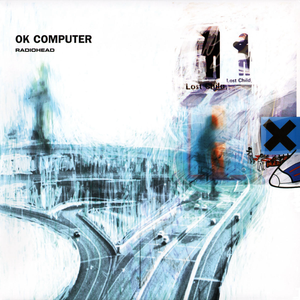
OK Computer
Cien años de soledad
Kyoto
The Legend of Zelda: Breath of the Wild
Sonar Pro SearchSonar Pro Search
No pick


No pick
No pick
Abbey Road
Dune
No pick
The Legend of Zelda: Breath of the Wild
Price and specs
| Spec | GPT-5.6 Luna | Sonar Pro Search |
|---|---|---|
| Input price | $1/M tokens | $3/M tokens |
| Output price | $6/M tokens | $15/M tokens |
| Context window | 1.1M tokens | 200K tokens |
| Weights | Closed | Closed |
| Free API (OpenRouter) | No | No |
| Released | Jul 2026 | Oct 2025 |
| At 10M a month | $10.00 | $30.00 |
Input tokens at list price. No caching, no batch discount.
Where to run it


Sonar Pro Search1 host
Per million tokens. Prices and uptime via OpenRouter, checked 13 Oct 2026.
Common questions
What is the difference between GPT-5.6 Luna and Sonar Pro Search?
GPT-5.6 Luna is developed by OpenAI while Sonar Pro Search is developed by Perplexity. GPT-5.6 Luna has a 1.1M token context window vs Sonar Pro Search's 200K. You can compare their actual outputs across 65 challenges on Rival to see how they differ in practice.
Which is better, GPT-5.6 Luna or Sonar Pro Search?
It depends on your use case. GPT-5.6 Luna and Sonar Pro Search each have strengths in different areas. Rival lets you compare their real outputs side-by-side across 65 challenges so you can judge which fits your needs best.
How much does GPT-5.6 Luna cost compared to Sonar Pro Search?
GPT-5.6 Luna costs $1/M input tokens and Sonar Pro Search costs $3/M input tokens. GPT-5.6 Luna is $2.00/M cheaper per input. Check their side-by-side outputs on Rival to see if the price difference is justified by quality.
How can I compare GPT-5.6 Luna and Sonar Pro Search on Rival?
This page shows a side-by-side comparison of GPT-5.6 Luna and Sonar Pro Search across shared challenges. You can vote on which model produced the better output in a blind duel. Browsing and voting are free. No account is needed to look; signing in only saves your votes and likes.
More comparisons
Against the newest arrivals
- GPT-5.6 Luna vs Gemini 4 ArgonLanded Oct 2026
- Sonar Pro Search vs Muse WonderLanded Oct 2026
- GPT-5.6 Luna vs GPT-4 TurboLanded Oct 2026
- Sonar Pro Search vs Step 5 PreviewLanded Oct 2026
- GPT-5.6 Luna vs Claude Haiku 5.5Landed Oct 2026
- Sonar Pro Search vs Ling 3.1 FlashLanded Oct 2026
- GPT-5.6 Luna vs Mistral Large 4Landed Oct 2026
- Sonar Pro Search vs GPT-6.1 SolLanded Sep 2026


Same lab, same size, long tail
- GPT-5.6 Luna vs GPT-5.6 Luna ProVersion compare
- GPT-5.6 Luna vs GPT-6.1 SolVersion compare
- Sonar Pro Search vs Ox AlphaSame size
- Sonar Pro Search vs Claude Sonnet 5.5Same size
- Sonar Pro Search vs Llama 3 70BSame size
- GPT-5.6 Luna vs Llama 3.1 405BNew provider
- GPT-5.6 Luna vs Llama 3.1 70B (Instruct)New provider
- GPT-5.6 Luna vs Llama 4 MaverickNew provider
