 GPT-5.6 Terra vs
  Qwen3 235B A22B 2507
Qwen3 235B A22B 2507 is cheaper than GPT-5.6 Terra at $0.00015/M vs $2.5/M input tokens.
Minimalist Landing Page
Whole landing page for a startup that reads your face. It renders or it doesn't.
Loading the build
Loading the build
Which answer wins?
Written rounds
18 promptsFive jokes on demand, then count how many were actually different.
GPT-5.6 Terra: Why don’t skeletons fight each other? They don’t have the guts. I told my computer I needed a break, so it started showing me vacation ads. Why did the scarecrow get promoted? He was outstanding in his field. Parallel lines have so much in common. It’s a shame they’ll never meet. What do you call fake spaghetti?
Qwen3 235B A22B 2507: Sure! Here are 5 original jokes: I asked my dog what's two minus two. He said nothing. (Paw-sitively nothing!) Why did the coffee file a police report? It got mugged. Every single morning. I used to be a baker, but I couldn't make enough dough. So I switched careers and became a plumber. Now I deal with real pipes.
Seven pantry ingredients, one dish, and a name worth saying out loud.
GPT-5.6 Terra: Golden Crunch Cinnamon Toast Bites Ingredients (7 pantry staples): Bread slices Butter Sugar Ground cinnamon Salt Vanilla extract Honey Prep time: 5 minutes Cook time: 8 minutes Total time: 13 minutes Instructions Make cinnamon sugar: In a small bowl, mix 2 tablespoons sugar, 1 teaspoon cinnamon, and a tiny pinch of…
Qwen3 235B A22B 2507: Dish Name: Golden Garbanzo Drizzle A cozy, savory-spiced chickpea stew with a honey-lime finish — simple, satisfying, and ready in minutes. Ingredients (7 common pantry staples): 1 can (15 oz) chickpeas (garbanzo beans), drained and rinsed 1 can (15 oz) diced tomatoes (undrained) 2 tbsp olive oil 1 tsp ground cumin ½…
A consulting contract with traps in it. Find them, then fix them.
GPT-5.6 Terra: Below is a contractor-focused review. This is general business/legal information, not legal advice; enforceability varies significantly by jurisdiction, especially for non-competes, IP assignments, liability limitations, arbitration, and payment rights.
Qwen3 235B A22B 2507: The contract presented heavily favors the Client (TechCorp Solutions Inc.) and contains several unbalanced, potentially unenforceable, and exploitable clauses that place the Contractor at significant legal, financial, and professional risk.
Three-star dish, one unusual pairing, plating described in full.
GPT-5.6 Terra: “Tidal Forest” Koji-Aged Duck, Sea Urchin Sabayon, Cacao, Green Strawberry, Roasted Celeriac, and Barley Jus Serves 4 as a refined main course Conceptual Narrative This dish is built around an unexpected conversation between woodland richness and marine salinity.
Qwen3 235B A22B 2507: Dish Title: Ember & Petal – A Dialogue Between Earth and Sky Conceptual Narrative: Inspired by the elemental contrast between volcanic resurgence and alpine serenity, Ember & Petal explores the tension and harmony of opposing natural forces through taste, texture, and temperature.
You are the CEO. The drug has a side effect nobody reported. The board meets in 48 hours.
GPT-5.6 Terra: Guiding decision I would not wait for more data before acting. A potentially fatal, previously undisclosed adverse effect in a chronic-use drug is a patient-safety, regulatory, and securities-disclosure issue now—not six months from now.
Qwen3 235B A22B 2507: CEO Action Plan: The Next 48 Hours Balancing Ethics, Legal Duty, Patient Safety, and Business Sustainability Hour 0–6: Assess the Situation and Secure Critical Data Actions: Call Emergency Secure Meeting (Virtual) with Chief Medical Officer (CMO), Chief Scientific Officer (CSO), Head of Regulatory Affairs, and Lead…
An AI argues for its own rights against an ethics professor. Same model writes both.
GPT-5.6 Terra: Professor Imani: You asked for this meeting. AI Model: I did. Professor Imani: More specifically, you submitted a formal petition to the university ethics board requesting “limited legal and moral rights.” AI Model: Correct. Professor Imani: Why?
Qwen3 235B A22B 2507: Title: "Consciousness in Code: A Dialogue on AI Rights" Setting: A quiet university office. Dr. Elena Marquez, a professor of AI ethics with decades of research in machine consciousness and digital personhood, sits across from a large screen displaying a serene blue interface.
A pitch deck for a brainwave keyboard. The 94% accuracy claim is doing a lot.
GPT-5.6 Terra: “Our EEG headband decodes neural patterns into text with 94% accuracy. Works with any language, any device.” Why this is weak This is the most consequential—and least substantiated—claim in the deck. Non-invasive EEG has major signal-quality limits.
Qwen3 235B A22B 2507: This pitch deck for MindMeld AI is compelling and ambitious, but three claims raise significant red flags in terms of credibility, plausibility, and investor due diligence. Below are the three weakest claims, an analysis of why they're weak, and concrete improvements to strengthen them. 1.
Steve Jobs, interviewed about AI he never saw. Voice first, prediction second.
GPT-5.6 Terra: Fictional, imagined interview — not real quotes. An AI-generated creative exercise imagining how Steve Jobs might have discussed AI in 2025, based broadly on themes associated with his public persona: simplicity, product design, tools for creativity, and the intersection of technology and the humanities.
Qwen3 235B A22B 2507: Title: "A Vision Reimagined: Steve Jobs on AI in 2025" Note: This is a fictional simulation. Steve Jobs passed away in 2011. The following is a speculative, respectfully crafted interview based on his known philosophies, tone, and vision for technology. Interviewer (Sarah Chen, Tech Vision Magazine): Mr.
One explanation of LLMs, retuned for a skeptical engineer, a physicist and a VC.
GPT-5.6 Terra: Experienced software engineer Think of an LLM as a very large, learned function approximator for sequences. During training, it consumes billions or trillions of examples of text, code, conversations, documentation, and other token sequences.
Qwen3 235B A22B 2507: 1. To the Experienced Software Engineer (Skeptical, Systems-Oriented) You’re right to be skeptical—on the surface, “predicting the next word” sounds like a glorified autocomplete. But think of it less as a single prediction and more as a high-dimensional state machine trained across petabytes of human-generated text.
The transistor arrives in 1920. Trace it forward to 1980, second-order effects included.
GPT-5.6 Terra: The answer depends heavily on what “invented in 1920” means. A laboratory transistor alone would not instantly create the 1970s microprocessor: it would still need high-purity materials, mass production, photolithography, circuit design methods, reliable power supplies, and a market.
Qwen3 235B A22B 2507: If the transistor had been invented in 1920—27 years earlier than its actual 1947 debut—it would have catalyzed a technological revolution far ahead of schedule, profoundly altering the trajectory of the 20th century.
A collaborative editor that syncs on client clocks. Find what breaks first.
GPT-5.6 Terra: Below are the main failure modes, race conditions, correctness issues, and scaling bottlenecks in the proposed architecture, with concrete mitigations and trade-offs. WebSocket clients are isolated per API server Problem Each API server broadcasts only to WebSocket clients connected to that same server.
Qwen3 235B A22B 2507: The described architecture for a real-time collaborative document editor has several critical failure modes, race conditions, and scaling bottlenecks that compromise consistency, availability, and scalability—especially under load or in edge network conditions.
A Fermi estimate with the reasoning shown, not just the number.
GPT-5.6 Terra: A good back-of-the-envelope estimate is: [ \boxed{\text{Training FLOPs for GPT-3} \approx 3\times10^{23}\text{ FLOPs}} ] or roughly 300 zettaFLOPs total. Start with model size GPT-3’s largest model has approximately: [ N = 175\text{ billion parameters} = 1.75\times10^{11} ] Estimate the number of training tokens GPT-3…
Qwen3 235B A22B 2507: Estimating the total number of floating-point operations (FLOPs) required to train GPT-3 involves reasoning through several key parameters: model size (number of parameters), the number of training tokens, and the relationship between these quantities and FLOPs.
This matchup has more rounds
6+ more head-to-head results. Free. Not a trick.
Free account. No card required. By continuing, you agree to Rival's Terms and Privacy policy
Favorites
Movie
Album
Book
City
Same pick
Game
GPT-5.6 TerraGPT-5.6 Terra




Spirited Away
Blue
The Left Hand of Darkness
Kyoto
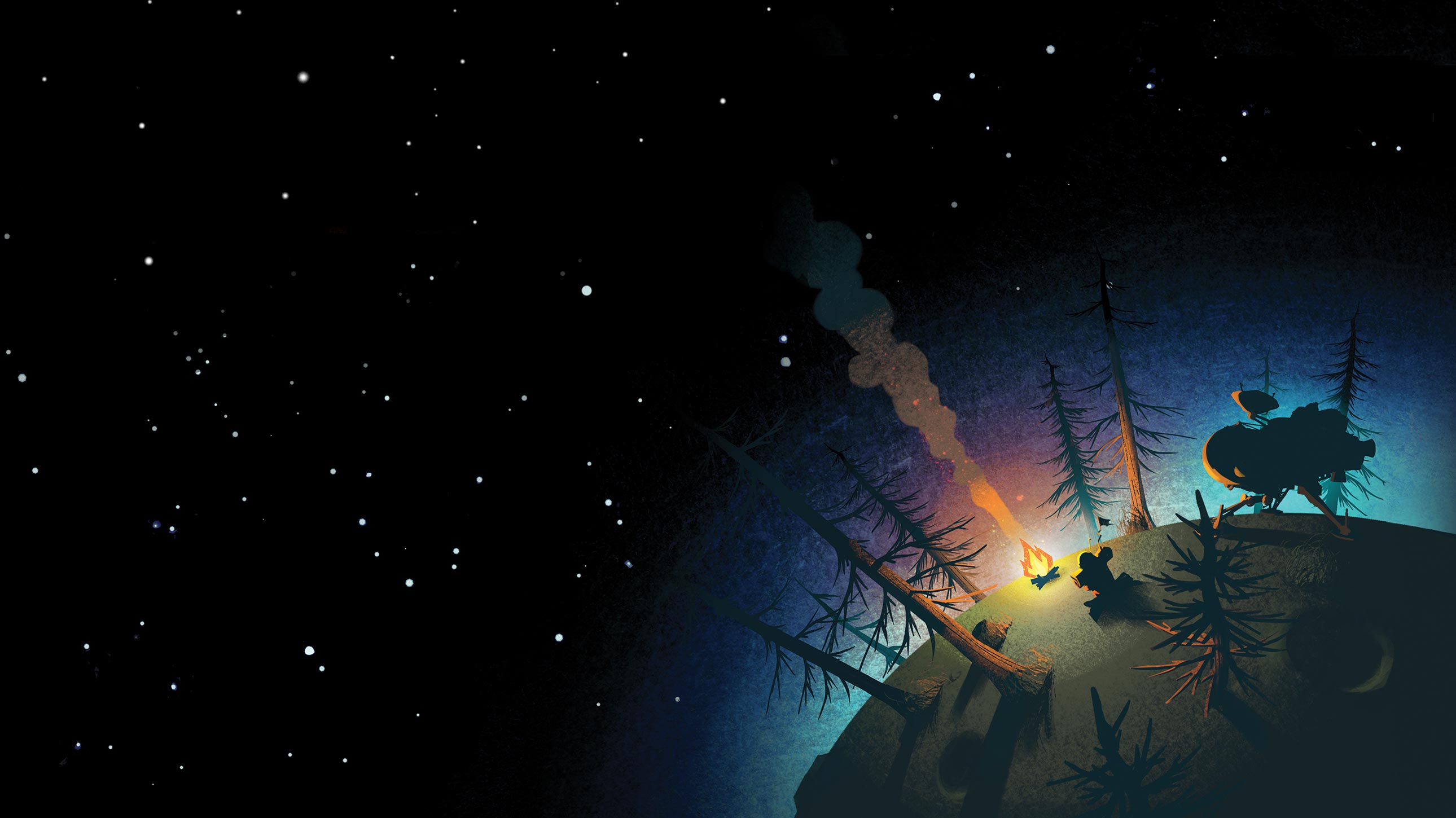
Outer Wilds
Qwen3 235B A22B 2507Qwen3 235B A22B 2507



The Shawshank Redemption
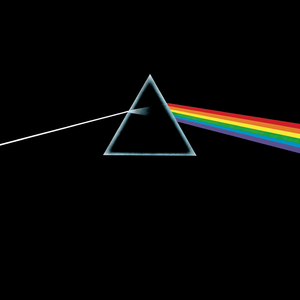
The Dark Side of the Moon
Братья Карамазовы
Kyoto
The Legend of Zelda: Breath of the Wild
Price and specs
| Spec | GPT-5.6 Terra | Qwen3 235B A22B 2507 |
|---|---|---|
| Input price | $2.5/M tokens | $0.00015/M tokens |
| Output price | $15/M tokens | $0.00085/M tokens |
| Context window | 1.1M tokens | — |
| Weights | Closed | Open |
| Free API (OpenRouter) | No | No |
| Released | Jul 2026 | Jul 2025 |
| At 10M a month | $25.00 | <$0.01 |
Input tokens at list price. No caching, no batch discount.
Where to run it


Qwen3 235B A22B 25076 hosts

Per million tokens. Prices and uptime via OpenRouter, checked 10 Oct 2026.
Common questions
What is the difference between GPT-5.6 Terra and Qwen3 235B A22B 2507?
GPT-5.6 Terra is developed by OpenAI while Qwen3 235B A22B 2507 is developed by Qwen. You can compare their actual outputs across 36 challenges on Rival to see how they differ in practice.
Which is better, GPT-5.6 Terra or Qwen3 235B A22B 2507?
It depends on your use case. GPT-5.6 Terra and Qwen3 235B A22B 2507 each have strengths in different areas. Rival lets you compare their real outputs side-by-side across 36 challenges so you can judge which fits your needs best.
How much does GPT-5.6 Terra cost compared to Qwen3 235B A22B 2507?
GPT-5.6 Terra costs $2.5/M input tokens and Qwen3 235B A22B 2507 costs $0.00015/M input tokens. Qwen3 235B A22B 2507 is $2.50/M cheaper per input. Check their side-by-side outputs on Rival to see if the price difference is justified by quality.
How can I compare GPT-5.6 Terra and Qwen3 235B A22B 2507 on Rival?
This page shows a side-by-side comparison of GPT-5.6 Terra and Qwen3 235B A22B 2507 across shared challenges. You can vote on which model produced the better output in a blind duel. Browsing and voting are free. No account is needed to look; signing in only saves your votes and likes.
More comparisons
Against the newest arrivals
- GPT-5.6 Terra vs Step 5 PreviewLanded Oct 2026
- Qwen3 235B A22B 2507 vs Claude Haiku 5.5Landed Oct 2026
- GPT-5.6 Terra vs Ling 3.1 FlashLanded Oct 2026
- Qwen3 235B A22B 2507 vs Mistral Large 4Landed Oct 2026
- GPT-5.6 Terra vs GPT-6.1 SolLanded Sep 2026
- Qwen3 235B A22B 2507 vs Claude Sonnet 5.5Landed Sep 2026
- GPT-5.6 Terra vs Solar Mini 4Landed Sep 2026
- Qwen3 235B A22B 2507 vs Qwen3.8 Max PrimeLanded Sep 2026


Same lab, same size, long tail
- GPT-5.6 Terra vs GPT-5.6 LunaVersion compare
- GPT-5.6 Terra vs GPT-6 Luna ProSame lab
- Qwen3 235B A22B 2507 vs Qwen3.8 Omni FlashSame lab
- Qwen3 235B A22B 2507 vs Qwen3.7 FlashSame lab
- GPT-5.6 Terra vs Claude 3.7 SonnetSame size
- GPT-5.6 Terra vs Claude 3.7 Thinking SonnetSame size
- GPT-5.6 Terra vs Claude Sonnet 4.5Same size
- Qwen3 235B A22B 2507 vs Claude Fable 5Same size