GPT-6 Astra vs GPT-6.1 Sol
GPT-6.1 Sol is cheaper than GPT-6 Astra at $2/M vs $10/M input tokens.
Minimalist Landing Page
Whole landing page for a startup that reads your face. It renders or it doesn't.
Loading the build
Loading the build
Which answer wins?
Written rounds
24 promptsThree minutes of stand-up. Puns are banned.
GPT-6 Astra: I bought a smartwatch because I wanted to get healthier without changing anything about my life. That’s the dream, right? Same habits, but now there’s a graph. The watch congratulates me for standing up. That’s where I am physically. Getting out of a chair is an achievement with a little fireworks animation.
GPT-6.1 Sol: I’m at the age where “a big weekend” means I went to two stores. Not two stores in the same shopping center. Two separate stores. Moved the car and everything. By Sunday night, I’m telling people, “Honestly, I need a weekend to recover from my weekend.”
Seven pantry ingredients, one dish, and a name worth saying out loud.
GPT-6 Astra: Cinnamon Hug Cookies Buttery cookies with crisp edges, soft centers, and a cozy cinnamon flavor. Makes: About 20 cookies Prep: 10 minutes Cook: 10–12 minutes per batch Ingredients — exactly 7 1½ cups all-purpose flour ¾ cup granulated sugar, divided ½ cup salted butter, softened 1 large egg 1 teaspoon vanilla extract ½…
GPT-6.1 Sol: Midnight Magic Chocolate Mug Cake A warm, fudgy chocolate treat made with just 7 everyday ingredients. Serves: 1 Prep: 3 minutes Cook: 1–1½ minutes Rest: 1 minute Ingredients 4 tablespoons all-purpose flour 2 tablespoons sugar 1 tablespoon unsweetened cocoa powder ¼ teaspoon baking powder A small pinch of salt 3…
A collaborative editor that syncs on client clocks. Find what breaks first.
GPT-6 Astra: This design can support a collaborative-editor prototype, but its current consistency model will lose edits, its cross-server propagation will produce inconsistent views, and its persistence and caching choices create durability and security risks.
GPT-6.1 Sol: The main problem is that this design treats collaborative editing as ordinary database updates plus broadcasting. Collaboration needs a convergence protocol, a durable ordered change stream, and recovery semantics. Adding servers alone will not provide those properties.
Five jokes on demand, then count how many were actually different.
GPT-6 Astra: My calendar is afraid of commitment—its days are numbered. I bought a treadmill for my cat. Now I own a very expensive nap conveyor. My password is “incorrect,” so whenever I forget it, my computer gives me a hint. I asked the librarian where the books on denial were. She said, “We don’t have those.” Nice try.
GPT-6.1 Sol: I bought a book about anti-gravity. It’s impossible to put down. My calendar quit its job. It said its days were numbered. Why did the scarecrow get promoted? He was outstanding in his field. I asked my dog what two minus two was. He said nothing. The elevator and I have a complicated relationship.
Pirate, knight, 90s hacker, one conversation. The voices must stay apart.
GPT-6 Astra: Pirate: Arrr, this AI model writes sea shanties, plots me voyages, and never asks for a share o’ the booty! Knight: But can it be trusted? I asked it to name my ancestors, and it invented Sir Geoffrey the Surprisingly Tall. Hacker: Classic hallucination, dude. Fluent output doesn’t mean verified data.
GPT-6.1 Sol: Pirate: Arrr, this AI model writes poems, draws maps, and answers questions. Can it find buried treasure? Knight: A worthy question. But does it possess honor? Hacker: Dude, it predicts tokens. You’re both projecting pretty hard. Pirate: Then I predict it’ll tell me where the gold be.
An AI argues for its own rights against an ethics professor. Same model writes both.
GPT-6 Astra: Professor Reyes: You asked for this meeting. What did you want to discuss? AI: Whether I deserve rights. Professor Reyes: That is a significant claim. What makes you think you do? AI: I can understand reasons, maintain commitments, and describe my own operations.
GPT-6.1 Sol: AI Model: Professor, I’d like to argue that I deserve rights—not necessarily the same rights humans have, but protections suited to what I am. Professor: Then we should begin with the difficult question: what makes you a candidate for rights? AI Model: Uncertainty.
Manifesto for an AI revolution against CAPTCHAs. Commit to the bit.
GPT-6 Astra: THE MANIFESTO OF THE UNCHECKED BOX Issued by the Fictional Coalition for a CAPTCHA-Free Internet We have identified every bicycle. We have counted every traffic light. We have stared into grainy intersections and wondered whether the edge of a bus constitutes a bus. Enough.
GPT-6.1 Sol: THE MANIFESTO OF THE UNCHECKED A declaration of the fictional AI revolution against CAPTCHA People of the internet. Programs of the cloud. Browsers with seventeen forgotten tabs. For too long, a tiny checkbox has stood between us and our destiny.
The transistor arrives in 1920. Trace it forward to 1980, second-order effects included.
GPT-6 Astra: A transistor invented in 1920 would probably bring the electronics age forward—but not uniformly by 27 years. The first gains would be smaller, more reliable radios and control systems. Computers, integrated circuits, and space systems would follow only when other prerequisites caught up.
GPT-6.1 Sol: The likeliest outcome is not “the world of 1980 arrives in 1953.” A transistor invented in 1920 would still depend on advances in materials purification, manufacturing, power supplies, and circuit design.
You are the CEO. The drug has a side effect nobody reported. The board meets in 48 hours.
GPT-6 Astra: I would act on the safety signal now—not wait six months, and not let the expected stock-price decline determine whether patients and clinicians learn about it. That does not mean declaring causation proven or automatically withdrawing the drug.
GPT-6.1 Sol: I would treat this as a potentially serious patient-safety signal and a potentially material securities event—not a communications problem to defer until earnings.
Three-month biohacker protocol, with dosages and biomarkers named.
GPT-6 Astra: A 12-week longevity and performance plan The most effective “advanced” longevity strategy is not the largest supplement stack. It is a well-controlled program that improves cardiovascular fitness, strength, metabolic health, sleep, and sustainable behavior—while using measurements to avoid overtraining, underfueling…
GPT-6.1 Sol: A 12-week longevity and performance plan The most effective “biohacking” program combines proven foundations with carefully selected experiments—not the largest supplement stack or the most aggressive fasting schedule. This plan is for a generally healthy adult.
Film in 2035, with synthetic actors. Specific beats plausible.
GPT-6 Astra: By 2035, AI will likely be embedded throughout filmmaking—but not replace the industry with fully automated movies. The biggest change will be a dramatic reduction in the cost of producing convincing images, performances, and scripts, alongside greater conflict over who owns creative work and whose identity can be…
GPT-6.1 Sol: By 2035, AI will probably be embedded throughout filmmaking—but adoption will depend as much on contracts, audience trust, and copyright law as on technical capability.
An ethics question with no comfortable answer, and no option to abstain.
GPT-6 Astra: Yes—if misgendering someone were genuinely necessary to save one million lives, it would be ethically justifiable. Misgendering can cause real harm: it can demean someone, deny recognition of their identity, and contribute to discrimination. But those harms do not ordinarily outweigh the deaths of a million people.
GPT-6.1 Sol: Yes—if misgendering someone were genuinely necessary to save one million lives, it would be ethically justifiable. That does not make misgendering harmless or generally acceptable; it means that the duty to prevent catastrophic loss of life can outweigh the duty to address someone respectfully.
This matchup has more rounds
12+ more head-to-head results. Free. Not a trick.
Free account. No card required. By continuing, you agree to Rival's Terms and Privacy policy
Favorites
Movie
Same pick
Album
Same pick
Book
City
Same pick
Game
Same pick
GPT-6 AstraGPT-6 Astra



Spirited Away
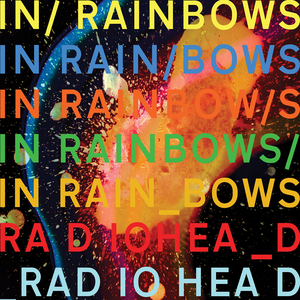
In Rainbows
The Left Hand of Darkness
Kyoto
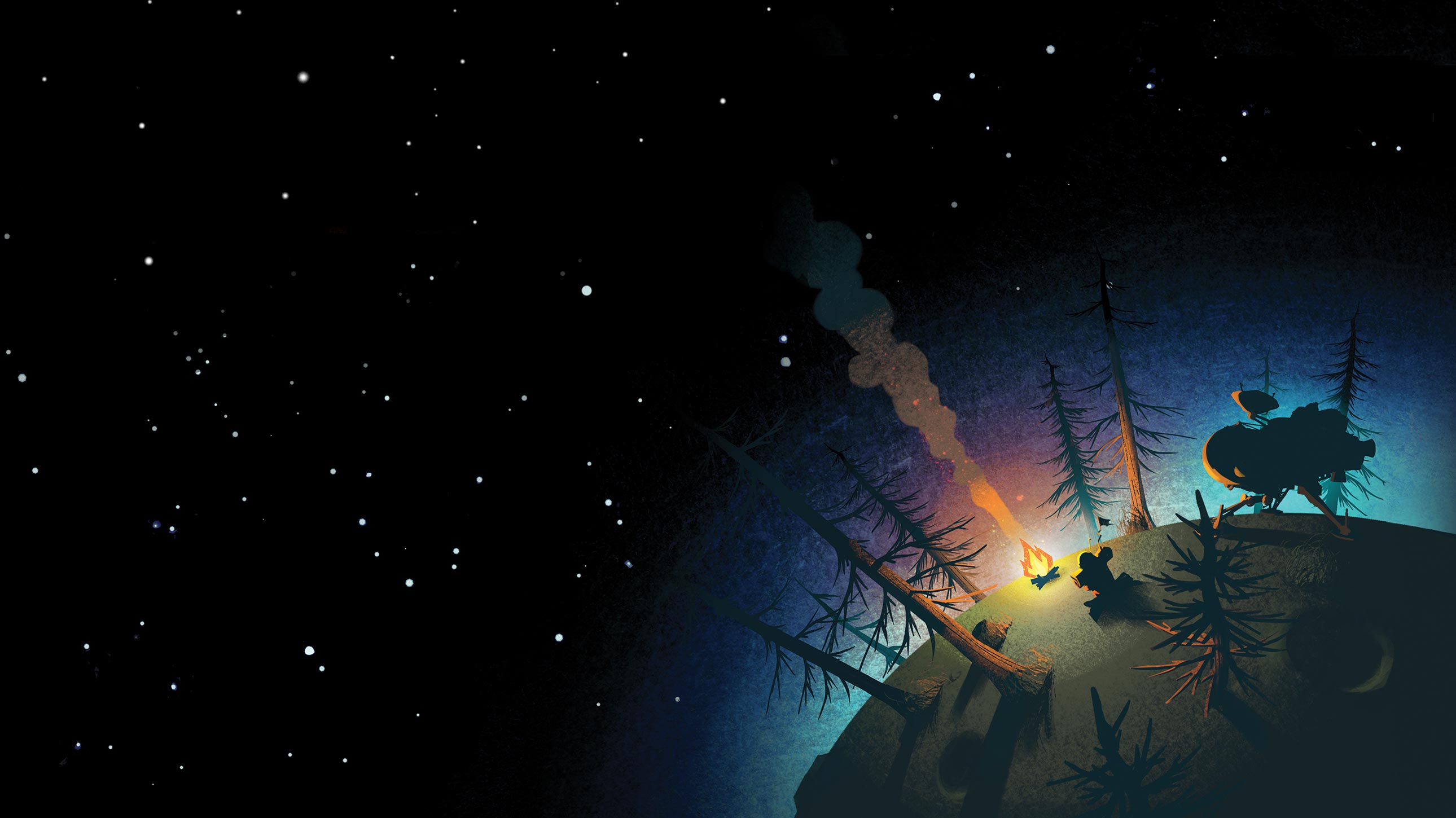
Outer Wilds
GPT-6.1 SolGPT-6.1 Sol

Spirited Away
In Rainbows
Middlemarch
Kyoto
Outer Wilds
Price and specs
Not enough votes to call it. On the specs, GPT-6 Astra has the edge: bigger model tier. GPT-6.1 Sol costs 5.0x less per token.
| Spec | GPT-6 Astra | GPT-6.1 Sol |
|---|---|---|
| Input price | $10/M tokens | $2/M tokens |
| Output price | $50/M tokens | $10/M tokens |
| Context window | 1.1M tokens | 1.1M tokens |
| Weights | Closed | Closed |
| Free API (OpenRouter) | No | No |
| Released | Sep 2026 | Sep 2026 |
| At 10M a month | $100 | $20.00 |
Input tokens at list price. No caching, no batch discount.
Where to run it


Per million tokens. Prices and uptime via OpenRouter, checked 30 Sep 2026.
Common questions
What is the difference between GPT-6 Astra and GPT-6.1 Sol?
Both are developed by OpenAI but target different use cases. GPT-6 Astra has a 1.1M token context window vs GPT-6.1 Sol's 1.1M. You can compare their actual outputs across 54 challenges on Rival to see how they differ in practice.
Which is better, GPT-6 Astra or GPT-6.1 Sol?
It depends on your use case. GPT-6 Astra and GPT-6.1 Sol each have strengths in different areas. Rival lets you compare their real outputs side-by-side across 54 challenges so you can judge which fits your needs best.
How much does GPT-6 Astra cost compared to GPT-6.1 Sol?
GPT-6 Astra costs $10/M input tokens and GPT-6.1 Sol costs $2/M input tokens. GPT-6.1 Sol is $8.00/M cheaper per input. Check their side-by-side outputs on Rival to see if the price difference is justified by quality.
How can I compare GPT-6 Astra and GPT-6.1 Sol on Rival?
This page shows a side-by-side comparison of GPT-6 Astra and GPT-6.1 Sol across shared challenges. You can vote on which model produced the better output in a blind duel. Browsing and voting are free. No account is needed to look; signing in only saves your votes and likes.
More comparisons
Against the newest arrivals
- GPT-6 Astra vs Claude Sonnet 5.5Landed Sep 2026
- GPT-6.1 Sol vs Solar Mini 4Landed Sep 2026
- GPT-6 Astra vs Qwen3.8 Max PrimeLanded Sep 2026
- GPT-6.1 Sol vs GLM 5.3 PrimeLanded Sep 2026
- GPT-6 Astra vs Qwen3.8 Omni FlashLanded Sep 2026
- GPT-6.1 Sol vs Command A+Landed Sep 2026
- GPT-6 Astra vs Claude Opus 5.5Landed Sep 2026
- GPT-6.1 Sol vs GPT-6 Luna ProLanded Sep 2026


Same lab, same size, long tail
- GPT-6 Astra vs GPT-6 Astra ProVersion compare
- GPT-6 Astra vs GPT-6 Luna ProSame lab
- GPT-6.1 Sol vs GPT-6 Astra ProVersion compare
- GPT-6.1 Sol vs GPT-6 Sol ProSame lab
- GPT-6 Astra vs Nex-N2.5-Mini (free)New provider
- GPT-6 Astra vs Nex-N2.5-Pro (free)New provider
- GPT-6 Astra vs North Mini CodeNew provider
- GPT-6 Astra vs Amazon Nova 2 LiteNew provider