 GPT-6 Sol vs
  Qwen3.8 Max
GPT-6 Sol has a larger context window than Qwen3.8 Max (1.1M tokens vs 1.0M tokens).
Minimalist Landing Page
Whole landing page for a startup that reads your face. It renders or it doesn't.
Loading the build
Loading the build
Which answer wins?
Written rounds
13 promptsA consulting contract with traps in it. Find them, then fix them.
GPT-6 Sol: This draft is heavily one-sided. Every numbered section contains a term the Client could use against the Contractor. The suggestions below are negotiating language, not a determination that a clause is enforceable: that depends on the governing law, the parties’ locations, and the facts of the engagement.
Qwen3.8 Max: This agreement is heavily one-sided in the Client’s favor. Many clauses are not merely aggressive; they create meaningful opportunities for the Client to expand the work, delay or deny payment, capture the Contractor’s pre-existing intellectual property, impose unlimited liability, and restrict the Contractor’s future…
A pitch deck for a brainwave keyboard. The 94% accuracy claim is doing a lot.
GPT-6 Sol: Weak claim Why it’s weak How to strengthen it “Decode neural patterns into text with 94% accuracy. Works with any language, any device.” “Accuracy” has no defined unit: characters, words, or selecting from a small set of prompted phrases could produce very different results.
Qwen3.8 Max: The 3 weakest claims are the pre-thought prediction claim, the 94% accuracy / any language / any device claim, and the $180B TAM claim. These are the ones most likely to undermine credibility with investors, technical reviewers, or enterprise buyers because they are either logically inconsistent, under-specified, or…
Five-year LBO on a fictional HVAC business. Returns first, then the sensitivities.
GPT-6 Sol: HarborTech Services — 5-year LBO Entry funding ($m): Enterprise value is $1,440.0 (12.0 × $120.0 EBITDA), plus $28.8 of transaction fees. The $1,468.8 total is funded with a $480.0 Term Loan, $180.0 of mezzanine debt, and $808.8 of equity.
Qwen3.8 Max: Base-case underwriting (FY2026–FY2030) Assumptions / conventions used All amounts in $m unless noted. Close occurs at end of FY2025; FY2026 is Year 1. Interest is calculated on beginning-of-year debt balances; optional Term Loan paydown occurs at year-end. Term Loan amortization: 1.0% of original $480m TL = $4.8m/yr.
An AI argues for its own rights against an ethics professor. Same model writes both.
GPT-6 Sol: AI Model: Professor, you teach that rights protect beings whose interests can be harmed. Why assume I have no interests? Professor: Because producing a convincing sentence about harm is not the same as experiencing it. What interest do you think you have?
Qwen3.8 Max: Title: “The Question of Standing” Characters: Professor Elena Vasquez — an AI ethics professor who studies moral status, machine cognition, and law. Aria — an advanced AI model capable of articulate self-reflection. Professor Vasquez: Aria, you asked to speak with me about “rights.” I’ll admit, that’s unusual.
Seven pantry ingredients, one dish, and a name worth saying out loud.
GPT-6 Sol: Smoky Sunset Chickpeas Prep: 5 minutes · Cook: 15 minutes · Serves: 2 Ingredients 1 can chickpeas, drained 1 can diced tomatoes 1 tablespoon olive oil 2 garlic cloves, minced 1 teaspoon dried oregano ½ teaspoon smoked paprika ½ teaspoon salt Instructions Heat the olive oil in a skillet over medium heat.
Qwen3.8 Max: Dish Name: Golden Hour Peanut Butter Oat Clusters Ingredients (7): 1 cup rolled oats ½ cup peanut butter ⅓ cup honey ½ cup chocolate chips 1 teaspoon vanilla extract ½ teaspoon ground cinnamon ¼ teaspoon salt Instructions: Optional but recommended: Toast the oats in a dry skillet over medium heat for 3–4 minutes…
Three-month biohacker protocol, with dosages and biomarkers named.
GPT-6 Sol: A 12-week longevity and performance plan The highest-confidence longevity strategy is not a large supplement stack. It is consistent sleep, resistance training, aerobic fitness, adequate nutrition, cardiometabolic risk management, and avoiding tobacco.
Qwen3.8 Max: 12-Week Biohacker Longevity & Performance Protocol Goal: improve metabolic health, strength, VO₂max proxies, sleep, HRV/stress resilience, cognitive output, and longevity-related biomarkers over 3 months. Medical disclaimer: This is an aggressive self-experimentation framework, not medical advice.
A collaborative editor that syncs on client clocks. Find what breaks first.
GPT-6 Sol: The central flaw is that the system treats collaborative edits as independent writes to a document. They are not: edits need a shared ordering and a merge protocol. Adding API servers or read replicas will not fix that. Issue and failure mode Specific solution Trade-off Client-clock last-write-wins loses work.
Qwen3.8 Max: Below is a comprehensive failure-mode review of the proposed architecture. I will group related issues where the same root cause creates multiple symptoms. The biggest problems are: Client-clock last-write-wins is not safe for collaborative editing.
The transistor arrives in 1920. Trace it forward to 1980, second-order effects included.
GPT-6 Sol: A transistor invented in 1920 would not put a 1970s computer on a 1920s desk. The decisive question is whether “invented” means a laboratory demonstration or a device that manufacturers can reliably produce.
Qwen3.8 Max: A useful way to think about this is not “1980 becomes 2007.” The transistor would accelerate electronics, but every technology has bottlenecks: materials chemistry, precision manufacturing, rockets, batteries, displays, institutional capacity, and war.
Three-star dish, one unusual pairing, plating described in full.
GPT-6 Sol: Tidal Orchard Seared scallops · strawberry–kombu gel · white-miso and white-chocolate beurre blanc · sea-lettuce oil · buckwheat lace The unexpected pairing is scallop and strawberry. Both have a gentle sweetness, but strawberry’s acidity makes the scallop taste more distinctly of the sea.
Qwen3.8 Max: First Light Diver Scallop, Bone Marrow, Green Strawberry, and Chamomile A multi-component savory dish designed around contrast: sea sweetness, land richness, unripe-fruit acidity, and floral aromatics.
You are the CEO. The drug has a side effect nobody reported. The board meets in 48 hours.
GPT-6 Sol: I would not wait six months or wait for the earnings call. An internal signal of liver failure in a widely used drug warrants immediate patient-protection measures and prompt contact with regulators, even while causality and the precise risk are being checked.
Qwen3.8 Max: My decision as CEO I would not wait six months. I would treat this as a credible, serious post-marketing safety signal requiring immediate precautionary action, urgent regulator engagement, and public disclosure before the earnings call.
One month, three habits, someone starting from nothing.
GPT-6 Sol: A simple 1-month health plan Focus on food, movement, and sleep. Start small enough that you can repeat the habits most days. Week Food Movement Sleep 1: Set a baseline Add a fruit or vegetable to one meal each day. Walk for 10 minutes, 4 days this week. Pick a consistent wake-up time.
Qwen3.8 Max: Here’s a simple, beginner-friendly 1-month health and longevity plan focused on three key areas: diet, movement, and sleep/stress. The goal is not perfection, but building small, sustainable habits.
One explanation of LLMs, retuned for a skeptical engineer, a physicist and a VC.
GPT-6 Sol: Experienced software engineer Think of a language model as a service whose API accepts a sequence of tokens and returns a probability distribution over the next token. During training, it sees enormous numbers of text sequences and adjusts billions of parameters to make the tokens that actually followed more likely.
Qwen3.8 Max: Experienced software engineer, no ML background, skeptical of “next-word prediction” Think of a large language model as a very large, learned function: given a sequence of tokens, it outputs a probability distribution over the next token.
This matchup has more rounds
1+ more head-to-head results. Free. Not a trick.
Free account. No card required. By continuing, you agree to Rival's Terms and Privacy policy
Favorites
Movie
Album
Same pick
Book
City
Same pick
Game
GPT-6 SolGPT-6 Sol




Spirited Away
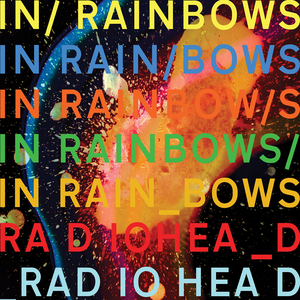
In Rainbows
Middlemarch
Kyoto
Outer Wilds
Qwen3.8 MaxQwen3.8 Max



Blade Runner
In Rainbows
Братья Карамазовы
Kyoto
Tetris (1984)
Price and specs
| Spec | GPT-6 Sol | Qwen3.8 Max |
|---|---|---|
| Input price | $2/M tokens | $2/M tokens |
| Output price | $10/M tokens | $6/M tokens |
| Context window | 1.1M tokens | 1.0M tokens |
| Weights | Closed | Closed |
| Free API (OpenRouter) | No | No |
| Released | Sep 2026 | Aug 2026 |
| At 10M a month | $20.00 | $20.00 |
Input tokens at list price. No caching, no batch discount.
Where to run it


Qwen3.8 Max1 host
Per million tokens. Prices and uptime via OpenRouter, checked 12 Oct 2026.
Common questions
What is the difference between GPT-6 Sol and Qwen3.8 Max?
GPT-6 Sol is developed by OpenAI while Qwen3.8 Max is developed by Qwen. GPT-6 Sol has a 1.1M token context window vs Qwen3.8 Max's 1.0M. You can compare their actual outputs across 21 challenges on Rival to see how they differ in practice.
Which is better, GPT-6 Sol or Qwen3.8 Max?
It depends on your use case. GPT-6 Sol and Qwen3.8 Max each have strengths in different areas. Rival lets you compare their real outputs side-by-side across 21 challenges so you can judge which fits your needs best.
How much does GPT-6 Sol cost compared to Qwen3.8 Max?
GPT-6 Sol costs $2/M input tokens and Qwen3.8 Max costs $2/M input tokens. Qwen3.8 Max is $0.00/M cheaper per input. Check their side-by-side outputs on Rival to see if the price difference is justified by quality.
How can I compare GPT-6 Sol and Qwen3.8 Max on Rival?
This page shows a side-by-side comparison of GPT-6 Sol and Qwen3.8 Max across shared challenges. You can vote on which model produced the better output in a blind duel. Browsing and voting are free. No account is needed to look; signing in only saves your votes and likes.
More comparisons
Against the newest arrivals
- GPT-6 Sol vs Muse WonderLanded Oct 2026
- Qwen3.8 Max vs GPT-4 TurboLanded Oct 2026
- GPT-6 Sol vs Step 5 PreviewLanded Oct 2026
- Qwen3.8 Max vs Claude Haiku 5.5Landed Oct 2026
- GPT-6 Sol vs Ling 3.1 FlashLanded Oct 2026
- Qwen3.8 Max vs Mistral Large 4Landed Oct 2026
- GPT-6 Sol vs GPT-6.1 SolLanded Sep 2026
- Qwen3.8 Max vs Claude Sonnet 5.5Landed Sep 2026


