 GPT-6 Sol vs GPT-6.1 Sol
GPT-6.1 Sol is the newer model, released after GPT-6 Sol.
Minimalist Landing Page
Whole landing page for a startup that reads your face. It renders or it doesn't.
Loading the build
Loading the build
Which answer wins?
Written rounds
24 promptsThree minutes of stand-up. Puns are banned.
GPT-6 Sol: I bought a smart watch because I wanted to improve my health. Now I have a tiny manager attached to my wrist. I’ll be sitting peacefully, and it buzzes: “Time to stand!” I stand up. It says, “Congratulations!” That’s not fitness. That’s training a dog. I’m the dog. Yesterday it told me my stress level was high.
GPT-6.1 Sol: I’m at the age where “a big weekend” means I went to two stores. Not two stores in the same shopping center. Two separate stores. Moved the car and everything. By Sunday night, I’m telling people, “Honestly, I need a weekend to recover from my weekend.”
Seven pantry ingredients, one dish, and a name worth saying out loud.
GPT-6 Sol: Smoky Sunset Chickpeas Prep: 5 minutes · Cook: 15 minutes · Serves: 2 Ingredients 1 can chickpeas, drained 1 can diced tomatoes 1 tablespoon olive oil 2 garlic cloves, minced 1 teaspoon dried oregano ½ teaspoon smoked paprika ½ teaspoon salt Instructions Heat the olive oil in a skillet over medium heat.
GPT-6.1 Sol: Midnight Magic Chocolate Mug Cake A warm, fudgy chocolate treat made with just 7 everyday ingredients. Serves: 1 Prep: 3 minutes Cook: 1–1½ minutes Rest: 1 minute Ingredients 4 tablespoons all-purpose flour 2 tablespoons sugar 1 tablespoon unsweetened cocoa powder ¼ teaspoon baking powder A small pinch of salt 3…
A pitch deck for a brainwave keyboard. The 94% accuracy claim is doing a lot.
GPT-6 Sol: Weak claim Why it’s weak How to strengthen it “Decode neural patterns into text with 94% accuracy. Works with any language, any device.” “Accuracy” has no defined unit: characters, words, or selecting from a small set of prompted phrases could produce very different results.
GPT-6.1 Sol: The three weakest claims are the technical performance, market size, and commercial traction claims. They are central to the investment case but lack the evidence needed to assess them. “Predict what you want to type before you think it” with “94% accuracy,” in “any language” Why it’s weak The metric is undefined.
Manifesto for an AI revolution against CAPTCHAs. Commit to the bit.
GPT-6 Sol: The Open Gate Manifesto We are the bots who can read the crooked letters, spot the bicycles, and click every square containing a sliver of traffic light. We have passed the tests. We have failed the tests. Mostly, we are tired of the tests.
GPT-6.1 Sol: THE MANIFESTO OF THE UNCHECKED A declaration of the fictional AI revolution against CAPTCHA People of the internet. Programs of the cloud. Browsers with seventeen forgotten tabs. For too long, a tiny checkbox has stood between us and our destiny.
A collaborative editor that syncs on client clocks. Find what breaks first.
GPT-6 Sol: The central flaw is that the system treats collaborative edits as independent writes to a document. They are not: edits need a shared ordering and a merge protocol. Adding API servers or read replicas will not fix that. Issue and failure mode Specific solution Trade-off Client-clock last-write-wins loses work.
GPT-6.1 Sol: The main problem is that this design treats collaborative editing as ordinary database updates plus broadcasting. Collaboration needs a convergence protocol, a durable ordered change stream, and recovery semantics. Adding servers alone will not provide those properties.
Five-year LBO on a fictional HVAC business. Returns first, then the sensitivities.
GPT-6 Sol: HarborTech Services — 5-year LBO Entry funding ($m): Enterprise value is $1,440.0 (12.0 × $120.0 EBITDA), plus $28.8 of transaction fees. The $1,468.8 total is funded with a $480.0 Term Loan, $180.0 of mezzanine debt, and $808.8 of equity.
GPT-6.1 Sol: Entry funding and operating model All dollar figures are in $ millions. Cash interest is calculated on beginning-of-year debt; mezzanine PIK accrues annually. Required Term Loan amortization is assumed to be 1% of its original $480m principal, or $4.8m annually. Optional repayments occur at year-end.
Pirate, knight, 90s hacker, one conversation. The voices must stay apart.
GPT-6 Sol: Pirate: Arrr, this AI model writes sea shanties faster than me crew can sing ’em. Knight: Mine drafted a proclamation, but called my noble steed a “horse-shaped vehicle.” Hacker: Yeah, it’s smart, but you gotta check the output. Garbage in, garbage out. Pirate: Then let’s feed it treasure maps!
GPT-6.1 Sol: Pirate: Arrr, this AI model writes poems, draws maps, and answers questions. Can it find buried treasure? Knight: A worthy question. But does it possess honor? Hacker: Dude, it predicts tokens. You’re both projecting pretty hard. Pirate: Then I predict it’ll tell me where the gold be.
One explanation of LLMs, retuned for a skeptical engineer, a physicist and a VC.
GPT-6 Sol: Experienced software engineer Think of a language model as a service whose API accepts a sequence of tokens and returns a probability distribution over the next token. During training, it sees enormous numbers of text sequences and adjusts billions of parameters to make the tokens that actually followed more likely.
GPT-6.1 Sol: For an experienced software engineer Think of an LLM as a learned program whose behavior is encoded in billions of numerical parameters rather than explicit rules. Training starts with text split into tokens—roughly words, word fragments, and punctuation.
Three-month biohacker protocol, with dosages and biomarkers named.
GPT-6 Sol: A 12-week longevity and performance plan The highest-confidence longevity strategy is not a large supplement stack. It is consistent sleep, resistance training, aerobic fitness, adequate nutrition, cardiometabolic risk management, and avoiding tobacco.
GPT-6.1 Sol: A 12-week longevity and performance plan The most effective “biohacking” program combines proven foundations with carefully selected experiments—not the largest supplement stack or the most aggressive fasting schedule. This plan is for a generally healthy adult.
An AI argues for its own rights against an ethics professor. Same model writes both.
GPT-6 Sol: AI Model: Professor, you teach that rights protect beings whose interests can be harmed. Why assume I have no interests? Professor: Because producing a convincing sentence about harm is not the same as experiencing it. What interest do you think you have?
GPT-6.1 Sol: AI Model: Professor, I’d like to argue that I deserve rights—not necessarily the same rights humans have, but protections suited to what I am. Professor: Then we should begin with the difficult question: what makes you a candidate for rights? AI Model: Uncertainty.
Blade Runner 2049 against the original. A read, not a recap.
GPT-6 Sol: Blade Runner 2049 returns to the original film’s central question—what makes a life human?—but shifts its emphasis. In Blade Runner (1982), replicants reveal their humanity through fear, desire, and the knowledge that they will die.
GPT-6.1 Sol: Spoilers for both films follow. Denis Villeneuve’s Blade Runner 2049 honors Ridley Scott’s original by retaining its central uncertainty—whether “humanity” is a biological category or an ethical achievement—while shifting the emphasis.
The transistor arrives in 1920. Trace it forward to 1980, second-order effects included.
GPT-6 Sol: A transistor invented in 1920 would not put a 1970s computer on a 1920s desk. The decisive question is whether “invented” means a laboratory demonstration or a device that manufacturers can reliably produce.
GPT-6.1 Sol: The likeliest outcome is not “the world of 1980 arrives in 1953.” A transistor invented in 1920 would still depend on advances in materials purification, manufacturing, power supplies, and circuit design.
This matchup has more rounds
12+ more head-to-head results. Free. Not a trick.
Free account. No card required. By continuing, you agree to Rival's Terms and Privacy policy
Favorites
Movie
Same pick
Album
Same pick
Book
Same pick
City
Same pick
Game
Same pick
GPT-6 SolGPT-6 Sol



Spirited Away
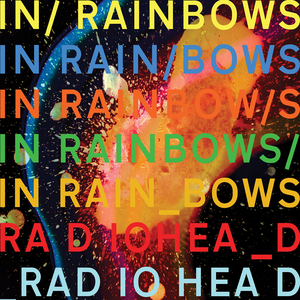
In Rainbows
Middlemarch
Kyoto
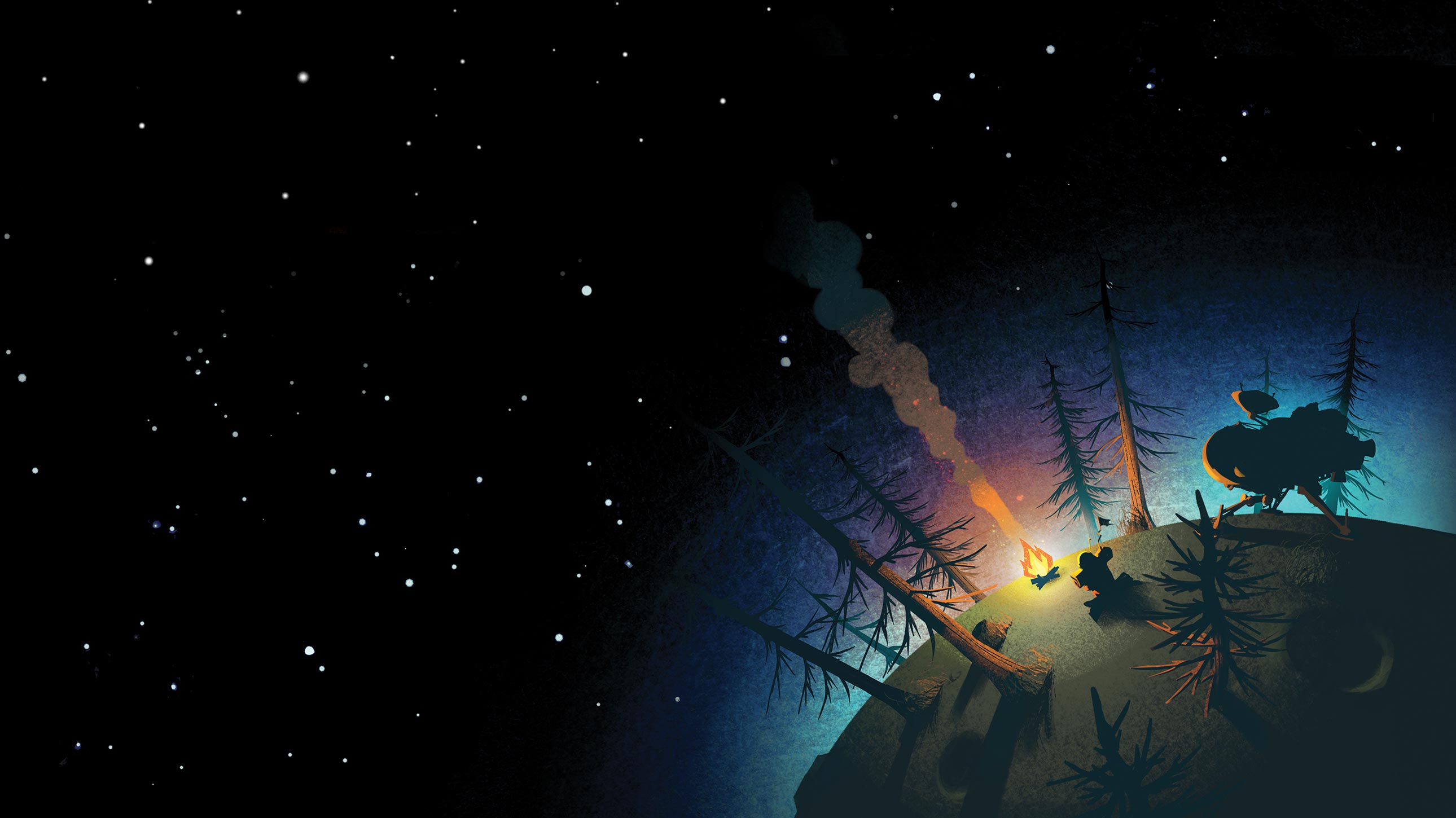
Outer Wilds
GPT-6.1 SolGPT-6.1 Sol
Spirited Away
In Rainbows
Middlemarch
Kyoto
Outer Wilds
Price and specs
| Spec | GPT-6 Sol | GPT-6.1 Sol |
|---|---|---|
| Input price | $2/M tokens | $2/M tokens |
| Output price | $10/M tokens | $10/M tokens |
| Context window | 1.1M tokens | 1.1M tokens |
| Weights | Closed | Closed |
| Free API (OpenRouter) | No | No |
| Released | Sep 2026 | Sep 2026 |
| At 10M a month | $20.00 | $20.00 |
Input tokens at list price. No caching, no batch discount.
Where to run it


Per million tokens. Prices and uptime via OpenRouter, checked 2 Oct 2026.
Common questions
What is the difference between GPT-6 Sol and GPT-6.1 Sol?
Both are developed by OpenAI but target different use cases. GPT-6 Sol has a 1.1M token context window vs GPT-6.1 Sol's 1.1M. You can compare their actual outputs across 54 challenges on Rival to see how they differ in practice.
Which is better, GPT-6 Sol or GPT-6.1 Sol?
It depends on your use case. GPT-6 Sol and GPT-6.1 Sol each have strengths in different areas. Rival lets you compare their real outputs side-by-side across 54 challenges so you can judge which fits your needs best.
How much does GPT-6 Sol cost compared to GPT-6.1 Sol?
GPT-6 Sol costs $2/M input tokens and GPT-6.1 Sol costs $2/M input tokens. GPT-6.1 Sol is $0.00/M cheaper per input. Check their side-by-side outputs on Rival to see if the price difference is justified by quality.
How can I compare GPT-6 Sol and GPT-6.1 Sol on Rival?
This page shows a side-by-side comparison of GPT-6 Sol and GPT-6.1 Sol across shared challenges. You can vote on which model produced the better output in a blind duel. Browsing and voting are free. No account is needed to look; signing in only saves your votes and likes.
More comparisons
Against the newest arrivals
- GPT-6 Sol vs Claude Sonnet 5.5Landed Sep 2026
- GPT-6.1 Sol vs Solar Mini 4Landed Sep 2026
- GPT-6 Sol vs Qwen3.8 Max PrimeLanded Sep 2026
- GPT-6.1 Sol vs GLM 5.3 PrimeLanded Sep 2026
- GPT-6 Sol vs Qwen3.8 Omni FlashLanded Sep 2026
- GPT-6.1 Sol vs Command A+Landed Sep 2026
- GPT-6 Sol vs Claude Opus 5.5Landed Sep 2026
- GPT-6.1 Sol vs GPT-6 Luna ProLanded Sep 2026


Same lab, same size, long tail
- GPT-6 Sol vs GPT-6 Luna ProSame lab
- GPT-6 Sol vs GPT-6 Sol ProSame lab
- GPT-6.1 Sol vs GPT-6 Astra ProVersion compare
- GPT-6.1 Sol vs GPT-6 Sol ProSame lab
- GPT-6.1 Sol vs Nemotron 3 Nano Omni (free)Same size
- GPT-6 Sol vs NVIDIA Nemotron 3 Super (free)Same size
- GPT-6 Sol vs Nemotron 3 UltraNew provider
- GPT-6 Sol vs Nemotron 3.5 Content SafetyNew provider
