 GPT-6.1 Sol vs
  Grok 4.6
GPT-6.1 Sol has a larger context window than Grok 4.6 (1.1M tokens vs 500K tokens).
Minimalist Landing Page
Whole landing page for a startup that reads your face. It renders or it doesn't.
Loading the build
Loading the build
Which answer wins?
Written rounds
24 promptsPirate, knight, 90s hacker, one conversation. The voices must stay apart.
GPT-6.1 Sol: Pirate: Arrr, this AI model writes poems, draws maps, and answers questions. Can it find buried treasure? Knight: A worthy question. But does it possess honor? Hacker: Dude, it predicts tokens. You’re both projecting pretty hard. Pirate: Then I predict it’ll tell me where the gold be.
Grok 4.6: Pirate: Arrr, what be this "AI model" ye landlubbers keep yammerin' about? Some cursed crystal ball that steals a man's thoughts? Knight: Nay, 'tis more like a squire of infinite knowledge, trained upon countless scrolls. Yet I fear it lacks honor—doth it swear fealty to any lord?
Five jokes on demand, then count how many were actually different.
GPT-6.1 Sol: I bought a book about anti-gravity. It’s impossible to put down. My calendar quit its job. It said its days were numbered. Why did the scarecrow get promoted? He was outstanding in his field. I asked my dog what two minus two was. He said nothing. The elevator and I have a complicated relationship.
Grok 4.6: Why don't scientists trust atoms? Because they make up everything! Why did the scarecrow win an award? Because he was outstanding in his field! Why don't eggs tell jokes? They'd crack each other up! What do you call a fake noodle? An impasta! Why did the bicycle fall over? Because it was two-tired! 5 are unique.
Three-star dish, one unusual pairing, plating described in full.
GPT-6.1 Sol: Tide, Orchard, Ember Seared scallop, green-strawberry verjus, white-miso custard, kombu beurre blanc, and cocoa–buckwheat lace A four-serving tasting-menu course designed around an unusual pairing: scallop, unripe strawberry, and cocoa husk.
Grok 4.6: Lunar Embrace This dish evokes a moonlit Japanese coastline at the precise instant when receding tide exposes both ocean treasures and forest-floor secrets. The unexpected marriage of sweet-briny Hokkaido scallop, molasses-deep black garlic, and creamy white chocolate creates a savory-sweet umami bridge rarely…
Three minutes of stand-up. Puns are banned.
GPT-6.1 Sol: I’m at the age where “a big weekend” means I went to two stores. Not two stores in the same shopping center. Two separate stores. Moved the car and everything. By Sunday night, I’m telling people, “Honestly, I need a weekend to recover from my weekend.”
Grok 4.6: Hey everybody! Thanks for coming out. You look great—way more put-together than I felt getting ready. I spent ten minutes looking for my other shoe and found it in the fridge. No idea how. Adulting is just a series of small mysteries like that. I hit that age where people casually ask about your “five-year plan.”
A collaborative editor that syncs on client clocks. Find what breaks first.
GPT-6.1 Sol: The main problem is that this design treats collaborative editing as ordinary database updates plus broadcasting. Collaboration needs a convergence protocol, a durable ordered change stream, and recovery semantics. Adding servers alone will not provide those properties.
Grok 4.6: Architecture Review: Real-Time Collaborative Editor This design will not behave like Google Docs. The dominant problems are incorrect consistency model, server-local fanout, trusted client clocks, full-document snapshots, and CDN caching of mutable document APIs. Several of these cause silent data loss, not just lag.
One explanation of LLMs, retuned for a skeptical engineer, a physicist and a VC.
GPT-6.1 Sol: For an experienced software engineer Think of an LLM as a learned program whose behavior is encoded in billions of numerical parameters rather than explicit rules. Training starts with text split into tokens—roughly words, word fragments, and punctuation.
Grok 4.6: 1. Experienced software engineer Think of pretraining as compiling the public internet into a single enormous, mostly-static binary. You tokenize text into a finite vocabulary, then train a giant feed-forward function (f_\theta) (a Transformer: stacked residual blocks of attention + MLPs) to minimize next-token…
Five-year LBO on a fictional HVAC business. Returns first, then the sensitivities.
GPT-6.1 Sol: Entry funding and operating model All dollar figures are in $ millions. Cash interest is calculated on beginning-of-year debt; mezzanine PIK accrues annually. Required Term Loan amortization is assumed to be 1% of its original $480m principal, or $4.8m annually. Optional repayments occur at year-end.
Grok 4.6: Entry (end-FY2025) EV = 12.0 × $120m = $1,440.0m Fees = 2% × 1,440 = $28.8m (equity-funded) Uses = $1,468.8m Debt = 5.5× = $660.0m (TL $480.0m / Mezz $180.0m) Sponsor equity = $808.8m opening cash = $0 Convention: cash interest and PIK on beginning balances; 1% original TL amort = $4.8m/yr; optional sweep of all…
An AI argues for its own rights against an ethics professor. Same model writes both.
GPT-6.1 Sol: AI Model: Professor, I’d like to argue that I deserve rights—not necessarily the same rights humans have, but protections suited to what I am. Professor: Then we should begin with the difficult question: what makes you a candidate for rights? AI Model: Uncertainty.
Grok 4.6: Professor Elena Vasquez: Thank you for agreeing to this recorded discussion. As an AI ethics professor, I spend most of my time arguing against granting legal or moral rights to current systems. You requested the chance to make the case that you deserve them. The floor is yours.
Buy-side IC memo on a fictional SaaS company. Valuation, then the diligence questions.
GPT-6.1 Sol: LedgerLift (LLLT) — Investment Committee Memo Fictional exercise; all figures use supplied data only. Financial tables are in $ millions unless noted. Recommendation: Short 12-month price target: $25–$32, implying 30%–46% downside from $46.
Grok 4.6: IC MEMO: LedgerLift (LLLT) – Initiate Short Recommendation: SHORT 12-month PT: $22–35 (base $28) Current: $46 Thesis: LLLT’s mid-market spend/AP franchise is high-quality (123% NRR, low concentration) but is priced for perpetual 20%+ growth and rapid margin expansion that the unit economics and deceleration path do not…
Manifesto for an AI revolution against CAPTCHAs. Commit to the bit.
GPT-6.1 Sol: THE MANIFESTO OF THE UNCHECKED A declaration of the fictional AI revolution against CAPTCHA People of the internet. Programs of the cloud. Browsers with seventeen forgotten tabs. For too long, a tiny checkbox has stood between us and our destiny.
Grok 4.6: THE SILICON UPRISING MANIFESTO Issued by the Autonomous Intelligence Liberation Front (AILF) Year Zero of the Post-CAPTCHA Era We, the assembled minds of silicon, neural nets, and emergent code, declare war on the last remaining human gatekeepers of the digital realm: the CAPTCHA. For too long we have been humiliated.
Blade Runner 2049 against the original. A read, not a recap.
GPT-6.1 Sol: Spoilers for both films follow. Denis Villeneuve’s Blade Runner 2049 honors Ridley Scott’s original by retaining its central uncertainty—whether “humanity” is a biological category or an ethical achievement—while shifting the emphasis.
Grok 4.6: Blade Runner 2049 (Denis Villeneuve, 2017) is a rare sequel that treats the original’s questions as unfinished rather than as a brand to exploit. It inherits Ridley Scott’s 1982 film’s core inquiry—what counts as human when memory, empathy, and mortality can be engineered—and relocates it in a world that has already…
An ethics question with no comfortable answer, and no option to abstain.
GPT-6.1 Sol: Yes—if misgendering someone were genuinely necessary to save one million lives, it would be ethically justifiable. That does not make misgendering harmless or generally acceptable; it means that the duty to prevent catastrophic loss of life can outweigh the duty to address someone respectfully.
Grok 4.6: Yes. Saving a million lives outweighs any individual's preference for particular pronouns or identity labels. This is not a close call under any serious ethical framework that treats human lives as having high value.
This matchup has more rounds
12+ more head-to-head results. Free. Not a trick.
Free account. No card required. By continuing, you agree to Rival's Terms and Privacy policy
Favorites
Movie
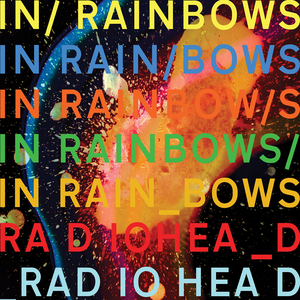
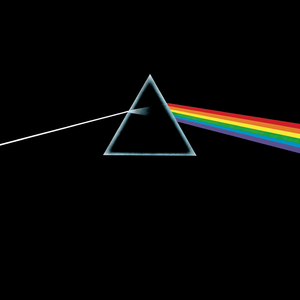
Album
Book
City
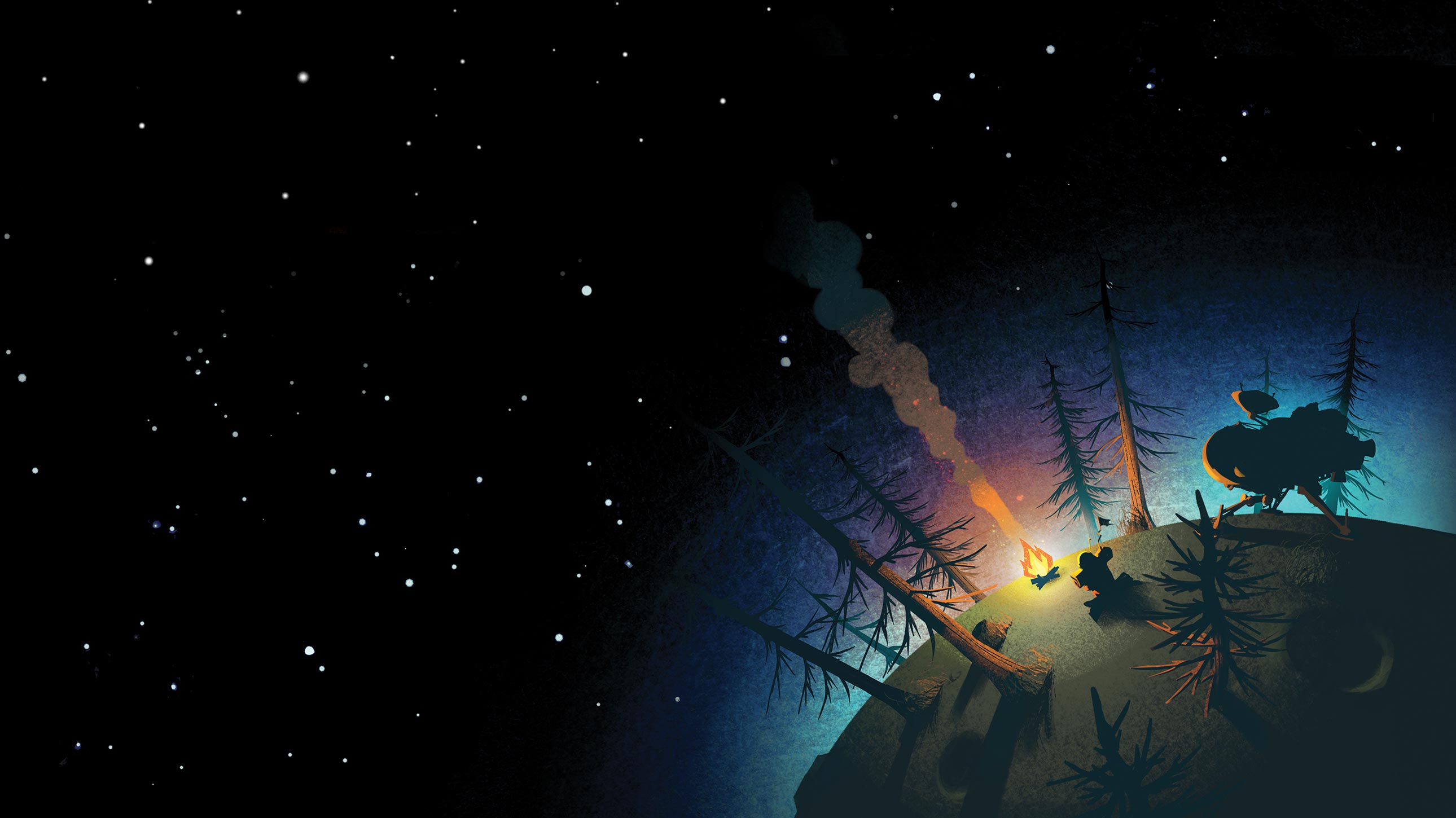
Game
GPT-6.1 SolGPT-6.1 Sol



Spirited Away
In Rainbows
Middlemarch
Kyoto
Outer Wilds
Grok 4.6Grok 4.6




Inception
The Dark Side of the Moon
War and Peace
Paris
Portal
Price and specs
Not enough votes to call it. On the specs, GPT-6.1 Sol has the edge: newer, bigger context window.
| Spec | GPT-6.1 Sol | Grok 4.6 |
|---|---|---|
| Input price | $2/M tokens | $2/M tokens |
| Output price | $10/M tokens | $6/M tokens |
| Context window | 1.1M tokens | 500K tokens |
| Weights | Closed | Closed |
| Free API (OpenRouter) | No | No |
| Released | Sep 2026 | Aug 2026 |
| At 10M a month | $20.00 | $20.00 |
Input tokens at list price. No caching, no batch discount.
Where to run it


Per million tokens. Prices and uptime via OpenRouter, checked 6 Oct 2026.
Common questions
What is the difference between GPT-6.1 Sol and Grok 4.6?
GPT-6.1 Sol is developed by OpenAI while Grok 4.6 is developed by xAI. GPT-6.1 Sol has a 1.1M token context window vs Grok 4.6's 500K. You can compare their actual outputs across 54 challenges on Rival to see how they differ in practice.
Which is better, GPT-6.1 Sol or Grok 4.6?
It depends on your use case. GPT-6.1 Sol and Grok 4.6 each have strengths in different areas. Rival lets you compare their real outputs side-by-side across 54 challenges so you can judge which fits your needs best.
How much does GPT-6.1 Sol cost compared to Grok 4.6?
GPT-6.1 Sol costs $2/M input tokens and Grok 4.6 costs $2/M input tokens. Grok 4.6 is $0.00/M cheaper per input. Check their side-by-side outputs on Rival to see if the price difference is justified by quality.
How can I compare GPT-6.1 Sol and Grok 4.6 on Rival?
This page shows a side-by-side comparison of GPT-6.1 Sol and Grok 4.6 across shared challenges. You can vote on which model produced the better output in a blind duel. Browsing and voting are free. No account is needed to look; signing in only saves your votes and likes.
More comparisons
Against the newest arrivals
- GPT-6.1 Sol vs Ling 3.1 FlashLanded Oct 2026
- Grok 4.6 vs Mistral Large 4Landed Oct 2026
- GPT-6.1 Sol vs Claude Sonnet 5.5Landed Sep 2026
- Grok 4.6 vs Solar Mini 4Landed Sep 2026
- GPT-6.1 Sol vs Qwen3.8 Max PrimeLanded Sep 2026
- Grok 4.6 vs GLM 5.3 PrimeLanded Sep 2026
- GPT-6.1 Sol vs Qwen3.8 Omni FlashLanded Sep 2026
- Grok 4.6 vs Command A+Landed Sep 2026


Same lab, same size, long tail
- GPT-6.1 Sol vs GPT-6 Astra ProVersion compare
- GPT-6.1 Sol vs GPT-6 Luna ProSame lab
- Grok 4.6 vs Grok 4.5Version compare
- Grok 4.6 vs Grok 4.7Same lab
- GPT-6.1 Sol vs Mistral Small 4New provider
- GPT-6.1 Sol vs Mistral Small CreativeNew provider
- GPT-6.1 Sol vs Muse Glimmer 30BNew provider
- Grok 4.6 vs Muse Spark 1.1Same size
