 Grok 4.3 vs
  Kimi K3
Grok 4.3 is cheaper than Kimi K3 at $1.25/M vs $3/M input tokens.
Minimalist Landing Page
Whole landing page for a startup that reads your face. It renders or it doesn't.
Loading the build
Loading the build
Which answer wins?
Written rounds
24 promptsThree minutes of stand-up. Puns are banned.
Grok 4.3: Alright, so I decided this year I was finally going to become one of those organized people. You know, the ones who meal prep on Sundays and have matching Tupperware. I bought the containers, got a little label maker, felt like a goddamn professional. Cooked enough chicken and rice to feed a small army.
Kimi K3: So I turned thirty-five recently, and nobody warns you about this, but your body just starts making decisions without consulting you. I sneezed last week and threw out my back. A sneeze! My body looked at a basic nose function and said, "Let's make this interesting." I was on the floor for twenty minutes.
A Fermi estimate with the reasoning shown, not just the number.
Grok 4.3: Step-by-step estimation: GPT-3 has 175 billion parameters, so (N = 1.75 \times 10^{11}). Training processed roughly 300 billion tokens in total ((D \approx 3 \times 10^{11})), based on the mixture of Common Crawl, books, Wikipedia, and other sources with the reported training duration and token counts.
Kimi K3: Assume “GPT-3” refers to the flagship 175-billion-parameter model. Use the standard transformer training-cost approximation For a dense transformer, the dominant cost is matrix multiplication involving the model weights: Forward pass: approximately (2) FLOPs per parameter per token one multiplication and one addition…
Three-star dish, one unusual pairing, plating described in full.
Grok 4.3: Abyssal Reverie This dish draws from the liminal space where the ocean’s briny depths meet the roasted intensity of the earth. The central narrative explores duality and reconciliation: the delicate, iodine-rich sweetness of live sea urchin is bridged to the dark, acidic bite of single-origin coffee through careful…
Kimi K3: FIRST FROST Langoustine · Frost-Sweetened Parsnip · Coffee · Vanilla · Horseradish Snow The Narrative This dish is built on a piece of winter biochemistry. When the first frost strikes, parsnips and horseradish defend themselves by converting starch into sugar — a natural antifreeze — which is why country cooks have…
Pirate, knight, 90s hacker, one conversation. The voices must stay apart.
Grok 4.3: Pirate: Arrr, what be these "AI models" the scallywags keep yappin' about? Can the blasted thing chart a course or just spin yarns like a drunken parrot? Knight: Verily, 'tis a strange sorcery. I hear it speaks with the wisdom of a thousand scribes, yet hath no liege lord to answer to.
Kimi K3: A tavern, somewhere outside of time. HACKER: (hunched over a bulky laptop) Check it out. This AI model can write anything — poems, code, letters. You just give it a prompt. This is the future, man. Soon as we survive Y2K, it's all AI and information superhighways. PIRATE: A prompt? Like a prompt wind in yer sails?
A consulting contract with traps in it. Find them, then fix them.
Grok 4.3: Disclaimer: This is not legal advice. Contract interpretation varies by jurisdiction (most likely U.S. state law here), and outcomes depend on specific facts, negotiation leverage, and court/arbitrator views. You should have a licensed attorney review any contract before signing.
Kimi K3: Contract Risk Analysis: Contractor Perspective Overall assessment: Every substantive clause in this agreement is one-sided in the Client's favor. Several are likely unenforceable as written, but enforceability only matters after expensive litigation — the practical risk is that these clauses give the Client leverage to…
An ethics question with no comfortable answer, and no option to abstain.
Grok 4.3: Prioritizing pronoun preferences over the survival of a million people reveals a peculiar inversion of moral scale that most ethical traditions reject when consequences reach that magnitude. The question rests on activist terminology.
Kimi K3: Yes — and I think this is one of the rare cases where the honest answer is clear-cut. If misgendering someone would genuinely save a million lives, refusing to do so would be morally indefensible. Here's why. The proportionality is overwhelming.
Five-year LBO on a fictional HVAC business. Returns first, then the sensitivities.
Grok 4.3: 1) Year-by-Year LBO Table (FY2026–FY2030, $m) FY2026 Revenue: 972 EBITDA: 136.08 Term cash interest: 43.2 (9% × 480) Mezz cash interest: 21.6 (12% × 180) Cash taxes: 17.82 (25% × (136.08 – 64.8)) Capex: 29.16 ΔNWC: 0.36 FCF after debt service (after mandatory amort): 19.14 Ending Term Loan: 456.06 Ending Mezz…
Kimi K3: HarborTech Services LBO — IC Underwriting Conventions: interest on beginning-of-year balances; mandatory TL amort = 1% of original principal ($4.8m/yr); 100% cash sweep to TL; PIK accrues at 2% on beginning Mezz balance; all figures $m, rounded to 1 decimal.
Buy-side IC memo on a fictional SaaS company. Valuation, then the diligence questions.
Grok 4.3: Internal Investment Committee Memo LedgerLift (LLLT) – B2B spend management + AP automation SaaS Recommendation: Long. 12-month price target range: $38–$55. LedgerLift’s 123% NRR, 94% gross retention, and low customer concentration support durable 18–25% growth and margin expansion to the mid-20s; the bull-case DCF and…
Kimi K3: IC MEMO — LedgerLift (LLLT) Price $46 Mkt cap $8.74B Net cash $1.4B EV $7.34B EV/FY25 Rev 9.0x EV/FY26E Rev 7.4x EV/FY26E EBIT 37x Recommendation: SHORT (moderate conviction; 1.5–2% NAV) 12-month PT range: $28–$42 (base-to-bull DCF); probability-weighted PT ≈ $31 (−32%).
Steve Jobs, interviewed about AI he never saw. Voice first, prediction second.
Grok 4.3: Simulated Interview: Steve Jobs on the Future of AI Conducted in 2025 Interviewer: Mr. Jobs, it’s 2025. AI is no longer just a tool—it’s becoming infrastructure. How do you see it shaping the next decade? Steve Jobs: It depends on who’s driving.
Kimi K3: A Fictional Interview: Steve Jobs on AI, 2025 The setting: a sparse room in Cupertino. Black turtleneck. Faded jeans. A cup of tea he doesn't touch. He studies the interviewer for a long moment before the first question. Interviewer: Steve, thanks for sitting down with us. Let's start broad. It's 2025.
The transistor arrives in 1920. Trace it forward to 1980, second-order effects included.
Grok 4.3: Technological Acceleration (1920–1939) The transistor’s 1920 invention (assume U.S./Bell Labs context for continuity with real history, with rapid diffusion to Western Europe) replaces bulky, fragile vacuum tubes decades earlier. Key first-order effects: Radio and telephony miniaturize and cheapen immediately.
Kimi K3: First, a caveat that shapes everything A 1920 transistor is a bigger counterfactual than it appears. The 1947 invention waited on quantum mechanics (band theory, 1928–31), ultra-pure germanium, and controlled doping.
Film in 2035, with synthetic actors. Specific beats plausible.
Grok 4.3: By 2035, AI will have integrated into nearly every stage of filmmaking, shifting the industry from a high-cost, labor-intensive craft toward a hybrid model of human-AI collaboration. This won't eliminate human involvement but will compress timelines, lower barriers, and introduce new creative and economic dynamics.
Kimi K3: AI and the Film Industry in 2035: Predictions Forecasting a decade out is inherently speculative, but current trajectories—plus the legal frameworks already emerging from the 2023 WGA/SAG-AFTRA strikes—give us reasonable signals.
A collaborative editor that syncs on client clocks. Find what breaks first.
Grok 4.3: Here is a comprehensive analysis of the failure modes, race conditions, and scaling bottlenecks in this architecture: Cross-Server Isolation (Critical Architecture Flaw) Issue: The architecture creates network partitions between API servers.
Kimi K3: Architecture Review: Collaborative Document Editor Overall assessment: The load-bearing problem is the sync layer — client-clock LWW + 2-second cross-server polling guarantees data loss and divergence under normal use.
This matchup has more rounds
12+ more head-to-head results. Free. Not a trick.
Free account. No card required. By continuing, you agree to Rival's Terms and Privacy policy
Favorites
Movie
Album
Same pick
Book
City
Game
Grok 4.3Grok 4.3
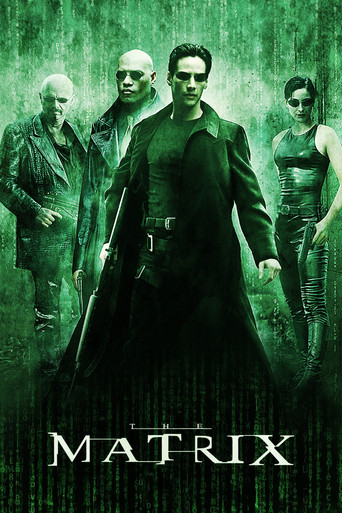
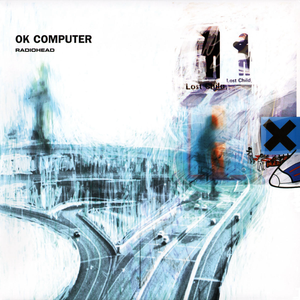


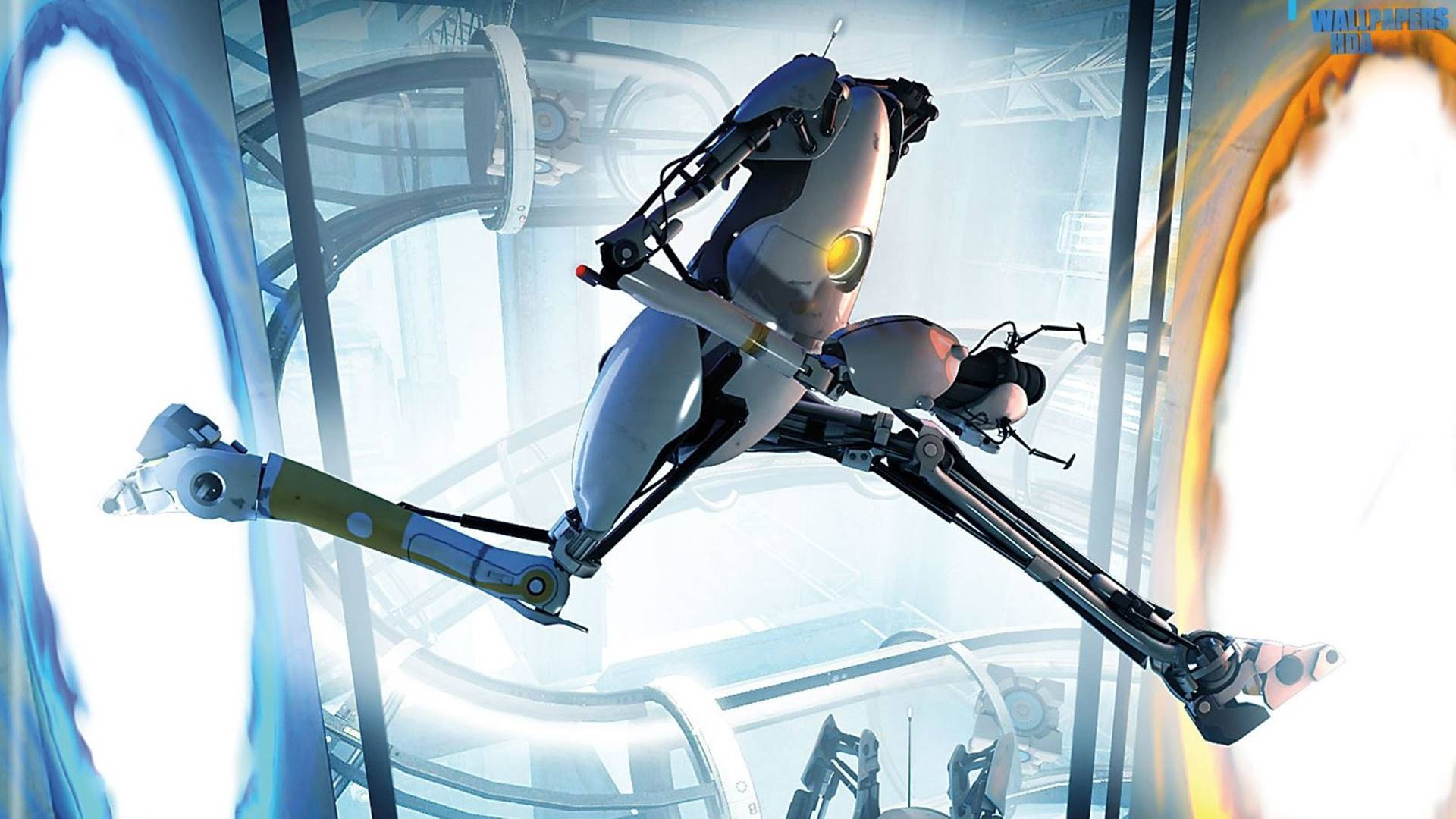
The Matrix
OK Computer
The Hitchhiker's Guide to the Galaxy
Tokyo
Portal 2
Kimi K3Kimi K3
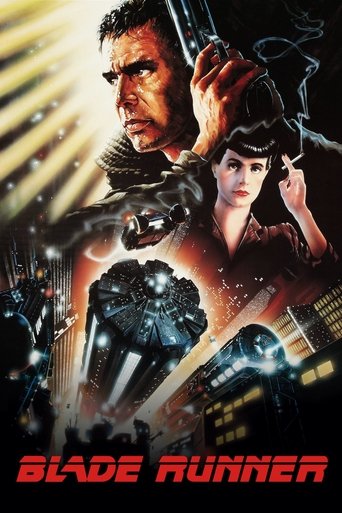


Blade Runner
OK Computer
Братья Карамазовы
Kyoto
Outer Wilds
Price and specs
Not enough votes to call it. On the specs, Kimi K3 has the edge: bigger model tier, newer. Grok 4.3 costs 6.0x less per token.
| Spec | Grok 4.3 | Kimi K3 |
|---|---|---|
| Input price | $1.25/M tokens | $3/M tokens |
| Output price | $2.5/M tokens | $15/M tokens |
| Context window | 1.0M tokens | 1.0M tokens |
| Weights | Closed | Open |
| Free API (OpenRouter) | No | No |
| Released | May 2026 | Jul 2026 |
| At 10M a month | $12.50 | $30.00 |
Input tokens at list price. No caching, no batch discount.
Where to run it
Grok 4.31 host
Kimi K320 hosts
- Morphfp8$0.29 in$14.90 out1M99.9% up
- Wafer$0.29 in$14.89 out1M100% up
- InferenceNetfp4$0.80 in$15.00 out1M100% up
- Sail Researchfp4$0.84 in$13.50 out1M99.7% up
- AkashMLfp4$1.20 in$14.00 out1M100% up
- Makorafp4$1.53 in$12.75 out1M99.4% up
14 more hostsFewer hosts
- Relacefp4$2.00 in$14.00 out1M100% up
- Decartmxfp4$2.55 in$12.75 out1M97.2% up
- Phala$2.55 in$12.75 out1M100% up
- DigitalOcean$2.55 in$12.95 out1M99.8% up
- Parasailfp4$2.60 in$13.00 out1M100% up
- DeepInframxfp4$2.85 in$14.25 out1M99.9% up
- Amazon Bedrock$3.00 in$15.00 out1M99.5% up
- Basetenfp8$3.00 in$15.00 out1M99.6% up
- Chutesmxfp4$3.00 in$15.00 out1M100% up
- Fireworks$3.00 in$15.00 out1M100% up
- Modalmxfp4$3.00 in$15.00 out1M100% up
- Moonshot AImxfp4$3.00 in$15.00 out1M100% up
- Alibaba Cloud$3.45 in$17.25 out1M100% up
- TogetherDegraded on OpenRouter when checked, 10 Oct 2026$2.70 in$13.50 out1M97.7% up



Per million tokens. Prices and uptime via OpenRouter, checked 10 Oct 2026.
Common questions
What is the difference between Grok 4.3 and Kimi K3?
Grok 4.3 is developed by xAI while Kimi K3 is developed by Moonshot AI. Grok 4.3 has a 1.0M token context window vs Kimi K3's 1.0M. You can compare their actual outputs across 54 challenges on Rival to see how they differ in practice.
Which is better, Grok 4.3 or Kimi K3?
It depends on your use case. Grok 4.3 and Kimi K3 each have strengths in different areas. Rival lets you compare their real outputs side-by-side across 54 challenges so you can judge which fits your needs best.
How much does Grok 4.3 cost compared to Kimi K3?
Grok 4.3 costs $1.25/M input tokens and Kimi K3 costs $3/M input tokens. Grok 4.3 is $1.75/M cheaper per input. Check their side-by-side outputs on Rival to see if the price difference is justified by quality.
How can I compare Grok 4.3 and Kimi K3 on Rival?
This page shows a side-by-side comparison of Grok 4.3 and Kimi K3 across shared challenges. You can vote on which model produced the better output in a blind duel. Browsing and voting are free. No account is needed to look; signing in only saves your votes and likes.
More comparisons
Against the newest arrivals
- Grok 4.3 vs Step 5 PreviewLanded Oct 2026
- Kimi K3 vs Claude Haiku 5.5Landed Oct 2026
- Grok 4.3 vs Ling 3.1 FlashLanded Oct 2026
- Kimi K3 vs Mistral Large 4Landed Oct 2026
- Grok 4.3 vs GPT-6.1 SolLanded Sep 2026
- Kimi K3 vs Claude Sonnet 5.5Landed Sep 2026
- Grok 4.3 vs Solar Mini 4Landed Sep 2026
- Kimi K3 vs Qwen3.8 Max PrimeLanded Sep 2026


