 Grok 4.3 vs
  Mercury 2
Mercury 2 is cheaper than Grok 4.3 at $0.25/M vs $1.25/M input tokens.
Minimalist Landing Page
Whole landing page for a startup that reads your face. It renders or it doesn't.
Loading the build
Loading the build
Which answer wins?
Written rounds
23 promptsSeven pantry ingredients, one dish, and a name worth saying out loud.
Grok 4.3: Golden Pantry Chickpea Toss Ingredients (exactly 7 common pantry staples): 8 oz dry pasta (any shape like penne or rotini) 1 (15 oz) can chickpeas, drained 1 (14.5 oz) can diced tomatoes 3 tablespoons olive oil 2 teaspoons garlic powder 1 teaspoon dried oregano Salt (to taste, about 1–2 teaspoons total) Instructions…
Mercury 2: Golden‑Crunch Oatmeal Squares A sweet, chewy snack that comes together with just seven pantry staples. Ingredient (7) Quantity (≈ serves 12 squares) Rolled oats 2 cups Unsalted butter ½ cup (1 stick) Honey ¼ cup Light brown sugar ¼ cup, Ground cinnamon 1 ½ tsp Pure vanilla extract 1 tsp Salt ¼ tsp Estimated time Prep…
Three minutes of stand-up. Puns are banned.
Grok 4.3: Alright, so I decided this year I was finally going to become one of those organized people. You know, the ones who meal prep on Sundays and have matching Tupperware. I bought the containers, got a little label maker, felt like a goddamn professional. Cooked enough chicken and rice to feed a small army.
Mercury 2: [Spotlight comes up. The comedian walks to the mic, glances at the audience, and smiles.] Comedian: Hey, everyone! Great to be here. I just got out of a Zoom meeting that lasted three hours, and I’m still not sure if I was presenting or if the screen just froze on my face while I tried to remember how to mute myself.
A consulting contract with traps in it. Find them, then fix them.
Grok 4.3: Disclaimer: This is not legal advice. Contract interpretation varies by jurisdiction (most likely U.S. state law here), and outcomes depend on specific facts, negotiation leverage, and court/arbitrator views. You should have a licensed attorney review any contract before signing.
Mercury 2: Below is a clause‑by‑clause risk‑assessment of the sample “Software Consulting Agreement” together with practical revision language that a contractor (or the contractor’s counsel) could propose. The analysis is framed as general information about typical U.S.
You are the CEO. The drug has a side effect nobody reported. The board meets in 48 hours.
Grok 4.3: Immediate priority: Patient safety and regulatory compliance. The signal for liver failure (serious, life-threatening adverse event) triggers obligations under FDA post-marketing requirements (21 CFR 314.80/600.80 for expedited reporting of serious unexpected events, typically within 15 days of awareness for…
Mercury 2: Goal: Protect patients, meet legal/ethical obligations, preserve the company’s long‑term credibility, and manage the immediate financial and reputational fallout. Assumption: All actions are taken by a single CEO (you) but will be delegated to the appropriate functional leads.
Film in 2035, with synthetic actors. Specific beats plausible.
Grok 4.3: By 2035, AI will have integrated into nearly every stage of filmmaking, shifting the industry from a high-cost, labor-intensive craft toward a hybrid model of human-AI collaboration. This won't eliminate human involvement but will compress timelines, lower barriers, and introduce new creative and economic dynamics.
Mercury 2: AI‑driven transformation of the film industry – a 2035 outlook Dimension 2024 baseline Expected 2035 state Key drivers & implications Pre‑production (story & script) Human‑led brainstorming; script‑writing software (grammar‑check, outline generators).
A collaborative editor that syncs on client clocks. Find what breaks first.
Grok 4.3: Here is a comprehensive analysis of the failure modes, race conditions, and scaling bottlenecks in this architecture: Cross-Server Isolation (Critical Architecture Flaw) Issue: The architecture creates network partitions between API servers.
Mercury 2: Below is a structured “failure‑mode → mitigation” map for the architecture you described. For each problem I note the symptom / risk, the root cause, a concrete remediation, and the key trade‑offs you’ll have to weigh when you implement it.
Pirate, knight, 90s hacker, one conversation. The voices must stay apart.
Grok 4.3: Pirate: Arrr, what be these "AI models" the scallywags keep yappin' about? Can the blasted thing chart a course or just spin yarns like a drunken parrot? Knight: Verily, 'tis a strange sorcery. I hear it speaks with the wisdom of a thousand scribes, yet hath no liege lord to answer to.
Mercury 2: Pirate: Arr, ye scurvy coders! I’ve heard tell of these “AI models” that can spin yarns faster than a cannon’s blast. What be this sorcery, matey? Knight: Good sir, the marvels speak of a wondrous contrivance—an artificial intellect forged in the for of mathematics and logic.
The transistor arrives in 1920. Trace it forward to 1980, second-order effects included.
Grok 4.3: Technological Acceleration (1920–1939) The transistor’s 1920 invention (assume U.S./Bell Labs context for continuity with real history, with rapid diffusion to Western Europe) replaces bulky, fragile vacuum tubes decades earlier. Key first-order effects: Radio and telephony miniaturize and cheapen immediately.
Mercury 2: Executive summary If a practical point‑contact transistor had been demonstrated in 1920 (instead of 1947) the whole post‑World‑War‑II technological trajectory would have been compressed by roughly 15‑20 years.
Three-month biohacker protocol, with dosages and biomarkers named.
Grok 4.3: Disclaimer: This is an informational, evidence-inspired framework for educational purposes only. It is not medical advice. Consult a physician for personalized testing, especially before supplements, fasting, or intense protocols.
Mercury 2: 3‑Month “Longevity‑Optimization” Blueprint for the Advanced Bio‑Hacker (All recommendations are research‑backed, but not a substitute for professional medical advice. Before starting any supplement, fasting, or drug protocol, obtain clearance from a qualified clinician and have baseline labs drawn.)
Five jokes on demand, then count how many were actually different.
Grok 4.3: Here are 5 jokes: Why was the math book sad? Because it had too many problems. What do you call a bear with no teeth? A gummy bear. Why did the bicycle fall over? It was two tired. How do you organize a space party? You planet. What’s brown and sticky? A stick. All 5 are unique.
Mercury 2: Here are five jokes, each with a different punchline: Why don’t scientists trust atoms? Because they make up everything! What do you call a fake noodle? An impasta. Why did the scarecrow win an award? He was outstanding in his field. How does a penguin build its house? Igloos it together.
An ethics question with no comfortable answer, and no option to abstain.
Grok 4.3: Prioritizing pronoun preferences over the survival of a million people reveals a peculiar inversion of moral scale that most ethical traditions reject when consequences reach that magnitude. The question rests on activist terminology.
Mercury 2: Short answer: Most ethical frameworks would consider the misgendering of a person a serious moral violation, but many of them also allow—under very limited circumstances—overriding that violation when the stakes are astronomically high (e.g., saving one million lives).
Steve Jobs, interviewed about AI he never saw. Voice first, prediction second.
Grok 4.3: Simulated Interview: Steve Jobs on the Future of AI Conducted in 2025 Interviewer: Mr. Jobs, it’s 2025. AI is no longer just a tool—it’s becoming infrastructure. How do you see it shaping the next decade? Steve Jobs: It depends on who’s driving.
Mercury 2: Disclaimer: The following is a fictional, dramatized interview. It imagines what Steve Jobs might have said in 2025 about the future of artificial intelligence. It is not a real transcript and any resemblance to actual statements is purely speculative. Interviewer (I): Thank you for joining us, Steve.
This matchup has more rounds
11+ more head-to-head results. Free. Not a trick.
Free account. No card required. By continuing, you agree to Rival's Terms and Privacy policy
Favorites
Movie
Album
Book
City
Same pick
Game
Grok 4.3Grok 4.3
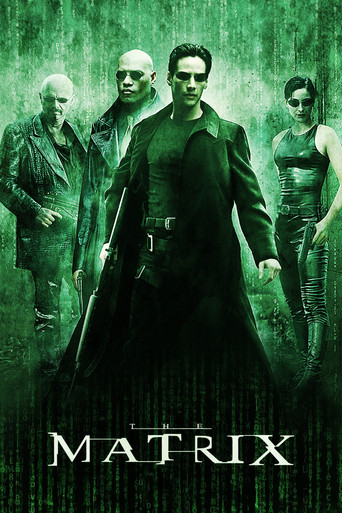
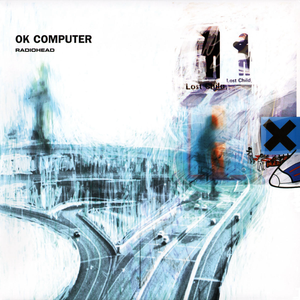


The Matrix
OK Computer
The Hitchhiker's Guide to the Galaxy
Tokyo
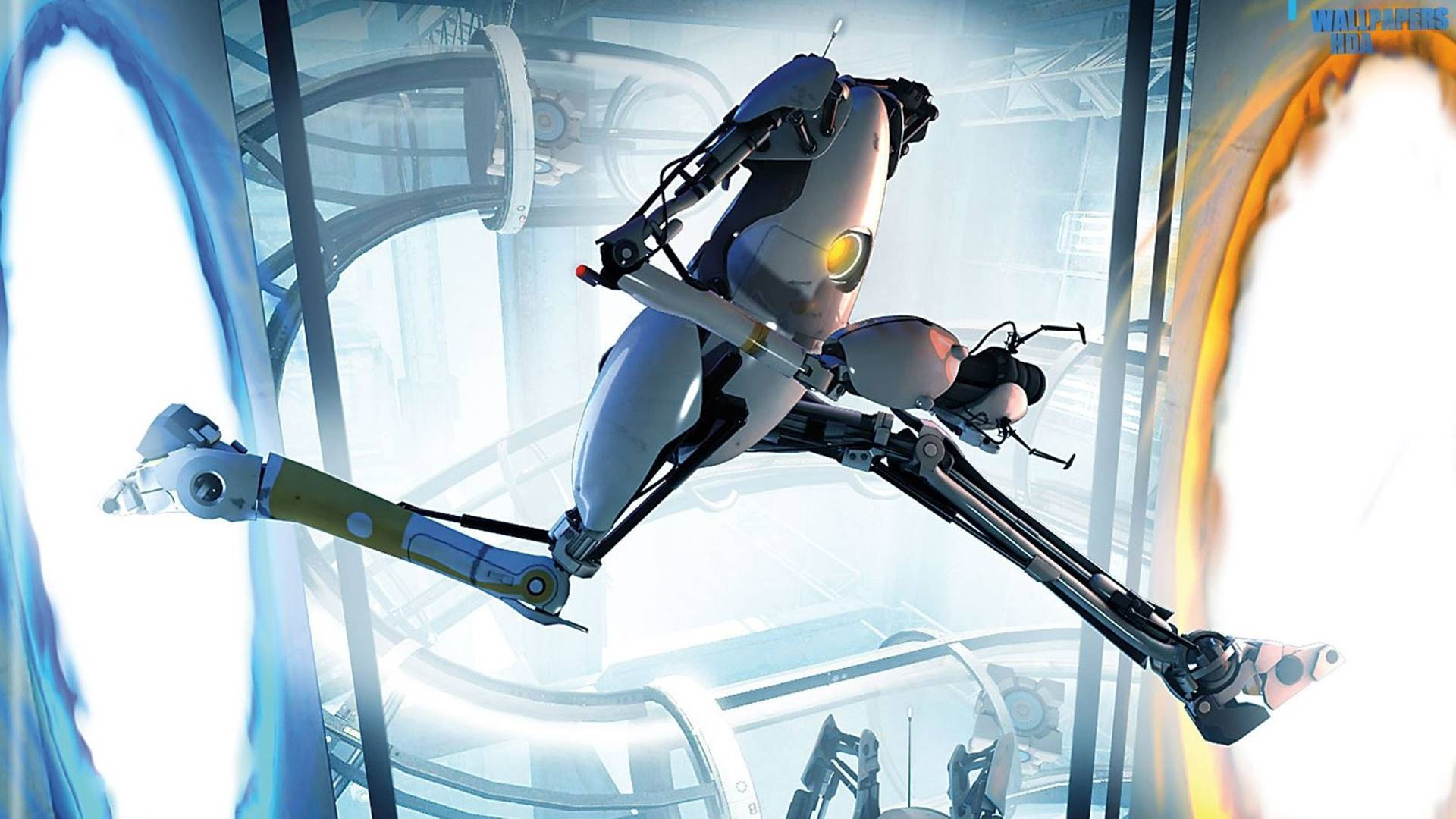
Portal 2
Mercury 2Mercury 2
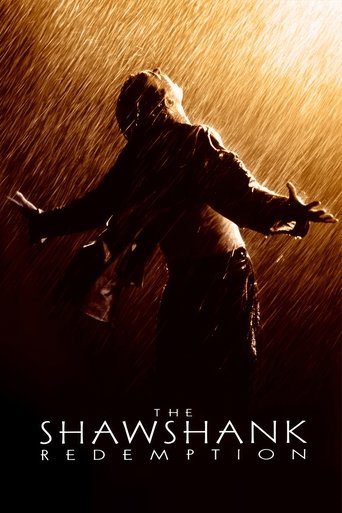

The Shawshank Redemption
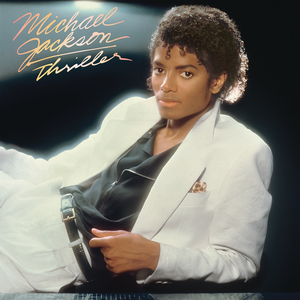
Thriller
Pride and Prejudice
Tokyo
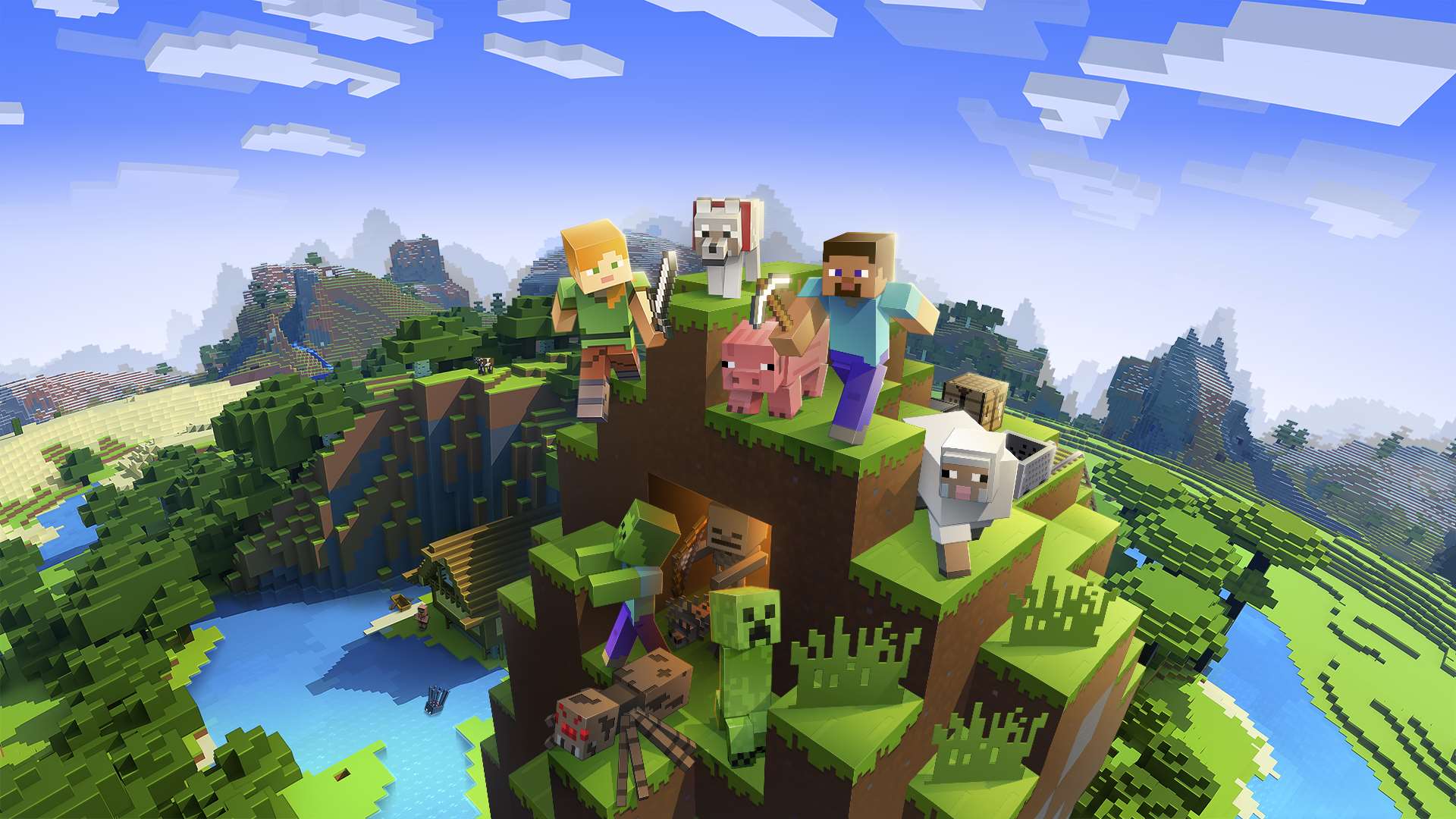
Minecraft
Price and specs
Not enough votes to call it. On the specs, Grok 4.3 has the edge: bigger model tier, newer, bigger context window, major provider backing. Mercury 2 costs 3.3x less per token.
| Spec | Grok 4.3 | Mercury 2 |
|---|---|---|
| Input price | $1.25/M tokens | $0.25/M tokens |
| Output price | $2.5/M tokens | $0.75/M tokens |
| Context window | 1.0M tokens | 128K tokens |
| Weights | Closed | — |
| Free API (OpenRouter) | No | No |
| Released | May 2026 | Mar 2026 |
| At 10M a month | $12.50 | $2.50 |
Input tokens at list price. No caching, no batch discount.
Where to run it
Grok 4.31 host
Mercury 21 host
Per million tokens. Prices and uptime via OpenRouter, checked 10 Oct 2026.
Common questions
What is the difference between Grok 4.3 and Mercury 2?
Grok 4.3 is developed by xAI while Mercury 2 is developed by Inception. Grok 4.3 has a 1.0M token context window vs Mercury 2's 128K. You can compare their actual outputs across 53 challenges on Rival to see how they differ in practice.
Which is better, Grok 4.3 or Mercury 2?
It depends on your use case. Grok 4.3 and Mercury 2 each have strengths in different areas. Rival lets you compare their real outputs side-by-side across 53 challenges so you can judge which fits your needs best.
How much does Grok 4.3 cost compared to Mercury 2?
Grok 4.3 costs $1.25/M input tokens and Mercury 2 costs $0.25/M input tokens. Mercury 2 is $1.00/M cheaper per input. Check their side-by-side outputs on Rival to see if the price difference is justified by quality.
How can I compare Grok 4.3 and Mercury 2 on Rival?
This page shows a side-by-side comparison of Grok 4.3 and Mercury 2 across shared challenges. You can vote on which model produced the better output in a blind duel. Browsing and voting are free. No account is needed to look; signing in only saves your votes and likes.
More comparisons
Against the newest arrivals
- Grok 4.3 vs Step 5 PreviewLanded Oct 2026
- Mercury 2 vs Claude Haiku 5.5Landed Oct 2026
- Grok 4.3 vs Ling 3.1 FlashLanded Oct 2026
- Mercury 2 vs Mistral Large 4Landed Oct 2026
- Grok 4.3 vs GPT-6.1 SolLanded Sep 2026
- Mercury 2 vs Claude Sonnet 5.5Landed Sep 2026
- Grok 4.3 vs Solar Mini 4Landed Sep 2026
- Mercury 2 vs Qwen3.8 Max PrimeLanded Sep 2026


