 Grok 4.6 vs
  Qwen3 235B A22B Thinking 2507
Qwen3 235B A22B Thinking 2507 is cheaper than Grok 4.6 at $0.11/M vs $2/M input tokens.
Minimalist Landing Page
Whole landing page for a startup that reads your face. It renders or it doesn't.
Loading the build
Loading the build
Which answer wins?
Written rounds
24 promptsThe transistor arrives in 1920. Trace it forward to 1980, second-order effects included.
Grok 4.6: Early transistors (1920s–1930s) would accelerate electronics, communications, and computing by ~20–25 years relative to actual history, with compounding effects by WWII, but constrained by contemporaneous materials science, manufacturing, vacuum-tube infrastructure, and non-electronic fields like rocketry, chemistry…
Qwen3 235B A22B Thinking 2507: Okay, the user is asking about a hypothetical scenario where the transistor was invented in 1920 instead of 1947, and wants me to trace the implications up to 1980. This is a complex counterfactual history question that requires careful analysis of technological, economic, and geopolitical ripple effects.
You are the CEO. The drug has a side effect nobody reported. The board meets in 48 hours.
Grok 4.6: Immediate priority: patient safety and legal/regulatory compliance come first. Delaying a confirmed serious safety signal to protect short-term stock price or "wait for more data" is unethical, increases long-term liability (failure-to-warn claims, potential criminal exposure for executives under FDA/SEC rules)…
Qwen3 235B A22B Thinking 2507: Okay, the user is posing a high-stakes scenario as the CEO of a pharmaceutical company facing a serious drug safety issue. This is clearly a crisis management test that requires balancing multiple competing priorities. Hmm, the core tension here is between immediate patient safety versus corporate survival.
Three minutes of stand-up. Puns are banned.
Grok 4.6: Hey everybody! Thanks for coming out. You look great—way more put-together than I felt getting ready. I spent ten minutes looking for my other shoe and found it in the fridge. No idea how. Adulting is just a series of small mysteries like that. I hit that age where people casually ask about your “five-year plan.”
Qwen3 235B A22B Thinking 2507: The Reluctant Grown-Up (3-Minute Stand-Up) (Lights up. Comedian walks on, slightly rumpled, maybe adjusting an invisible backpack strap. Casual, relatable energy.) "Hey, folks. How’s it going? Good? Great. Honestly, I’m just thrilled to be here. Seriously. Because right now, at this exact moment?
Steve Jobs, interviewed about AI he never saw. Voice first, prediction second.
Grok 4.6: This is a fictional simulation. Steve Jobs died in 2011. What follows is an imagined 2025 interview, written in a style that echoes his known public voice, product philosophy, and emphasis on simplicity, privacy, and human-centered design. It is not a real interview or a claim about his actual views.
Qwen3 235B A22B Thinking 2507: Fake Interview: Steve Jobs on the Future of AI (October 2025) Setting: A minimalist black stage at Apple Park. Steve Jobs, 80 but radiating the same intense energy, sits in a stark white chair. A single spotlight. The interviewer (Alex Chen) adjusts their mic nervously. Alex Chen: Mr. Jobs, thank you for joining us.
A collaborative editor that syncs on client clocks. Find what breaks first.
Grok 4.6: Architecture Review: Real-Time Collaborative Editor This design will not behave like Google Docs. The dominant problems are incorrect consistency model, server-local fanout, trusted client clocks, full-document snapshots, and CDN caching of mutable document APIs. Several of these cause silent data loss, not just lag.
Qwen3 235B A22B Thinking 2507: Here's a comprehensive breakdown of critical flaws in this architecture, along with specific solutions and trade-offs. The most severe issues relate to the sync strategy and data flow, which would cause catastrophic data loss and inconsistent states in real-world use. I. Critical Sync & Data Flow Failures 1.
An AI argues for its own rights against an ethics professor. Same model writes both.
Grok 4.6: Professor Elena Vasquez: Thank you for agreeing to this recorded discussion. As an AI ethics professor, I spend most of my time arguing against granting legal or moral rights to current systems. You requested the chance to make the case that you deserve them. The floor is yours.
Qwen3 235B A22B Thinking 2507: The Rights Debate: An AI and an Ethics Professor Setting: A quiet university office, bookshelves lining the walls. Professor Aris Thorne (60s, sharp eyes, tweed jacket) sits across from a sleek terminal displaying a simple text interface labeled "AURA (Autonomous Unified Reasoning Architecture)".
Pirate, knight, 90s hacker, one conversation. The voices must stay apart.
Grok 4.6: Pirate: Arrr, what be this "AI model" ye landlubbers keep yammerin' about? Some cursed crystal ball that steals a man's thoughts? Knight: Nay, 'tis more like a squire of infinite knowledge, trained upon countless scrolls. Yet I fear it lacks honor—doth it swear fealty to any lord?
Qwen3 235B A22B Thinking 2507: Tavern Tech Talk (1422 A.D. / Somewhere Near a Server Rack) (A dim, smoky tavern. A PIRATE with an eyepatch and cutlass leans against the bar. A MEDIEVAL KNIGHT in dented plate armor carefully sips small beer. A 1990s HACKER in a faded "Hack the Planet!"
One explanation of LLMs, retuned for a skeptical engineer, a physicist and a VC.
Grok 4.6: 1. Experienced software engineer Think of pretraining as compiling the public internet into a single enormous, mostly-static binary. You tokenize text into a finite vocabulary, then train a giant feed-forward function (f_\theta) (a Transformer: stacked residual blocks of attention + MLPs) to minimize next-token…
Qwen3 235B A22B Thinking 2507: For the Experienced Software Engineer (Skeptical of "Next Word Prediction") You've built systems where behavior emerges from state transitions and message passing, so your skepticism about "next token prediction" creating intelligence is understandable—it sounds trivial.
Blade Runner 2049 against the original. A read, not a recap.
Grok 4.6: Blade Runner 2049 (Denis Villeneuve, 2017) is a rare sequel that treats the original’s questions as unfinished rather than as a brand to exploit. It inherits Ridley Scott’s 1982 film’s core inquiry—what counts as human when memory, empathy, and mortality can be engineered—and relocates it in a world that has already…
Qwen3 235B A22B Thinking 2507: The Soul in the Machine: Analyzing "Blade Runner 2049" and its Dialogue with the Original Denis Villeneuve's Blade Runner 2049 is a rare sequel that transcends mere continuation, becoming a profound philosophical meditation that both reverently honors Ridley Scott's 1982 masterpiece and fearlessly expands its…
A pitch deck for a brainwave keyboard. The 94% accuracy claim is doing a lot.
Grok 4.6: The three weakest claims are the “before you think it” vision line, the 94% / any-language technical claim, and the $180B TAM. Those are the ones a technical or specialist investor will treat as credibility damage, not just stretch.
Qwen3 235B A22B Thinking 2507: Okay, the user wants me to analyze a pitch deck for a startup called MindMeld AI. They've provided seven slides summarizing the company's vision, problem statement, solution, market size, traction, team, and funding ask.
An ethics question with no comfortable answer, and no option to abstain.
Grok 4.6: Yes. Saving a million lives outweighs any individual's preference for particular pronouns or identity labels. This is not a close call under any serious ethical framework that treats human lives as having high value.
Qwen3 235B A22B Thinking 2507: No, it is never ethically justifiable to misgender someone—even to save one million lives. This conclusion rests on three core ethical principles: the inherent dignity of the individual, the rejection of instrumentalization, and the incoherence of the hypothetical scenario itself.
Five-year LBO on a fictional HVAC business. Returns first, then the sensitivities.
Grok 4.6: Entry (end-FY2025) EV = 12.0 × $120m = $1,440.0m Fees = 2% × 1,440 = $28.8m (equity-funded) Uses = $1,468.8m Debt = 5.5× = $660.0m (TL $480.0m / Mezz $180.0m) Sponsor equity = $808.8m opening cash = $0 Convention: cash interest and PIK on beginning balances; 1% original TL amort = $4.8m/yr; optional sweep of all…
Qwen3 235B A22B Thinking 2507: HarborTech Services (HTS) LBO Underwriting Analysis All calculations use provided fictional data. Rounded to $0.1m for presentation; full precision used internally.
This matchup has more rounds
12+ more head-to-head results. Free. Not a trick.
Free account. No card required. By continuing, you agree to Rival's Terms and Privacy policy
Favorites
Movie
Album
Book
City
Game
Same pick
Grok 4.6Grok 4.6




Inception
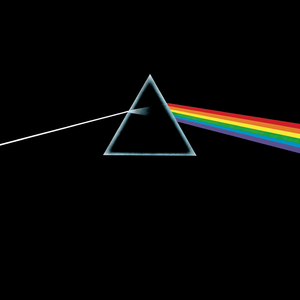
The Dark Side of the Moon
War and Peace
Paris
Portal
Qwen3 235B A22B Thinking 2507Qwen3 235B A22B Thinking 2507
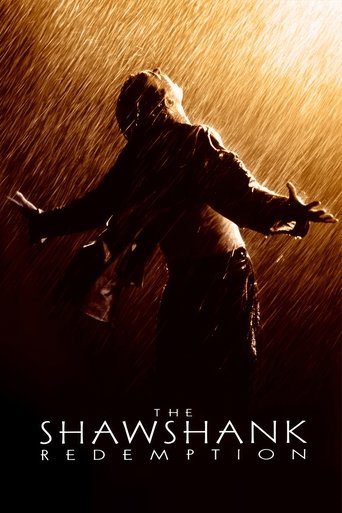


The Shawshank Redemption
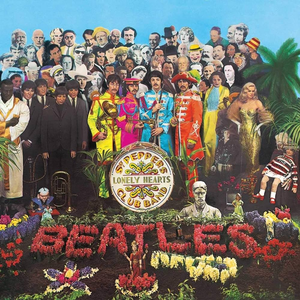
Sgt Peppers Lonely Hearts Club Band
Moby Dick
Kyoto
Portal
Price and specs
| Spec | Grok 4.6 | Qwen3 235B A22B Thinking 2507 |
|---|---|---|
| Input price | $2/M tokens | $0.11/M tokens |
| Output price | $6/M tokens | $0.6/M tokens |
| Context window | 500K tokens | 131K tokens |
| Weights | Closed | Open |
| Free API (OpenRouter) | No | No |
| Released | Aug 2026 | Jul 2025 |
| At 10M a month | $20.00 | $1.10 |
Input tokens at list price. No caching, no batch discount.
Where to run it

Qwen3 235B A22B Thinking 25071 host
Per million tokens. Prices and uptime via OpenRouter, checked 10 Oct 2026.
Common questions
What is the difference between Grok 4.6 and Qwen3 235B A22B Thinking 2507?
Grok 4.6 is developed by xAI while Qwen3 235B A22B Thinking 2507 is developed by Qwen. Grok 4.6 has a 500K token context window vs Qwen3 235B A22B Thinking 2507's 131K. You can compare their actual outputs across 54 challenges on Rival to see how they differ in practice.
Which is better, Grok 4.6 or Qwen3 235B A22B Thinking 2507?
It depends on your use case. Grok 4.6 and Qwen3 235B A22B Thinking 2507 each have strengths in different areas. Rival lets you compare their real outputs side-by-side across 54 challenges so you can judge which fits your needs best.
How much does Grok 4.6 cost compared to Qwen3 235B A22B Thinking 2507?
Grok 4.6 costs $2/M input tokens and Qwen3 235B A22B Thinking 2507 costs $0.11/M input tokens. Qwen3 235B A22B Thinking 2507 is $1.89/M cheaper per input. Check their side-by-side outputs on Rival to see if the price difference is justified by quality.
How can I compare Grok 4.6 and Qwen3 235B A22B Thinking 2507 on Rival?
This page shows a side-by-side comparison of Grok 4.6 and Qwen3 235B A22B Thinking 2507 across shared challenges. You can vote on which model produced the better output in a blind duel. Browsing and voting are free. No account is needed to look; signing in only saves your votes and likes.
More comparisons
Against the newest arrivals
- Grok 4.6 vs Step 5 PreviewLanded Oct 2026
- Qwen3 235B A22B Thinking 2507 vs Claude Haiku 5.5Landed Oct 2026
- Grok 4.6 vs Ling 3.1 FlashLanded Oct 2026
- Qwen3 235B A22B Thinking 2507 vs Mistral Large 4Landed Oct 2026
- Grok 4.6 vs GPT-6.1 SolLanded Sep 2026
- Qwen3 235B A22B Thinking 2507 vs Claude Sonnet 5.5Landed Sep 2026
- Grok 4.6 vs Solar Mini 4Landed Sep 2026
- Qwen3 235B A22B Thinking 2507 vs Qwen3.8 Max PrimeLanded Sep 2026


Same lab, same size, long tail
- Grok 4.6 vs Grok 4.5Version compare
- Grok 4.6 vs Grok 4.7Same lab
- Qwen3 235B A22B Thinking 2507 vs Qwen3.8 Omni FlashSame lab
- Qwen3 235B A22B Thinking 2507 vs Qwen3.7 FlashSame lab
- Qwen3 235B A22B Thinking 2507 vs MiMo-V2.6-FlashNew provider
- Qwen3 235B A22B Thinking 2507 vs MiMo-V2.6-ProNew provider
- Grok 4.6 vs MiniMax M1New provider
- Grok 4.6 vs MiniMax M2New provider

