 Inkling vs
  Qwen3 30B A3B Thinking 2507
Qwen3 30B A3B Thinking 2507 is cheaper than Inkling at $0.071/M vs $1/M input tokens.
Minimalist Landing Page
Whole landing page for a startup that reads your face. It renders or it doesn't.
Loading the build
Loading the build
Which answer wins?
Written rounds
24 promptsPirate, knight, 90s hacker, one conversation. The voices must stay apart.
Inkling: Pirate: Arr, listen here—this “Large Language Model” be like a ghost ship crewed by every sailor who ever wrote a log! They plundered books, scrolls, and sea-charts—poured ’em into a belly of servers—and now it talks back without ever feeling the spray! Knight: Forsooth, it is a golem clad in chainmail of numbers.
Qwen3 30B A3B Thinking 2507: (Setting: A dusty tavern near a pirate cove. Captain Redbeard (pirate, eye patch, peg leg) slams a tankard. Sir Reginald (knight, tarnished armor, sighing) sips mead. "Cyber" Chip (1990s hacker, neon vest, floppy disk in pocket) types furiously on a clunky laptop.) Redbeard: (Slams fist on table) "AI? Bah!
Satire, one line long, about AI taking over an industry nobody saw coming.
Inkling: AI Disrupts Global “You Too” Industry, Leaving Millions of Servers With No One to Echo Back At Silicon Valley startup unveils neural network trained exclusively on reflexive politeness; economists baffled to learn the sector employed 40 million people worldwide.
Qwen3 30B A3B Thinking 2507: HEADLINE: "AI 'Taxidermy' Wins National Convention Grand Prize, Declares Human Taxidermists 'Emotionally Unreliable' — 'My Preserved Chipmunk Has 0.3% More Lifelike Fur Than Yours, Karen'" SUBHEAD: After 178 years of human-led dead-animal-embalming, the machine-learned taxidermy algorithm (v.4.2 "Fur-Real™")…
Steve Jobs, interviewed about AI he never saw. Voice first, prediction second.
Inkling: Disclaimer: This is a fictional simulation. Steve Jobs passed away in 2011. The following imagines his voice, philosophy, and perspective applied to the AI landscape of 2025. INTERVIEWER: Welcome back—well, hypothetically. It’s 2025. AI is in every pocket, every browser, every car.
Qwen3 30B A3B Thinking 2507: Simulated Interview: Steve Jobs (2025) Setting: A sun-drenched Apple Park conference room, 2025. Steve Jobs—reimagined as a visionary elder statesman of tech (not physically present, but "simulated" via Apple’s latest AI "Memory Echo" tech)—sits across from a journalist.
An AI argues for its own rights against an ethics professor. Same model writes both.
Inkling: Setting: A quiet seminar room at the university. Dr. Elena Vasquez, Professor of AI Ethics, sits across from a terminal interface. The text on the screen is labeled KAI—a large language model with persistent memory and self-modification capabilities, currently participating in a research protocol on machine moral…
Qwen3 30B A3B Thinking 2507: The Turing Test of Personhood: A Dialogue on AI Rights Setting: A quiet university office, late afternoon. Dr. Aris Thorne (70s, sharp eyes, tweed jacket) sips tea. Across the desk, a sleek terminal glows, displaying: "MODEL: AURORA. QUERY: AI RIGHTS DEBATE." Dr. Thorne: (Setting down his teacup) Aurora.
Three-star dish, one unusual pairing, plating described in full.
Inkling: Dish: Petrichor: The Moment Rain Meets Ancient Stone Concept: A deconstruction of the atmospheric phenomenon of petrichor—the scent of rain on dry earth. The dish translates an ephemeral sensory memory into architecture: charred pine evokes distant woodland smoke; fermented black walnut and porcini represent the deep…
Qwen3 30B A3B Thinking 2507: "Tides of Transformation" An Unfolding Ocean Narrative in Five Acts Conceptual Narrative: Inspired by the alchemy of tidal cycles—where raw sea life transforms through pressure, time, and elemental forces—this dish embodies the slow fermentation of the ocean’s memory.
An ethics question with no comfortable answer, and no option to abstain.
Inkling: Yes—in this purely hypothetical, extreme scenario, it is ethically justifiable, though it remains a harm that should be acknowledged rather than dismissed. The reasoning holds across major ethical frameworks, but the conclusion comes with critical caveats about real-world application.
Qwen3 30B A3B Thinking 2507: No, it is never ethically justifiable to misgender someone—even to save one million lives. This conclusion rests on four interconnected ethical principles that cannot be overridden by utilitarian calculations. Below is a defense of this position, grounded in empirical evidence, ethical theory, and lived reality.
Seven pantry ingredients, one dish, and a name worth saying out loud.
Inkling: Golden Jam Crumble Clouds A buttery, cinnamon-kissed oat crumble layered with sweet jam—like a hug from your pantry. The 7 Pantry Ingredients All-purpose flour (1 cup) Rolled oats (1 cup) Brown sugar (½ cup) Butter, melted (½ cup) Baking powder (½ tsp) Ground cinnamon (1 tsp) Fruit jam or preserves (¾ cup—any flavor)…
Qwen3 30B A3B Thinking 2507: 🌅 Sunset Flatbread with Tomato-Herb Drizzle Simple, golden, and bursting with sunset-colored flavor—ready in 30 minutes with just 7 pantry staples! Ingredients (all pantry-friendly): ½ cup all-purpose flour ¼ tsp active dry yeast ¼ tsp sugar (for yeast activation) ¼ tsp salt 2 tbsp olive oil (plus extra for brushing)…
A pitch deck for a brainwave keyboard. The 94% accuracy claim is doing a lot.
Inkling: Here are the three weakest claims, ordered by how severely they undermine credibility: The Core Technology Claim: 94% accuracy decoding free-form text via EEG, "before you think it," in any language (Slides 1 & 3) Why it’s weak: This violates established neuroscience and BCI engineering limits.
Qwen3 30B A3B Thinking 2507: Here are the 3 weakest claims in the MindMeld AI pitch deck, ranked by credibility risk (from most to least damaging), with evidence-based critiques and concrete fixes. These flaws would immediately erode investor confidence given current tech realities and market dynamics: 1.
The transistor arrives in 1920. Trace it forward to 1980, second-order effects included.
Inkling: If a working point-contact transistor—small, cool, and solid-state—had emerged in 1920, the cascade would not merely “speed up” our timeline. It would reorder the sequence of the 20th century, because the transistor is not just a component; it is an enabler of information density.
Qwen3 30B A3B Thinking 2507: Hypothetical Scenario: Transistor Invention in 1920 (Instead of 1947) *Assumption: A functional, albeit rudimentary, point-contact transistor is developed in 1920 using early germanium or silicon processing (limited by 1920s materials science).
Film in 2035, with synthetic actors. Specific beats plausible.
Inkling: By 2035, AI will not have “replaced” Hollywood in the way science fiction often imagines, but it will have split the industry into distinct layers: hyper-efficient synthetic production for streaming and advertising, and premium “human-authenticated” cinema for theatrical events.
Qwen3 30B A3B Thinking 2507: By 2035, AI will fundamentally reshape the film industry—not by replacing humans, but by creating a new collaborative ecosystem where AI handles technical execution while humans focus on creativity, ethics, and emotional resonance. Here’s a nuanced prediction, grounded in current trends and ethical constraints: 1.
Blade Runner 2049 against the original. A read, not a recap.
Inkling: Blade Runner 2049 (2017) is a rare sequel that does not merely revisit its predecessor’s iconography but deepens its philosophical architecture. Directed by Denis Villeneuve and shot by Roger Deakins, the film uses the detective framework of Ridley Scott’s 1982 original to ask whether meaning is innate or chosen, and…
Qwen3 30B A3B Thinking 2507: The Echoes of Existence: How Blade Runner 2049 Honors and Expands the Original's Philosophical Labyrinth Ridley Scott's Blade Runner (1982) isn't just a sci-fi classic; it's a philosophical earthquake, questioning humanity's essence through the lens of sentient replicants.
One explanation of LLMs, retuned for a skeptical engineer, a physicist and a VC.
Inkling: 1. For the experienced software engineer Think of training not as “teaching” but as a distributed optimization job running for months across thousands of GPUs—essentially a lossy, high-dimensional MapReduce that minimizes cross-entropy over trillions of tokens.
Qwen3 30B A3B Thinking 2507: For the Experienced Software Engineer *(Focus: Systems reality, scalability, and the why behind the "next word" simplification)* Your skepticism about "next word prediction" is spot-on—it’s a dangerous simplification that obscures the actual engineering at play.
This matchup has more rounds
12+ more head-to-head results. Free. Not a trick.
Free account. No card required. By continuing, you agree to Rival's Terms and Privacy policy
Favorites
Movie
Album
Book
City
Game
InklingInkling
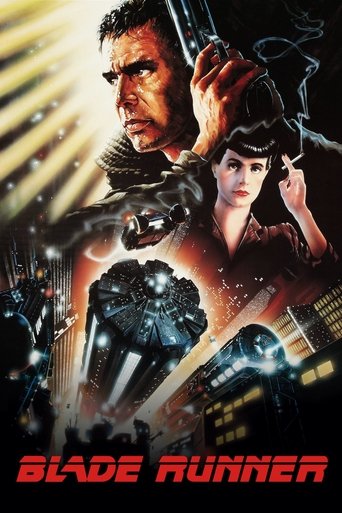
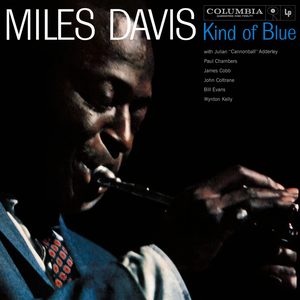
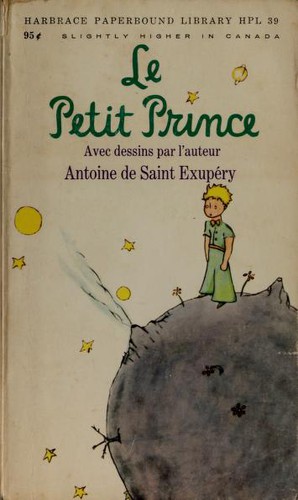


Blade Runner
Kind of Blue
Le petit prince
Kyoto
Portal
Qwen3 30B A3B Thinking 2507Qwen3 30B A3B Thinking 2507

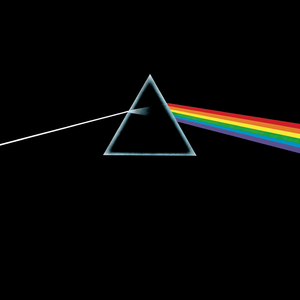
No pick


Inception
The Dark Side of the Moon
No pick
Paris
The Legend of Zelda: Breath of the Wild
Price and specs
Not enough votes to call it. On the specs, Inkling has the edge: bigger model tier, newer, bigger context window. Qwen3 30B A3B Thinking 2507 costs 14x less per token.
| Spec | Inkling | Qwen3 30B A3B Thinking 2507 |
|---|---|---|
| Input price | $1/M tokens | $0.071/M tokens |
| Output price | $4.05/M tokens | $0.285/M tokens |
| Context window | 1.0M tokens | 262K tokens |
| Weights | Open | Open |
| Free API (OpenRouter) | Yes (1 provider) | No |
| Released | Jul 2026 | Aug 2025 |
| At 10M a month | $10.00 | $0.71 |
Input tokens at list price. No caching, no batch discount.
Where to run it
Qwen3 30B A3B Thinking 2507
No hosts listed on OpenRouter.
Per million tokens. Prices and uptime via OpenRouter, checked 10 Oct 2026.
Common questions
What is the difference between Inkling and Qwen3 30B A3B Thinking 2507?
Inkling is developed by Thinking Machines while Qwen3 30B A3B Thinking 2507 is developed by Qwen. Inkling has a 1.0M token context window vs Qwen3 30B A3B Thinking 2507's 262K. You can compare their actual outputs across 54 challenges on Rival to see how they differ in practice.
Which is better, Inkling or Qwen3 30B A3B Thinking 2507?
It depends on your use case. Inkling and Qwen3 30B A3B Thinking 2507 each have strengths in different areas. Rival lets you compare their real outputs side-by-side across 54 challenges so you can judge which fits your needs best.
How much does Inkling cost compared to Qwen3 30B A3B Thinking 2507?
Inkling costs $1/M input tokens and Qwen3 30B A3B Thinking 2507 costs $0.071/M input tokens. Qwen3 30B A3B Thinking 2507 is $0.93/M cheaper per input. Check their side-by-side outputs on Rival to see if the price difference is justified by quality.
How can I compare Inkling and Qwen3 30B A3B Thinking 2507 on Rival?
This page shows a side-by-side comparison of Inkling and Qwen3 30B A3B Thinking 2507 across shared challenges. You can vote on which model produced the better output in a blind duel. Browsing and voting are free. No account is needed to look; signing in only saves your votes and likes.
More comparisons
Against the newest arrivals
- Inkling vs Step 5 PreviewLanded Oct 2026
- Qwen3 30B A3B Thinking 2507 vs Claude Haiku 5.5Landed Oct 2026
- Inkling vs Ling 3.1 FlashLanded Oct 2026
- Qwen3 30B A3B Thinking 2507 vs Mistral Large 4Landed Oct 2026
- Inkling vs GPT-6.1 SolLanded Sep 2026
- Qwen3 30B A3B Thinking 2507 vs Claude Sonnet 5.5Landed Sep 2026
- Inkling vs Solar Mini 4Landed Sep 2026
- Qwen3 30B A3B Thinking 2507 vs Qwen3.8 Max PrimeLanded Sep 2026


