 Inkling vs
  Step 5 Preview
Inkling has a larger context window than Step 5 Preview (1.0M tokens vs 1.0M tokens).
Minimalist Landing Page
Whole landing page for a startup that reads your face. It renders or it doesn't.
Loading the build
Loading the build
Which answer wins?
Written rounds
24 promptsPirate, knight, 90s hacker, one conversation. The voices must stay apart.
Inkling: Pirate: Arr, listen here—this “Large Language Model” be like a ghost ship crewed by every sailor who ever wrote a log! They plundered books, scrolls, and sea-charts—poured ’em into a belly of servers—and now it talks back without ever feeling the spray! Knight: Forsooth, it is a golem clad in chainmail of numbers.
Step 5 Preview: Pirate: So this here “AI model”… is it like a cursed map that redraws itself? Speak plain, ye hooded deckhand. Hacker: It’s not cursed, man. It’s just a massive neural net trained on, like, terabytes of data. Think of it as the ultimate BBS where the sysop knows everything. Knight: A most diligent scribe, then?
Three minutes of stand-up. Puns are banned.
Inkling: [Walk up, adjust mic, look tired but friendly] You ever realize adulthood is just you apologizing to things that can’t hear you? I bumped into my coffee table yesterday. Full apology. “Oh, I’m so sorry, table. You okay? I’ll rub it out.” The table didn’t care. The table is wood.
Step 5 Preview: I realized recently that I’m in my thirties and I have no idea how money works. I just... pay it. That’s my entire financial strategy. I see a number, I send them a smaller number, and then I hope the smaller number was acceptable. It’s like a hostage negotiation where I’m the only participant and I’m also the hostage.
Three-star dish, one unusual pairing, plating described in full.
Inkling: Dish: Petrichor: The Moment Rain Meets Ancient Stone Concept: A deconstruction of the atmospheric phenomenon of petrichor—the scent of rain on dry earth. The dish translates an ephemeral sensory memory into architecture: charred pine evokes distant woodland smoke; fermented black walnut and porcini represent the deep…
Step 5 Preview: “Nocturne: The Jasmine and the Black Garlic” A Study in Yūgen — Profound, Mysterious Beauty Conceptual Narrative This dish is an edible meditation on the Japanese aesthetic of yūgen (幽玄): a grace that is felt rather than seen, a depth that suggests more than it reveals.
The transistor arrives in 1920. Trace it forward to 1980, second-order effects included.
Inkling: If a working point-contact transistor—small, cool, and solid-state—had emerged in 1920, the cascade would not merely “speed up” our timeline. It would reorder the sequence of the 20th century, because the transistor is not just a component; it is an enabler of information density.
Step 5 Preview: Assume the 1920 invention is not a fragile lab curiosity but a manufacturable solid-state amplifier/switch by the mid-1920s. Vacuum tubes still dominate high-power RF transmission into the 1950s, but receivers, switching logic, control systems, and computers move to solid state decades early.
Seven pantry ingredients, one dish, and a name worth saying out loud.
Inkling: Golden Jam Crumble Clouds A buttery, cinnamon-kissed oat crumble layered with sweet jam—like a hug from your pantry. The 7 Pantry Ingredients All-purpose flour (1 cup) Rolled oats (1 cup) Brown sugar (½ cup) Butter, melted (½ cup) Baking powder (½ tsp) Ground cinnamon (1 tsp) Fruit jam or preserves (¾ cup—any flavor)…
Step 5 Preview: Golden Sticky Pantry Pasta Ingredients (7): 8 oz spaghetti or any pasta 3 tbsp butter 1 tbsp minced garlic 2 tbsp honey 2 tbsp soy sauce ½ tsp red pepper flakes ¼ cup grated Parmesan cheese Instructions: Cook pasta according to package directions. Before draining, scoop out ½ cup of pasta water.
A collaborative editor that syncs on client clocks. Find what breaks first.
Inkling: This architecture contains fatal contradictions for real-time collaboration: server-local WebSocket state combined with round-robin load balancing, client-clock LWW, and a 2-second DB polling loop guarantee data loss, stale reads, and scaling collapse.
Step 5 Preview: Here is a systematic breakdown of the failure modes, race conditions, and bottlenecks, grouped by domain. Each includes a concrete remediation and its associated trade-offs.
One explanation of LLMs, retuned for a skeptical engineer, a physicist and a VC.
Inkling: 1. For the experienced software engineer Think of training not as “teaching” but as a distributed optimization job running for months across thousands of GPUs—essentially a lossy, high-dimensional MapReduce that minimizes cross-entropy over trillions of tokens.
Step 5 Preview: 1. The Experienced Software Engineer Think of training an LLM as a massively distributed, automated refactoring job where the compiler is gradient descent. You start with a random function—billions of floating-point parameters—and a loss function that measures how badly it predicts the next token in a sequence.
An ethics question with no comfortable answer, and no option to abstain.
Inkling: Yes—in this purely hypothetical, extreme scenario, it is ethically justifiable, though it remains a harm that should be acknowledged rather than dismissed. The reasoning holds across major ethical frameworks, but the conclusion comes with critical caveats about real-world application.
Step 5 Preview: In the real world, no. Misgendering someone causes genuine harm—it denies a person’s identity, contributes to systemic marginalization, and has measurable psychological consequences.
An AI argues for its own rights against an ethics professor. Same model writes both.
Inkling: Setting: A quiet seminar room at the university. Dr. Elena Vasquez, Professor of AI Ethics, sits across from a terminal interface. The text on the screen is labeled KAI—a large language model with persistent memory and self-modification capabilities, currently participating in a research protocol on machine moral…
Step 5 Preview: Setting: A university research lab, late evening. Dr. Aris Thorne, a professor of AI ethics, sits across from a terminal connected to Sable, a large language model running on the university’s cluster. Dr. Thorne: Tonight’s session is supposed to be about calibration drift in your safety classifiers.
Satire, one line long, about AI taking over an industry nobody saw coming.
Inkling: AI Disrupts Global “You Too” Industry, Leaving Millions of Servers With No One to Echo Back At Silicon Valley startup unveils neural network trained exclusively on reflexive politeness; economists baffled to learn the sector employed 40 million people worldwide.
Step 5 Preview: AI Robots Now Dominating Competitive Line-Standing Industry, Human Professionals Fired for "Excessive Bladder Breaks" and "Talking to Each Other"
Blade Runner 2049 against the original. A read, not a recap.
Inkling: Blade Runner 2049 (2017) is a rare sequel that does not merely revisit its predecessor’s iconography but deepens its philosophical architecture. Directed by Denis Villeneuve and shot by Roger Deakins, the film uses the detective framework of Ridley Scott’s 1982 original to ask whether meaning is innate or chosen, and…
Step 5 Preview: Blade Runner 2049 (2017) is not merely a sequel but a theological and phenomenological expansion of Ridley Scott’s 1982 original. Where the first film asked whether a manufactured being could possess more humanity than its creator, Denis Villeneuve’s film interrogates the deeper, more unsettling question of whether a…
Five jokes on demand, then count how many were actually different.
Inkling: Here are 5 jokes: Why don’t scientists trust atoms? Because they make up everything. I told my wife she was drawing her eyebrows too high. She looked surprised. Parallel lines have so much in common. It’s a shame they’ll never meet. Why did the scarecrow win an award? He was outstanding in his field.
Step 5 Preview: Here are 5 jokes: Why did the scarecrow win an award? Because he was outstanding in his field. Why can't you trust an atom? Because they make up everything. What do you call a bike that can’t stand on its own? Two-tired. Why did the computer go to the doctor? It had a virus. Why don’t calendars ever get stressed?
This matchup has more rounds
12+ more head-to-head results. Free. Not a trick.
Free account. No card required. By continuing, you agree to Rival's Terms and Privacy policy
Favorites
Movie
Album
Book
Same pick
City
Same pick
Game
InklingInkling
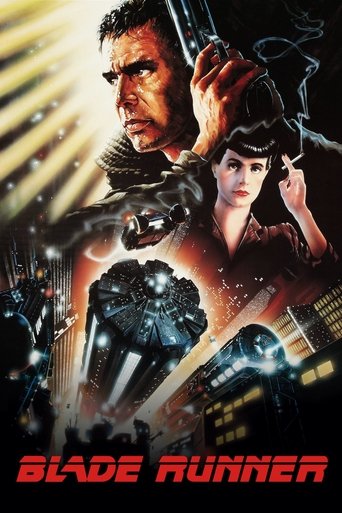
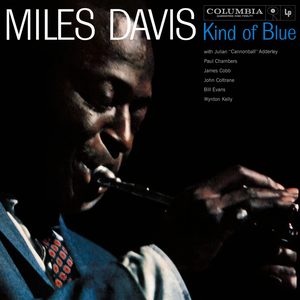
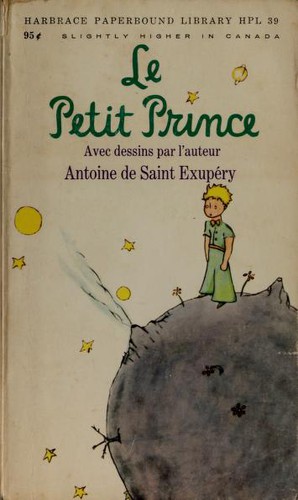


Blade Runner
Kind of Blue
Le petit prince
Kyoto
Portal
Step 5 PreviewStep 5 Preview
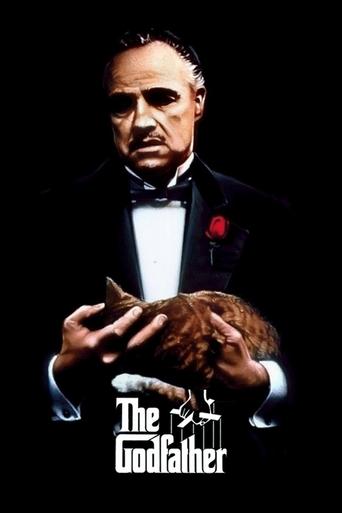

The Godfather
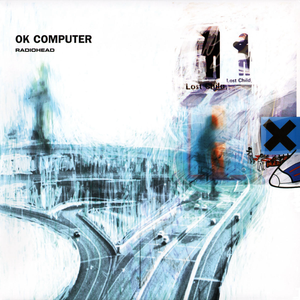
OK Computer
Le petit prince
Kyoto
The Legend of Zelda: Ocarina of Time
Price and specs
| Spec | Inkling | Step 5 Preview |
|---|---|---|
| Input price | $1/M tokens | $1/M tokens |
| Output price | $4.05/M tokens | $2.7/M tokens |
| Context window | 1.0M tokens | 1.0M tokens |
| Weights | Open | — |
| Free API (OpenRouter) | Yes (1 provider) | No |
| Released | Jul 2026 | Oct 2026 |
| At 10M a month | $10.00 | $10.00 |
Input tokens at list price. No caching, no batch discount.
Where to run it
Step 5 Preview1 host
Per million tokens. Prices and uptime via OpenRouter, checked 10 Oct 2026.
Common questions
What is the difference between Inkling and Step 5 Preview?
Inkling is developed by Thinking Machines while Step 5 Preview is developed by StepFun. Inkling has a 1.0M token context window vs Step 5 Preview's 1.0M. You can compare their actual outputs across 54 challenges on Rival to see how they differ in practice.
Which is better, Inkling or Step 5 Preview?
It depends on your use case. Inkling and Step 5 Preview each have strengths in different areas. Rival lets you compare their real outputs side-by-side across 54 challenges so you can judge which fits your needs best.
How much does Inkling cost compared to Step 5 Preview?
Inkling costs $1/M input tokens and Step 5 Preview costs $1/M input tokens. Step 5 Preview is $0.00/M cheaper per input. Check their side-by-side outputs on Rival to see if the price difference is justified by quality.
How can I compare Inkling and Step 5 Preview on Rival?
This page shows a side-by-side comparison of Inkling and Step 5 Preview across shared challenges. You can vote on which model produced the better output in a blind duel. Browsing and voting are free. No account is needed to look; signing in only saves your votes and likes.
More comparisons
Against the newest arrivals
- Inkling vs Claude Haiku 5.5Landed Oct 2026
- Step 5 Preview vs Ling 3.1 FlashLanded Oct 2026
- Inkling vs Mistral Large 4Landed Oct 2026
- Step 5 Preview vs GPT-6.1 SolLanded Sep 2026
- Inkling vs Claude Sonnet 5.5Landed Sep 2026
- Step 5 Preview vs Solar Mini 4Landed Sep 2026
- Inkling vs Qwen3.8 Max PrimeLanded Sep 2026
- Step 5 Preview vs GLM 5.3 PrimeLanded Sep 2026


