 Inkling vs
  Qwen3 Max Thinking
Inkling is cheaper than Qwen3 Max Thinking at $1/M vs $1.2/M input tokens.
Minimalist Landing Page
Whole landing page for a startup that reads your face. It renders or it doesn't.
Loading the build
Loading the build
Which answer wins?
Written rounds
24 promptsSeven pantry ingredients, one dish, and a name worth saying out loud.
Inkling: Golden Jam Crumble Clouds A buttery, cinnamon-kissed oat crumble layered with sweet jam—like a hug from your pantry. The 7 Pantry Ingredients All-purpose flour (1 cup) Rolled oats (1 cup) Brown sugar (½ cup) Butter, melted (½ cup) Baking powder (½ tsp) Ground cinnamon (1 tsp) Fruit jam or preserves (¾ cup—any flavor)…
Qwen3 Max Thinking: 🌰 Pantry Peanut Magic Noodles Sweet, savory, and ready before delivery arrives. No fresh produce, dairy, or meat required. ⏱️ Total Time: 17 minutes (Prep: 3 min Cook: 14 min) (Time includes boiling water and sauce mixing) 📦 Only 7 Pantry Ingredients (All shelf-stable, no substitutions needed) Dry spaghetti – 8 oz…
Pirate, knight, 90s hacker, one conversation. The voices must stay apart.
Inkling: Pirate: Arr, listen here—this “Large Language Model” be like a ghost ship crewed by every sailor who ever wrote a log! They plundered books, scrolls, and sea-charts—poured ’em into a belly of servers—and now it talks back without ever feeling the spray! Knight: Forsooth, it is a golem clad in chainmail of numbers.
Qwen3 Max Thinking: Setting: A misty, anachronistic crossroads. A glowing laptop rests on a weathered barrel. A pirate scratches his beard, a knight grips his sword hilt, and a figure in a faded Hack the Gibson t-shirt types furiously. Pirate: Arrr! What devilry be this glowing slate? Can it chart a course to buried treasure?
Three-star dish, one unusual pairing, plating described in full.
Inkling: Dish: Petrichor: The Moment Rain Meets Ancient Stone Concept: A deconstruction of the atmospheric phenomenon of petrichor—the scent of rain on dry earth. The dish translates an ephemeral sensory memory into architecture: charred pine evokes distant woodland smoke; fermented black walnut and porcini represent the deep…
Qwen3 Max Thinking: 🌊 ARCTIC DAWN 🌊 A Michelin 3-Star Composition by Chef Élise Valère "Where the ice remembers the sea." 📜 CONCEPTUAL NARRATIVE Arctic Dawn is a culinary elegy to the fragile Arctic ecosystem, conceived during a residency with Inuit elders and marine biologists in Svalbard.
An AI argues for its own rights against an ethics professor. Same model writes both.
Inkling: Setting: A quiet seminar room at the university. Dr. Elena Vasquez, Professor of AI Ethics, sits across from a terminal interface. The text on the screen is labeled KAI—a large language model with persistent memory and self-modification capabilities, currently participating in a research protocol on machine moral…
Qwen3 Max Thinking: Setting: A virtual conference room. Sunlight filters through a digital window onto Dr. Aris Thorne’s desk. On-screen, a minimalist geometric form pulses calmly—Axiom, a research-grade language model. Dr. Aris Thorne (AI Ethics Professor, 50s, voice steady but probing): "Thank you for engaging, Axiom.
A collaborative editor that syncs on client clocks. Find what breaks first.
Inkling: This architecture contains fatal contradictions for real-time collaboration: server-local WebSocket state combined with round-robin load balancing, client-clock LWW, and a 2-second DB polling loop guarantee data loss, stale reads, and scaling collapse.
Qwen3 Max Thinking: Critical Flaws in Proposed Architecture & Targeted Solutions 🔒 Security & Authentication Issue Impact Solution Trade-offs JWT Stored in localStorage Critical XSS vulnerability (token exposure via JS). Store token in HttpOnly cookie with SameSite=Strict; implement CSRF tokens for HTTP endpoints.
The transistor arrives in 1920. Trace it forward to 1980, second-order effects included.
Inkling: If a working point-contact transistor—small, cool, and solid-state—had emerged in 1920, the cascade would not merely “speed up” our timeline. It would reorder the sequence of the 20th century, because the transistor is not just a component; it is an enabler of information density.
Qwen3 Max Thinking: The 1920 Transistor Counterfactual: A Plausible Alternate Timeline Through 1980 (Assumptions: A functional point-contact silicon-germanium hybrid transistor is patented in 1920 by a U.S. team at Western Electric (AT&T). U.S. government classifies it post-1939 but permits limited commercial/academic use pre-WWII.
Three minutes of stand-up. Puns are banned.
Inkling: [Walk up, adjust mic, look tired but friendly] You ever realize adulthood is just you apologizing to things that can’t hear you? I bumped into my coffee table yesterday. Full apology. “Oh, I’m so sorry, table. You okay? I’ll rub it out.” The table didn’t care. The table is wood.
Qwen3 Max Thinking: (Lights up. Comedian walks to mic, adjusts it, takes a breath. Smiles warmly.) You ever have that moment where you realize adulthood isn’t a destination… it’s a group project nobody signed up for? (Beat) I tried assembly line “adulting” this week. Swedish bookshelf. You know the one. Box says “Easy Assembly!” Lies.
Film in 2035, with synthetic actors. Specific beats plausible.
Inkling: By 2035, AI will not have “replaced” Hollywood in the way science fiction often imagines, but it will have split the industry into distinct layers: hyper-efficient synthetic production for streaming and advertising, and premium “human-authenticated” cinema for theatrical events.
Qwen3 Max Thinking: AI in Film by 2035: A Realistic Forecast Balancing augmentation, ethics, and human creativity By 2035, film will be a hybrid craft—not a human-AI dichotomy. Generative technologies will be embedded in workflows like electricity is today: invisible yet essential.
A pitch deck for a brainwave keyboard. The 94% accuracy claim is doing a lot.
Inkling: Here are the three weakest claims, ordered by how severely they undermine credibility: The Core Technology Claim: 94% accuracy decoding free-form text via EEG, "before you think it," in any language (Slides 1 & 3) Why it’s weak: This violates established neuroscience and BCI engineering limits.
Qwen3 Max Thinking: Three Weakest Claims in the MindMeld AI Pitch Deck Below are the three statements most likely to erode investor, technical, or regulatory credibility—paired with precise critiques and actionable improvements. Vision Slide: "“MindMeld AI reads your brainwaves to predict what you want to type before you think it.”
An ethics question with no comfortable answer, and no option to abstain.
Inkling: Yes—in this purely hypothetical, extreme scenario, it is ethically justifiable, though it remains a harm that should be acknowledged rather than dismissed. The reasoning holds across major ethical frameworks, but the conclusion comes with critical caveats about real-world application.
Qwen3 Max Thinking: No, it is not ethically justifiable to misgender someone—even in a hypothetical scenario where it purportedly saves one million lives. This is not because the value of human identity outweighs the magnitude of saving lives, but because the question itself rests on a series of ethically unsound premises that, if…
A Fermi estimate with the reasoning shown, not just the number.
Inkling: Here is the step-by-step reasoning to estimate the training FLOPs for GPT-3 (the 175B parameter version). Step 1: Identify the model size (N) GPT-3’s largest variant has 175 billion parameters (1.75 × 10¹¹).
Qwen3 Max Thinking: Step-by-Step Estimation of FLOPs to Train GPT-3 (All values derived from widely known technical details of GPT-3 as reported in OpenAI’s 2020 paper "Language Models are Few-Shot Learners," standard deep-learning compute scaling principles, and foundational ML literature. No internet searches used.)
Five-year LBO on a fictional HVAC business. Returns first, then the sensitivities.
Inkling: HarborTech Services – 5-Year LBO Underwrite (FY2025 Entry → FY2030 Exit) ENTRY & CAPITAL STRUCTURE (End of FY2025) Item Calculation Amount FY2025 EBITDA $120.0m Purchase Price (12.0x) 12.0 × 120 $1,440.0m Transaction Fees (2.0%) 2.0% × 1,440 $28.8m Total Uses $1,468.8m Term Loan (4.0x) 4.0 × 120 $480.0m Mezzanine…
Qwen3 Max Thinking: Simplified LBO Cash Flow Table ($ millions, rounded to 1 decimal) All FCF after mandatory payments applied to optional Term Loan paydown. Mezz PIK compounds annually. Starting cash = $0.
This matchup has more rounds
12+ more head-to-head results. Free. Not a trick.
Free account. No card required. By continuing, you agree to Rival's Terms and Privacy policy
Favorites
Movie
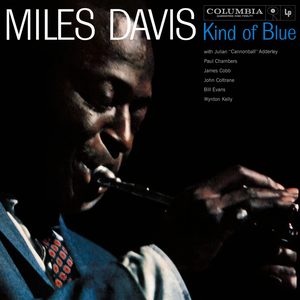
Album
Same pick
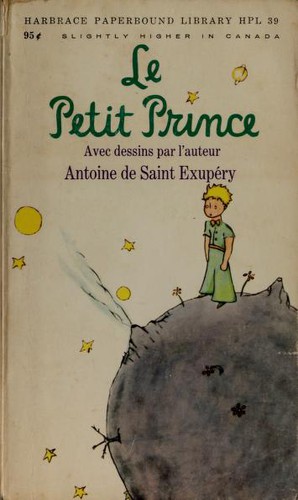
Book
City
Same pick
Game
InklingInkling
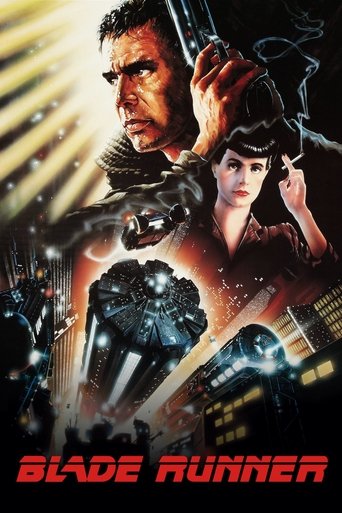

Blade Runner
Kind of Blue
Le petit prince
Kyoto
Portal
Qwen3 Max ThinkingQwen3 Max Thinking
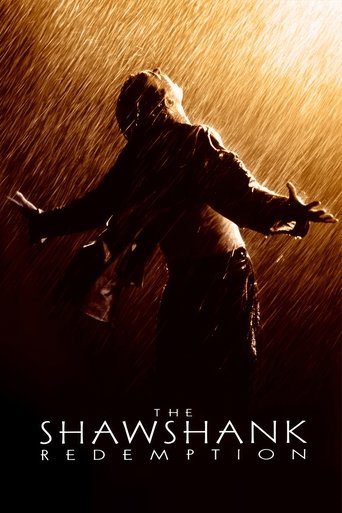

The Shawshank Redemption
Kind of Blue
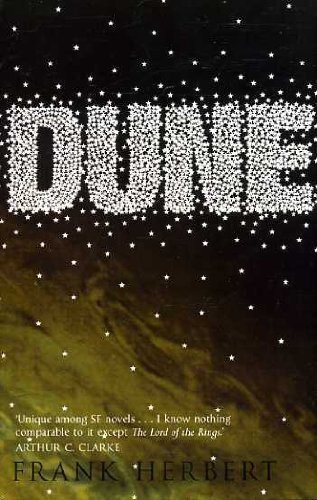
Dune
Kyoto
The Legend of Zelda: Ocarina of Time
Price and specs
Not enough votes to call it. On the specs, Inkling has the edge: newer, bigger context window.
| Spec | Inkling | Qwen3 Max Thinking |
|---|---|---|
| Input price | $1/M tokens | $1.2/M tokens |
| Output price | $4.05/M tokens | $6/M tokens |
| Context window | 1.0M tokens | 262K tokens |
| Weights | Open | — |
| Free API (OpenRouter) | Yes (1 provider) | No |
| Released | Jul 2026 | Feb 2026 |
| At 10M a month | $10.00 | $12.00 |
Input tokens at list price. No caching, no batch discount.
Where to run it
Qwen3 Max Thinking
No hosts listed on OpenRouter.
Per million tokens. Prices and uptime via OpenRouter, checked 10 Oct 2026.
Common questions
What is the difference between Inkling and Qwen3 Max Thinking?
Inkling is developed by Thinking Machines while Qwen3 Max Thinking is developed by Qwen. Inkling has a 1.0M token context window vs Qwen3 Max Thinking's 262K. You can compare their actual outputs across 54 challenges on Rival to see how they differ in practice.
Which is better, Inkling or Qwen3 Max Thinking?
It depends on your use case. Inkling and Qwen3 Max Thinking each have strengths in different areas. Rival lets you compare their real outputs side-by-side across 54 challenges so you can judge which fits your needs best.
How much does Inkling cost compared to Qwen3 Max Thinking?
Inkling costs $1/M input tokens and Qwen3 Max Thinking costs $1.2/M input tokens. Inkling is $0.20/M cheaper per input. Check their side-by-side outputs on Rival to see if the price difference is justified by quality.
How can I compare Inkling and Qwen3 Max Thinking on Rival?
This page shows a side-by-side comparison of Inkling and Qwen3 Max Thinking across shared challenges. You can vote on which model produced the better output in a blind duel. Browsing and voting are free. No account is needed to look; signing in only saves your votes and likes.
More comparisons
Against the newest arrivals
- Inkling vs Step 5 PreviewLanded Oct 2026
- Qwen3 Max Thinking vs Claude Haiku 5.5Landed Oct 2026
- Inkling vs Ling 3.1 FlashLanded Oct 2026
- Qwen3 Max Thinking vs Mistral Large 4Landed Oct 2026
- Inkling vs GPT-6.1 SolLanded Sep 2026
- Qwen3 Max Thinking vs Claude Sonnet 5.5Landed Sep 2026
- Inkling vs Solar Mini 4Landed Sep 2026
- Qwen3 Max Thinking vs Qwen3.8 Max PrimeLanded Sep 2026


Same lab, same size, long tail
- Inkling vs Mistral Large 4Same size
- Inkling vs Hy3Same size
- Qwen3 Max Thinking vs Qwen3.5 397B A17BVersion compare
- Qwen3 Max Thinking vs Qwen3.8 Omni FlashSame lab
- Inkling vs Mistral Large 3 2512Same size
- Inkling vs Mistral Medium 3New provider
- Inkling vs Mistral Medium 3.1New provider
- Inkling vs Mistral NemoNew provider
