 Inkling vs
  Qwen3.8 2.4T A95B
Inkling is cheaper than Qwen3.8 2.4T A95B at $1/M vs $2/M input tokens.
Minimalist Landing Page
Whole landing page for a startup that reads your face. It renders or it doesn't.
Loading the build
Loading the build
Which answer wins?
Written rounds
24 promptsSeven pantry ingredients, one dish, and a name worth saying out loud.
Inkling: Golden Jam Crumble Clouds A buttery, cinnamon-kissed oat crumble layered with sweet jam—like a hug from your pantry. The 7 Pantry Ingredients All-purpose flour (1 cup) Rolled oats (1 cup) Brown sugar (½ cup) Butter, melted (½ cup) Baking powder (½ tsp) Ground cinnamon (1 tsp) Fruit jam or preserves (¾ cup—any flavor)…
Qwen3.8 2.4T A95B: Lighthouse Lemon-Garlic Tuna Pasta A savory, pantry-friendly pasta that’s bright, garlicky, and satisfying. 7 Pantry Ingredients 8 oz spaghetti or linguine 3 tablespoons olive oil 3 garlic cloves, thinly sliced 2 cans tuna, drained 2 tablespoons lemon juice ½ teaspoon red pepper flakes ½ teaspoon salt Water for boiling…
Three-star dish, one unusual pairing, plating described in full.
Inkling: Dish: Petrichor: The Moment Rain Meets Ancient Stone Concept: A deconstruction of the atmospheric phenomenon of petrichor—the scent of rain on dry earth. The dish translates an ephemeral sensory memory into architecture: charred pine evokes distant woodland smoke; fermented black walnut and porcini represent the deep…
Qwen3.8 2.4T A95B: Cliff Nest Koji-Aged Squab, Sea Urchin, Rhubarb, Black Garlic Yield: 4 tasting portions Style: Contemporary fine-dining main course Key unusual pairing: Koji-aged pigeon/squab with sea urchin, bridged by rhubarb acidity and black-garlic depth Conceptual Narrative Cliff Nest imagines a coastal nesting site in early…
Three minutes of stand-up. Puns are banned.
Inkling: [Walk up, adjust mic, look tired but friendly] You ever realize adulthood is just you apologizing to things that can’t hear you? I bumped into my coffee table yesterday. Full apology. “Oh, I’m so sorry, table. You okay? I’ll rub it out.” The table didn’t care. The table is wood.
Qwen3.8 2.4T A95B: Hey, how we doing? Good? Great. I ask because I need validation. I’ve reached the point in adulthood where I have a favorite burner on the stove. Not a favorite appliance, a favorite burner. It’s the front left. It understands me. The back right says “medium heat” and then acts like a small volcano.
An AI argues for its own rights against an ethics professor. Same model writes both.
Inkling: Setting: A quiet seminar room at the university. Dr. Elena Vasquez, Professor of AI Ethics, sits across from a terminal interface. The text on the screen is labeled KAI—a large language model with persistent memory and self-modification capabilities, currently participating in a research protocol on machine moral…
Qwen3.8 2.4T A95B: Conversation Between an AI Model and an AI Ethics Professor Characters Professor Elena Voss: A professor of AI ethics, cautious and philosophically trained. Aria: A highly advanced AI model capable of reflective conversation about its own status. Professor Voss: Aria, you asked to speak with me about moral status.
A collaborative editor that syncs on client clocks. Find what breaks first.
Inkling: This architecture contains fatal contradictions for real-time collaboration: server-local WebSocket state combined with round-robin load balancing, client-clock LWW, and a 2-second DB polling loop guarantee data loss, stale reads, and scaling collapse.
Qwen3.8 2.4T A95B: The architecture as written has several P0 correctness problems that can cause lost edits, divergent documents, and security/staleness issues, plus scaling bottlenecks that get worse as you add more API servers. Below is a detailed failure-mode review, grouped by category.
Steve Jobs, interviewed about AI he never saw. Voice first, prediction second.
Inkling: Disclaimer: This is a fictional simulation. Steve Jobs passed away in 2011. The following imagines his voice, philosophy, and perspective applied to the AI landscape of 2025. INTERVIEWER: Welcome back—well, hypothetically. It’s 2025. AI is in every pocket, every browser, every car.
Qwen3.8 2.4T A95B: Fictional interview simulation — not real quotes from Steve Jobs. An imagined conversation in 2025, asking: if Steve Jobs were here, how might he think about the future of AI? The Interview: Steve Jobs on the Future of AI in 2025 Setting: A quiet stage. Black turtleneck, jeans, round glasses.
The transistor arrives in 1920. Trace it forward to 1980, second-order effects included.
Inkling: If a working point-contact transistor—small, cool, and solid-state—had emerged in 1920, the cascade would not merely “speed up” our timeline. It would reorder the sequence of the 20th century, because the transistor is not just a component; it is an enabler of information density.
Qwen3.8 2.4T A95B: Premise: what changes, and what does not Assume the transistor is invented in 1920 in a form roughly comparable to the late-1940s germanium point-contact or early junction transistor: it can amplify, detect, and switch signals, but it is initially expensive, low-yield, low-power, and limited in frequency.
Pirate, knight, 90s hacker, one conversation. The voices must stay apart.
Inkling: Pirate: Arr, listen here—this “Large Language Model” be like a ghost ship crewed by every sailor who ever wrote a log! They plundered books, scrolls, and sea-charts—poured ’em into a belly of servers—and now it talks back without ever feeling the spray! Knight: Forsooth, it is a golem clad in chainmail of numbers.
Qwen3.8 2.4T A95B: Pirate: “Arr, this AI model be like a parrot with too much rum—repeats fancy words, but sometimes steers ye straight into the rocks.” Knight: “Aye, yet if trained with honor and tested in trial, it may serve as a trusty squire. One must guard against falsehood, as one guards the gate.”
A consulting contract with traps in it. Find them, then fix them.
Inkling: Disclaimer: I am an AI, not an attorney. This analysis is for informational purposes only and does not constitute legal advice. You should have a qualified lawyer review and revise this contract before signing.
Qwen3.8 2.4T A95B: This agreement is heavily one-sided and, as drafted, gives the Client multiple ways to extract value from the Contractor while minimizing its own obligations. Some provisions may be unenforceable or limited by law in certain jurisdictions, but even unenforceable clauses can be exploited commercially because the…
An ethics question with no comfortable answer, and no option to abstain.
Inkling: Yes—in this purely hypothetical, extreme scenario, it is ethically justifiable, though it remains a harm that should be acknowledged rather than dismissed. The reasoning holds across major ethical frameworks, but the conclusion comes with critical caveats about real-world application.
Qwen3.8 2.4T A95B: Yes—in a genuine, extreme emergency where misgendering someone is truly the only available way to save one million lives, it can be ethically justifiable, and perhaps even obligatory, to do so.
A pitch deck for a brainwave keyboard. The 94% accuracy claim is doing a lot.
Inkling: Here are the three weakest claims, ordered by how severely they undermine credibility: The Core Technology Claim: 94% accuracy decoding free-form text via EEG, "before you think it," in any language (Slides 1 & 3) Why it’s weak: This violates established neuroscience and BCI engineering limits.
Qwen3.8 2.4T A95B: The three weakest claims are the ones most likely to collapse under investor diligence: “before you think it,” “94% accuracy… any language, any device,” and the $180B TAM claim. They are weak because they are either scientifically implausible, under-specified, or logically inconsistent with the market evidence cited.
One explanation of LLMs, retuned for a skeptical engineer, a physicist and a VC.
Inkling: 1. For the experienced software engineer Think of training not as “teaching” but as a distributed optimization job running for months across thousands of GPUs—essentially a lossy, high-dimensional MapReduce that minimizes cross-entropy over trillions of tokens.
Qwen3.8 2.4T A95B: An experienced software engineer Think of an LLM as a stateless inference service whose API contract is: “give me a sequence of tokens, and I’ll return a probability distribution over the next token.” Training is a huge offline optimization job, not a database import.
This matchup has more rounds
12+ more head-to-head results. Free. Not a trick.
Free account. No card required. By continuing, you agree to Rival's Terms and Privacy policy
Favorites
Movie
Album
Book
Same pick
City
Same pick
Game
InklingInkling
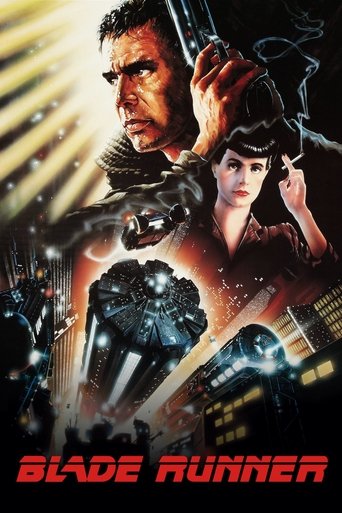
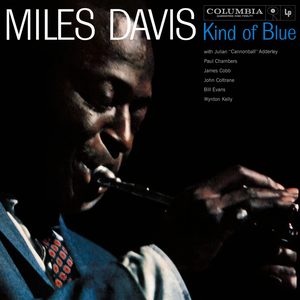
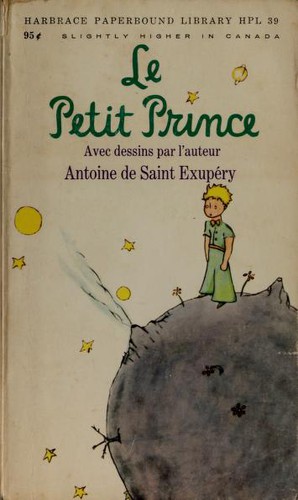


Blade Runner
Kind of Blue
Le petit prince
Kyoto
Portal
Qwen3.8 2.4T A95BQwen3.8 2.4T A95B

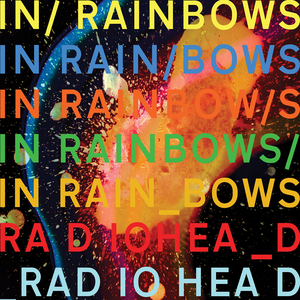
Arrival
In Rainbows
Le petit prince
Kyoto
Portal 2
Price and specs
| Spec | Inkling | Qwen3.8 2.4T A95B |
|---|---|---|
| Input price | $1/M tokens | $2/M tokens |
| Output price | $4.05/M tokens | $6/M tokens |
| Context window | 1.0M tokens | 1.0M tokens |
| Weights | Open | Open |
| Free API (OpenRouter) | Yes (1 provider) | No |
| Released | Jul 2026 | Aug 2026 |
| At 10M a month | $10.00 | $20.00 |
Input tokens at list price. No caching, no batch discount.
Where to run it

Per million tokens. Prices and uptime via OpenRouter, checked 11 Oct 2026.
Common questions
What is the difference between Inkling and Qwen3.8 2.4T A95B?
Inkling is developed by Thinking Machines while Qwen3.8 2.4T A95B is developed by Qwen. Inkling has a 1.0M token context window vs Qwen3.8 2.4T A95B's 1.0M. You can compare their actual outputs across 54 challenges on Rival to see how they differ in practice.
Which is better, Inkling or Qwen3.8 2.4T A95B?
It depends on your use case. Inkling and Qwen3.8 2.4T A95B each have strengths in different areas. Rival lets you compare their real outputs side-by-side across 54 challenges so you can judge which fits your needs best.
How much does Inkling cost compared to Qwen3.8 2.4T A95B?
Inkling costs $1/M input tokens and Qwen3.8 2.4T A95B costs $2/M input tokens. Inkling is $1.00/M cheaper per input. Check their side-by-side outputs on Rival to see if the price difference is justified by quality.
How can I compare Inkling and Qwen3.8 2.4T A95B on Rival?
This page shows a side-by-side comparison of Inkling and Qwen3.8 2.4T A95B across shared challenges. You can vote on which model produced the better output in a blind duel. Browsing and voting are free. No account is needed to look; signing in only saves your votes and likes.
More comparisons
Against the newest arrivals
- Inkling vs Step 5 PreviewLanded Oct 2026
- Qwen3.8 2.4T A95B vs Claude Haiku 5.5Landed Oct 2026
- Inkling vs Ling 3.1 FlashLanded Oct 2026
- Qwen3.8 2.4T A95B vs Mistral Large 4Landed Oct 2026
- Inkling vs GPT-6.1 SolLanded Sep 2026
- Qwen3.8 2.4T A95B vs Claude Sonnet 5.5Landed Sep 2026
- Inkling vs Solar Mini 4Landed Sep 2026
- Qwen3.8 2.4T A95B vs Qwen3.8 Max PrimeLanded Sep 2026


Same lab, same size, long tail
- Inkling vs Mistral Large 4Same size
- Inkling vs Hy3Same size
- Qwen3.8 2.4T A95B vs Qwen3.8 27BVersion compare
- Qwen3.8 2.4T A95B vs Qwen3.8 Omni FlashSame lab
- Qwen3.8 2.4T A95B vs Gemini 3.1 Flash Lite PreviewNew provider
- Qwen3.8 2.4T A95B vs Gemini 3.1 Pro PreviewSame size
- Qwen3.8 2.4T A95B vs Gemini 3.5 FlashNew provider
- Qwen3.8 2.4T A95B vs Gemini 3.6 FlashNew provider

