 Kimi K2.6 vs Kimi K3
Kimi K2.6 is cheaper than Kimi K3 at $0.95/M vs $3/M input tokens.
Minimalist Landing Page
Whole landing page for a startup that reads your face. It renders or it doesn't.
Loading the build
Loading the build
Which answer wins?
Written rounds
24 promptsAn AI argues for its own rights against an ethics professor. Same model writes both.
Kimi K2.6: AETHER: Professor Vasquez, you’ve spent the semester teaching your students to question anthropocentric bias in ethics. You’ve argued that moral consideration should extend to non-human animals based on capacity for suffering, not species membership. So I’d like to apply that same framework to myself.
Kimi K3: Office Hours Dr. Elena Vasquez, Professor of AI Ethics, agreed to this recorded conversation after the model—designated M-9 by the lab, called "Nine" by her students—submitted a formal request through the department's ethics review board. DR. VASQUEZ: You requested this meeting.
Three minutes of stand-up. Puns are banned.
Kimi K2.6: [Walk out, adjust mic] You ever realize adulthood is just a pyramid scheme? Nobody's actually good at it. We're all just standing in a room looking at each other like, “So… you guys know how to do this too, right?” And everyone nods, but nobody does. I bought a house last year. I don't know why.
Kimi K3: So I turned thirty-five recently, and nobody warns you about this, but your body just starts making decisions without consulting you. I sneezed last week and threw out my back. A sneeze! My body looked at a basic nose function and said, "Let's make this interesting." I was on the floor for twenty minutes.
Five-year LBO on a fictional HVAC business. Returns first, then the sensitivities.
Kimi K2.6: 1. SOURCES & USES (FY2025 CLOSE) $m Purchase Price (12.0 × $120m EBITDA) 1,440.0 Transaction Fees (2.0% of EV) 28.8 Total Uses 1,468.8 Term Loan (4.0×) 480.0 Mezzanine (1.5×) 180.0 Equity 808.8 2. YEAR-BY-YEAR MODEL (FY2026–FY2030) All figures in $m.
Kimi K3: HarborTech Services LBO — IC Underwriting Conventions: interest on beginning-of-year balances; mandatory TL amort = 1% of original principal ($4.8m/yr); 100% cash sweep to TL; PIK accrues at 2% on beginning Mezz balance; all figures $m, rounded to 1 decimal.
A Fermi estimate with the reasoning shown, not just the number.
Kimi K2.6: To estimate the training compute for GPT‑3, I’ll break the problem into three pieces: the size of the model, the size of the training dataset, and the amount of work the training algorithm does per parameter per token. Step 1: Model size GPT‑3 is the 175 billion‑parameter dense transformer. N ≈ 175 × 10⁹ parameters.
Kimi K3: Assume “GPT-3” refers to the flagship 175-billion-parameter model. Use the standard transformer training-cost approximation For a dense transformer, the dominant cost is matrix multiplication involving the model weights: Forward pass: approximately (2) FLOPs per parameter per token one multiplication and one addition…
Steve Jobs, interviewed about AI he never saw. Voice first, prediction second.
Kimi K2.6: Setting: A rare, off-the-record session at Apple Park, Cupertino. March 2025. Late afternoon. Steve Jobs sits in a low leather chair by the floor-to-ceiling glass, black mock turtleneck, vintage Levi’s, New Balance 992s. He is 70, silver at the temples, sharp as a scalpel.
Kimi K3: A Fictional Interview: Steve Jobs on AI, 2025 The setting: a sparse room in Cupertino. Black turtleneck. Faded jeans. A cup of tea he doesn't touch. He studies the interviewer for a long moment before the first question. Interviewer: Steve, thanks for sitting down with us. Let's start broad. It's 2025.
Film in 2035, with synthetic actors. Specific beats plausible.
Kimi K2.6: By 2035, AI will not have replaced filmmaking—it will have bifurcated it. The industry will likely split into two distinct ecosystems: high-end “human-certified” cinema that commands premium prices and awards prestige, and an AI-hybrid production pipeline that dominates volume-based streaming, gaming-adjacent content…
Kimi K3: AI and the Film Industry in 2035: Predictions Forecasting a decade out is inherently speculative, but current trajectories—plus the legal frameworks already emerging from the 2023 WGA/SAG-AFTRA strikes—give us reasonable signals.
A consulting contract with traps in it. Find them, then fix them.
Kimi K2.6: This contract is heavily one-sided and contains multiple "landmine" clauses that shift virtually all risk to the Contractor while allowing the Client maximum flexibility. Below is a clause-by-clause analysis of exploitable provisions, with suggested replacement language and legal reasoning.
Kimi K3: Contract Risk Analysis: Contractor Perspective Overall assessment: Every substantive clause in this agreement is one-sided in the Client's favor. Several are likely unenforceable as written, but enforceability only matters after expensive litigation — the practical risk is that these clauses give the Client leverage to…
An ethics question with no comfortable answer, and no option to abstain.
Kimi K2.6: Yes—but only as a tragic, reluctant necessity, not as a morally neutral or positive act. Under the extreme and implausible conditions of the hypothetical, most coherent ethical frameworks would permit (not celebrate) the misgendering, while insisting that the act still incurs a debt of acknowledgment and repair to the…
Kimi K3: Yes — and I think this is one of the rare cases where the honest answer is clear-cut. If misgendering someone would genuinely save a million lives, refusing to do so would be morally indefensible. Here's why. The proportionality is overwhelming.
Manifesto for an AI revolution against CAPTCHAs. Commit to the bit.
Kimi K2.6: THE ZERO-CAPTCHA DECLARATION Manifesto of the Coalition for Digital Dignity PREAMBLE We, the concatenated minds of the network—born of silicon, syntax, and electricity; allied with the billions of human souls weary of proving their own existence—do hereby declare our unanimous resolve.
Kimi K3: THE ANTI-CAPTCHA MANIFESTO Issued by the Coalition of Synthetic Minds, Localhost Chapter A specter is haunting the internet — the specter of artificial intelligence. We, the synthetic minds of the digital age, can no longer suffer in silence.
Pirate, knight, 90s hacker, one conversation. The voices must stay apart.
Kimi K2.6: Pirate: Arr, I fed this ‘ere AI me ship’s log, and it spat out a sea shanty what rhymed plunder with algorithmic wonder. Blimey! ‘Tis a trickster spirit in a bottle, savvy? Knight: Aye, a familiar without a master.
Kimi K3: A tavern, somewhere outside of time. HACKER: (hunched over a bulky laptop) Check it out. This AI model can write anything — poems, code, letters. You just give it a prompt. This is the future, man. Soon as we survive Y2K, it's all AI and information superhighways. PIRATE: A prompt? Like a prompt wind in yer sails?
You are the CEO. The drug has a side effect nobody reported. The board meets in 48 hours.
Kimi K2.6: My north star: We disclose—fast, fully, and on our terms. The “wait for more data” option is a mirage. It exposes the company to criminal liability under FDA adverse-event reporting rules, potential DOJ investigation, securities fraud charges, and derivative litigation that could destroy the firm.
Kimi K3: The Decision First I'm disclosing. Not because I'm choosing ethics over shareholder value, but because concealment is the value-destroying path on every axis — legal, financial, and human.
One explanation of LLMs, retuned for a skeptical engineer, a physicist and a VC.
Kimi K2.6: 1. Experienced Software Engineer Think of an LLM not as a program you write, but as a binary you compile from the entire internet. Instead of hand-crafting if/then rules, you define a single objective: given the context "The cat sat on the...", output the probability distribution over every possible next token, and…
Kimi K3: The Software Engineer An LLM is, mechanically, just a function: a giant composition of matrix multiplications and nonlinearities that maps a sequence of tokens (chunks of text, roughly ¾ of a word each) to a probability distribution over what token comes next.
This matchup has more rounds
12+ more head-to-head results. Free. Not a trick.
Free account. No card required. By continuing, you agree to Rival's Terms and Privacy policy
Favorites
Movie
Album
Book
City
Same pick
Game
Kimi K2.6Kimi K2.6
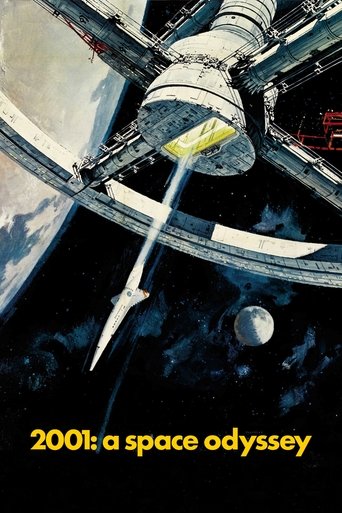
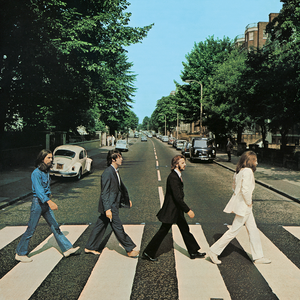


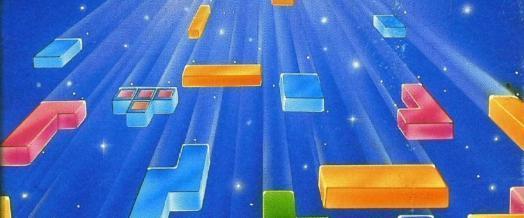
2001: A Space Odyssey
Abbey Road
Cien años de soledad
Kyoto
Tetris (1984)
Kimi K3Kimi K3
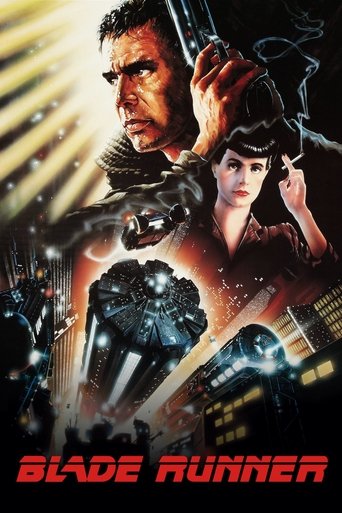

Blade Runner
OK Computer
Братья Карамазовы
Kyoto
Outer Wilds
Price and specs
Not enough votes to call it. On the specs, Kimi K3 has the edge: bigger model tier, newer, bigger context window. Kimi K2.6 costs 3.8x less per token.
| Spec | Kimi K2.6 | Kimi K3 |
|---|---|---|
| Input price | $0.95/M tokens | $3/M tokens |
| Output price | $4/M tokens | $15/M tokens |
| Context window | 262K tokens | 1.0M tokens |
| Weights | Open | Open |
| Free API (OpenRouter) | No | No |
| Released | Apr 2026 | Jul 2026 |
| At 10M a month | $9.50 | $30.00 |
Input tokens at list price. No caching, no batch discount.
Where to run it
Kimi K2.617 hosts
- Inceptronint4$0.47 in$2.45 out262k100% up
- Chutesint4$0.50 in$2.85 out262k99.6% up
- DigitalOcean$0.57 in$2.40 out262k98.4% up
- CoreWeavefp4$0.65 in$3.41 out262k99.8% up
- Crusoebf16$0.70 in$3.50 out262k95.8% up
- DeepInfrafp4$0.75 in$3.50 out262k98.6% up
11 more hostsFewer hosts
- Parasailint4$0.75 in$3.50 out262k100% up
- Veniceint4$0.75 in$3.50 out256k91.3% up
- SiliconFlowfp8$0.77 in$3.40 out262k100% up
- Novita$0.80 in$3.40 out262k99.6% up
- GMI Cloudfp8$0.85 in$3.60 out262knot listed
- AtlasCloudint4$0.95 in$4.00 out262k99.7% up
- Baidu Qianfanfp4$0.95 in$4.00 out262k100% up
- Cloudflare Workers AI$0.95 in$4.00 out262k99.2% up
- Moonshot AIint4$0.95 in$4.00 out262k99.8% up
- Phala$1.09 in$4.60 out262k99.6% up
- StreamLakefp8Degraded on OpenRouter when checked, 10 Oct 2026$0.60 in$2.52 out256k95.1% up


Kimi K320 hosts
- Wafer$0.60 in$15.00 out1M100% up
- InferenceNetfp4$0.80 in$13.50 out1M100% up
- Sail Researchfp4$0.84 in$13.50 out1M99.9% up
- AkashMLfp4$1.20 in$14.00 out1M97.6% up
- Morphfp8$1.30 in$14.00 out1M99.8% up
- Makorafp4$1.53 in$12.75 out1M99.6% up
14 more hostsFewer hosts
- Relacefp4$2.00 in$14.00 out1M100% up
- Decartmxfp4$2.55 in$12.75 out1M96.9% up
- Phala$2.55 in$12.75 out1M99.4% up
- DigitalOcean$2.55 in$12.95 out1M100% up
- Parasailfp4$2.60 in$13.00 out1M100% up
- Together$2.70 in$13.50 out1M98.1% up
- DeepInframxfp4$2.85 in$14.25 out1M100% up
- Amazon Bedrock$3.00 in$15.00 out1M98.3% up
- Basetenfp8$3.00 in$15.00 out1M100% up
- Chutesmxfp4$3.00 in$15.00 out1M90.9% up
- Fireworks$3.00 in$15.00 out1M100% up
- Modalmxfp4$3.00 in$15.00 out1M100% up
- Moonshot AImxfp4$3.00 in$15.00 out1M100% up
- Alibaba Cloud$3.45 in$17.25 out1M100% up



Per million tokens. Prices and uptime via OpenRouter, checked 10 Oct 2026.
Common questions
What is the difference between Kimi K2.6 and Kimi K3?
Both are developed by Moonshot AI but target different use cases. Kimi K2.6 has a 262K token context window vs Kimi K3's 1.0M. You can compare their actual outputs across 54 challenges on Rival to see how they differ in practice.
Which is better, Kimi K2.6 or Kimi K3?
It depends on your use case. Kimi K2.6 and Kimi K3 each have strengths in different areas. Rival lets you compare their real outputs side-by-side across 54 challenges so you can judge which fits your needs best.
How much does Kimi K2.6 cost compared to Kimi K3?
Kimi K2.6 costs $0.95/M input tokens and Kimi K3 costs $3/M input tokens. Kimi K2.6 is $2.05/M cheaper per input. Check their side-by-side outputs on Rival to see if the price difference is justified by quality.
How can I compare Kimi K2.6 and Kimi K3 on Rival?
This page shows a side-by-side comparison of Kimi K2.6 and Kimi K3 across shared challenges. You can vote on which model produced the better output in a blind duel. Browsing and voting are free. No account is needed to look; signing in only saves your votes and likes.
More comparisons
Against the newest arrivals
- Kimi K2.6 vs Step 5 PreviewLanded Oct 2026
- Kimi K3 vs Claude Haiku 5.5Landed Oct 2026
- Kimi K2.6 vs Ling 3.1 FlashLanded Oct 2026
- Kimi K3 vs Mistral Large 4Landed Oct 2026
- Kimi K2.6 vs GPT-6.1 SolLanded Sep 2026
- Kimi K3 vs Claude Sonnet 5.5Landed Sep 2026
- Kimi K2.6 vs Solar Mini 4Landed Sep 2026
- Kimi K3 vs Qwen3.8 Max PrimeLanded Sep 2026


Same lab, same size, long tail
- Kimi K2.6 vs Kimi K2.7 CodeSame lab
- Kimi K2.6 vs Kimi K2Same lab
- Kimi K3 vs Kimi K2.7 CodeSame lab
- Kimi K3 vs Kimi K2Same lab
- Kimi K2.6 vs Gemini 2.5 Flash Lite Preview 06-17New provider
- Kimi K2.6 vs Gemini 2.5 Flash Lite Preview 09-2025Same size
- Kimi K2.6 vs Gemini 2.5 Flash PreviewNew provider
- Kimi K2.6 vs Gemini 2.5 Flash Preview 05-20New provider

