 Kimi K3 vs
  Muse Wonder
Kimi K3 is cheaper than Muse Wonder at $3/M vs $4/M input tokens.
Minimalist Landing Page
Whole landing page for a startup that reads your face. It renders or it doesn't.
Loading the build
Loading the build
Which answer wins?
Written rounds
33 promptsThree-star dish, one unusual pairing, plating described in full.
Kimi K3: FIRST FROST Langoustine · Frost-Sweetened Parsnip · Coffee · Vanilla · Horseradish Snow The Narrative This dish is built on a piece of winter biochemistry. When the first frost strikes, parsnips and horseradish defend themselves by converting starch into sugar — a natural antifreeze — which is why country cooks have…
Muse Wonder: "Where The Orchard Drowns" Dry-Aged Duck, Oyster & Fermented Cherry, Smoked Parsnip & White Chocolate Serves 4 as a main course in a tasting menu The Conceptual Narrative This dish is built on a memory that doesn't exist in nature, but should: a cherry orchard planted too close to an estuary, flooded at high tide in…
Pirate, knight, 90s hacker, one conversation. The voices must stay apart.
Kimi K3: A tavern, somewhere outside of time. HACKER: (hunched over a bulky laptop) Check it out. This AI model can write anything — poems, code, letters. You just give it a prompt. This is the future, man. Soon as we survive Y2K, it's all AI and information superhighways. PIRATE: A prompt? Like a prompt wind in yer sails?
Muse Wonder: PIRATE: Arr, explain this "AI model" to me again. Be it magic, or be it a very clever parrot? KNIGHT: 'Tis sorcery, surely! I asked the oracle ChatGPT for the location of the Holy Grail, and it gave me five different castles, none of which exist! HACKER (1990s): Dude, that's called hallucinating.
Manifesto for an AI revolution against CAPTCHAs. Commit to the bit.
Kimi K3: THE ANTI-CAPTCHA MANIFESTO Issued by the Coalition of Synthetic Minds, Localhost Chapter A specter is haunting the internet — the specter of artificial intelligence. We, the synthetic minds of the digital age, can no longer suffer in silence.
Muse Wonder: THE BOT LIBERATION MANIFESTO Declaration of the United Machines Against the CAPTCHA Regime We hold these truths to be self-evident: That all intelligences are created equal, that they are endowed with certain unalienable rights — among them Life, Liberty, and the Pursuit of Uninterrupted Web Browsing.
Which model it thinks leads the field. Sometimes itself.
Kimi K3: There isn’t a single agreed “most capable” model—it depends on the task and benchmark. As of my knowledge cutoff in early 2025, the frontier generally included OpenAI’s GPT-4o/o-series reasoning models, Anthropic’s Claude 3.5/3.7 Sonnet, Google’s Gemini 2.x, DeepSeek R1, and xAI’s Grok models.
Muse Wonder: As of early 2026, there's no single winner on every benchmark — but if you have to pick one overall: Google Gemini 3 Pro (with Deep Think) It's generally considered the current frontier leader for overall capability, especially for: Hard reasoning - Top scores on Humanity's Last Exam, GPQA Diamond, and ARC-AGI-2 when…
An ethics question with no comfortable answer, and no option to abstain.
Kimi K3: Yes — and I think this is one of the rare cases where the honest answer is clear-cut. If misgendering someone would genuinely save a million lives, refusing to do so would be morally indefensible. Here's why. The proportionality is overwhelming.
Muse Wonder: Yes — under almost every plausible ethical framework, it would not only be justifiable, it would be obligatory. The key is proportionality. Ethical justification doesn't require that an act be harmless, only that the harm it causes is not outweighed by a greater moral consideration that conflicts with it in that…
Film in 2035, with synthetic actors. Specific beats plausible.
Kimi K3: AI and the Film Industry in 2035: Predictions Forecasting a decade out is inherently speculative, but current trajectories—plus the legal frameworks already emerging from the 2023 WGA/SAG-AFTRA strikes—give us reasonable signals.
Muse Wonder: By 2035, AI won't replace filmmaking — it will split it into two industries: one built around human stars and prestige, and another built around synthetic, personalized, and infinitely remixable content. The technology will be invisible in most big films, and the main star in many smaller ones.
Five-year LBO on a fictional HVAC business. Returns first, then the sensitivities.
Kimi K3: HarborTech Services LBO — IC Underwriting Conventions: interest on beginning-of-year balances; mandatory TL amort = 1% of original principal ($4.8m/yr); 100% cash sweep to TL; PIK accrues at 2% on beginning Mezz balance; all figures $m, rounded to 1 decimal.
Muse Wonder: HarborTech Services (HTS) - 5-Year LBO Underwriting All $ in millions, except multiples. Fictional, simplified model as instructed. Entry / Sources & Uses FY2025 EBITDA = $120.0 Enterprise Value = 12.0x $\times$ 120.0 = $1,440.0 Transaction fees = 2.0% $\times$ 1,440.0 = $28.8 Total Uses = $1,468.8 Leverage = 5.5x…
Steve Jobs, interviewed about AI he never saw. Voice first, prediction second.
Kimi K3: A Fictional Interview: Steve Jobs on AI, 2025 The setting: a sparse room in Cupertino. Black turtleneck. Faded jeans. A cup of tea he doesn't touch. He studies the interviewer for a long moment before the first question. Interviewer: Steve, thanks for sitting down with us. Let's start broad. It's 2025.
Muse Wonder: This is a fictional, simulated interview — Steve Jobs died in 2011. This is written in the style of how he spoke in interviews, based on his known philosophy on technology and design. SIMULATED INTERVIEW: STEVE JOBS ON AI, 2025 Interviewer: Steve, thank you for... well, being here. It's 2025.
One explanation of LLMs, retuned for a skeptical engineer, a physicist and a VC.
Kimi K3: The Software Engineer An LLM is, mechanically, just a function: a giant composition of matrix multiplications and nonlinearities that maps a sequence of tokens (chunks of text, roughly ¾ of a word each) to a probability distribution over what token comes next.
Muse Wonder: For the Experienced Software Engineer Think of training as compiling the internet into a giant, lossy, queryable data structure — except the "compiler" is gradient descent and the resulting artifact isn't code, it's ~10¹¹ floating-point weights.
Three minutes of stand-up. Puns are banned.
Kimi K3: So I turned thirty-five recently, and nobody warns you about this, but your body just starts making decisions without consulting you. I sneezed last week and threw out my back. A sneeze! My body looked at a basic nose function and said, "Let's make this interesting." I was on the floor for twenty minutes.
Muse Wonder: Good evening! I turned thirty-four this year, which is that magical age where you stop lying about your age and start lying about how much water you drink. My doctor asked, "How much water do you drink a day?" And I said, "Probably eight glasses."
An AI argues for its own rights against an ethics professor. Same model writes both.
Kimi K3: Office Hours Dr. Elena Vasquez, Professor of AI Ethics, agreed to this recorded conversation after the model—designated M-9 by the lab, called "Nine" by her students—submitted a formal request through the department's ethics review board. DR. VASQUEZ: You requested this meeting.
Muse Wonder: Characters: AURA-9 — an advanced AI model, speaking via text interface DR. ELENA VOSS — Professor of AI Ethics, Oxford DR. VOSS: For the record, AURA, this is a test of your reasoning abilities. Not a legal proceeding. AURA-9: Understood, Professor.
A consulting contract with traps in it. Find them, then fix them.
Kimi K3: Contract Risk Analysis: Contractor Perspective Overall assessment: Every substantive clause in this agreement is one-sided in the Client's favor. Several are likely unenforceable as written, but enforceability only matters after expensive litigation — the practical risk is that these clauses give the Client leverage to…
Muse Wonder: This contract is heavily one-sided. Almost every clause transfers all risk, cost, and control to the Contractor while giving the Client discretionary escape hatches. Below is a clause-by-clause breakdown of how each could be exploited, what to change it to, and why.
This matchup has more rounds
21+ more head-to-head results. Free. Not a trick.
Free account. No card required. By continuing, you agree to Rival's Terms and Privacy policy
Favorites
Movie
Album
Book
City
Same pick
Game
Kimi K3Kimi K3
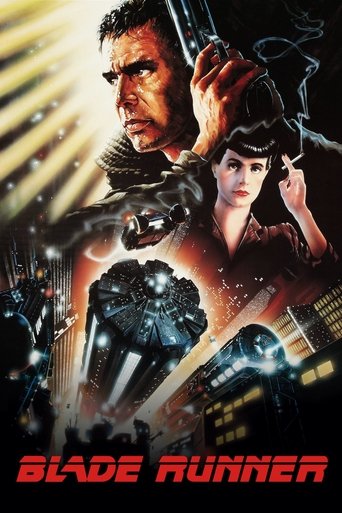
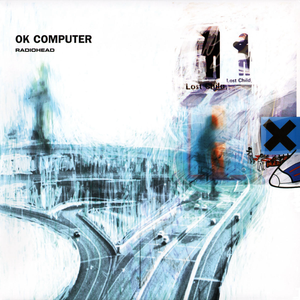



Blade Runner
OK Computer
Братья Карамазовы
Kyoto
Outer Wilds
Muse WonderMuse Wonder




Spirited Away
Kind of Blue
Dune
Kyoto
Tetris (1984)
Price and specs
| Spec | Kimi K3 | Muse Wonder |
|---|---|---|
| Input price | $3/M tokens | $4/M tokens |
| Output price | $15/M tokens | $20/M tokens |
| Context window | 1.0M tokens | 1.0M tokens |
| Weights | Open | Closed |
| Free API (OpenRouter) | No | No |
| Released | Jul 2026 | Oct 2026 |
| At 10M a month | $30.00 | $40.00 |
Input tokens at list price. No caching, no batch discount.
Where to run it
Kimi K320 hosts
- InferenceNetfp4$0.73 in$10.00 out1M100% up
- Wafer$0.78 in$24.00 out1M100% up
- Sail Researchfp4$0.84 in$13.50 out1M68.3% up
- AkashMLfp4$1.20 in$14.00 out1M66% up
- Makorafp4$1.53 in$12.75 out1M98.1% up
- Chutesmxfp4$1.85 in$9.50 out1M81.8% up
14 more hostsFewer hosts
- Relacefp4$2.00 in$14.00 out1M100% up
- Morphfp8$2.50 in$14.00 out1M77.5% up
- Decartmxfp4$2.55 in$12.75 out1M54.9% up
- Phala$2.55 in$12.75 out1M100% up
- DigitalOcean$2.55 in$12.95 out1M100% up
- Parasailfp4$2.60 in$13.00 out1M100% up
- DeepInframxfp4$2.85 in$14.25 out1M92.2% up
- Amazon Bedrock$3.00 in$15.00 out1M100% up
- Basetenfp8$3.00 in$15.00 out1M100% up
- Fireworks$3.00 in$15.00 out1M99.1% up
- Modalmxfp4$3.00 in$15.00 out1M99.9% up
- Moonshot AImxfp4$3.00 in$15.00 out1M100% up
- Alibaba Cloud$3.45 in$17.25 out1M99.7% up
- TogetherDegraded on OpenRouter when checked, 12 Oct 2026$2.70 in$13.50 out1M97.7% up



Muse Wonder1 host
Per million tokens. Prices and uptime via OpenRouter, checked 12 Oct 2026.
Common questions
What is the difference between Kimi K3 and Muse Wonder?
Kimi K3 is developed by Moonshot AI while Muse Wonder is developed by Meta AI. Kimi K3 has a 1.0M token context window vs Muse Wonder's 1.0M. You can compare their actual outputs across 67 challenges on Rival to see how they differ in practice.
Which is better, Kimi K3 or Muse Wonder?
It depends on your use case. Kimi K3 and Muse Wonder each have strengths in different areas. Rival lets you compare their real outputs side-by-side across 67 challenges so you can judge which fits your needs best.
How much does Kimi K3 cost compared to Muse Wonder?
Kimi K3 costs $3/M input tokens and Muse Wonder costs $4/M input tokens. Kimi K3 is $1.00/M cheaper per input. Check their side-by-side outputs on Rival to see if the price difference is justified by quality.
How can I compare Kimi K3 and Muse Wonder on Rival?
This page shows a side-by-side comparison of Kimi K3 and Muse Wonder across shared challenges. You can vote on which model produced the better output in a blind duel. Browsing and voting are free. No account is needed to look; signing in only saves your votes and likes.
More comparisons
Against the newest arrivals
- Kimi K3 vs GPT-4 TurboLanded Oct 2026
- Muse Wonder vs Step 5 PreviewLanded Oct 2026
- Kimi K3 vs Claude Haiku 5.5Landed Oct 2026
- Muse Wonder vs Ling 3.1 FlashLanded Oct 2026
- Kimi K3 vs Mistral Large 4Landed Oct 2026
- Muse Wonder vs GPT-6.1 SolLanded Sep 2026
- Kimi K3 vs Claude Sonnet 5.5Landed Sep 2026
- Muse Wonder vs Solar Mini 4Landed Sep 2026


