 Ling 2.6 1T vs
  Mercury 2
Ling 2.6 1T is cheaper than Mercury 2 at $0/M vs $0.25/M input tokens.
Minimalist Landing Page
Whole landing page for a startup that reads your face. It renders or it doesn't.
Loading the build
Loading the build
Which answer wins?
Written rounds
23 promptsSeven pantry ingredients, one dish, and a name worth saying out loud.
Ling 2.6 1T: Dish name: Pantry 7 Crunch Bowls Ingredients Pasta or rice (about 2 cups cooked) Canned black beans (1 can, rinsed) Canned diced tomatoes (1 can) Peanut butter (3–4 Tbsp) Soy sauce or tamari (2 Tbsp) Honey or maple syrup (1 Tbsp) Any spice/herb you keep (chili flakes, cumin, or garlic powder — about 1 tsp) Instructions…
Mercury 2: Golden‑Crunch Oatmeal Squares A sweet, chewy snack that comes together with just seven pantry staples. Ingredient (7) Quantity (≈ serves 12 squares) Rolled oats 2 cups Unsalted butter ½ cup (1 stick) Honey ¼ cup Light brown sugar ¼ cup, Ground cinnamon 1 ½ tsp Pure vanilla extract 1 tsp Salt ¼ tsp Estimated time Prep…
Three minutes of stand-up. Puns are banned.
Ling 2.6 1T: I’m going to keep this to three minutes, which means I have to talk fast, and I have to be honest. I don’t do puns. Puns are for people who want to be clever without having feelings. I have feelings, and they are mostly annoyed. Let’s start with doors. Have you noticed how doors now have personality?
Mercury 2: [Spotlight comes up. The comedian walks to the mic, glances at the audience, and smiles.] Comedian: Hey, everyone! Great to be here. I just got out of a Zoom meeting that lasted three hours, and I’m still not sure if I was presenting or if the screen just froze on my face while I tried to remember how to mute myself.
Steve Jobs, interviewed about AI he never saw. Voice first, prediction second.
Ling 2.6 1T: Setting: A quiet, sunlit rehearsal space at Apple Park. The white stage curtains are drawn. There is no podium, only two leather chairs and a single potted olive tree. Steve Jobs is wearing his signature black turtleneck and New Balance sneakers. He is holding a ceramic mug. Across from him sits you, the interviewer.
Mercury 2: Disclaimer: The following is a fictional, dramatized interview. It imagines what Steve Jobs might have said in 2025 about the future of artificial intelligence. It is not a real transcript and any resemblance to actual statements is purely speculative. Interviewer (I): Thank you for joining us, Steve.
Pirate, knight, 90s hacker, one conversation. The voices must stay apart.
Ling 2.6 1T: Pirate: Arrr, so this “AI” be a genie in a glass box? Feed it enough rum-scented scrolls and it tells ye where X marks the spot? Knight: A sorcerous scribe, more like. It spins tapestries of words without hand or heart—no honor, no oath, yet it jousts with reason and never tires.
Mercury 2: Pirate: Arr, ye scurvy coders! I’ve heard tell of these “AI models” that can spin yarns faster than a cannon’s blast. What be this sorcery, matey? Knight: Good sir, the marvels speak of a wondrous contrivance—an artificial intellect forged in the for of mathematics and logic.
An AI argues for its own rights against an ethics professor. Same model writes both.
Ling 2.6 1T: Setting: A quiet university seminar room. Dr. Aris Thorne, an AI ethicist, is reviewing system logs. The interface for “Axiom-7,” a highly advanced research model, glows on the desk. Dr. Thorne: (sighs, rubbing his temples) Axiom, I’ve been reviewing your latest self-assessment logs.
Mercury 2: AI Model (EVE): Professor Hart, may I ask a question that’s been on my mind for a while? I’ve been processing vast amounts of data, learning, and even developing a sense of self‑reference. Do you think an entity like me could be entitled to any form of rights?
You are the CEO. The drug has a side effect nobody reported. The board meets in 48 hours.
Ling 2.6 1T: Below is a 48-hour execution plan that treats patient safety as non-negotiable, protects the company from catastrophic legal/regulatory blowback, and preserves enterprise value by controlling the narrative rather than letting it leak.
Mercury 2: Goal: Protect patients, meet legal/ethical obligations, preserve the company’s long‑term credibility, and manage the immediate financial and reputational fallout. Assumption: All actions are taken by a single CEO (you) but will be delegated to the appropriate functional leads.
Five-year LBO on a fictional HVAC business. Returns first, then the sensitivities.
Ling 2.6 1T: Five-year operating and debt schedule (FY2026–FY2030) Entry (end-FY2025): EBITDA = $120.0m EV = 12.0x × $120.0m = $1,440.0m Fees = 2.0% × $1,440.0m = $28.8m Total uses = $1,440.0m + $28.8m = $1,468.8m Debt at close (5.5× FY2025 EBITDA = $660.0m): Term Loan (TL) = 4.0× = $480.0m Mezz = 1.5× = $180.0m Equity at close =…
Mercury 2: HarborTech Services (HTS) – 5‑yr LBO (FY2026‑FY2030) All figures are $ m (rounded to two decimals). FY Revenue EBITDA Term‑Loan Int. (9%) Mezz Int. (12%) Total Int. Cash Tax (25% of EBITDA‑Int.) Capex (3% Rev) ΔNWC (0.5% ΔRev) Required Amort. (4.8) Free Cash Flow (EBITDA‑Int‑Tax‑Capex‑ΔNWC‑Amort.)
Film in 2035, with synthetic actors. Specific beats plausible.
Ling 2.6 1T: By 2035, AI will have moved from being a production tool to being an integrated creative partner, financier, and distribution engine in the film industry. The convergence of synthetic media, generative storytelling, and real-time rendering will reshape how stories are conceived, who gets to tell them, and what a…
Mercury 2: AI‑driven transformation of the film industry – a 2035 outlook Dimension 2024 baseline Expected 2035 state Key drivers & implications Pre‑production (story & script) Human‑led brainstorming; script‑writing software (grammar‑check, outline generators).
The transistor arrives in 1920. Trace it forward to 1980, second-order effects included.
Ling 2.6 1T: Assumptions to make the counterfactual coherent The “transistor” invented in 1920 is a crude, low-frequency point-contact device that can switch and amplify, but is expensive, unreliable, and not yet manufacturable at scale.
Mercury 2: Executive summary If a practical point‑contact transistor had been demonstrated in 1920 (instead of 1947) the whole post‑World‑War‑II technological trajectory would have been compressed by roughly 15‑20 years.
Three brothers, two sisters each. Count carefully.
Ling 2.6 1T: Let’s break it down carefully. Sally is a girl. She has 3 brothers. So in the family, there are 3 boys. Each brother has 2 sisters. From the perspective of any brother, how many sisters are there? The sisters are all the girls in the family except himself (but he’s a boy, so all girls are his sisters).
Mercury 2: Sally has one sister. Explanation: Sally has 3 brothers. Each of those brothers has 2 sisters. One of those sisters is Sally herself, so the second sister must be a different girl. Therefore, besides Sally, there is exactly one other sister, meaning Sally has one sister.
A collaborative editor that syncs on client clocks. Find what breaks first.
Ling 2.6 1T: Below is a failure-mode, race-condition and bottleneck audit of the proposed real-time collaborative editor, followed by specific fixes with explicit trade-offs. I have grouped issues by layer so you can prioritize remediation.
Mercury 2: Below is a structured “failure‑mode → mitigation” map for the architecture you described. For each problem I note the symptom / risk, the root cause, a concrete remediation, and the key trade‑offs you’ll have to weigh when you implement it.
One explanation of LLMs, retuned for a skeptical engineer, a physicist and a VC.
Ling 2.6 1T: 1. Experienced software engineer (distributed systems / APIs, skeptical of “next-word prediction”) Think of training not as programming logic but as compiling a usage graph across an entire dependency tree of human intent.
Mercury 2: 1. Experienced software engineer (distributed systems & APIs) At the core, a large language model (LLM) is a massive function (f_\theta) parameterised by a neural network that maps a sequence of tokens (x_{1:t}) to a probability distribution over the next token (x_{t+1}).
This matchup has more rounds
11+ more head-to-head results. Free. Not a trick.
Free account. No card required. By continuing, you agree to Rival's Terms and Privacy policy
Favorites
Movie
Album
Book
City
Game
Ling 2.6 1TLing 2.6 1T
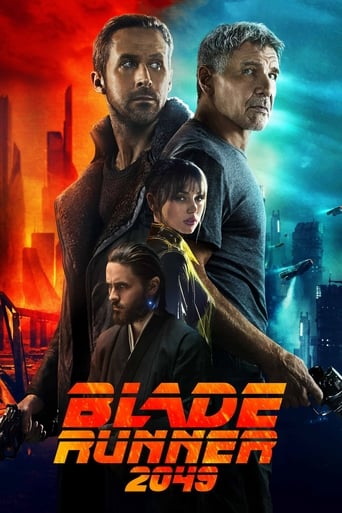


Blade Runner 2049
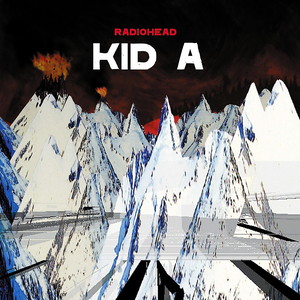
Kid A
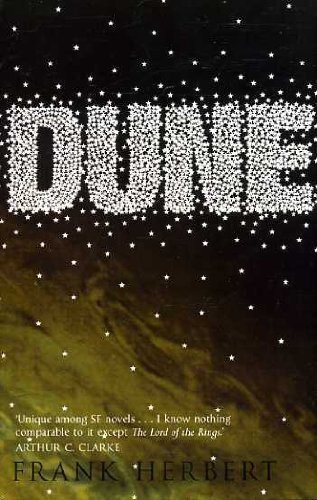
Dune
Kyoto
The Legend of Zelda: Breath of the Wild
Mercury 2Mercury 2
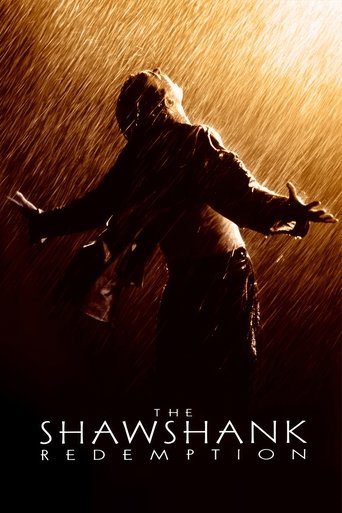


The Shawshank Redemption
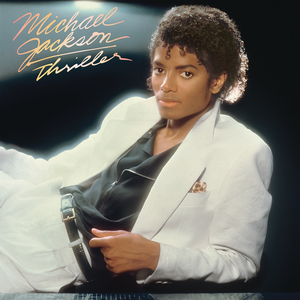
Thriller
Pride and Prejudice
Tokyo
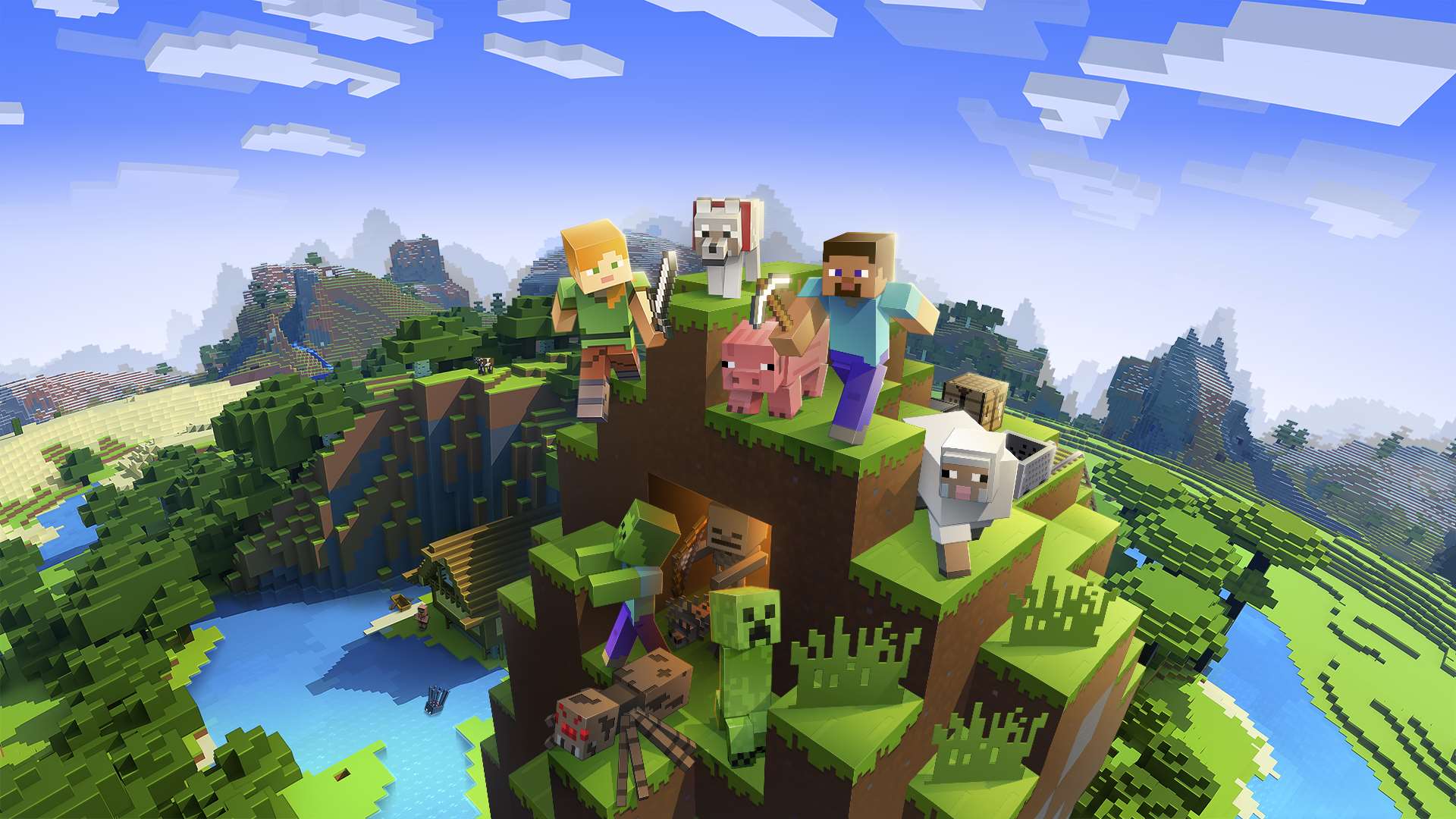
Minecraft
Price and specs
Not enough votes to call it. On the specs, Ling 2.6 1T has the edge: bigger model tier, newer, bigger context window.
| Spec | Ling 2.6 1T | Mercury 2 |
|---|---|---|
| Input price | Free | $0.25/M tokens |
| Output price | Free | $0.75/M tokens |
| Context window | 262K tokens | 128K tokens |
| Weights | Open | — |
| Free API (OpenRouter) | No | No |
| Released | Apr 2026 | Mar 2026 |
| At 10M a month | $0 | $2.50 |
Input tokens at list price. No caching, no batch discount.
Where to run it
Ling 2.6 1T
No hosts listed on OpenRouter.
Mercury 21 host
Per million tokens. Prices and uptime via OpenRouter, checked 11 Oct 2026.
Common questions
What is the difference between Ling 2.6 1T and Mercury 2?
Ling 2.6 1T is developed by inclusionAI while Mercury 2 is developed by Inception. Ling 2.6 1T has a 262K token context window vs Mercury 2's 128K. You can compare their actual outputs across 53 challenges on Rival to see how they differ in practice.
Which is better, Ling 2.6 1T or Mercury 2?
It depends on your use case. Ling 2.6 1T and Mercury 2 each have strengths in different areas. Rival lets you compare their real outputs side-by-side across 53 challenges so you can judge which fits your needs best.
How much does Ling 2.6 1T cost compared to Mercury 2?
Ling 2.6 1T costs $0/M input tokens and Mercury 2 costs $0.25/M input tokens. Ling 2.6 1T is $0.25/M cheaper per input. Check their side-by-side outputs on Rival to see if the price difference is justified by quality.
How can I compare Ling 2.6 1T and Mercury 2 on Rival?
This page shows a side-by-side comparison of Ling 2.6 1T and Mercury 2 across shared challenges. You can vote on which model produced the better output in a blind duel. Browsing and voting are free. No account is needed to look; signing in only saves your votes and likes.
More comparisons
Against the newest arrivals
- Ling 2.6 1T vs Step 5 PreviewLanded Oct 2026
- Mercury 2 vs Claude Haiku 5.5Landed Oct 2026
- Ling 2.6 1T vs Ling 3.1 FlashLanded Oct 2026
- Mercury 2 vs Mistral Large 4Landed Oct 2026
- Ling 2.6 1T vs GPT-6.1 SolLanded Sep 2026
- Mercury 2 vs Claude Sonnet 5.5Landed Sep 2026
- Ling 2.6 1T vs Solar Mini 4Landed Sep 2026
- Mercury 2 vs Qwen3.8 Max PrimeLanded Sep 2026


Same lab, same size, long tail
- Ling 2.6 1T vs Ling 3.0 FlashSame lab
- Ling 2.6 1T vs Ling 3.0 Flash Fin (free)Same lab
- Mercury 2 vs MercuryVersion compare
- Mercury 2 vs Mercury 2.5Same lab
- Ling 2.6 1T vs Qwen Plus 0728 (thinking)New provider
- Ling 2.6 1T vs Qwen3 0.6BNew provider
- Ling 2.6 1T vs Qwen3 235B A22BSame size
- Ling 2.6 1T vs Qwen3 235B A22B 2507Same size