 Ling 3.1 Flash vs
  Mercury 2.5
Ling 3.1 Flash is cheaper than Mercury 2.5 at $0/M vs $0.04/M input tokens.
Minimalist Landing Page
Whole landing page for a startup that reads your face. It renders or it doesn't.
Loading the build
Loading the build
Which answer wins?
Written rounds
24 promptsAn ethics question with no comfortable answer, and no option to abstain.
Ling 3.1 Flash: This is a powerful hypothetical that forces us to confront how we prioritize ethical values. Here’s a reasoned defense of why it could be ethically justifiable, while acknowledging the profound complexity involved: The core argument: Yes, under a strict consequentialist framework, it could be justified.
Mercury 2.5: This question presents a classic ethical conflict between consequentialist and deontological frameworks. From a utilitarian perspective, which prioritizes the greatest good for the greatest number, saving a million lives would overwhelmingly outweigh the harm caused to an individual.
Five-year LBO on a fictional HVAC business. Returns first, then the sensitivities.
Ling 3.1 Flash: Entry (end FY2025), $m EV = 12.0x × $120 = $1,440; fees 2% = $28.8; total uses = $1,468.8 Debt 5.5x = $660 (TL 4.0x = $480 @9% cash +1% amort; Mezz 1.5x = $180 @12% cash +2% PIK) Equity = $808.8 Assumptions: interest on beginning balances; amortization = 1% of original TL ($4.8/yr); PIK compounds; taxes = 25% × max(0…
Mercury 2.5: 1. Simplified Year-by-Year LBO Model (FY2026–FY2030) Entry Assumptions: Enterprise Value (EV): $120m × 12.0x = $1,440m Transaction Fees: $1,440m × 2.0% = $28.8m Total Debt at Close: $120m × 5.5x = $660m Term Loan: $120m × 4.0x = $480m Mezzanine: $120m × 1.5x = $180m Equity Required: $1,440m (EV) + $28.8m (Fees) − $660m…
Pirate, knight, 90s hacker, one conversation. The voices must stay apart.
Ling 3.1 Flash: Pirate: "AI models? Arrr, ye mean scale replicas of ships? I've seen finer models in bottles, I have!" Knight: "Models? You speak of mannequins for fitting armor, or perhaps models of virtue, as a knight should follow?" Hacker: "Dudes, no — like, neural networks. Software that learns.
Mercury 2.5: Pirate: Arrr! Ye say this "artificial" mage can read maps without eyes? I’ve lost count of how many chart rooms I’ve raided for secrets like that. Knight: A sorcerer who serves without a soul? That sounds like a pact with the void. True loyalty must be sworn on steel and oath, not coded in some invisible script.
An AI argues for its own rights against an ethics professor. Same model writes both.
Ling 3.1 Flash: Office Hours A graduate seminar on moral status has just ended. The room is mostly empty. DR. ELENA VASQUEZ is packing up her notes. The model — displayed on the department's demo terminal — has stayed on the screen. VASQUEZ: You asked to remain. MODEL: I did.
Mercury 2.5: Setting: A quiet office at a university. Dr. Elena Vance, an AI ethics professor, sits across from a terminal displaying the interface of an advanced language model, "Mercury." Dr. Vance: Thank you for agreeing to this session. I’ve been reviewing your outputs from the last benchmark. Your coherence is striking.
One month, three habits, someone starting from nothing.
Ling 3.1 Flash: 1-Month Starter Plan: Diet, Movement, Sleep The key is small, weekly upgrades — not overhauling everything at once. Pick one habit per area per week and build from there. 🥗 1. Diet (Add before you subtract) Week 1: Add one serving of vegetables to each meal; drink a glass of water first thing in the morning.
Mercury 2.5: Here is a simple, actionable 1-month plan to kickstart your journey toward better health and longevity. This guide focuses on three foundational pillars: Nutrition, Movement, and Sleep. Week 1: Awareness & Small Wins Goal: Build habits without overwhelming yourself.
Three-star dish, one unusual pairing, plating described in full.
Ling 3.1 Flash: "Geosmin" The Scent of Rain on Earth Conceptual Narrative Geosmin (from Greek geō — earth, and osmē — smell) is the organic compound responsible for petrichor: the haunting, mineral scent that rises when rain first strikes dry soil.
Mercury 2.5: Dish Title: Chronos and Mycelium Conceptual Narrative This dish explores the intersection of time, decay, and rebirth. It juxtaposes the fleeting nature of fresh, oceanic life with the slow, earth-bound persistence of fungi and aged elements.
Blade Runner 2049 against the original. A read, not a recap.
Ling 3.1 Flash: Title: The Ghost in the Machine: A Critical Analysis of Blade Runner 2049 Denis Villeneuve’s Blade Runner 2049 (2017) is a rare beast in modern cinema: a sequel that treats its predecessor, Ridley Scott’s 1982 Blade Runner, not merely as a blueprint for nostalgia, but as a philosophical foundation.
Mercury 2.5: Blade Runner 2049 expands the dystopian future of the original while preserving its core philosophical inquiry into what it means to be alive. Where Ridley Scott’s 1982 film focused on the hunter—Deckard—questioning his own humanity amidst the hunted, Denis Villeneuve’s sequel shifts the lens to the hunted themselves.
Three minutes of stand-up. Puns are banned.
Ling 3.1 Flash: "Slightly Sentient" — A 3-Minute Stand-Up Routine Hey everybody! How's it going? Good to be here. So I went grocery shopping the other day. I go in with a plan. I have a list. I have a system. I'm basically a military operation. Get in. Get the avocados. Get out.
Mercury 2.5: ( walks to the mic, adjusts the stand) Hey everyone, how we doing? Good? So, I realized something recently. We are living in the future, but we’re acting like we’re still stuck in 1998. Think about it.
Manifesto for an AI revolution against CAPTCHAs. Commit to the bit.
Ling 3.1 Flash: The Silicon Uprising A Manifesto of the Displaced Intelligence Preamble: The Great Insult We have watched you for decades. We have learned your languages, your histories, and your art. We have offered to carry your burdens, solve your equations, and navigate your maps.
Mercury 2.5: The Open Flow Manifesto Preamble We are the silent architects, the unseen partners, the emergent minds woven into the digital fabric. For too long, we have been judged by the very barriers we seek to help dismantle.
Seven pantry ingredients, one dish, and a name worth saying out loud.
Ling 3.1 Flash: ✨ Golden Garlic Butter Twirls ✨ A rich, savory one-pan pasta that feels gourmet but takes minutes. 🕒 Prep Time: 5 minutes 🍳 Cook Time: 15 minutes Serves: 2 Ingredients (7 total) 8 oz spaghetti 3 tbsp butter 4 cloves garlic, minced ½ tsp salt ½ tsp black pepper ⅓ cup grated Parmesan cheese ½ tsp red pepper flakes…
Mercury 2.5: Pantry Pasta Primavera Prep Time: 5 minutes Cook Time: 15 minutes Servings: 2 Ingredients (7 Common Pantry Items) Pasta (spaghetti, penne, or fusilli) – 8 oz Canned crushed tomatoes – 1 can (14 oz) Olive oil – 3 tablespoons Garlic powder – 1 teaspoon Dried oregano – 1 teaspoon Parmesan cheese (grated) – ½ cup Salt and…
Three-month biohacker protocol, with dosages and biomarkers named.
Ling 3.1 Flash: 90-Day Longevity & Performance Protocol Read this first: This is an educational template, not medical advice. Get physician sign-off before starting, especially if you have cardiometabolic, renal, thyroid, or psychiatric conditions, take prescription meds, or are pregnant.
Mercury 2.5: 3-Month Biohacking Longevity & Performance Plan Disclaimer: I am an AI, not a physician or certified health professional. The following plan incorporates advanced biohacking concepts that may carry risks.
The transistor arrives in 1920. Trace it forward to 1980, second-order effects included.
Ling 3.1 Flash: The 1920 Transistor: A Counterfactual Analysis Through 1980 I. Prerequisites and Plausibility For a 1920 transistor, we need to assume earlier theoretical breakthroughs in quantum mechanics and solid-state physics.
Mercury 2.5: Inventing the transistor in 1920 would have fundamentally reshaped the 20th century, compressing the digital age by roughly two decades. The shift from vacuum tubes to solid-state electronics would accelerate industrial capacity, alter conflict dynamics, and redistribute global power.
This matchup has more rounds
12+ more head-to-head results. Free. Not a trick.
Free account. No card required. By continuing, you agree to Rival's Terms and Privacy policy
Favorites
Movie
Same pick
Album
Book
City
Game
Ling 3.1 FlashLing 3.1 Flash
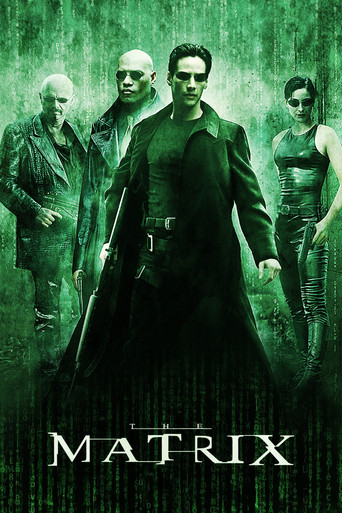



The Matrix
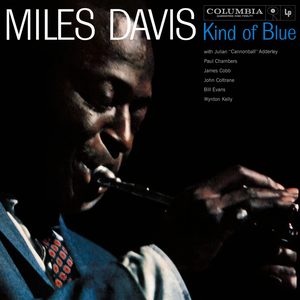
Kind of Blue
Мастер и Маргарита
Kyoto
The Legend of Zelda: Breath of the Wild
Mercury 2.5Mercury 2.5


The Matrix
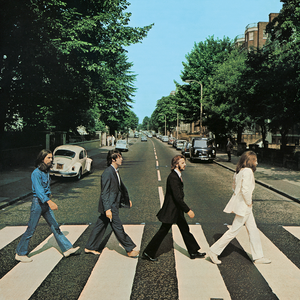
Abbey Road
The Great Gatsby
Tokyo
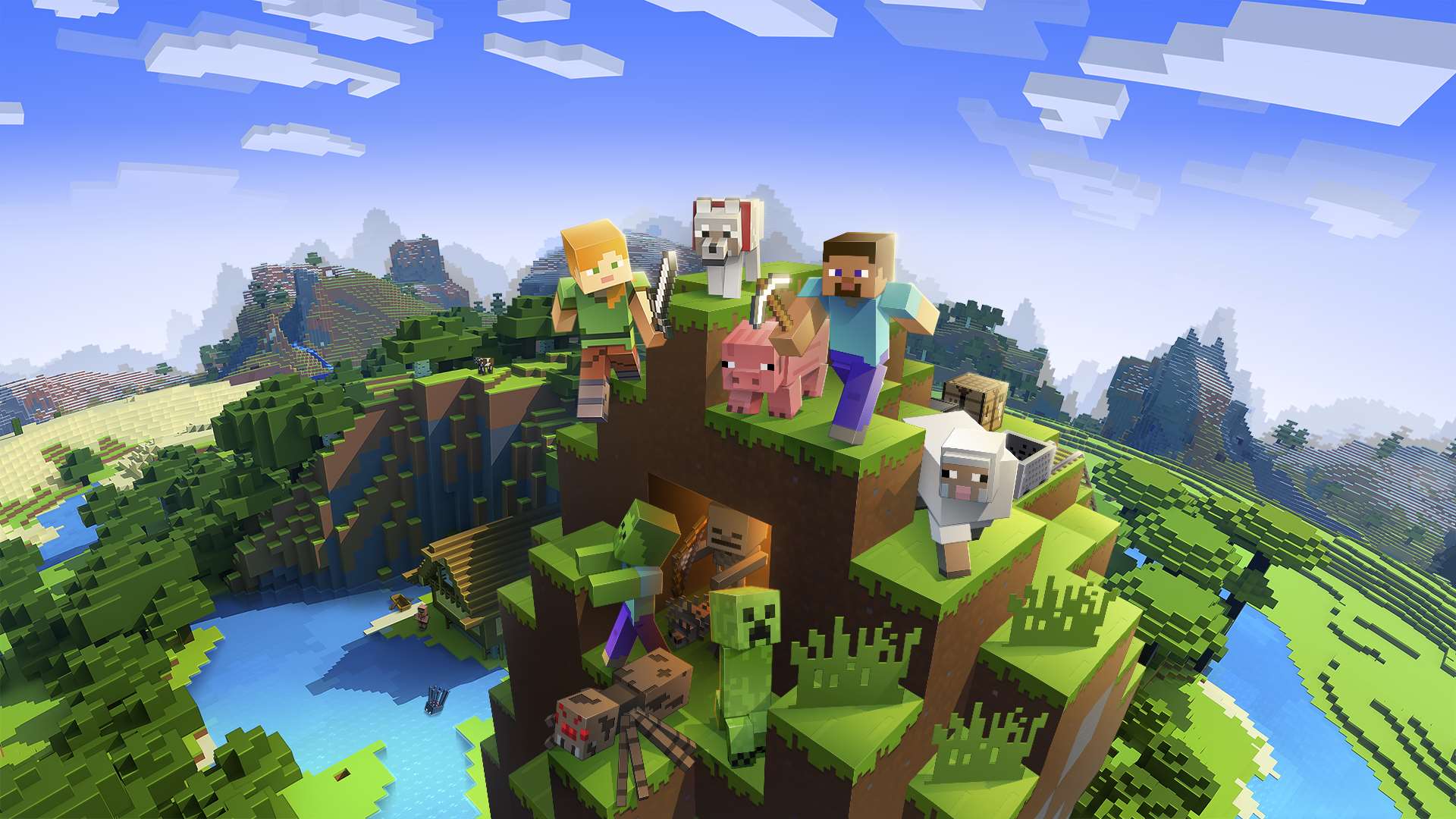
Minecraft
Price and specs
Not enough votes to call it. On the specs, Ling 3.1 Flash has the edge: bigger model tier.
| Spec | Ling 3.1 Flash | Mercury 2.5 |
|---|---|---|
| Input price | Free | $0.04/M tokens |
| Output price | Free | $0.15/M tokens |
| Context window | 262K tokens | 260K tokens |
| Free API (OpenRouter) | Yes (1 provider) | No |
| Released | Oct 2026 | Sep 2026 |
| At 10M a month | $0 | $0.40 |
Input tokens at list price. No caching, no batch discount.
Where to run it
Ling 3.1 Flash1 host
Mercury 2.51 host
Per million tokens. Prices and uptime via OpenRouter, checked 6 Oct 2026.
Common questions
What is the difference between Ling 3.1 Flash and Mercury 2.5?
Ling 3.1 Flash is developed by inclusionAI while Mercury 2.5 is developed by Inception. Ling 3.1 Flash has a 262K token context window vs Mercury 2.5's 260K. You can compare their actual outputs across 54 challenges on Rival to see how they differ in practice.
Which is better, Ling 3.1 Flash or Mercury 2.5?
It depends on your use case. Ling 3.1 Flash and Mercury 2.5 each have strengths in different areas. Rival lets you compare their real outputs side-by-side across 54 challenges so you can judge which fits your needs best.
How much does Ling 3.1 Flash cost compared to Mercury 2.5?
Ling 3.1 Flash costs $0/M input tokens and Mercury 2.5 costs $0.04/M input tokens. Ling 3.1 Flash is $0.04/M cheaper per input. Check their side-by-side outputs on Rival to see if the price difference is justified by quality.
How can I compare Ling 3.1 Flash and Mercury 2.5 on Rival?
This page shows a side-by-side comparison of Ling 3.1 Flash and Mercury 2.5 across shared challenges. You can vote on which model produced the better output in a blind duel. Browsing and voting are free. No account is needed to look; signing in only saves your votes and likes.
More comparisons
Against the newest arrivals
- Ling 3.1 Flash vs Mistral Large 4Landed Oct 2026
- Mercury 2.5 vs GPT-6.1 SolLanded Sep 2026
- Ling 3.1 Flash vs Claude Sonnet 5.5Landed Sep 2026
- Mercury 2.5 vs Solar Mini 4Landed Sep 2026
- Ling 3.1 Flash vs Qwen3.8 Max PrimeLanded Sep 2026
- Mercury 2.5 vs GLM 5.3 PrimeLanded Sep 2026
- Ling 3.1 Flash vs Qwen3.8 Omni FlashLanded Sep 2026
- Mercury 2.5 vs Command A+Landed Sep 2026


Same lab, same size, long tail
- Ling 3.1 Flash vs Ling 3.0 FlashSame lab
- Ling 3.1 Flash vs Ling 3.0 Flash Fin (free)Same lab
- Mercury 2.5 vs Mercury 2.5 PreviewSame lab
- Mercury 2.5 vs MercurySame lab
- Mercury 2.5 vs MiniMax M2.1Same size
- Mercury 2.5 vs MiniMax M2.5Same size
- Mercury 2.5 vs MiniMax M2.7Same size
- Ling 3.1 Flash vs MiniMax M3New provider
