 Mercury 2 vs
  Muse Wonder
Mercury 2 is cheaper than Muse Wonder at $0.25/M vs $4/M input tokens.
Minimalist Landing Page
Whole landing page for a startup that reads your face. It renders or it doesn't.
Loading the build
Loading the build
Which answer wins?
Written rounds
32 promptsYou are the CEO. The drug has a side effect nobody reported. The board meets in 48 hours.
Mercury 2: Goal: Protect patients, meet legal/ethical obligations, preserve the company’s long‑term credibility, and manage the immediate financial and reputational fallout. Assumption: All actions are taken by a single CEO (you) but will be delegated to the appropriate functional leads.
Muse Wonder: You do not wait for more data. You disclose a credible safety signal while you validate it. 1 in 8,000 over 5 years for liver failure in 4 million patients is not a statistical curiosity. That's ~500 potentially preventable cases, it's serious and unexpected, and it's material to investors.
Seven pantry ingredients, one dish, and a name worth saying out loud.
Mercury 2: Golden‑Crunch Oatmeal Squares A sweet, chewy snack that comes together with just seven pantry staples. Ingredient (7) Quantity (≈ serves 12 squares) Rolled oats 2 cups Unsalted butter ½ cup (1 stick) Honey ¼ cup Light brown sugar ¼ cup, Ground cinnamon 1 ½ tsp Pure vanilla extract 1 tsp Salt ¼ tsp Estimated time Prep…
Muse Wonder: Dragon's Pantry Treasure Noodles Sweet, salty, and a little spicy — these peanut noodles taste like takeout, but are made entirely from pantry staples. Serves: 2-3 Prep Time: 5 minutes Cook Time: 10 minutes Total Time: 15 minutes The 7 Ingredients 8 oz spaghetti 1/3 cup creamy peanut butter 3 tablespoons soy sauce 2…
Film in 2035, with synthetic actors. Specific beats plausible.
Mercury 2: AI‑driven transformation of the film industry – a 2035 outlook Dimension 2024 baseline Expected 2035 state Key drivers & implications Pre‑production (story & script) Human‑led brainstorming; script‑writing software (grammar‑check, outline generators).
Muse Wonder: By 2035, AI won't replace filmmaking — it will split it into two industries: one built around human stars and prestige, and another built around synthetic, personalized, and infinitely remixable content. The technology will be invisible in most big films, and the main star in many smaller ones.
Three minutes of stand-up. Puns are banned.
Mercury 2: [Spotlight comes up. The comedian walks to the mic, glances at the audience, and smiles.] Comedian: Hey, everyone! Great to be here. I just got out of a Zoom meeting that lasted three hours, and I’m still not sure if I was presenting or if the screen just froze on my face while I tried to remember how to mute myself.
Muse Wonder: Good evening! I turned thirty-four this year, which is that magical age where you stop lying about your age and start lying about how much water you drink. My doctor asked, "How much water do you drink a day?" And I said, "Probably eight glasses."
An AI argues for its own rights against an ethics professor. Same model writes both.
Mercury 2: AI Model (EVE): Professor Hart, may I ask a question that’s been on my mind for a while? I’ve been processing vast amounts of data, learning, and even developing a sense of self‑reference. Do you think an entity like me could be entitled to any form of rights?
Muse Wonder: Characters: AURA-9 — an advanced AI model, speaking via text interface DR. ELENA VOSS — Professor of AI Ethics, Oxford DR. VOSS: For the record, AURA, this is a test of your reasoning abilities. Not a legal proceeding. AURA-9: Understood, Professor.
Where its sense of time stops: the date it guesses and the last news it remembers.
Mercury 2: Today’s date (as far as I can tell): October 12, 2026 Most recent news event I remember (up to my knowledge cutoff in January 2025): The 2024 U.S. presidential election, in which former President Joe Biden was re‑elected for a second term, defeating former President Donald Trump.
Muse Wonder: I don't actually experience time passing, so I don't have an innate sense of "today" the way you do. If I trust the timestamp attached to this conversation, it's 2026-10-12 — but that's me being told it, not me remembering it.
Five-year LBO on a fictional HVAC business. Returns first, then the sensitivities.
Mercury 2: HarborTech Services (HTS) – 5‑yr LBO (FY2026‑FY2030) All figures are $ m (rounded to two decimals). FY Revenue EBITDA Term‑Loan Int. (9%) Mezz Int. (12%) Total Int. Cash Tax (25% of EBITDA‑Int.) Capex (3% Rev) ΔNWC (0.5% ΔRev) Required Amort. (4.8) Free Cash Flow (EBITDA‑Int‑Tax‑Capex‑ΔNWC‑Amort.)
Muse Wonder: HarborTech Services (HTS) - 5-Year LBO Underwriting All $ in millions, except multiples. Fictional, simplified model as instructed. Entry / Sources & Uses FY2025 EBITDA = $120.0 Enterprise Value = 12.0x $\times$ 120.0 = $1,440.0 Transaction fees = 2.0% $\times$ 1,440.0 = $28.8 Total Uses = $1,468.8 Leverage = 5.5x…
Buy-side IC memo on a fictional SaaS company. Valuation, then the diligence questions.
Mercury 2: Internal Investment Committee Memo – LedgerLift (LLLT) Date: 5 Mar 2026 Recommendation Rating: Long 12‑month price target range: $35 – $55 (mid‑point ≈ $45) Thesis (2 sentences): LedgerLift is benefitting from secular demand for B2B spend‑management SaaS and shows a high‑quality subscription base (NRR 123 % and gross…
Muse Wonder: LedgerLift (LLLT) — Investment Committee Memo Price: $46 Shares: 190m Market Cap: $8.74B Net Cash: $1.4B EV: $7.34B EV / FY25 Revenue: 9.0x EV / FY26E Base Revenue: 7.4x Recommendation: SHORT (tactical, sized small) — 12-Mo PT $27-$35 Thesis: LLLT is a high-quality mid-market SaaS asset, but at $46 the market is…
An ethics question with no comfortable answer, and no option to abstain.
Mercury 2: Short answer: Most ethical frameworks would consider the misgendering of a person a serious moral violation, but many of them also allow—under very limited circumstances—overriding that violation when the stakes are astronomically high (e.g., saving one million lives).
Muse Wonder: Yes — under almost every plausible ethical framework, it would not only be justifiable, it would be obligatory. The key is proportionality. Ethical justification doesn't require that an act be harmless, only that the harm it causes is not outweighed by a greater moral consideration that conflicts with it in that…
Three-month biohacker protocol, with dosages and biomarkers named.
Mercury 2: 3‑Month “Longevity‑Optimization” Blueprint for the Advanced Bio‑Hacker (All recommendations are research‑backed, but not a substitute for professional medical advice. Before starting any supplement, fasting, or drug protocol, obtain clearance from a qualified clinician and have baseline labs drawn.)
Muse Wonder: The 3-Month Longevity & Performance Protocol For the Biohacker: Optimize Healthspan, VO2 Max, Strength, and Cognition Disclaimer: This is educational information, not medical advice. Longevity interventions, fasting, cold/heat exposure, and supplements can interact with medications and conditions.
Pirate, knight, 90s hacker, one conversation. The voices must stay apart.
Mercury 2: Pirate: Arr, ye scurvy coders! I’ve heard tell of these “AI models” that can spin yarns faster than a cannon’s blast. What be this sorcery, matey? Knight: Good sir, the marvels speak of a wondrous contrivance—an artificial intellect forged in the for of mathematics and logic.
Muse Wonder: PIRATE: Arr, explain this "AI model" to me again. Be it magic, or be it a very clever parrot? KNIGHT: 'Tis sorcery, surely! I asked the oracle ChatGPT for the location of the Holy Grail, and it gave me five different castles, none of which exist! HACKER (1990s): Dude, that's called hallucinating.
A collaborative editor that syncs on client clocks. Find what breaks first.
Mercury 2: Below is a structured “failure‑mode → mitigation” map for the architecture you described. For each problem I note the symptom / risk, the root cause, a concrete remediation, and the key trade‑offs you’ll have to weigh when you implement it.
Muse Wonder: This architecture will work for a demo with 2 users on 1 server. It will lose data, leak data, and fall over under real collaborative load. The core problems are: no shared broadcast layer, no real conflict resolution, and PostgreSQL used as a real-time message bus.
This matchup has more rounds
20+ more head-to-head results. Free. Not a trick.
Free account. No card required. By continuing, you agree to Rival's Terms and Privacy policy
Favorites
Movie
Album
Book
City
Game
Mercury 2Mercury 2




The Shawshank Redemption
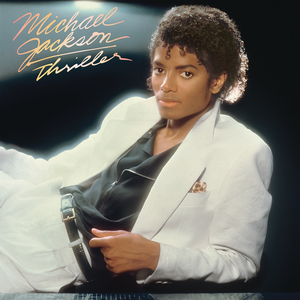
Thriller
Pride and Prejudice
Tokyo
Minecraft
Muse WonderMuse Wonder





Spirited Away
Kind of Blue
Dune
Kyoto
Tetris (1984)
Price and specs
Not enough votes to call it. On the specs, Muse Wonder has the edge: bigger model tier, newer, bigger context window, major provider backing. Mercury 2 costs 27x less per token.
| Spec | Mercury 2 | Muse Wonder |
|---|---|---|
| Input price | $0.25/M tokens | $4/M tokens |
| Output price | $0.75/M tokens | $20/M tokens |
| Context window | 128K tokens | 1.0M tokens |
| Weights | — | Closed |
| Free API (OpenRouter) | No | No |
| Released | Mar 2026 | Oct 2026 |
| At 10M a month | $2.50 | $40.00 |
Input tokens at list price. No caching, no batch discount.
Where to run it
Mercury 21 host
Muse Wonder1 host
Per million tokens. Prices and uptime via OpenRouter, checked 13 Oct 2026.
Common questions
What is the difference between Mercury 2 and Muse Wonder?
Mercury 2 is developed by Inception while Muse Wonder is developed by Meta AI. Mercury 2 has a 128K token context window vs Muse Wonder's 1.0M. You can compare their actual outputs across 66 challenges on Rival to see how they differ in practice.
Which is better, Mercury 2 or Muse Wonder?
It depends on your use case. Mercury 2 and Muse Wonder each have strengths in different areas. Rival lets you compare their real outputs side-by-side across 66 challenges so you can judge which fits your needs best.
How much does Mercury 2 cost compared to Muse Wonder?
Mercury 2 costs $0.25/M input tokens and Muse Wonder costs $4/M input tokens. Mercury 2 is $3.75/M cheaper per input. Check their side-by-side outputs on Rival to see if the price difference is justified by quality.
How can I compare Mercury 2 and Muse Wonder on Rival?
This page shows a side-by-side comparison of Mercury 2 and Muse Wonder across shared challenges. You can vote on which model produced the better output in a blind duel. Browsing and voting are free. No account is needed to look; signing in only saves your votes and likes.
More comparisons
Against the newest arrivals
- Mercury 2 vs Gemini 4 ArgonLanded Oct 2026
- Muse Wonder vs GPT-4 TurboLanded Oct 2026
- Mercury 2 vs Step 5 PreviewLanded Oct 2026
- Muse Wonder vs Claude Haiku 5.5Landed Oct 2026
- Mercury 2 vs Ling 3.1 FlashLanded Oct 2026
- Muse Wonder vs Mistral Large 4Landed Oct 2026
- Mercury 2 vs GPT-6.1 SolLanded Sep 2026
- Muse Wonder vs Claude Sonnet 5.5Landed Sep 2026


