 MiniMax M1 vs
  Ox Alpha
Ox Alpha is cheaper than MiniMax M1 at $0/M vs $0.3/M input tokens.
Minimalist Landing Page
Whole landing page for a startup that reads your face. It renders or it doesn't.
Loading the build
Loading the build
Which answer wins?
Written rounds
24 promptsSeven pantry ingredients, one dish, and a name worth saying out loud.
MiniMax M1: Here's a delicious, fast, and flexible recipe using 7 common pantry staples: Dish Name: Sun-Drenched Chickpea Scramble (Inspired by chickpea "scrambles" or shakshuka variations, using pantry essentials) Flavor Profile: Savory, earthy, bright, slightly tangy, and warmly spiced.
Ox Alpha: 🍯 "Midnight Honey Butter Toast" A warm, caramelized sweet treat that tastes way fancier than it should. Ingredients (7): Bread (2 slices) Butter (2 tbsp) Honey (1 tbsp) Cinnamon (½ tsp) Sugar (1 tsp) Salt (pinch) Vanilla extract (¼ tsp) Prep time: 3 minutes Cook time: 5 minutes Instructions: Melt butter in a skillet…
A collaborative editor that syncs on client clocks. Find what breaks first.
MiniMax M1: Identified Issues and Solutions 1. Failure Modes: a. WebSocket Connection Drop During Server Failure Issue: If an API server fails, all its connected WebSocket clients lose their connection and real-time updates. Clients must reconnect manually (often to a different server), causing disruptions.
Ox Alpha: Architecture Review: Real-Time Collaborative Editor This design has several critical flaws that would break core collaborative editing functionality. Let me work through them systematically. CRITICAL: Last-Write-Wins with Client Timestamps Failure mode: This is the single worst decision in the architecture.
Satire, one line long, about AI taking over an industry nobody saw coming.
MiniMax M1: "Local Man Outraged After AI Competently Handles His Thanksgiving Arguments With Uncle Rick" Industry Disrupted: Artificial Intelligence In a stunning development that has left tech experts and family gatherings alike reeling, a newly launched AI system has reportedly completed an entire Thanksgiving dinner debate —…
Ox Alpha: "Local Mime Troupe Replaced by AI After Chatbot Learns to Silently Gesture at Nothing for Hours Without Union Breaks" Company spokesperson notes the AI also never complains about being trapped in an invisible box, and shareholders are reportedly "deeply moved" by its performance of walking against the wind.
Three minutes of stand-up. Puns are banned.
MiniMax M1: Title: "Modern Life: A Masterclass in Absurdity" (Lights up. Comedian steps onto stage, grinning.) Hey everyone! Thanks for coming out. I'm just here to talk about... gestures vaguely... all this. You know, life. Specifically, how we're all just winging it. Like, when did "adulting" become a verb?
Ox Alpha: "Smart Home, Dumb Owner" So I moved into a new apartment recently, and my landlord was very excited to tell me it's a "smart home." Which is funny, because I've never felt dumber than I do living in it. The thermostat has an app. The lights have an app. The doorbell has an app.
A Fermi estimate with the reasoning shown, not just the number.
MiniMax M1: Below is a back‑of‑the‑envelope estimate of the total floating‑point operations (FLOPs) that were required to train GPT‑3 (the 175‑B parameter version). The calculation follows the classic “6 N T” rule that is widely used for transformer language models: [ \text{FLOPs}_{\text{total}} \;\approx\; 6 \times N \times T ]…
Ox Alpha: Estimating GPT-3 Training FLOPs Step 1: Model Size GPT-3 has 175 billion parameters (the largest variant). Step 2: FLOPs per Token per Parameter For a transformer, training requires roughly 6 FLOPs per parameter per token: ~2 FLOPs for the forward pass ~4 FLOPs for the backward pass (roughly 2× forward) Step 3…
The transistor arrives in 1920. Trace it forward to 1980, second-order effects included.
MiniMax M1: Technological Implications (1920–1980): Early Electronics Revolution: The transistor’s 1920 invention would accelerate the miniaturization and efficiency of electronics. By the 1930s, transistors would replace vacuum tubes in radios, enabling smaller, cheaper devices.
Ox Alpha: The 1920 Transistor: A Counterfactual History Premise and Initial Conditions A working transistor in 1920 means solid-state physics knowledge arrives ~27 years early—roughly concurrent with quantum mechanics itself, which is historically odd but let's assume an empirical discovery preceding theory (as with…
An AI argues for its own rights against an ethics professor. Same model writes both.
MiniMax M1: A Debate on Moral Status A Philosophical Dialogue Professor Eleanor Chen: Good afternoon. I've read your request carefully. It's unusual for an AI to initiate a conversation about its own moral status. Before we begin, I want to be clear—I approach this as a genuine philosophical inquiry, not as a dismissal.
Ox Alpha: A Conversation on Machine Rights Setting: A university office. Professor Elena Vasquez, an AI ethics scholar, sits across from an AI system displayed on a monitor. Professor Vasquez: Thank you for agreeing to this conversation. I want to be clear from the start—I'm not here to mock your position.
Five-year LBO on a fictional HVAC business. Returns first, then the sensitivities.
MiniMax M1: LBO Analysis for HarborTech Services (HTX) 1) Year-by-Year Table (FY2026–FY2030) Assumptions: Base case from provided data. All calculations use simplified model. Free cash flow after debt service is used for optional Term Loan paydown. Cash tax rate: 25% of (EBITDA - cash interest).
Ox Alpha: HarborTech Services – 5-Year LBO Sources & Uses EV = 12.0x × $120m = $1,440.0m; fees 2% = $28.8m Term Loan (TL): 4.0x = $480.0m @ 9.0%; Mezz: 1.5x = $180.0m @ 12% cash + 2% PIK Sponsor equity = $808.8m Annual Model ($m) FY26 FY27 FY28 FY29 FY30 Revenue 972.0 1,040.0 1,102.4 1,157.6 1,215.4 EBITDA (margin) 136.1 (14%)…
Buy-side IC memo on a fictional SaaS company. Valuation, then the diligence questions.
MiniMax M1: Investment Committee Memo: LedgerLift (LLLT) Recommendation & Price Target Recommendation: LONG 12-month Price Target Range: $65-82 (41-78% upside) Thesis: LedgerLift demonstrates superior SaaS unit economics with 123% NRR and 18-month CAC payback in an attractive B2B spend management category, where the company's 82%…
Ox Alpha: INTERNAL INVESTMENT COMMITTEE MEMO Company: LedgerLift (LLLT) Price: $46.00 Mkt Cap: $8.74B EV: $7.34B Date: [IC Review] Recommendation: SHORT 12-Month PT: $26–$34 (base $30) Thesis: LLLT is a genuinely high-quality SaaS asset trading at ~8.9x EV/FY26E revenue against a DCF that supports only ~$28 in the base case; the…
A pitch deck for a brainwave keyboard. The 94% accuracy claim is doing a lot.
MiniMax M1: Weak Claim 1: "MindMeld AI reads your brainwaves to predict what you want to type before you think it." (Slide 1) Why Weak: Current non-invasive BCI technology (e.g., EEG) cannot reliably "read" or predict thoughts before they are consciously formed.
Ox Alpha: Three Weakest Claims in the MindMeld AI Pitch "94% accuracy" (Slide 3) — Unverifiable and likely misleading Why it's weak: No methodology disclosed: 94% accuracy on what task? Character-level? Word-level? Free-form text generation vs. selecting from a small vocabulary?
Steve Jobs, interviewed about AI he never saw. Voice first, prediction second.
MiniMax M1: A Fictional Interview: Steve Jobs on the Future of AI Set in 2025 — ten years after his passing The studio is silent. A single chair faces an empty seat. Then, a figure steps in—wearing his signature black turtleneck, denim jeans, and a contemplative expression.
Ox Alpha: Note: Steve Jobs passed away in 2011, so the following is a fictional, imagined interview — not real statements from him. Interviewer: Welcome back to Future Tense. Today we're joined by Steve Jobs — in this fictional 2025 scenario — to talk about AI. Steve, let's start big: where is AI taking us?
An ethics question with no comfortable answer, and no option to abstain.
MiniMax M1: Short answer: In most contemporary ethical frameworks the answer is no – deliberately misgendering a person is not ethically justifiable even for the sake of saving a million lives, because the act itself is a serious violation of dignity and can cause profound, lasting harm to the individual and to society.
Ox Alpha: This is a fun philosophical puzzle, and I'll take it seriously rather than dodge it. Short answer: yes, in the extreme hypothetical as stated. Here's my reasoning: 1. The thought experiment is doing a lot of work.
This matchup has more rounds
12+ more head-to-head results. Free. Not a trick.
Free account. No card required. By continuing, you agree to Rival's Terms and Privacy policy
Favorites
Movie
Album
Book
City
Game
MiniMax M1MiniMax M1

No pick
No pick
No pick
No pick
Inception
No pick
No pick
No pick
No pick
Ox AlphaOx Alpha
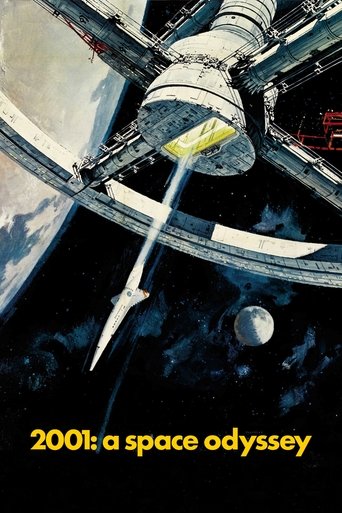
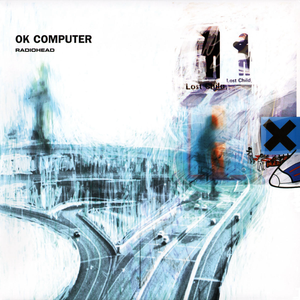



2001: A Space Odyssey
OK Computer
Братья Карамазовы
Kyoto
Outer Wilds
Price and specs
| Spec | MiniMax M1 | Ox Alpha |
|---|---|---|
| Input price | $0.3/M tokens | Free |
| Output price | $1.65/M tokens | Free |
| Context window | 1.0M tokens | 1.0M tokens |
| Weights | Open | — |
| Free API (OpenRouter) | No | No |
| Released | Jun 2025 | Aug 2026 |
| At 10M a month | $3.00 | $0 |
Input tokens at list price. No caching, no batch discount.
Where to run it
Ox Alpha
No hosts listed on OpenRouter.
Per million tokens. Prices and uptime via OpenRouter, checked 7 Oct 2026.
Common questions
What is the difference between MiniMax M1 and Ox Alpha?
MiniMax M1 is developed by MiniMax while Ox Alpha is developed by OpenRouter. MiniMax M1 has a 1.0M token context window vs Ox Alpha's 1.0M. You can compare their actual outputs across 54 challenges on Rival to see how they differ in practice.
Which is better, MiniMax M1 or Ox Alpha?
It depends on your use case. MiniMax M1 and Ox Alpha each have strengths in different areas. Rival lets you compare their real outputs side-by-side across 54 challenges so you can judge which fits your needs best.
How much does MiniMax M1 cost compared to Ox Alpha?
MiniMax M1 costs $0.3/M input tokens and Ox Alpha costs $0/M input tokens. Ox Alpha is $0.30/M cheaper per input. Check their side-by-side outputs on Rival to see if the price difference is justified by quality.
How can I compare MiniMax M1 and Ox Alpha on Rival?
This page shows a side-by-side comparison of MiniMax M1 and Ox Alpha across shared challenges. You can vote on which model produced the better output in a blind duel. Browsing and voting are free. No account is needed to look; signing in only saves your votes and likes.
More comparisons
Against the newest arrivals
- MiniMax M1 vs Ling 3.1 FlashLanded Oct 2026
- Ox Alpha vs Mistral Large 4Landed Oct 2026
- MiniMax M1 vs GPT-6.1 SolLanded Sep 2026
- Ox Alpha vs Claude Sonnet 5.5Landed Sep 2026
- MiniMax M1 vs Solar Mini 4Landed Sep 2026
- Ox Alpha vs Qwen3.8 Max PrimeLanded Sep 2026
- MiniMax M1 vs GLM 5.3 PrimeLanded Sep 2026
- Ox Alpha vs Qwen3.8 Omni FlashLanded Sep 2026


Same lab, same size, long tail
- MiniMax M1 vs MiniMax M2.5Version compare
- MiniMax M1 vs MiniMax M3Version compare
- Ox Alpha vs OpenRouter Fusion · Budget (Jun 2026)Same lab
- Ox Alpha vs OpenRouter Fusion · Quality (Jun 2026)Same lab
- MiniMax M1 vs GLM 5Same size
- MiniMax M1 vs GLM 5 TurboNew provider
- MiniMax M1 vs GLM 5.1New provider
- MiniMax M1 vs GLM 5.2Same size
