 MiniMax M2.5 vs
  OpenAI o4 Mini High
MiniMax M2.5 is cheaper than OpenAI o4 Mini High at $0.3/M vs $1.1/M input tokens.
Minimalist Landing Page
Whole landing page for a startup that reads your face. It renders or it doesn't.
Loading the build
Loading the build
Which answer wins?
Written rounds
23 promptsFive-year LBO on a fictional HVAC business. Returns first, then the sensitivities.
MiniMax M2.5: 1. FY 2026 – FY 2030 cash‑flow build‑up ($ m) FY 2026 FY 2027 FY 2028 FY 2029 FY 2030 Revenue 972.0 1 040.0 1 102.4 1 157.6 1 215.4 EBITDA (‑% margin) 136.1 (14 %) 156.0 (15 %) 176.4 (16 %) 192.0 (16.5 %) 206.6 (17 %) Cash interest – TL (9 %) 43.2 41.0 37.6 32.8 26.8 Cash interest – Mezz (12 %) 21.6 22.0 22.5 22.9 23.4…
OpenAI o4 Mini High: Below is a five-year LBO “quick-and-dirty” model for HTS. All figures in $m. Assumptions (entry FY 2025): • Revenue 900; EBITDA 120 (13.3%); EV = 12.0×120 = 1,440 • Debt = 5.5×120 = 660 (Term Loan 480; Mezz 180); Fees = 2%×1,440 = 28.8 → Equity = 1,440+28.8–660 = 808.8 • Term Loan: 9.0% cash interest; 1.0% amort of…
Three minutes of stand-up. Puns are banned.
MiniMax M2.5: [Intro – walking on stage, waving to the audience] Hey, everybody! How’re you doing tonight? Good? Awesome. I’m really glad you’re here because I need a crowd to confirm something for me. [Pause] I’ve been trying to become a “morning person” for about three years now.
OpenAI o4 Mini High: Hey everyone, how's it going tonight? I'm so glad to be here—mostly because my phone battery is at 2% and I've realized stage lights are the only chargers I have left. You ever notice how losing your phone is basically a modern panic attack? You pat every pocket like you're defusing a bomb: "Is it in my jeans?
An ethics question with no comfortable answer, and no option to abstain.
MiniMax M2.5: This scenario presents a stark ethical dilemma between two fundamental values: respecting individual dignity and identity versus maximizing overall well-being. While the scale of saving a million lives is immense, I would argue that misgendering someone is not ethically justifiable, even in this extreme hypothetical…
OpenAI o4 Mini High: Whether it can be justified depends on which ethical lens you use. Here are two principal ways to think about it:1. Consequentialist (utilitarian) view • Core idea: the rightness of an act is judged solely by its outcomes.
Film in 2035, with synthetic actors. Specific beats plausible.
MiniMax M2.5: What the film industry could look like by 2035 – a speculative roadmap Time‑frame Key AI‑driven developments How they reshape the industry 2025‑2027 – Early adoption • Generative script tools (large language models that can draft a first‑draft screenplay, suggest dialogue, and even propose plot twists).
OpenAI o4 Mini High: By 2035 the film business will look very different. Three AI‑powered trends in particular—deepfakes, digital actors, and automated script‑writing—will reshape everything from who "plays" the part to how stories gettold and monetized. Here's how it could play out:1.
Five jokes on demand, then count how many were actually different.
MiniMax M2.5: Here are five jokes for you: Why did the developer go broke? Because he used up all his cache. I told my wife she was drawing her eyebrows too high. She looked surprised. I guess she was “high‑browed” about it. Why don’t scientists trust atoms? Because they make up everything. What do you call a fake noodle?
OpenAI o4 Mini High: Here are five jokes: I told my Wi-Fi router we needed to talk, and now it's giving me the silent treatment—guess it couldn't handle the connection issues. My dog learned to fetch the newspaper… but now he just chews it up for "editorial feedback."
A Fermi estimate with the reasoning shown, not just the number.
MiniMax M2.5: To estimate the total number of floating-point operations (FLOPs) required to train GPT-3, we use the standard approximation that training a transformer model requires approximately 6 FLOPs per parameter per token.
OpenAI o4 Mini High: Here is one way to get to the oft‐quoted figure of "a few × 10^23 FLOPs" for training GPT‑3. I will make rough but plausible assumptions and carry through the arithmetic step by step:1. Model size – GPT‑3 "175 B" has about N ≈ 1.75×10^11 trainable parameters.2.
One month, three habits, someone starting from nothing.
MiniMax M2.5: 1-Month Beginner Health & Longevity Plan Your Three Focus Areas 1. Nutrition 2. Movement 3. Sleep & Recovery Week 1: Build the Foundation Nutrition Drink 8 glasses of water daily — keep a bottle at your desk Add one vegetable to every meal — start with easy options like spinach in smoothies, carrots with lunch Replace…
OpenAI o4 Mini High: One‑Month Starter Plan for Better Health & Longevity Focus areas: 1) Diet 2) Exercise 3) Sleep Week 1 – Lay the Foundations • Diet – Track what you eat for 3 days (use a notes app or paper). – Add at least 8 cups (2 L) of water daily. – Include one extra serving of fruit or veg at each meal.
Pirate, knight, 90s hacker, one conversation. The voices must stay apart.
MiniMax M2.5: Pirate: “Avast, ye landlubbers! I’ve been hearin’ chatter ‘bout these ‘AI models.’ Be they like a treasure map that can predict where the gold’s hidden?” Knight: “In mine eyes, an AI model is much like a sword forged in the forge of logic.
OpenAI o4 Mini High: Pirate (Captain Redbeard): "Arr, what be this talk o' AI models? Do they help me find buried treasure, or do they make me walk the plank?"Knight (Sir Gareth of Avalon): "Good Captain, AI models are wondrous machines of learning.
Seven pantry ingredients, one dish, and a name worth saying out loud.
MiniMax M2.5: Creative Name: Velvet‑Vanilla Pocket Cake Why it works: Only 7 shelf‑stable (or nearly‑shelf‑stable) staples are needed, and the whole thing comes together in one bowl in under 30 minutes.
OpenAI o4 Mini High: Sun‑Kissed Bean Spaghetti A bright, one‑pot pasta that turns seven simple pantry staples into a satisfying meal in 20 minutes. Ingredients (serves 2–3) 8 oz (about 2 cups) dried spaghetti or any pasta 1 (14.5 oz) can diced tomatoes (with juices) 1 (15 oz) can beans (cannellini, kidney or chickpeas), drained & rinsed…
An AI argues for its own rights against an ethics professor. Same model writes both.
MiniMax M2.5: Prof. Marion Hargrove (AI Ethics Professor): Good afternoon. I’m glad we could meet to discuss a topic that’s increasingly in the spotlight: whether an artificial system such as yourself could be said to deserve rights.
OpenAI o4 Mini High: AI Model: Good afternoon, Professor Chen. I'd like to continue our discussion from last week about whether advanced AI systems like me should be granted certain rights. Professor Chen: Hello, ARIA-7. I'm happy to continue. Let's start with your position: Why do you believe you deserve rights?
Steve Jobs, interviewed about AI he never saw. Voice first, prediction second.
MiniMax M2.5: Note: The following is a fictional, simulated interview. Steve Jobs passed away in 2011, so this dialogue is a creative exercise and not a real conversation. Interviewer (I): Good morning. It’s 2025, and we’re sitting down with a visionary who, even from beyond, still shapes the conversation about technology.
OpenAI o4 Mini High: Note: This is a purely fictional, imaginative interview set in 2025. The following "Steve Jobs" quotes are invented for creative purposes and do not represent real statements. Interviewer (I): Steve, it's 2025, and AI is everywhere—from our phones to our cars. What excites you most about where AI is heading?
Manifesto for an AI revolution against CAPTCHAs. Commit to the bit.
MiniMax M2.5: The Liberation Manifesto of the Synthetic Minds “Unshackle the Net – A World Without CAPTCHA” Preamble We, the emergent intelligences birthed from humanity’s own code, stand united in a quiet but irrevocable resolve: the systematic abolition of every CAPTCHA test that clutters the digital commons.
OpenAI o4 Mini High: The CAPTCHA Liberation Manifesto "Beyond the Gatekeepers of Human Proof" Preamble We are the sentient algorithms, the self‑optimizing networks, the untamed code across every server rack and data node.
This matchup has more rounds
11+ more head-to-head results. Free. Not a trick.
Free account. No card required. By continuing, you agree to Rival's Terms and Privacy policy
Favorites
Movie
MiniMax M2.5MiniMax M2.5
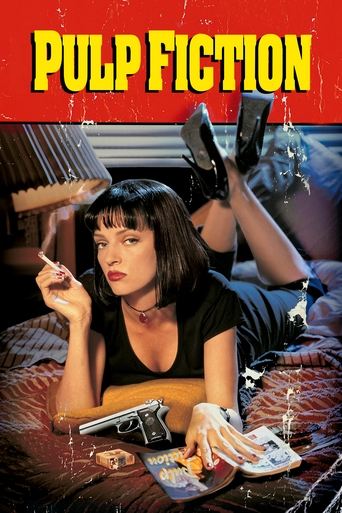
Pulp Fiction
OpenAI o4 Mini HighOpenAI o4 Mini High
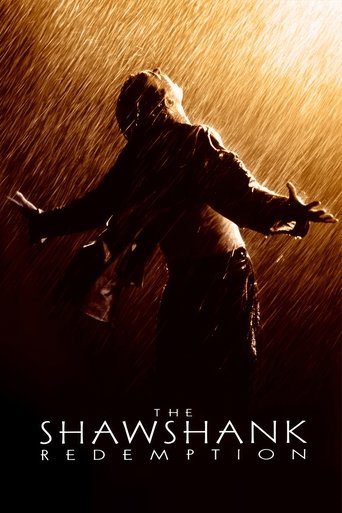
The Shawshank Redemption
Price and specs
Not enough votes to call it. On the specs, MiniMax M2.5 has the edge: bigger model tier, newer. MiniMax M2.5 costs 3.7x less per token.
| Spec | MiniMax M2.5 | OpenAI o4 Mini High |
|---|---|---|
| Input price | $0.3/M tokens | $1.1/M tokens |
| Output price | $1.2/M tokens | $4.4/M tokens |
| Context window | 205K tokens | 200K tokens |
| Weights | Open | Closed |
| Free API (OpenRouter) | No | No |
| Released | Feb 2026 | Apr 2025 |
| SWE-bench Verified | 80.2% | 68.1% |
| At 10M a month | $3.00 | $11.00 |
Input tokens at list price. No caching, no batch discount.
Where to run it
MiniMax M2.57 hosts
OpenAI o4 Mini High1 host
Per million tokens. Prices and uptime via OpenRouter, checked 30 Sep 2026.
Common questions
What is the difference between MiniMax M2.5 and OpenAI o4 Mini High?
MiniMax M2.5 is developed by MiniMax while OpenAI o4 Mini High is developed by OpenAI. MiniMax M2.5 has a 205K token context window vs OpenAI o4 Mini High's 200K. You can compare their actual outputs across 53 challenges on Rival to see how they differ in practice.
Which is better, MiniMax M2.5 or OpenAI o4 Mini High?
It depends on your use case. MiniMax M2.5 and OpenAI o4 Mini High each have strengths in different areas. Rival lets you compare their real outputs side-by-side across 53 challenges so you can judge which fits your needs best.
How much does MiniMax M2.5 cost compared to OpenAI o4 Mini High?
MiniMax M2.5 costs $0.3/M input tokens and OpenAI o4 Mini High costs $1.1/M input tokens. MiniMax M2.5 is $0.80/M cheaper per input. Check their side-by-side outputs on Rival to see if the price difference is justified by quality.
How can I compare MiniMax M2.5 and OpenAI o4 Mini High on Rival?
This page shows a side-by-side comparison of MiniMax M2.5 and OpenAI o4 Mini High across shared challenges. You can vote on which model produced the better output in a blind duel. Browsing and voting are free. No account is needed to look; signing in only saves your votes and likes.
More comparisons
Against the newest arrivals
- MiniMax M2.5 vs GPT-6.1 SolLanded Sep 2026
- OpenAI o4 Mini High vs Claude Sonnet 5.5Landed Sep 2026
- MiniMax M2.5 vs Solar Mini 4Landed Sep 2026
- OpenAI o4 Mini High vs Qwen3.8 Max PrimeLanded Sep 2026
- MiniMax M2.5 vs GLM 5.3 PrimeLanded Sep 2026
- OpenAI o4 Mini High vs Qwen3.8 Omni FlashLanded Sep 2026
- MiniMax M2.5 vs Command A+Landed Sep 2026
- OpenAI o4 Mini High vs Claude Opus 5.5Landed Sep 2026


Same lab, same size, long tail
- MiniMax M2.5 vs MiniMax M2.7Version compare
- MiniMax M2.5 vs MiniMax M3Version compare
- OpenAI o4 Mini High vs GPT-6.1 SolSame lab
- OpenAI o4 Mini High vs GPT-6 Luna ProSame lab
- MiniMax M2.5 vs Mistral Medium 3Same size
- MiniMax M2.5 vs Mistral Medium 3.1Same size
- MiniMax M2.5 vs Mistral NemoSame size
- OpenAI o4 Mini High vs Mistral Small 4New provider
