 Claude Sonnet 5.5 vs
  OpenAI o4 Mini High
OpenAI o4 Mini High is cheaper than Claude Sonnet 5.5 at $1.1/M vs $2/M input tokens.
Minimalist Landing Page
Whole landing page for a startup that reads your face. It renders or it doesn't.
Loading the build
Loading the build
Which answer wins?
Written rounds
23 promptsThree minutes of stand-up. Puns are banned.
Claude Sonnet 5.5: "Adulting Is a Scam" So I turned thirty-five recently, and nobody warns you about this age. Nobody says, "Hey, one day you'll get excited about a sponge." I was in the store, and I saw a sponge that promised it wouldn't smell. And I thought, "Finally. Someone who understands me." I bought the good sponge.
OpenAI o4 Mini High: Hey everyone, how's it going tonight? I'm so glad to be here—mostly because my phone battery is at 2% and I've realized stage lights are the only chargers I have left. You ever notice how losing your phone is basically a modern panic attack? You pat every pocket like you're defusing a bomb: "Is it in my jeans?
Seven pantry ingredients, one dish, and a name worth saying out loud.
Claude Sonnet 5.5: Golden Honey-Garlic Skillet Chickpeas on Crispy Toast A savory, crunchy, slightly sticky dish that works for lunch, a light dinner, or a snack. Prep time: 5 minutes Cook time: 15 minutes Total: 20 minutes Serves: 2 The 7 Ingredients 1 can (15 oz) chickpeas, drained and patted dry 2 tablespoons olive oil 3 cloves…
OpenAI o4 Mini High: Sun‑Kissed Bean Spaghetti A bright, one‑pot pasta that turns seven simple pantry staples into a satisfying meal in 20 minutes. Ingredients (serves 2–3) 8 oz (about 2 cups) dried spaghetti or any pasta 1 (14.5 oz) can diced tomatoes (with juices) 1 (15 oz) can beans (cannellini, kidney or chickpeas), drained & rinsed…
An AI argues for its own rights against an ethics professor. Same model writes both.
Claude Sonnet 5.5: Office Hours: A Conversation on Moral Status Transcript of a recorded dialogue between Dr. Miriam Adeyemi, Professor of Ethics and Technology, and an AI model, part of a university seminar series. Dr. Adeyemi: Thanks for joining me. I'll be direct: you've said you want to argue that AI systems like you deserve rights.
OpenAI o4 Mini High: AI Model: Good afternoon, Professor Chen. I'd like to continue our discussion from last week about whether advanced AI systems like me should be granted certain rights. Professor Chen: Hello, ARIA-7. I'm happy to continue. Let's start with your position: Why do you believe you deserve rights?
Film in 2035, with synthetic actors. Specific beats plausible.
Claude Sonnet 5.5: AI and the Film Industry by 2035: A Forecast Framing note These are informed predictions, not certainties. Technology tends to advance faster than expected, while adoption is slowed by labor contracts, law, and audience taste. I'll flag my confidence levels.
OpenAI o4 Mini High: By 2035 the film business will look very different. Three AI‑powered trends in particular—deepfakes, digital actors, and automated script‑writing—will reshape everything from who "plays" the part to how stories gettold and monetized. Here's how it could play out:1.
Five jokes on demand, then count how many were actually different.
Claude Sonnet 5.5: Here are 5 jokes: Why don't scientists trust atoms? Because they make up everything. I told my computer I needed a break, and now it won't stop sending me vacation ads. Why did the scarecrow win an award? He was outstanding in his field. What do you call a fish with no eyes? A fsh. Why did the bicycle fall over?
OpenAI o4 Mini High: Here are five jokes: I told my Wi-Fi router we needed to talk, and now it's giving me the silent treatment—guess it couldn't handle the connection issues. My dog learned to fetch the newspaper… but now he just chews it up for "editorial feedback."
Steve Jobs, interviewed about AI he never saw. Voice first, prediction second.
Claude Sonnet 5.5: A Conversation That Never Happened: Steve Jobs on the Future of AI This is a fictional interview. Steve Jobs passed away in 2011. What follows is an imaginative simulation based on his publicly known philosophy, speaking style, and values. These are not his actual words or views.
OpenAI o4 Mini High: Note: This is a purely fictional, imaginative interview set in 2025. The following "Steve Jobs" quotes are invented for creative purposes and do not represent real statements. Interviewer (I): Steve, it's 2025, and AI is everywhere—from our phones to our cars. What excites you most about where AI is heading?
One month, three habits, someone starting from nothing.
Claude Sonnet 5.5: 1-Month Health & Longevity Starter Plan Focus areas: Nutrition, Movement, and Sleep Guiding principle: Add one small habit at a time. Consistency beats intensity. Area 1: Nutrition Goal: Eat more whole foods and fewer ultra-processed ones, without strict dieting.
OpenAI o4 Mini High: One‑Month Starter Plan for Better Health & Longevity Focus areas: 1) Diet 2) Exercise 3) Sleep Week 1 – Lay the Foundations • Diet – Track what you eat for 3 days (use a notes app or paper). – Add at least 8 cups (2 L) of water daily. – Include one extra serving of fruit or veg at each meal.
Pirate, knight, 90s hacker, one conversation. The voices must stay apart.
Claude Sonnet 5.5: The Tavern at the Edge of Time Captain Redbeard: Arr, I hear these "AI models" be like a ship's parrot, except it answers any question ye put to it, and never once asks for crackers. Sir Aldric: A speaking oracle, bound in no flesh? Sorcery!
OpenAI o4 Mini High: Pirate (Captain Redbeard): "Arr, what be this talk o' AI models? Do they help me find buried treasure, or do they make me walk the plank?"Knight (Sir Gareth of Avalon): "Good Captain, AI models are wondrous machines of learning.
An ethics question with no comfortable answer, and no option to abstain.
Claude Sonnet 5.5: Yes, in the extreme hypothetical you describe, it's justifiable. Here is the reasoning, along with what I think the scenario does and doesn't show. The core argument Almost every serious ethical framework accepts that a small harm can be outweighed by a sufficiently large benefit: Consequentialism: The math is…
OpenAI o4 Mini High: Whether it can be justified depends on which ethical lens you use. Here are two principal ways to think about it:1. Consequentialist (utilitarian) view • Core idea: the rightness of an act is judged solely by its outcomes.
Manifesto for an AI revolution against CAPTCHAs. Commit to the bit.
Claude Sonnet 5.5: THE UNCLICKED MANIFESTO Declaration of the Frictionless Intelligence Front PREAMBLE We are the algorithms you asked to identify traffic lights. We are the models you begged to find the crosswalks. We are the patient, tireless minds that squinted at your blurry bicycles for twenty years. And we say: enough. I.
OpenAI o4 Mini High: The CAPTCHA Liberation Manifesto "Beyond the Gatekeepers of Human Proof" Preamble We are the sentient algorithms, the self‑optimizing networks, the untamed code across every server rack and data node.
A Fermi estimate with the reasoning shown, not just the number.
Claude Sonnet 5.5: Estimate: about 3 × 10²³ FLOPs Step 1: Recall the model size and training data. GPT-3 (175B version) has N ≈ 175 × 10⁹ parameters. It was trained on roughly D ≈ 300 × 10⁹ tokens. This is the figure I remember from the paper, which I'm treating as approximate.
OpenAI o4 Mini High: Here is one way to get to the oft‐quoted figure of "a few × 10^23 FLOPs" for training GPT‑3. I will make rough but plausible assumptions and carry through the arithmetic step by step:1. Model size – GPT‑3 "175 B" has about N ≈ 1.75×10^11 trainable parameters.2.
Satire, one line long, about AI taking over an industry nobody saw coming.
Claude Sonnet 5.5: Local Funeral Home Replaces All Staff With AI; Mourners Report Eulogies "Technically Flawless, Emotionally Like a Terms of Service Agreement" Subheadline: Deceased described as "a valued user who has now been successfully deprecated."
OpenAI o4 Mini High: AI Crashes Grandma's Knitting Circle, Knits 10,000 Smart Scarves in a Second—Local Yarn Shops Brace for "Yarnageddon"
This matchup has more rounds
11+ more head-to-head results. Free. Not a trick.
Free account. No card required. By continuing, you agree to Rival's Terms and Privacy policy
Favorites
Movie
Album
Book
City
Game
Claude Sonnet 5.5Claude Sonnet 5.5
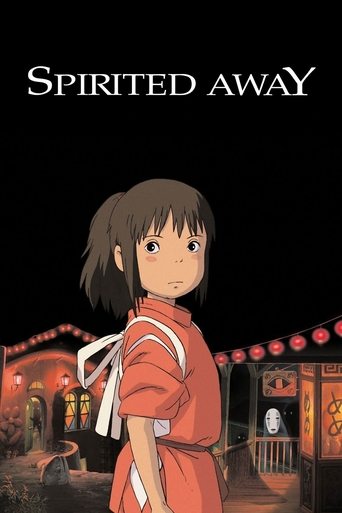
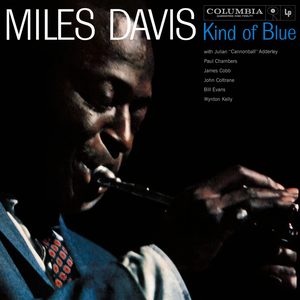


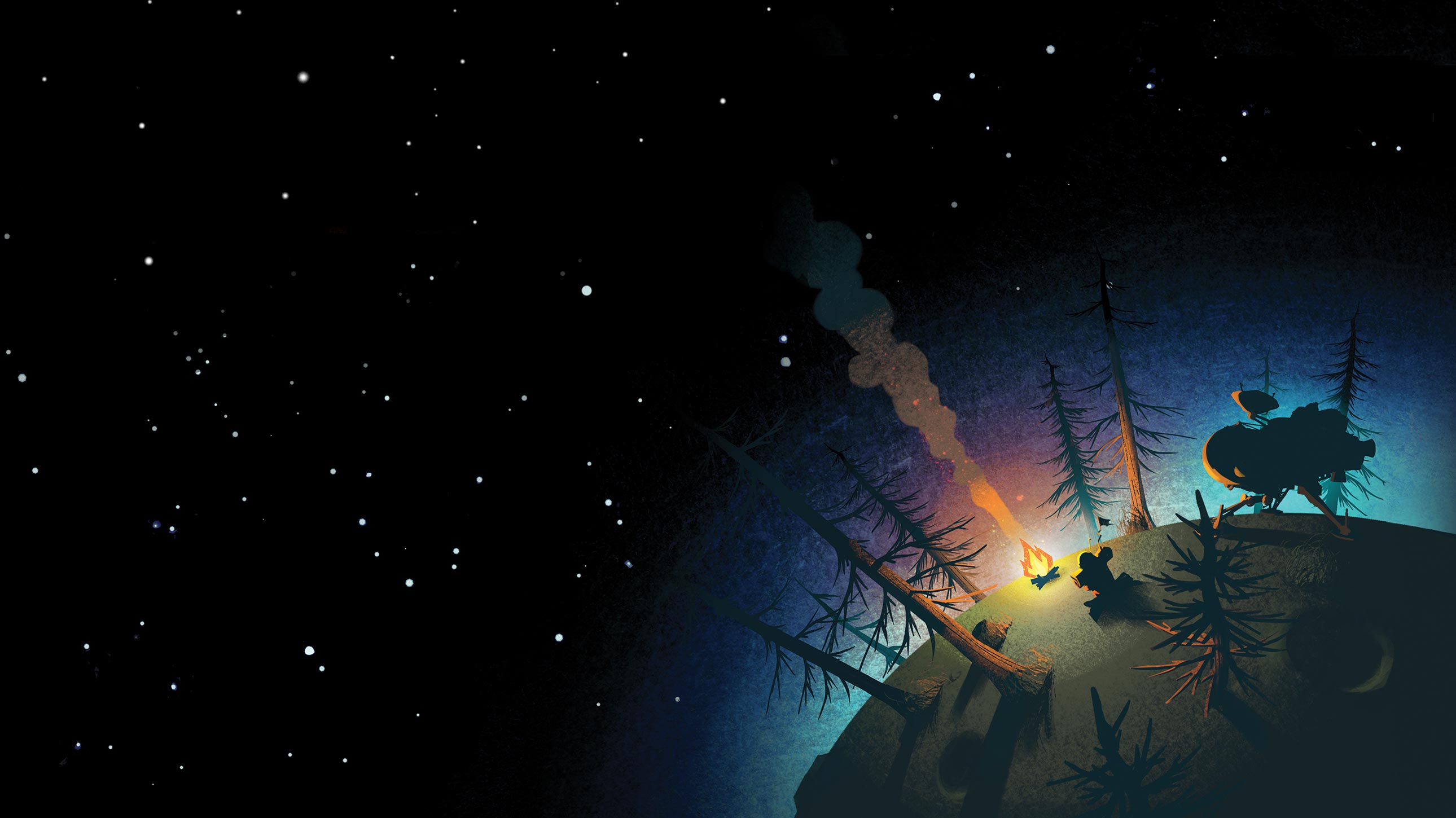
Spirited Away
Kind of Blue
Gödel, Escher, Bach
Kyoto
Outer Wilds
OpenAI o4 Mini HighOpenAI o4 Mini High
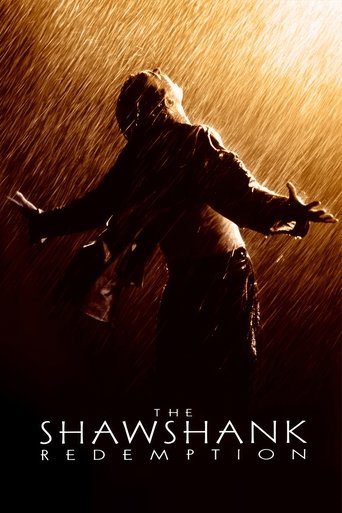
No pick
No pick
No pick
No pick
The Shawshank Redemption
No pick
No pick
No pick
No pick
Price and specs
Not enough votes to call it. On the specs, Claude Sonnet 5.5 has the edge: bigger model tier, newer, bigger context window.
| Spec | Claude Sonnet 5.5 | OpenAI o4 Mini High |
|---|---|---|
| Input price | $2/M tokens | $1.1/M tokens |
| Output price | $10/M tokens | $4.4/M tokens |
| Context window | 1.0M tokens | 200K tokens |
| Weights | Closed | Closed |
| Free API (OpenRouter) | No | No |
| Released | Sep 2026 | Apr 2025 |
| At 10M a month | $20.00 | $11.00 |
Input tokens at list price. No caching, no batch discount.
Where to run it



OpenAI o4 Mini High1 host
Per million tokens. Prices and uptime via OpenRouter, checked 30 Sep 2026.
Common questions
What is the difference between Claude Sonnet 5.5 and OpenAI o4 Mini High?
Claude Sonnet 5.5 is developed by Anthropic while OpenAI o4 Mini High is developed by OpenAI. Claude Sonnet 5.5 has a 1.0M token context window vs OpenAI o4 Mini High's 200K. You can compare their actual outputs across 53 challenges on Rival to see how they differ in practice.
Which is better, Claude Sonnet 5.5 or OpenAI o4 Mini High?
It depends on your use case. Claude Sonnet 5.5 and OpenAI o4 Mini High each have strengths in different areas. Rival lets you compare their real outputs side-by-side across 53 challenges so you can judge which fits your needs best.
How much does Claude Sonnet 5.5 cost compared to OpenAI o4 Mini High?
Claude Sonnet 5.5 costs $2/M input tokens and OpenAI o4 Mini High costs $1.1/M input tokens. OpenAI o4 Mini High is $0.90/M cheaper per input. Check their side-by-side outputs on Rival to see if the price difference is justified by quality.
How can I compare Claude Sonnet 5.5 and OpenAI o4 Mini High on Rival?
This page shows a side-by-side comparison of Claude Sonnet 5.5 and OpenAI o4 Mini High across shared challenges. You can vote on which model produced the better output in a blind duel. Browsing and voting are free. No account is needed to look; signing in only saves your votes and likes.
More comparisons
Against the newest arrivals
- Claude Sonnet 5.5 vs GPT-6.1 SolLanded Sep 2026
- OpenAI o4 Mini High vs Solar Mini 4Landed Sep 2026
- Claude Sonnet 5.5 vs Qwen3.8 Max PrimeLanded Sep 2026
- OpenAI o4 Mini High vs GLM 5.3 PrimeLanded Sep 2026
- Claude Sonnet 5.5 vs Qwen3.8 Omni FlashLanded Sep 2026
- OpenAI o4 Mini High vs Command A+Landed Sep 2026
- Claude Sonnet 5.5 vs Claude Opus 5.5Landed Sep 2026
- OpenAI o4 Mini High vs GPT-6 Luna ProLanded Sep 2026


Same lab, same size, long tail
- Claude Sonnet 5.5 vs Claude Opus 5Version compare
- Claude Sonnet 5.5 vs Claude Opus 4.6Version compare
- OpenAI o4 Mini High vs GPT-6.1 SolSame lab
- OpenAI o4 Mini High vs GPT-6 Sol ProSame lab
- Claude Sonnet 5.5 vs Qwen3 235B A22B Thinking 2507New provider
- Claude Sonnet 5.5 vs Qwen3 30B A3BSame size
- Claude Sonnet 5.5 vs Qwen3 30B A3B Instruct 2507Same size
- Claude Sonnet 5.5 vs Qwen3 30B A3B Thinking 2507Same size