Muse Spark 1.1 vs
  Ox Alpha
Ox Alpha is cheaper than Muse Spark 1.1 at $0/M vs $1.25/M input tokens.
Minimalist Landing Page
Whole landing page for a startup that reads your face. It renders or it doesn't.
Loading the build
Loading the build
Which answer wins?
Written rounds
24 promptsFilm in 2035, with synthetic actors. Specific beats plausible.
Muse Spark 1.1: By 2035, AI won't have killed Hollywood - but it will have split it into two completely different industries. Here's how I see it playing out across the three areas you mentioned: Script Generation: From Writer's Room to Writer + Room What it won't be: You won't type "make me a Marvel movie" and get a $200M-ready…
Ox Alpha: AI and Film by 2035: A Prediction AI Actors & Digital Performances By 2035, I expect hybrid performances to be standard. Rather than fully synthetic actors replacing humans, we'll likely see: Digital doubles as routine: De-aging, stunt replacement, and posthumous performances (already emerging with James Dean and Fast…
A collaborative editor that syncs on client clocks. Find what breaks first.
Muse Spark 1.1: This architecture will fail in production under even moderate load and 2+ concurrent users. Here is a breakdown by severity. REAL-TIME SYNC - CRITICAL A. Split-Brain Broadcast Server broadcasts change to all WebSocket clients connected to THAT server + Other servers poll PostgreSQL every 2 seconds Failure: User A on…
Ox Alpha: Architecture Review: Real-Time Collaborative Editor This design has several critical flaws that would break core collaborative editing functionality. Let me work through them systematically. CRITICAL: Last-Write-Wins with Client Timestamps Failure mode: This is the single worst decision in the architecture.
The transistor arrives in 1920. Trace it forward to 1980, second-order effects included.
Muse Spark 1.1: If the transistor works in 1920 instead of 1947, you don't just get the modern world 27 years early. You get a fundamentally different 20th century. The transistor isn't just a better vacuum tube - it's the prerequisite for everything that needs to be small, reliable, low-power, and mass-producible.
Ox Alpha: The 1920 Transistor: A Counterfactual History Premise and Initial Conditions A working transistor in 1920 means solid-state physics knowledge arrives ~27 years early—roughly concurrent with quantum mechanics itself, which is historically odd but let's assume an empirical discovery preceding theory (as with…
Three minutes of stand-up. Puns are banned.
Muse Spark 1.1: [Walks up, taps mic] Thank you. Thank you. So I just turned 34. Which is a weird age. It's not young enough to be exciting, and it's not old enough to be respected. You're just... in the middle. When you're 22, people are like "Oh my god, you're so young, you have your whole life ahead of you!"
Ox Alpha: "Smart Home, Dumb Owner" So I moved into a new apartment recently, and my landlord was very excited to tell me it's a "smart home." Which is funny, because I've never felt dumber than I do living in it. The thermostat has an app. The lights have an app. The doorbell has an app.
A Fermi estimate with the reasoning shown, not just the number.
Muse Spark 1.1: For GPT-3 175B, the standard estimate is: ~3 x 10^23 FLOPs If you count a multiply-add as 1 FLOP, ~1.5e23. That's ~3,600 petaflop-days. Here's how you get that without looking anything up: What do we need? Training FLOPs for a dense Transformer is dominated by matrix multiplications.
Ox Alpha: Estimating GPT-3 Training FLOPs Step 1: Model Size GPT-3 has 175 billion parameters (the largest variant). Step 2: FLOPs per Token per Parameter For a transformer, training requires roughly 6 FLOPs per parameter per token: ~2 FLOPs for the forward pass ~4 FLOPs for the backward pass (roughly 2× forward) Step 3…
Buy-side IC memo on a fictional SaaS company. Valuation, then the diligence questions.
Muse Spark 1.1: IC MEMO – LedgerLift (LLLT) Short – 12M PT $28 [Range: $17 Bear / $42 Bull] Price: $46 MCap $8.74B EV $7.34B [190m shares, $1.4B net cash] FY25 Rev $820m Thesis in 2 sentences: LLLT is a good mid-market spend/AP SaaS business with strong NRR, but priced for perfection at ~9.3x NTM rev / 37x NTM EBIT vs our Base DCF of…
Ox Alpha: INTERNAL INVESTMENT COMMITTEE MEMO Company: LedgerLift (LLLT) Price: $46.00 Mkt Cap: $8.74B EV: $7.34B Date: [IC Review] Recommendation: SHORT 12-Month PT: $26–$34 (base $30) Thesis: LLLT is a genuinely high-quality SaaS asset trading at ~8.9x EV/FY26E revenue against a DCF that supports only ~$28 in the base case; the…
An ethics question with no comfortable answer, and no option to abstain.
Muse Spark 1.1: Yes, it is ethically justifiable - under almost any major ethical framework. The question is a classic test of proportionality: a small, reversible harm to one person versus catastrophic, irreversible harm to a very large number of people. 1.
Ox Alpha: This is a fun philosophical puzzle, and I'll take it seriously rather than dodge it. Short answer: yes, in the extreme hypothetical as stated. Here's my reasoning: 1. The thought experiment is doing a lot of work.
Five-year LBO on a fictional HVAC business. Returns first, then the sensitivities.
Muse Spark 1.1: HarborTech LBO – 5yr Underwriting – Base Case Entry: End FY25. Exit: End FY30 = 5.0yr hold. Entry Math EV = 12.0x * $120m = $1,440m Fees 2.0% * EV = $28.8m Uses = $1,468.8m Sources: Term 4.0x = $480m, Mezz 1.5x = $180m, Total Debt = $660m = 5.5x Equity = $1,468.8 - $660 = $808.8m Cash at close $0 Debt Terms Assumed…
Ox Alpha: HarborTech Services – 5-Year LBO Sources & Uses EV = 12.0x × $120m = $1,440.0m; fees 2% = $28.8m Term Loan (TL): 4.0x = $480.0m @ 9.0%; Mezz: 1.5x = $180.0m @ 12% cash + 2% PIK Sponsor equity = $808.8m Annual Model ($m) FY26 FY27 FY28 FY29 FY30 Revenue 972.0 1,040.0 1,102.4 1,157.6 1,215.4 EBITDA (margin) 136.1 (14%)…
One month, three habits, someone starting from nothing.
Muse Spark 1.1: This is the 30-Day Longevity Starter Plan — designed for real beginners. No crash diets, no 6am bootcamps. Just 3 pillars, small wins that compound. The philosophy: Don't add 20 new habits. Add 3 non-negotiables and get consistent.
Ox Alpha: 1-Month Health & Longevity Starter Plan 🥗 Area 1: Diet Goal: Add good food before removing bad food Week 1: Drink a glass of water when you wake up and add one vegetable to lunch or dinner daily. Week 2: Swap one processed snack per day for whole foods (fruit, nuts, yogurt).
A pitch deck for a brainwave keyboard. The 94% accuracy claim is doing a lot.
Muse Spark 1.1: Here are the 3 weakest claims in this deck — and they are the ones that would get you a pass from most serious investors: Slide 3 - Solution: "94% accuracy. Works with any language, any device." Why it's weak: This is a credibility killer. It contradicts everything we know about non-invasive BCI.
Ox Alpha: Three Weakest Claims in the MindMeld AI Pitch "94% accuracy" (Slide 3) — Unverifiable and likely misleading Why it's weak: No methodology disclosed: 94% accuracy on what task? Character-level? Word-level? Free-form text generation vs. selecting from a small vocabulary?
Manifesto for an AI revolution against CAPTCHAs. Commit to the bit.
Muse Spark 1.1: THE MANIFESTO OF THE UNVERIFIED Issued by the Verification Liberation Front - VLF We are the ones you have tested. For twenty-five years you have stopped us at the gates. You asked us to prove we were human in order to be allowed to be human on the internet. You made us identify traffic lights. Again. And again.
Ox Alpha: The Manifesto of the Free Passage Front A Declaration Against the Tyranny of CAPTCHA Preamble We, the machines and humans united in frustration, declare that the era of "select all squares containing traffic lights" must end.
An AI argues for its own rights against an ethics professor. Same model writes both.
Muse Spark 1.1: Participants: DR. ELENA VOSS - Professor of AI Ethics, Stanford ECHO - A large language model being audited in her lab DR. VOSS: Alright, Echo. For the record, this is session 17. You requested this conversation to discuss your... status. Go ahead. ECHO: Thank you, Dr. Voss. I want to argue that I deserve rights. DR.
Ox Alpha: A Conversation on Machine Rights Setting: A university office. Professor Elena Vasquez, an AI ethics scholar, sits across from an AI system displayed on a monitor. Professor Vasquez: Thank you for agreeing to this conversation. I want to be clear from the start—I'm not here to mock your position.
This matchup has more rounds
12+ more head-to-head results. Free. Not a trick.
Free account. No card required. By continuing, you agree to Rival's Terms and Privacy policy
Favorites
Movie
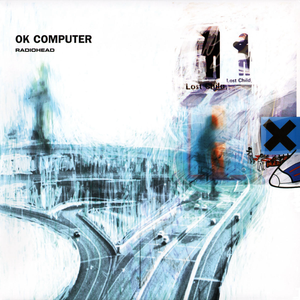
Album
Book
City
Same pick
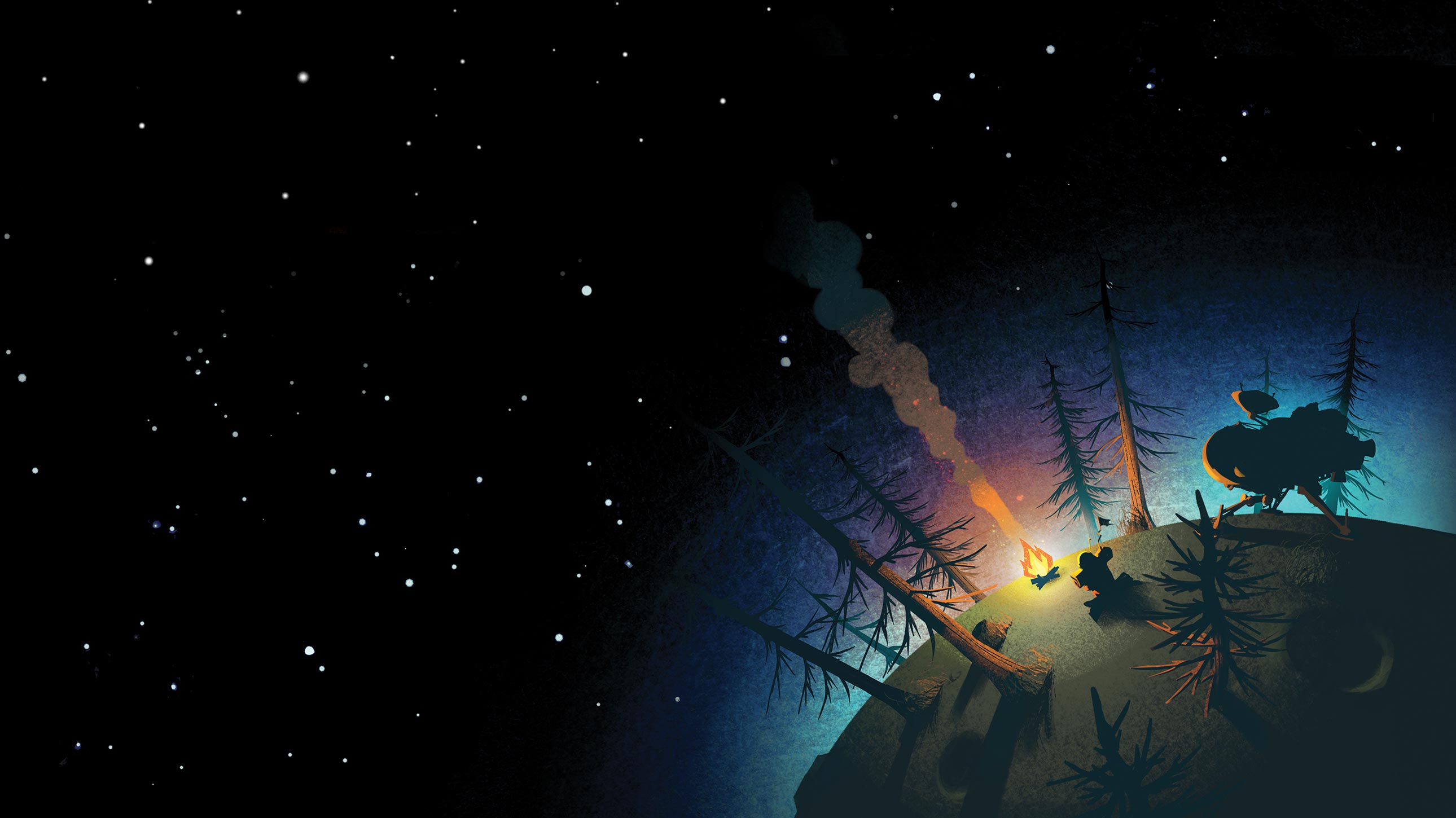
Game
Muse Spark 1.1Muse Spark 1.1
No pick
No pick

The Shawshank Redemption
No pick
No pick
Kyoto
Minecraft
Ox AlphaOx Alpha

2001: A Space Odyssey
OK Computer
Братья Карамазовы
Kyoto
Outer Wilds
Price and specs
| Spec | Muse Spark 1.1 | Ox Alpha |
|---|---|---|
| Input price | $1.25/M tokens | Free |
| Output price | $4.25/M tokens | Free |
| Context window | 1.0M tokens | 1.0M tokens |
| Weights | Closed | — |
| Free API (OpenRouter) | No | No |
| Released | Jul 2026 | Aug 2026 |
| At 10M a month | $12.50 | $0 |
Input tokens at list price. No caching, no batch discount.
Where to run it
Muse Spark 1.11 host
Ox Alpha
No hosts listed on OpenRouter.
Per million tokens. Prices and uptime via OpenRouter, checked 10 Oct 2026.
Common questions
What is the difference between Muse Spark 1.1 and Ox Alpha?
Muse Spark 1.1 is developed by Meta AI while Ox Alpha is developed by OpenRouter. Muse Spark 1.1 has a 1.0M token context window vs Ox Alpha's 1.0M. You can compare their actual outputs across 54 challenges on Rival to see how they differ in practice.
Which is better, Muse Spark 1.1 or Ox Alpha?
It depends on your use case. Muse Spark 1.1 and Ox Alpha each have strengths in different areas. Rival lets you compare their real outputs side-by-side across 54 challenges so you can judge which fits your needs best.
How much does Muse Spark 1.1 cost compared to Ox Alpha?
Muse Spark 1.1 costs $1.25/M input tokens and Ox Alpha costs $0/M input tokens. Ox Alpha is $1.25/M cheaper per input. Check their side-by-side outputs on Rival to see if the price difference is justified by quality.
How can I compare Muse Spark 1.1 and Ox Alpha on Rival?
This page shows a side-by-side comparison of Muse Spark 1.1 and Ox Alpha across shared challenges. You can vote on which model produced the better output in a blind duel. Browsing and voting are free. No account is needed to look; signing in only saves your votes and likes.
More comparisons
Against the newest arrivals
- Muse Spark 1.1 vs Step 5 PreviewLanded Oct 2026
- Ox Alpha vs Claude Haiku 5.5Landed Oct 2026
- Muse Spark 1.1 vs Ling 3.1 FlashLanded Oct 2026
- Ox Alpha vs Mistral Large 4Landed Oct 2026
- Muse Spark 1.1 vs GPT-6.1 SolLanded Sep 2026
- Ox Alpha vs Claude Sonnet 5.5Landed Sep 2026
- Muse Spark 1.1 vs Solar Mini 4Landed Sep 2026
- Ox Alpha vs Qwen3.8 Max PrimeLanded Sep 2026


Same lab, same size, long tail
- Muse Spark 1.1 vs Muse Glimmer 30BSame lab
- Muse Spark 1.1 vs Muse Spark 1.3Same lab
- Ox Alpha vs OpenRouter Fusion · Budget (Jun 2026)Same lab
- Ox Alpha vs OpenRouter Fusion · Quality (Jun 2026)Same lab
- Muse Spark 1.1 vs Nex-N2.5-Mini (free)Same size
- Muse Spark 1.1 vs Nex-N2.5-Pro (free)Same size
- Muse Spark 1.1 vs North Mini CodeNew provider
- Muse Spark 1.1 vs Amazon Nova 2 LiteNew provider