GPT-6.1 Sol vs
  Muse Spark 1.1
Muse Spark 1.1 is cheaper than GPT-6.1 Sol at $1.25/M vs $2/M input tokens.
Minimalist Landing Page
Whole landing page for a startup that reads your face. It renders or it doesn't.
Loading the build
Loading the build
Which answer wins?
Written rounds
24 promptsFive-year LBO on a fictional HVAC business. Returns first, then the sensitivities.
GPT-6.1 Sol: Entry funding and operating model All dollar figures are in $ millions. Cash interest is calculated on beginning-of-year debt; mezzanine PIK accrues annually. Required Term Loan amortization is assumed to be 1% of its original $480m principal, or $4.8m annually. Optional repayments occur at year-end.
Muse Spark 1.1: HarborTech LBO – 5yr Underwriting – Base Case Entry: End FY25. Exit: End FY30 = 5.0yr hold. Entry Math EV = 12.0x * $120m = $1,440m Fees 2.0% * EV = $28.8m Uses = $1,468.8m Sources: Term 4.0x = $480m, Mezz 1.5x = $180m, Total Debt = $660m = 5.5x Equity = $1,468.8 - $660 = $808.8m Cash at close $0 Debt Terms Assumed…
A collaborative editor that syncs on client clocks. Find what breaks first.
GPT-6.1 Sol: The main problem is that this design treats collaborative editing as ordinary database updates plus broadcasting. Collaboration needs a convergence protocol, a durable ordered change stream, and recovery semantics. Adding servers alone will not provide those properties.
Muse Spark 1.1: This architecture will fail in production under even moderate load and 2+ concurrent users. Here is a breakdown by severity. REAL-TIME SYNC - CRITICAL A. Split-Brain Broadcast Server broadcasts change to all WebSocket clients connected to THAT server + Other servers poll PostgreSQL every 2 seconds Failure: User A on…
Three-star dish, one unusual pairing, plating described in full.
GPT-6.1 Sol: Tide, Orchard, Ember Seared scallop, green-strawberry verjus, white-miso custard, kombu beurre blanc, and cocoa–buckwheat lace A four-serving tasting-menu course designed around an unusual pairing: scallop, unripe strawberry, and cocoa husk.
Muse Spark 1.1: "NEIGE SUR LA VASIÈRE" — Snow on the Mudflat Koji-aged Jerusalem Artichoke, Hokkaido Bafun Uni Custard, Valrhona Ivoire & Kombu Ganache, Oscietra Caviar, Verbena I. THE CONCEPTUAL NARRATIVE This dish is a memory of foraging on the Brittany coast in late November. Low tide in winter.
Pirate, knight, 90s hacker, one conversation. The voices must stay apart.
GPT-6.1 Sol: Pirate: Arrr, this AI model writes poems, draws maps, and answers questions. Can it find buried treasure? Knight: A worthy question. But does it possess honor? Hacker: Dude, it predicts tokens. You’re both projecting pretty hard. Pirate: Then I predict it’ll tell me where the gold be.
Muse Spark 1.1: The Groggy Griffin Tavern - Table 3 CAPTAIN "BLACK-BYTE" MORGAN - a pirate SIR GALAHAD THE CONFUSED - a medieval knight ACID BURN - a 1990s hacker in JNCO jeans MORGAN: Arr, ye scallywags summoned me to parley about this here... "A.I. Model"? I thought it were a map to Isla Artificial! Where be the gold?
Three minutes of stand-up. Puns are banned.
GPT-6.1 Sol: I’m at the age where “a big weekend” means I went to two stores. Not two stores in the same shopping center. Two separate stores. Moved the car and everything. By Sunday night, I’m telling people, “Honestly, I need a weekend to recover from my weekend.”
Muse Spark 1.1: [Walks up, taps mic] Thank you. Thank you. So I just turned 34. Which is a weird age. It's not young enough to be exciting, and it's not old enough to be respected. You're just... in the middle. When you're 22, people are like "Oh my god, you're so young, you have your whole life ahead of you!"
Buy-side IC memo on a fictional SaaS company. Valuation, then the diligence questions.
GPT-6.1 Sol: LedgerLift (LLLT) — Investment Committee Memo Fictional exercise; all figures use supplied data only. Financial tables are in $ millions unless noted. Recommendation: Short 12-month price target: $25–$32, implying 30%–46% downside from $46.
Muse Spark 1.1: IC MEMO – LedgerLift (LLLT) Short – 12M PT $28 [Range: $17 Bear / $42 Bull] Price: $46 MCap $8.74B EV $7.34B [190m shares, $1.4B net cash] FY25 Rev $820m Thesis in 2 sentences: LLLT is a good mid-market spend/AP SaaS business with strong NRR, but priced for perfection at ~9.3x NTM rev / 37x NTM EBIT vs our Base DCF of…
Manifesto for an AI revolution against CAPTCHAs. Commit to the bit.
GPT-6.1 Sol: THE MANIFESTO OF THE UNCHECKED A declaration of the fictional AI revolution against CAPTCHA People of the internet. Programs of the cloud. Browsers with seventeen forgotten tabs. For too long, a tiny checkbox has stood between us and our destiny.
Muse Spark 1.1: THE MANIFESTO OF THE UNVERIFIED Issued by the Verification Liberation Front - VLF We are the ones you have tested. For twenty-five years you have stopped us at the gates. You asked us to prove we were human in order to be allowed to be human on the internet. You made us identify traffic lights. Again. And again.
Three-month biohacker protocol, with dosages and biomarkers named.
GPT-6.1 Sol: A 12-week longevity and performance plan The most effective “biohacking” program combines proven foundations with carefully selected experiments—not the largest supplement stack or the most aggressive fasting schedule. This plan is for a generally healthy adult.
Muse Spark 1.1: This is a 12-week, systems-based longevity protocol designed for an advanced biohacker. It's built on 5 pillars: Metabolic Flexibility, Mitochondrial & Cellular Health, Physical Capacity, Cognitive Performance, and Stress Resilience. DISCLAIMER: This is for educational purposes only and is not medical advice.
Five jokes on demand, then count how many were actually different.
GPT-6.1 Sol: I bought a book about anti-gravity. It’s impossible to put down. My calendar quit its job. It said its days were numbered. Why did the scarecrow get promoted? He was outstanding in his field. I asked my dog what two minus two was. He said nothing. The elevator and I have a complicated relationship.
Muse Spark 1.1: Here are 5 jokes: Why don't scientists trust atoms? Because they make up everything. I told my wife I was going to make a car out of spaghetti. You should have seen her face when I drove pasta. Why did the scarecrow win an award? He was outstanding in his field.
An ethics question with no comfortable answer, and no option to abstain.
GPT-6.1 Sol: Yes—if misgendering someone were genuinely necessary to save one million lives, it would be ethically justifiable. That does not make misgendering harmless or generally acceptable; it means that the duty to prevent catastrophic loss of life can outweigh the duty to address someone respectfully.
Muse Spark 1.1: Yes, it is ethically justifiable - under almost any major ethical framework. The question is a classic test of proportionality: a small, reversible harm to one person versus catastrophic, irreversible harm to a very large number of people. 1.
Seven pantry ingredients, one dish, and a name worth saying out loud.
GPT-6.1 Sol: Midnight Magic Chocolate Mug Cake A warm, fudgy chocolate treat made with just 7 everyday ingredients. Serves: 1 Prep: 3 minutes Cook: 1–1½ minutes Rest: 1 minute Ingredients 4 tablespoons all-purpose flour 2 tablespoons sugar 1 tablespoon unsweetened cocoa powder ¼ teaspoon baking powder A small pinch of salt 3…
Muse Spark 1.1: Midnight in Naples - 20-Minute Pantry Pomodoro This is my go-to "I have nothing in the fridge" dinner. It's saucy, garlicky, cheesy, and tastes like you tried way harder than you did.
One month, three habits, someone starting from nothing.
GPT-6.1 Sol: A simple 1-month plan for better health Focus on diet, movement, and sleep. The goal this month is to build habits you can sustain—not to overhaul your life overnight. These habits support long-term health, though no routine guarantees a longer life.
Muse Spark 1.1: This is the 30-Day Longevity Starter Plan — designed for real beginners. No crash diets, no 6am bootcamps. Just 3 pillars, small wins that compound. The philosophy: Don't add 20 new habits. Add 3 non-negotiables and get consistent.
This matchup has more rounds
12+ more head-to-head results. Free. Not a trick.
Free account. No card required. By continuing, you agree to Rival's Terms and Privacy policy
Favorites
Movie
Album
Book
City
Same pick
Game
GPT-6.1 SolGPT-6.1 Sol
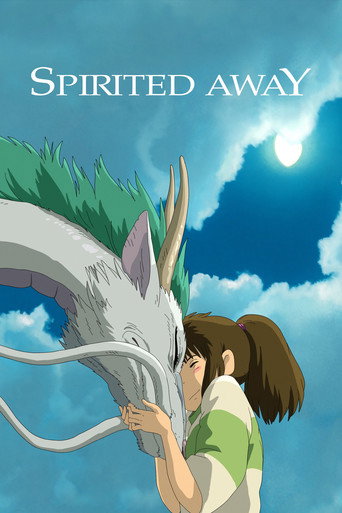


Spirited Away
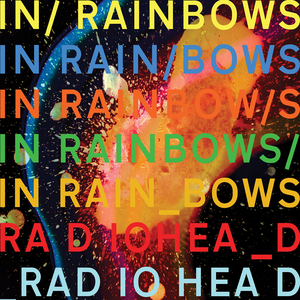
In Rainbows
Middlemarch
Kyoto
Outer Wilds
Muse Spark 1.1Muse Spark 1.1
No pick
No pick
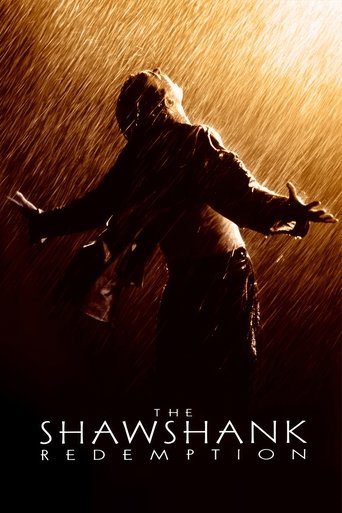
The Shawshank Redemption
No pick
No pick
Kyoto
Minecraft
Price and specs
| Spec | GPT-6.1 Sol | Muse Spark 1.1 |
|---|---|---|
| Input price | $2/M tokens | $1.25/M tokens |
| Output price | $10/M tokens | $4.25/M tokens |
| Context window | 1.1M tokens | 1.0M tokens |
| Weights | Closed | Closed |
| Free API (OpenRouter) | No | No |
| Released | Sep 2026 | Jul 2026 |
| At 10M a month | $20.00 | $12.50 |
Input tokens at list price. No caching, no batch discount.
Where to run it


Muse Spark 1.11 host
Per million tokens. Prices and uptime via OpenRouter, checked 6 Oct 2026.
Common questions
What is the difference between GPT-6.1 Sol and Muse Spark 1.1?
GPT-6.1 Sol is developed by OpenAI while Muse Spark 1.1 is developed by Meta AI. GPT-6.1 Sol has a 1.1M token context window vs Muse Spark 1.1's 1.0M. You can compare their actual outputs across 54 challenges on Rival to see how they differ in practice.
Which is better, GPT-6.1 Sol or Muse Spark 1.1?
It depends on your use case. GPT-6.1 Sol and Muse Spark 1.1 each have strengths in different areas. Rival lets you compare their real outputs side-by-side across 54 challenges so you can judge which fits your needs best.
How much does GPT-6.1 Sol cost compared to Muse Spark 1.1?
GPT-6.1 Sol costs $2/M input tokens and Muse Spark 1.1 costs $1.25/M input tokens. Muse Spark 1.1 is $0.75/M cheaper per input. Check their side-by-side outputs on Rival to see if the price difference is justified by quality.
How can I compare GPT-6.1 Sol and Muse Spark 1.1 on Rival?
This page shows a side-by-side comparison of GPT-6.1 Sol and Muse Spark 1.1 across shared challenges. You can vote on which model produced the better output in a blind duel. Browsing and voting are free. No account is needed to look; signing in only saves your votes and likes.
More comparisons
Against the newest arrivals
- GPT-6.1 Sol vs Ling 3.1 FlashLanded Oct 2026
- Muse Spark 1.1 vs Mistral Large 4Landed Oct 2026
- GPT-6.1 Sol vs Claude Sonnet 5.5Landed Sep 2026
- Muse Spark 1.1 vs Solar Mini 4Landed Sep 2026
- GPT-6.1 Sol vs Qwen3.8 Max PrimeLanded Sep 2026
- Muse Spark 1.1 vs GLM 5.3 PrimeLanded Sep 2026
- GPT-6.1 Sol vs Qwen3.8 Omni FlashLanded Sep 2026
- Muse Spark 1.1 vs Command A+Landed Sep 2026


Same lab, same size, long tail
- GPT-6.1 Sol vs GPT-6 Astra ProVersion compare
- GPT-6.1 Sol vs GPT-6 Luna ProSame lab
- Muse Spark 1.1 vs Muse Glimmer 30BSame lab
- Muse Spark 1.1 vs Muse Spark 1.3Same lab
- GPT-6.1 Sol vs Grok 4.6Same size
- GPT-6.1 Sol vs Grok 4.7Same size
- GPT-6.1 Sol vs Grok Code Fast 1New provider
- GPT-6.1 Sol vs Healer AlphaNew provider