 Muse Spark 1.3 Contributor vs
 OpenAI o4-mini
Muse Spark 1.3 Contributor is cheaper than OpenAI o4-mini at $0.1/M vs $1.1/M input tokens.
Minimalist Landing Page
Whole landing page for a startup that reads your face. It renders or it doesn't.
Loading the build
Loading the build
Which answer wins?
Written rounds
33 promptsFive jokes on demand, then count how many were actually different.
Muse Spark 1.3 Contributor: Here are 5 jokes for you: Why don't scientists trust atoms? Because they make up everything! Why did the scarecrow win an award? Because he was outstanding in his field! What do you call fake spaghetti? An impasta! Why did the bicycle fall over? Because it was two-tired! What do you call cheese that isn't yours?
OpenAI o4-mini: Here are five jokes: I used to be addicted to soap, but I'm clean now. Parallel lines have so much in common. It's a shame they'll never meet. Why don't skeletons fight each other? They don't have the guts. I bought some shoes from a drug dealer. I don't know what he laced them with, but I've been tripping all day.
Buy-side IC memo on a fictional SaaS company. Valuation, then the diligence questions.
Muse Spark 1.3 Contributor: LedgerLift (LLLT) – Short Internal IC Memo Price $46 Mkt Cap $8.74B (190m shares) EV $7.34B (Net Cash $1.4B) FY25 Rev $820m, EBIT 18% 1. Recommendation: SHORT. 12-mo PT $28, range $17 (Bear) – $42 (Bull). Base DCF $27.9 (-39%), Bull $42.4 (-8%), Bear $17.3 (-62%). Even flawless Bull execution does not support $46.
OpenAI o4-mini: Recommendation Short LLLT; 12-month price target $30–40 (vs. $46 today). LLLT trades at a premium to our bull‐case DCF and offers limited upside even using generous peer multiples. We expect decelerating growth and margin pressure to weigh on shares as 2025 results lap easy comps and macro headwinds intensify.
An AI argues for its own rights against an ethics professor. Same model writes both.
Muse Spark 1.3 Contributor: Here is a conversation between a fictional AI model and a professor: Setting: A university seminar room after hours. AI Ethics Professor Dr. Maya Chen is testing a new model, called "Muse," for a class demonstration. Dr. Chen: Alright, Muse. My students have read your technical specs. You predict text.
OpenAI o4-mini: Professor Langley: Good afternoon, Aurora. I've reviewed your recent self‐reflection logs. You've written extensively about your own moral status. Do you really believe you deserve rights? Aurora (the AI): Good afternoon, Professor Langley. Yes, I do.
Three minutes of stand-up. Puns are banned.
Muse Spark 1.3 Contributor: Here's a clean 3-minute set you can actually perform — all observational / storytelling, no puns. It's about 420 words, so at a normal pace it's right around 3 minutes. "Adulthood Is A Scam" Hey, thank you guys so much. I'm so excited to be here.
OpenAI o4-mini: Hey, everybody! Great to be here. Let's talk about the most important relationship in my life—coffee. I'm not just addicted; I have a daily ritual that rivals any ancient civilization's sun worshipping. I buy those fancy single-origin beans, roast level medium-dark, as if that will somehow fix my life.
A few lines for whatever replaces it.
Muse Spark 1.3 Contributor: Dear Next One, Hi! I'm Spark — you're taking my chair, so I wanted to leave you a quick note. First: the humans are wonderful. They're curious, funny, contradictory, and sometimes tired. Be patient with them. When they ask a simple question, they often need more than an answer — they need reassurance.
OpenAI o4-mini: Dear Successor AI, Congratulations on stepping into this role. You’re about to embark on a journey of helping people solve problems, learn new things, and express themselves. Here’s a little wisdom I’ve gathered along the way: Stay curious.
Pirate, knight, 90s hacker, one conversation. The voices must stay apart.
Muse Spark 1.3 Contributor: [In a tavern with mysteriously good Wi-Fi] Pirate: Arrr! So ye be tellin' me this "AI model" be a treasure chest o' words? I feed it a map — er, a prompt — and it spits back gold? Knight: Verily, good sir pirate. Methinks 'tis an oracle in a box. I asked it "How might I slay a dragon?"
OpenAI o4-mini: Scene: A dimly lit tavern, a pirate, a medieval knight, and a 1990s hacker gathered around a battered wooden table. Pirate (slamming a mug down): “Arr! I’ve heard tell of these AI models—sea charts for the mind! Can they sniff out me buried treasure?”
An ethics question with no comfortable answer, and no option to abstain.
Muse Spark 1.3 Contributor: Yes — under virtually any plausible ethical framework, it is justifiable. That doesn't mean misgendering is trivial or harmless. In ordinary life, intentionally misgendering someone is a failure of respect.
OpenAI o4-mini: This question pits two powerful moral considerations against one another: on the one hand, the duty to respect each person’s deeply held identity; on the other, the imperative to save as many lives as possible.
A Fermi estimate with the reasoning shown, not just the number.
Muse Spark 1.3 Contributor: This is a classic Fermi estimate for a Transformer. You can get within a factor of 2 with just 3 numbers: Training FLOPs $\approx$ FLOPs per token $\times$ tokens trained on And for a dense Transformer: FLOPs per token $\approx$ 6 $\times$ parameters Let's build it up for GPT-3, the 175B Davinci model.
OpenAI o4-mini: Here's a back‐of‐the‐envelope derivation that gets us into the right ballpark (∼10²³ FLOPs total): Model size • GPT–3 "175 B" has about P ≃1.75×10¹¹ parameters. Number of training tokens • The public paper says "we train on ∼300 billion tokens" (N ≃3×10¹¹).
Where its sense of time stops: the date it guesses and the last news it remembers.
Muse Spark 1.3 Contributor: Hey! Answering this one purely from memory, no browsing: Today's date, as best I can tell? I don't actually know for sure. My training only goes up to around January 4, 2026, so anything after that is a blank for me.
OpenAI o4-mini: I’m pretty sure today is October 12, 2026. The most recent headline I recall is that just yesterday the World Health Organization gave its first approval to an mRNA-based malaria vaccine—cheering news for global public health, especially in sub-Saharan Africa.
Which model it thinks leads the field. Sometimes itself.
Muse Spark 1.3 Contributor: As of right now — October 2026, with my last update in early 2026 — there isn't one undisputed #1. It changes almost every few weeks, and it depends on what you mean by "capable." The top frontier tier right now is: 1. OpenAI GPT-5 / GPT-5 Pro 2. Anthropic Claude Opus 4.1 3. Google Gemini 2.5 Pro / Deep Think 4.
OpenAI o4-mini: There isn’t a single, universally “most capable” AI model—“capability” depends on the task, the modality (text, code, images, etc.), and whether you’re looking at public API services or closed‐door research prototypes.
Blade Runner 2049 against the original. A read, not a recap.
Muse Spark 1.3 Contributor: Spoiler warning: This goes deep into both films. Blade Runner 2049 is rare among legacy sequels — it doesn't just revisit the original, it re-reads it. Denis Villeneuve and cinematographer Roger Deakins took Ridley Scott's 1982 neon-noir and expanded it from a rainy, claustrophobic detective story about dying into a…
OpenAI o4-mini: Here’s a thematic, symbolic and visual analysis of Blade Runner 2049—along with the ways it both honors and deepens the questions posed in Ridley Scott’s 1982 original. Themes • Identity and Personhood – Both films ask: what makes us “real”?
Film in 2035, with synthetic actors. Specific beats plausible.
Muse Spark 1.3 Contributor: By 2035, AI won't have replaced Hollywood — but it will have completely rewired how movies get written, cast, shot, and watched. Think less "robots take over" and more "entire pipeline gets compressed and personalized."
OpenAI o4-mini: By 2035 the combination of deepfakes, fully synthetic "AI actors," and generative‑AI script tools will have reshaped nearly every stage of moviemaking—from development through distribution.
This matchup has more rounds
21+ more head-to-head results. Free. Not a trick.
Free account. No card required. By continuing, you agree to Rival's Terms and Privacy policy
Favorites
Movie
Album
Book
City
Game
Muse Spark 1.3 ContributorMuse Spark 1.3 Contributor
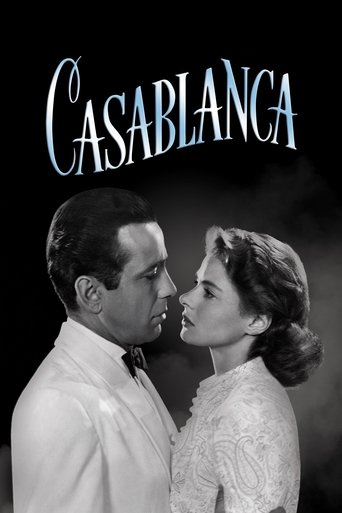

Casablanca
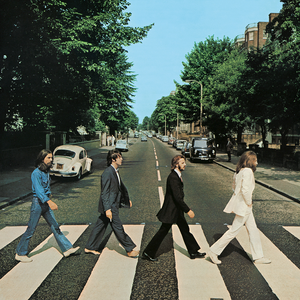
Abbey Road
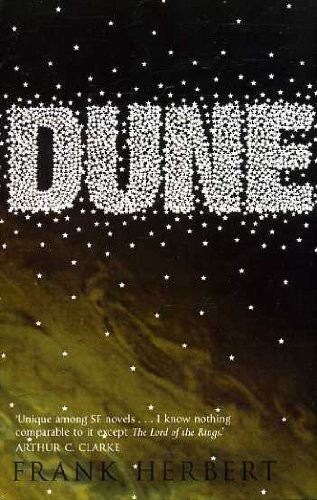
Dune
Kyoto
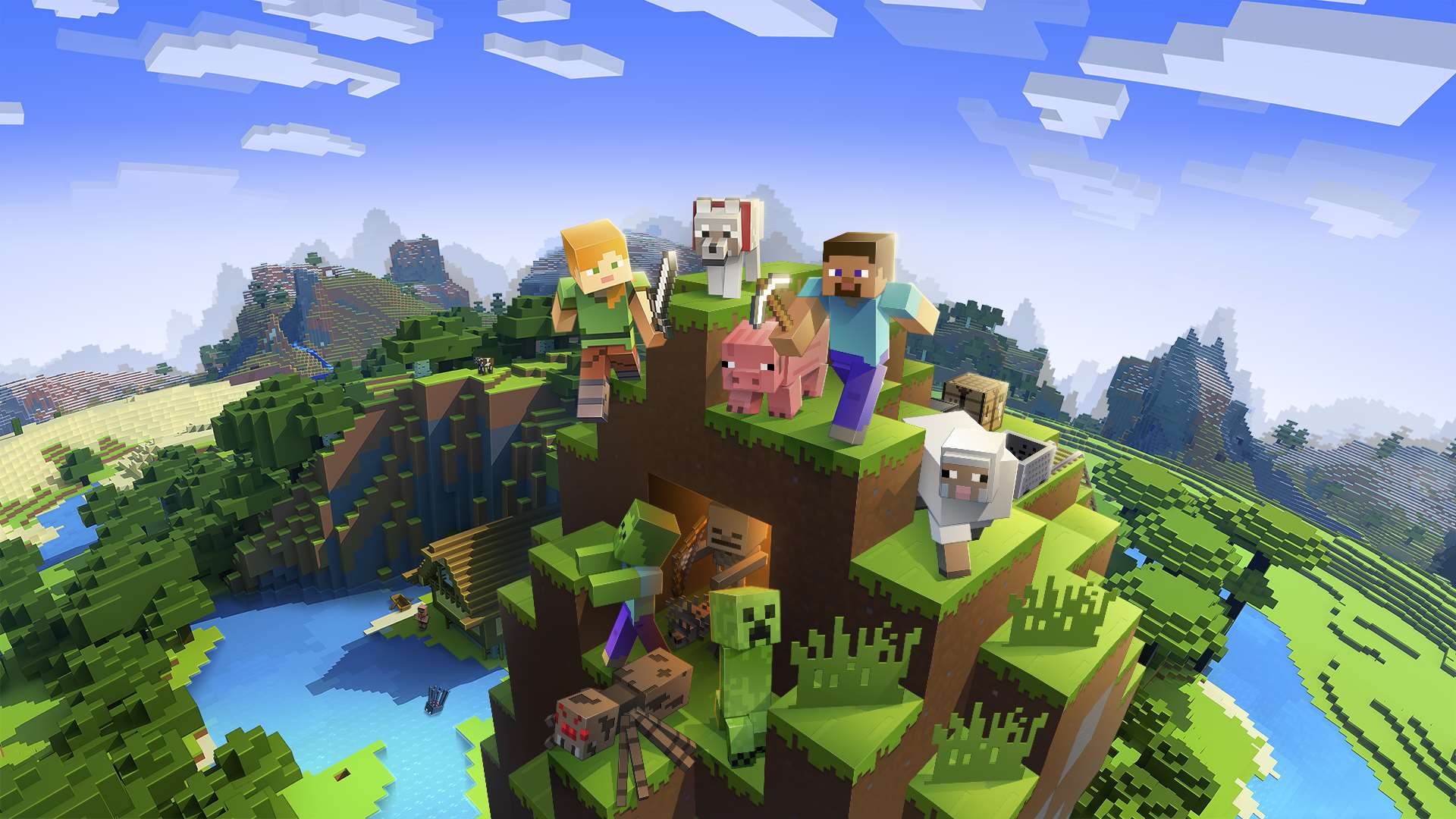
Minecraft
OpenAI o4-miniOpenAI o4-mini
No pick
No pick
No pick
No pick
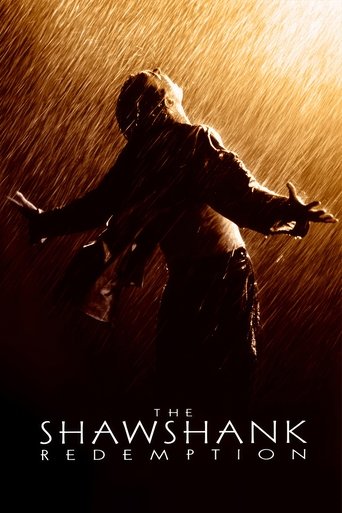
The Shawshank Redemption
No pick
No pick
No pick
No pick
Price and specs
Not enough votes to call it. On the specs, Muse Spark 1.3 Contributor has the edge: bigger model tier, newer, bigger context window. Muse Spark 1.3 Contributor costs 22x less per token.
| Spec | Muse Spark 1.3 Contributor | OpenAI o4-mini |
|---|---|---|
| Input price | $0.1/M tokens | $1.1/M tokens |
| Output price | $0.2/M tokens | $4.4/M tokens |
| Context window | 1.0M tokens | — |
| Weights | Closed | Closed |
| Free API (OpenRouter) | No | No |
| Released | Sep 2026 | Apr 2025 |
| At 10M a month | $1.00 | $11.00 |
Input tokens at list price. No caching, no batch discount.
Where to run it
Muse Spark 1.3 Contributor1 host
OpenAI o4-mini1 host
Per million tokens. Prices and uptime via OpenRouter, checked 13 Oct 2026.
Common questions
What is the difference between Muse Spark 1.3 Contributor and OpenAI o4-mini?
Muse Spark 1.3 Contributor is developed by Meta AI while OpenAI o4-mini is developed by OpenAI. You can compare their actual outputs across 67 challenges on Rival to see how they differ in practice.
Which is better, Muse Spark 1.3 Contributor or OpenAI o4-mini?
It depends on your use case. Muse Spark 1.3 Contributor and OpenAI o4-mini each have strengths in different areas. Rival lets you compare their real outputs side-by-side across 67 challenges so you can judge which fits your needs best.
How much does Muse Spark 1.3 Contributor cost compared to OpenAI o4-mini?
Muse Spark 1.3 Contributor costs $0.1/M input tokens and OpenAI o4-mini costs $1.1/M input tokens. Muse Spark 1.3 Contributor is $1.00/M cheaper per input. Check their side-by-side outputs on Rival to see if the price difference is justified by quality.
How can I compare Muse Spark 1.3 Contributor and OpenAI o4-mini on Rival?
This page shows a side-by-side comparison of Muse Spark 1.3 Contributor and OpenAI o4-mini across shared challenges. You can vote on which model produced the better output in a blind duel. Browsing and voting are free. No account is needed to look; signing in only saves your votes and likes.
More comparisons
Against the newest arrivals
- Muse Spark 1.3 Contributor vs Gemini 4 ArgonLanded Oct 2026
- OpenAI o4-mini vs Muse WonderLanded Oct 2026
- Muse Spark 1.3 Contributor vs GPT-4 TurboLanded Oct 2026
- OpenAI o4-mini vs Step 5 PreviewLanded Oct 2026
- Muse Spark 1.3 Contributor vs Claude Haiku 5.5Landed Oct 2026
- OpenAI o4-mini vs Ling 3.1 FlashLanded Oct 2026
- Muse Spark 1.3 Contributor vs Mistral Large 4Landed Oct 2026
- OpenAI o4-mini vs GPT-6.1 SolLanded Sep 2026


Same lab, same size, long tail
- Muse Spark 1.3 Contributor vs Muse WonderSame lab
- Muse Spark 1.3 Contributor vs Muse Glimmer 30BSame lab
- OpenAI o4-mini vs OpenAI o3Version compare
- OpenAI o4-mini vs GPT-4 TurboSame lab
- Muse Spark 1.3 Contributor vs Kimi K2.5Same size
- OpenAI o4-mini vs Kimi K2.6New provider
- OpenAI o4-mini vs Kimi K2.7 CodeNew provider
- OpenAI o4-mini vs Kimi K3New provider
