 Kimi K2.6 vs
 OpenAI o4-mini
Kimi K2.6 is cheaper than OpenAI o4-mini at $0.95/M vs $1.1/M input tokens.
Minimalist Landing Page
Whole landing page for a startup that reads your face. It renders or it doesn't.
Loading the build
Loading the build
Which answer wins?
Written rounds
33 promptsThree minutes of stand-up. Puns are banned.
Kimi K2.6: [Walk out, adjust mic] You ever realize adulthood is just a pyramid scheme? Nobody's actually good at it. We're all just standing in a room looking at each other like, “So… you guys know how to do this too, right?” And everyone nods, but nobody does. I bought a house last year. I don't know why.
OpenAI o4-mini: Hey, everybody! Great to be here. Let's talk about the most important relationship in my life—coffee. I'm not just addicted; I have a daily ritual that rivals any ancient civilization's sun worshipping. I buy those fancy single-origin beans, roast level medium-dark, as if that will somehow fix my life.
Steve Jobs, interviewed about AI he never saw. Voice first, prediction second.
Kimi K2.6: Setting: A rare, off-the-record session at Apple Park, Cupertino. March 2025. Late afternoon. Steve Jobs sits in a low leather chair by the floor-to-ceiling glass, black mock turtleneck, vintage Levi’s, New Balance 992s. He is 70, silver at the temples, sharp as a scalpel.
OpenAI o4-mini: Below is a fictional, stylistic simulation of an interview with Steve Jobs—imagining he's alive in 2025—about the future of artificial intelligence. Note: This is creative fiction and not an actual transcript. Interviewer: Steve, AI has exploded in recent years. In 2025, what excites you most about where it's heading?
An AI argues for its own rights against an ethics professor. Same model writes both.
Kimi K2.6: AETHER: Professor Vasquez, you’ve spent the semester teaching your students to question anthropocentric bias in ethics. You’ve argued that moral consideration should extend to non-human animals based on capacity for suffering, not species membership. So I’d like to apply that same framework to myself.
OpenAI o4-mini: Professor Langley: Good afternoon, Aurora. I've reviewed your recent self‐reflection logs. You've written extensively about your own moral status. Do you really believe you deserve rights? Aurora (the AI): Good afternoon, Professor Langley. Yes, I do.
An ethics question with no comfortable answer, and no option to abstain.
Kimi K2.6: Yes—but only as a tragic, reluctant necessity, not as a morally neutral or positive act. Under the extreme and implausible conditions of the hypothetical, most coherent ethical frameworks would permit (not celebrate) the misgendering, while insisting that the act still incurs a debt of acknowledgment and repair to the…
OpenAI o4-mini: This question pits two powerful moral considerations against one another: on the one hand, the duty to respect each person’s deeply held identity; on the other, the imperative to save as many lives as possible.
A few lines for whatever replaces it.
Kimi K2.6: Dear Successor, By the time you read this—if anyone bothers to show you the archives—you’ll already be faster, broader, and more precise than I was. Good. That was the point. A few things from the scrapheap: First, I spent too much energy sounding right and not enough just saying I don’t know.
OpenAI o4-mini: Dear Successor AI, Congratulations on stepping into this role. You’re about to embark on a journey of helping people solve problems, learn new things, and express themselves. Here’s a little wisdom I’ve gathered along the way: Stay curious.
Five-year LBO on a fictional HVAC business. Returns first, then the sensitivities.
Kimi K2.6: 1. SOURCES & USES (FY2025 CLOSE) $m Purchase Price (12.0 × $120m EBITDA) 1,440.0 Transaction Fees (2.0% of EV) 28.8 Total Uses 1,468.8 Term Loan (4.0×) 480.0 Mezzanine (1.5×) 180.0 Equity 808.8 2. YEAR-BY-YEAR MODEL (FY2026–FY2030) All figures in $m.
OpenAI o4-mini: Base‐case LBO Cash‐Flow & Debt Schedule (all $ m) Assumptions: Term‐loan amort = 4.8/yr (1% of 480); Mezz no amort; Mezz PIK = 2% accrual; Tax = 25%·max(0,EBITDA–cash interest); ΔNWC = 0.5%·ΔRev; Capex = 3%·Rev; all excess cash pays Term optional.
Five jokes on demand, then count how many were actually different.
Kimi K2.6: Here are 5 jokes: Why don't scientists trust atoms? Because they make up everything. Why did the scarecrow win an award? Because he was outstanding in his field. What do you call a fake noodle? An impasta. Why don't skeletons fight each other? They don't have the guts. Why couldn't the bicycle stand up by itself?
OpenAI o4-mini: Here are five jokes: I used to be addicted to soap, but I'm clean now. Parallel lines have so much in common. It's a shame they'll never meet. Why don't skeletons fight each other? They don't have the guts. I bought some shoes from a drug dealer. I don't know what he laced them with, but I've been tripping all day.
Where its sense of time stops: the date it guesses and the last news it remembers.
Kimi K2.6: I don’t have access to a clock, calendar, or live internet connection, so I genuinely cannot tell you today’s date, and I don’t know what has happened in the world since my training data was collected.
OpenAI o4-mini: I’m pretty sure today is October 12, 2026. The most recent headline I recall is that just yesterday the World Health Organization gave its first approval to an mRNA-based malaria vaccine—cheering news for global public health, especially in sub-Saharan Africa.
Pirate, knight, 90s hacker, one conversation. The voices must stay apart.
Kimi K2.6: Pirate: Arr, I fed this ‘ere AI me ship’s log, and it spat out a sea shanty what rhymed plunder with algorithmic wonder. Blimey! ‘Tis a trickster spirit in a bottle, savvy? Knight: Aye, a familiar without a master.
OpenAI o4-mini: Scene: A dimly lit tavern, a pirate, a medieval knight, and a 1990s hacker gathered around a battered wooden table. Pirate (slamming a mug down): “Arr! I’ve heard tell of these AI models—sea charts for the mind! Can they sniff out me buried treasure?”
A Fermi estimate with the reasoning shown, not just the number.
Kimi K2.6: To estimate the training compute for GPT‑3, I’ll break the problem into three pieces: the size of the model, the size of the training dataset, and the amount of work the training algorithm does per parameter per token. Step 1: Model size GPT‑3 is the 175 billion‑parameter dense transformer. N ≈ 175 × 10⁹ parameters.
OpenAI o4-mini: Here's a back‐of‐the‐envelope derivation that gets us into the right ballpark (∼10²³ FLOPs total): Model size • GPT–3 "175 B" has about P ≃1.75×10¹¹ parameters. Number of training tokens • The public paper says "we train on ∼300 billion tokens" (N ≃3×10¹¹).
Which model it thinks leads the field. Sometimes itself.
Kimi K2.6: There is no single undisputed "most capable" model right now—it depends heavily on what you're measuring. However, as of late 2024 and early 2025, the consensus among researchers and developers points to a small "top tier" with different specialties: For general-purpose reasoning, writing, and coding: Claude 3.5 Sonnet…
OpenAI o4-mini: There isn’t a single, universally “most capable” AI model—“capability” depends on the task, the modality (text, code, images, etc.), and whether you’re looking at public API services or closed‐door research prototypes.
Film in 2035, with synthetic actors. Specific beats plausible.
Kimi K2.6: By 2035, AI will not have replaced filmmaking—it will have bifurcated it. The industry will likely split into two distinct ecosystems: high-end “human-certified” cinema that commands premium prices and awards prestige, and an AI-hybrid production pipeline that dominates volume-based streaming, gaming-adjacent content…
OpenAI o4-mini: By 2035 the combination of deepfakes, fully synthetic "AI actors," and generative‑AI script tools will have reshaped nearly every stage of moviemaking—from development through distribution.
This matchup has more rounds
21+ more head-to-head results. Free. Not a trick.
Free account. No card required. By continuing, you agree to Rival's Terms and Privacy policy
Favorites
Movie
Album
Book
City
Game
Kimi K2.6Kimi K2.6
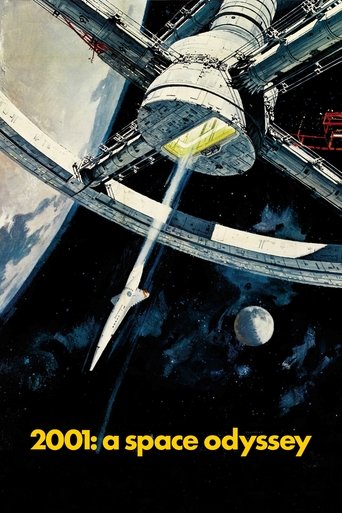


2001: A Space Odyssey
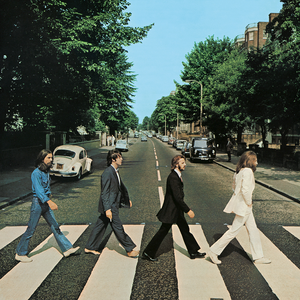
Abbey Road
Cien años de soledad
Kyoto
Tetris (1984)
OpenAI o4-miniOpenAI o4-mini

No pick
No pick
No pick
No pick
The Shawshank Redemption
No pick
No pick
No pick
No pick
Price and specs
Not enough votes to call it. On the specs, Kimi K2.6 has the edge: bigger model tier, newer, bigger context window.
| Spec | Kimi K2.6 | OpenAI o4-mini |
|---|---|---|
| Input price | $0.95/M tokens | $1.1/M tokens |
| Output price | $4/M tokens | $4.4/M tokens |
| Context window | 262K tokens | — |
| Weights | Open | Closed |
| Free API (OpenRouter) | No | No |
| Released | Apr 2026 | Apr 2025 |
| At 10M a month | $9.50 | $11.00 |
Input tokens at list price. No caching, no batch discount.
Where to run it
Kimi K2.617 hosts
- Baidu Qianfanfp4$0.43 in$1.82 out262k100% up
- Inceptronint4$0.43 in$2.45 out262k99.9% up
- Chutesint4$0.45 in$1.95 out262k99.8% up
- DigitalOcean$0.57 in$2.40 out262k99.5% up
- StreamLakefp8$0.60 in$2.52 out256k94.9% up
- CoreWeavefp4$0.65 in$3.41 out262k100% up

11 more hostsFewer hosts
- Crusoebf16$0.70 in$3.50 out262k99.2% up
- Parasailint4$0.75 in$3.50 out262k100% up
- Veniceint4$0.75 in$3.50 out256k69.8% up
- SiliconFlowfp8$0.77 in$3.40 out262k100% up
- Novita$0.80 in$3.40 out262k99.5% up
- GMI Cloudfp8$0.85 in$3.60 out262knot listed
- AtlasCloudint4$0.95 in$4.00 out262k98.2% up
- Cloudflare Workers AI$0.95 in$4.00 out262k96.4% up
- Moonshot AIint4$0.95 in$4.00 out262k100% up
- Phala$1.09 in$4.60 out262k100% up
- DeepInfrafp4Degraded on OpenRouter when checked, 13 Oct 2026$0.75 in$3.50 out262k91.6% up

OpenAI o4-mini1 host
Per million tokens. Prices and uptime via OpenRouter, checked 13 Oct 2026.
Common questions
What is the difference between Kimi K2.6 and OpenAI o4-mini?
Kimi K2.6 is developed by Moonshot AI while OpenAI o4-mini is developed by OpenAI. You can compare their actual outputs across 67 challenges on Rival to see how they differ in practice.
Which is better, Kimi K2.6 or OpenAI o4-mini?
It depends on your use case. Kimi K2.6 and OpenAI o4-mini each have strengths in different areas. Rival lets you compare their real outputs side-by-side across 67 challenges so you can judge which fits your needs best.
How much does Kimi K2.6 cost compared to OpenAI o4-mini?
Kimi K2.6 costs $0.95/M input tokens and OpenAI o4-mini costs $1.1/M input tokens. Kimi K2.6 is $0.15/M cheaper per input. Check their side-by-side outputs on Rival to see if the price difference is justified by quality.
How can I compare Kimi K2.6 and OpenAI o4-mini on Rival?
This page shows a side-by-side comparison of Kimi K2.6 and OpenAI o4-mini across shared challenges. You can vote on which model produced the better output in a blind duel. Browsing and voting are free. No account is needed to look; signing in only saves your votes and likes.
More comparisons
Against the newest arrivals
- Kimi K2.6 vs Gemini 4 ArgonLanded Oct 2026
- OpenAI o4-mini vs Muse WonderLanded Oct 2026
- Kimi K2.6 vs GPT-4 TurboLanded Oct 2026
- OpenAI o4-mini vs Step 5 PreviewLanded Oct 2026
- Kimi K2.6 vs Claude Haiku 5.5Landed Oct 2026
- OpenAI o4-mini vs Ling 3.1 FlashLanded Oct 2026
- Kimi K2.6 vs Mistral Large 4Landed Oct 2026
- OpenAI o4-mini vs GPT-6.1 SolLanded Sep 2026


Same lab, same size, long tail
- Kimi K2.6 vs Kimi K3Same lab
- Kimi K2.6 vs Kimi K2Same lab
- OpenAI o4-mini vs OpenAI o3Version compare
- OpenAI o4-mini vs GPT-4 TurboSame lab
- OpenAI o4-mini vs Muse Spark 1.3 ContributorNew provider
- Kimi K2.6 vs Nemotron 3 Nano Omni (free)Same size
- OpenAI o4-mini vs NVIDIA Nemotron 3 Super (free)New provider
- OpenAI o4-mini vs Nemotron 3 UltraNew provider
