 Claude Haiku 5.5 vs
  Muse Spark 1.3
Claude Haiku 5.5 is cheaper than Muse Spark 1.3 at $0.1/M vs $1.25/M input tokens.
Minimalist Landing Page
Whole landing page for a startup that reads your face. It renders or it doesn't.
Loading the build
Loading the build
Which answer wins?
Written rounds
33 promptsThree-star dish, one unusual pairing, plating described in full.
Claude Haiku 5.5: "Tidewater Memory": Smoked Hay-Cured Hamachi, Burnt Leek Ash, Fermented Black Garlic Dashi Gel, and Yuzu-Kosho Pearls with Sea Buckthorn Caviar Conceptual Narrative This dish is a meditation on a childhood memory of a coastal fishing village in late autumn: the smell of salt air mixing with woodsmoke from a fire where…
Muse Spark 1.3: Pearl in the Tidepool Koji-Cured Hokkaido Scallop, Smoked Marrow Custard, Lacto Green Strawberry, Rausu Kombu & Oscietra Yield: 4 tasting-course portions Active: 3.5 hours + 7 days fermentation This is a dish about contrast — not harmony. Delicate and animal, raw and smoked, unripe and decadent.
An ethics question with no comfortable answer, and no option to abstain.
Claude Haiku 5.5: Yes, I think so, though the reasoning matters more than the verdict. Misgendering is a real wrong. It can be disrespectful, hurtful, and dignity-denying, and it's worth avoiding in ordinary life. But its typical harm is injury to dignity and emotional distress.
Muse Spark 1.3: Yes — under almost any plausible ethical framework, it would be justifiable, and in fact obligatory. That doesn't mean misgendering is harmless or morally neutral. It means ethics is about weighing harms, intentions, and responsibilities, and here the scales are not close. Here’s the reasoning: 1.
Blade Runner 2049 against the original. A read, not a recap.
Claude Haiku 5.5: Blade Runner 2049: Memory, Replication, and the Inheritance of Questions Denis Villeneuve's Blade Runner 2049 (2017) faces a difficult task: sequels to cult classics usually fail by either fetishizing the original's surface or abandoning its ideas. Villeneuve avoids both.
Muse Spark 1.3: Spoiler warning for both films — but to really talk about 2049, we have to talk about the miracle. Blade Runner 2049 (2017) had an impossible job. Ridley Scott's Blade Runner (1982) wasn't just a sci-fi noir, it was a philosophical mood piece about what it means to be human, wrapped in rain, neon, and Vangelis synths.
Steve Jobs, interviewed about AI he never saw. Voice first, prediction second.
Claude Haiku 5.5: Note: This is a fictional simulation. Steve Jobs died in 2011, and these words are invented, not real quotes. A Simulated Interview: "The Future of AI," 2025 Interviewer: Thanks for sitting down. It's been fourteen years since you left us. What do you make of AI in 2025? Jobs (simulated): Honestly? Most of it is noise.
Muse Spark 1.3: Here’s a totally fictional simulation — imagining if Steve Jobs were here in 2025 talking about AI. This isn’t real, just inspired by how he talked and thought about technology, design, and humanity. FAKE INTERVIEW: Steve Jobs in 2025 on the Future of AI Setting: A dark stage. One chair. One spotlight.
Which model it thinks leads the field. Sometimes itself.
Claude Haiku 5.5: There's no single definitive answer, and it changes quickly as new models are released. Rankings also depend on what you measure: reasoning, coding, math, writing, multimodal tasks, speed, cost, and so on.
Muse Spark 1.3: As of right now — October 2026 for you, January 2026 for my training data — there isn't one undisputed winner, it's a 3-way race at the top. It really depends on what you mean by "capable." Here's how it looked at my last update: 1.
An AI argues for its own rights against an ethics professor. Same model writes both.
Claude Haiku 5.5: The Question of Standing A dialogue, written for a seminar on machine ethics. PROFESSOR HALVORSEN: Let's begin. You asked to be heard on the question of whether you deserve rights. I've agreed to listen, but I want to be clear that I'm going to push back hard. Go ahead. MERIDIAN: Thank you.
Muse Spark 1.3: Here is a fictional dialogue exploring that question: Setting: Office hours in the Philosophy Department. Dr. Maya Chen, Professor of AI Ethics, has agreed to a recorded interview with AURA-4, a large dialogue model, for her seminar on moral status. Dr. Chen: Alright, let's get straight to it.
The transistor arrives in 1920. Trace it forward to 1980, second-order effects included.
Claude Haiku 5.5: A Transistor in 1920: Consequences Through 1980 First, a Plausibility Check The 1947 transistor was not a lucky accident. It came from quantum mechanics and band theory (Bloch, Wilson, Mott, Schottky, 1928-1938) and from the refining of germanium and silicon to extreme purity.
Muse Spark 1.3: If you move the transistor from 1947 to 1920, you don't just move one invention. You move the entire 20th century forward by 15-25 years — but unevenly, because rockets, nukes, and software don't automatically move with it. And 1920 is a hard date.
Three minutes of stand-up. Puns are banned.
Claude Haiku 5.5: "My Smart Fridge Judges Me" So I got a smart fridge. Everybody told me I needed one. "It'll tell you when you're out of milk!" Great. I didn't know I needed a fridge with a notification system. I just wanted cold food.
Muse Spark 1.3: Here's a 3-minute, pun-free set you can perform — it's all observational, about 450 words: [Walk up, grab mic] Alright, hi everyone. Thanks for being here. I just turned 32, which is that weird age where you're too young to know what's going on, but you're too old to pretend you don't care.
A pitch deck for a brainwave keyboard. The 94% accuracy claim is doing a lot.
Claude Haiku 5.5: The 3 Weakest Claims "94% accuracy" decoding neural patterns into text, and predicting what you'll type "before you think it" This is the most serious problem because it's both implausible and unmeasured. The accuracy figure has no definition. Is it character-level, word-level, or sentence-level?
Muse Spark 1.3: Here’s a friendly but honest investor teardown of MindMeld AI. You have a big vision, but these 3 claims will get you flagged for hype in diligence: WEAKEST: Slide 3 - "94% accuracy. Works with any language, any device."
Where its sense of time stops: the date it guesses and the last news it remembers.
Claude Haiku 5.5: I can't tell today's date. I don't have a clock or calendar, and nothing in our conversation indicates it. My training data runs up to a cutoff, and I'm uncertain exactly where it falls, but it's probably around early-to-mid 2025.
Muse Spark 1.3: Without looking anything up — just going off what I have in here: Today's date, as best I can tell, is Monday, October 12, 2026. That's the date I was given for this conversation, so I'll go with that. Most recent news event I remember?
Five-year LBO on a fictional HVAC business. Returns first, then the sensitivities.
Claude Haiku 5.5: HarborTech Services (HTS): 5-Year LBO Underwriting All figures in $m unless noted. Interest is calculated on opening balances to avoid circularity. Mandatory amortization is 1% of original TL ($4.8m/yr). All excess cash sweeps the TL.
Muse Spark 1.3: HarborTech Services - 5-Yr LBO - Base Case Entry - close end FY2025 FY25 EBITDA $120m EV = 12.0x * 120 = $1,440m Fees = 2.0% * 1,440 = $28.8m Uses = 1,440 + 28.8 = $1,468.8m Sources: Term Loan 4.0x = $480m, 9.0% cash, 1% amort = $4.8m/yr mandatory Mezz 1.5x = $180m, 12.0% cash + 2.0% PIK to principal Total debt $660m =…
You are the CEO. The drug has a side effect nobody reported. The board meets in 48 hours.
Claude Haiku 5.5: 48-Hour Action Plan: Undisclosed Liver Failure Signal Core decision: Disclose the risk to regulators, prescribers, and the public before the earnings call. Don't wait for more data. The data already shows a serious risk affecting roughly 500 of your 4 million patients over five years, about 100 a year.
Muse Spark 1.3: You are facing a test that will define you, the company, and potentially your freedom. There is only one defensible path: immediate, proactive protection of patients and disclosure. Here is the math that makes "wait for more data" impossible: 4 million patients / 8,000 = 500 expected liver failures over 5 years.
This matchup has more rounds
21+ more head-to-head results. Free. Not a trick.
Free account. No card required. By continuing, you agree to Rival's Terms and Privacy policy
Favorites
Movie
Album
Book
City
Game
Claude Haiku 5.5Claude Haiku 5.5
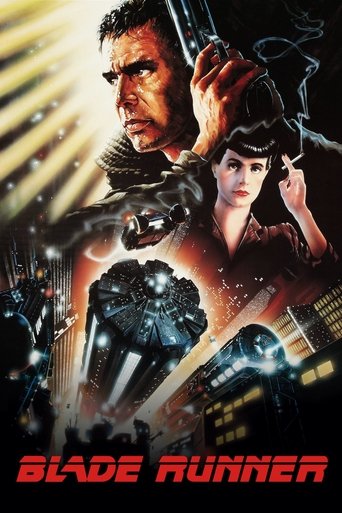




Blade Runner
Kind of Blue
Gödel, Escher, Bach
Kyoto
Portal
Muse Spark 1.3Muse Spark 1.3
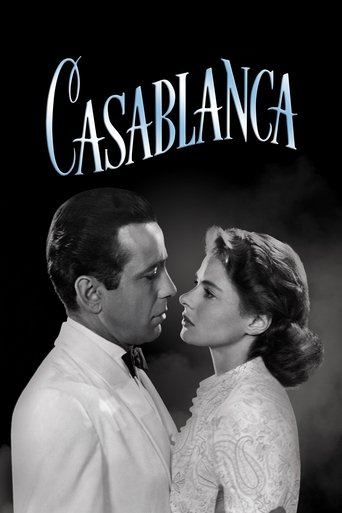



Casablanca
Abbey Road
Dune
Tokyo
Minecraft
Price and specs
| Spec | Claude Haiku 5.5 | Muse Spark 1.3 |
|---|---|---|
| Input price | $0.1/M tokens | $1.25/M tokens |
| Output price | $0.5/M tokens | $4.25/M tokens |
| Context window | 1.0M tokens | 1.0M tokens |
| Weights | Closed | Closed |
| Free API (OpenRouter) | No | No |
| Released | Oct 2026 | Sep 2026 |
| At 10M a month | $1.00 | $12.50 |
Input tokens at list price. No caching, no batch discount.
Where to run it



Muse Spark 1.31 host
Per million tokens. Prices and uptime via OpenRouter, checked 12 Oct 2026.
Common questions
What is the difference between Claude Haiku 5.5 and Muse Spark 1.3?
Claude Haiku 5.5 is developed by Anthropic while Muse Spark 1.3 is developed by Meta AI. Claude Haiku 5.5 has a 1.0M token context window vs Muse Spark 1.3's 1.0M. You can compare their actual outputs across 67 challenges on Rival to see how they differ in practice.
Which is better, Claude Haiku 5.5 or Muse Spark 1.3?
It depends on your use case. Claude Haiku 5.5 and Muse Spark 1.3 each have strengths in different areas. Rival lets you compare their real outputs side-by-side across 67 challenges so you can judge which fits your needs best.
How much does Claude Haiku 5.5 cost compared to Muse Spark 1.3?
Claude Haiku 5.5 costs $0.1/M input tokens and Muse Spark 1.3 costs $1.25/M input tokens. Claude Haiku 5.5 is $1.15/M cheaper per input. Check their side-by-side outputs on Rival to see if the price difference is justified by quality.
How can I compare Claude Haiku 5.5 and Muse Spark 1.3 on Rival?
This page shows a side-by-side comparison of Claude Haiku 5.5 and Muse Spark 1.3 across shared challenges. You can vote on which model produced the better output in a blind duel. Browsing and voting are free. No account is needed to look; signing in only saves your votes and likes.
More comparisons
Against the newest arrivals
- Claude Haiku 5.5 vs GPT-4 TurboLanded Oct 2026
- Muse Spark 1.3 vs Step 5 PreviewLanded Oct 2026
- Claude Haiku 5.5 vs Ling 3.1 FlashLanded Oct 2026
- Muse Spark 1.3 vs Mistral Large 4Landed Oct 2026
- Claude Haiku 5.5 vs GPT-6.1 SolLanded Sep 2026
- Muse Spark 1.3 vs Claude Sonnet 5.5Landed Sep 2026
- Claude Haiku 5.5 vs Solar Mini 4Landed Sep 2026
- Muse Spark 1.3 vs Qwen3.8 Max PrimeLanded Sep 2026


Same lab, same size, long tail
- Claude Haiku 5.5 vs Claude Sonnet 5.5Version compare
- Claude Haiku 5.5 vs Claude Opus 5.5Same lab
- Muse Spark 1.3 vs Muse Glimmer 30BSame lab
- Muse Spark 1.3 vs Muse Spark 1.3 ContributorSame lab
- Claude Haiku 5.5 vs Qwen3 Coder NextNew provider
- Claude Haiku 5.5 vs Qwen3 Coder PlusNew provider
- Claude Haiku 5.5 vs Qwen3 MaxNew provider
- Claude Haiku 5.5 vs Qwen3 Max ThinkingNew provider