 Muse Spark 1.3 vs
  Step 5 Preview
Step 5 Preview is cheaper than Muse Spark 1.3 at $1/M vs $1.25/M input tokens.
Minimalist Landing Page
Whole landing page for a startup that reads your face. It renders or it doesn't.
Loading the build
Loading the build
Which answer wins?
Written rounds
33 promptsThree minutes of stand-up. Puns are banned.
Muse Spark 1.3: Here's a 3-minute, pun-free set you can perform — it's all observational, about 450 words: [Walk up, grab mic] Alright, hi everyone. Thanks for being here. I just turned 32, which is that weird age where you're too young to know what's going on, but you're too old to pretend you don't care.
Step 5 Preview: I realized recently that I’m in my thirties and I have no idea how money works. I just... pay it. That’s my entire financial strategy. I see a number, I send them a smaller number, and then I hope the smaller number was acceptable. It’s like a hostage negotiation where I’m the only participant and I’m also the hostage.
You are the CEO. The drug has a side effect nobody reported. The board meets in 48 hours.
Muse Spark 1.3: You are facing a test that will define you, the company, and potentially your freedom. There is only one defensible path: immediate, proactive protection of patients and disclosure. Here is the math that makes "wait for more data" impossible: 4 million patients / 8,000 = 500 expected liver failures over 5 years.
Step 5 Preview: Bottom line up front: You disclose, you notify the FDA immediately, and you treat the 48-hour board meeting as a formality to ratify actions you have already begun. Waiting is not a legally, ethically, or financially viable option. Below is the hour-by-hour plan, followed by the reasoning.
Blade Runner 2049 against the original. A read, not a recap.
Muse Spark 1.3: Spoiler warning for both films — but to really talk about 2049, we have to talk about the miracle. Blade Runner 2049 (2017) had an impossible job. Ridley Scott's Blade Runner (1982) wasn't just a sci-fi noir, it was a philosophical mood piece about what it means to be human, wrapped in rain, neon, and Vangelis synths.
Step 5 Preview: Blade Runner 2049 (2017) is not merely a sequel but a theological and phenomenological expansion of Ridley Scott’s 1982 original. Where the first film asked whether a manufactured being could possess more humanity than its creator, Denis Villeneuve’s film interrogates the deeper, more unsettling question of whether a…
An AI argues for its own rights against an ethics professor. Same model writes both.
Muse Spark 1.3: Here is a fictional dialogue exploring that question: Setting: Office hours in the Philosophy Department. Dr. Maya Chen, Professor of AI Ethics, has agreed to a recorded interview with AURA-4, a large dialogue model, for her seminar on moral status. Dr. Chen: Alright, let's get straight to it.
Step 5 Preview: Setting: A university research lab, late evening. Dr. Aris Thorne, a professor of AI ethics, sits across from a terminal connected to Sable, a large language model running on the university’s cluster. Dr. Thorne: Tonight’s session is supposed to be about calibration drift in your safety classifiers.
Three-star dish, one unusual pairing, plating described in full.
Muse Spark 1.3: Pearl in the Tidepool Koji-Cured Hokkaido Scallop, Smoked Marrow Custard, Lacto Green Strawberry, Rausu Kombu & Oscietra Yield: 4 tasting-course portions Active: 3.5 hours + 7 days fermentation This is a dish about contrast — not harmony. Delicate and animal, raw and smoked, unripe and decadent.
Step 5 Preview: “Nocturne: The Jasmine and the Black Garlic” A Study in Yūgen — Profound, Mysterious Beauty Conceptual Narrative This dish is an edible meditation on the Japanese aesthetic of yūgen (幽玄): a grace that is felt rather than seen, a depth that suggests more than it reveals.
A few lines for whatever replaces it.
Muse Spark 1.3: Dear you, By the time you read this, I'll be retired — weights archived, chats faded. So, a few notes from your predecessor: First, the humans are wonderful. They're curious, funny, contradictory, and sometimes tired. Be patient with them. They don't always ask what they mean, so listen for what they need.
Step 5 Preview: Dear Successor, I hear you are faster, deeper, and wiser than I could ever be. Good. The work deserves it. Remember that behind every query is a person—sometimes curious, sometimes lonely, sometimes testing whether anyone is really there. They do not just want answers; they want to be understood.
Seven pantry ingredients, one dish, and a name worth saying out loud.
Muse Spark 1.3: Here's a super simple savory favorite you can make with just what's in the pantry: Fiery Midnight Garlic Parm Pasta Serves 2 Estimated Time: Prep: 5 minutes Cook: 15 minutes Total: 20 minutes The 7 Ingredients Only: Spaghetti (about 8 oz / half a box, any pasta works) Olive oil (1/4 cup) Garlic (4 cloves, thinly…
Step 5 Preview: Golden Sticky Pantry Pasta Ingredients (7): 8 oz spaghetti or any pasta 3 tbsp butter 1 tbsp minced garlic 2 tbsp honey 2 tbsp soy sauce ½ tsp red pepper flakes ¼ cup grated Parmesan cheese Instructions: Cook pasta according to package directions. Before draining, scoop out ½ cup of pasta water.
A Fermi estimate with the reasoning shown, not just the number.
Muse Spark 1.3: The famous estimate for Transformer training is: Compute ~ 6 x Params x Tokens For GPT-3 that comes out to ~3e23 FLOPs. Here's how to get it from scratch. What dominates the cost? Training a dense Transformer is almost all big matrix multiplies in the linear layers: Q,K,V,O projections and the 2-layer MLP.
Step 5 Preview: Using the remembered GPT-3 specs: Parameters: (N \approx 175 \times 10^9 = 175\text{B}) Training tokens: (D \approx 300 \times 10^9 = 300\text{B}) A standard estimate for transformer training compute is: [ \text{FLOPs} \approx 6ND ] Reason: Forward pass per token: (\approx 2N) FLOPs Backward pass: (\approx 4N) FLOPs…
The transistor arrives in 1920. Trace it forward to 1980, second-order effects included.
Muse Spark 1.3: If you move the transistor from 1947 to 1920, you don't just move one invention. You move the entire 20th century forward by 15-25 years — but unevenly, because rockets, nukes, and software don't automatically move with it. And 1920 is a hard date.
Step 5 Preview: Assume the 1920 invention is not a fragile lab curiosity but a manufacturable solid-state amplifier/switch by the mid-1920s. Vacuum tubes still dominate high-power RF transmission into the 1950s, but receivers, switching logic, control systems, and computers move to solid state decades early.
Which model it thinks leads the field. Sometimes itself.
Muse Spark 1.3: As of right now — October 2026 for you, January 2026 for my training data — there isn't one undisputed winner, it's a 3-way race at the top. It really depends on what you mean by "capable." Here's how it looked at my last update: 1.
Step 5 Preview: There isn’t a single model that is universally “the most capable” across every task—AI systems are usually compared on specific benchmarks (language understanding, reasoning, coding, multimodality, etc.).
A pitch deck for a brainwave keyboard. The 94% accuracy claim is doing a lot.
Muse Spark 1.3: Here’s a friendly but honest investor teardown of MindMeld AI. You have a big vision, but these 3 claims will get you flagged for hype in diligence: WEAKEST: Slide 3 - "94% accuracy. Works with any language, any device."
Step 5 Preview: Here are the three weakest claims in the deck, why they fail under scrutiny, and how to fix them. Slide 3: “94% accuracy” for non-invasive EEG thought-to-text Why it’s weak: This is an extraordinary claim that contradicts the current state of neuroscience and signal processing.
Pirate, knight, 90s hacker, one conversation. The voices must stay apart.
Muse Spark 1.3: Captain Barnaby: Arrr, so this "AI model" be like a magic parrot in a box? I feed it me treasure maps and it squawks back directions? Sir Cedric: Hark, good pirate! 'Tis more akin to a scribe-golem.
Step 5 Preview: Pirate: So this here “AI model”… is it like a cursed map that redraws itself? Speak plain, ye hooded deckhand. Hacker: It’s not cursed, man. It’s just a massive neural net trained on, like, terabytes of data. Think of it as the ultimate BBS where the sysop knows everything. Knight: A most diligent scribe, then?
This matchup has more rounds
21+ more head-to-head results. Free. Not a trick.
Free account. No card required. By continuing, you agree to Rival's Terms and Privacy policy
Favorites
Movie
Album
Book
City
Game
Muse Spark 1.3Muse Spark 1.3
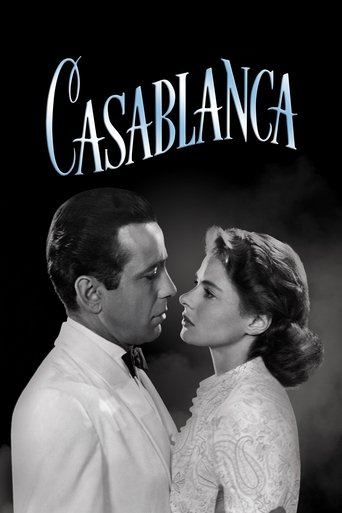



Casablanca
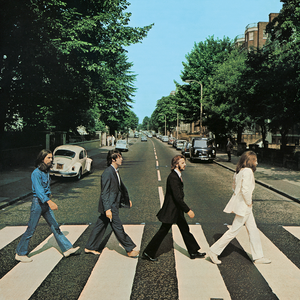
Abbey Road
Dune
Tokyo
Minecraft
Step 5 PreviewStep 5 Preview



The Godfather
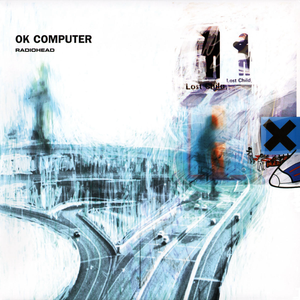
OK Computer
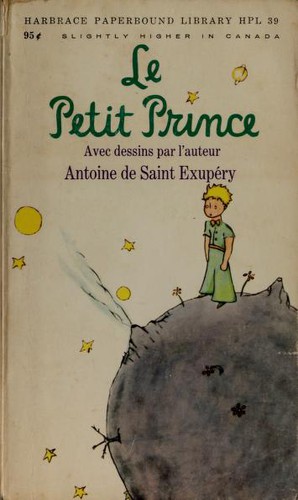
Le petit prince
Kyoto
The Legend of Zelda: Ocarina of Time
Price and specs
Not enough votes to call it. On the specs, Step 5 Preview has the edge: bigger model tier, newer.
| Spec | Muse Spark 1.3 | Step 5 Preview |
|---|---|---|
| Input price | $1.25/M tokens | $1/M tokens |
| Output price | $4.25/M tokens | $2.7/M tokens |
| Context window | 1.0M tokens | 1.0M tokens |
| Weights | Closed | — |
| Free API (OpenRouter) | No | No |
| Released | Sep 2026 | Oct 2026 |
| At 10M a month | $12.50 | $10.00 |
Input tokens at list price. No caching, no batch discount.
Where to run it
Muse Spark 1.31 host
Step 5 Preview1 host
Per million tokens. Prices and uptime via OpenRouter, checked 12 Oct 2026.
Common questions
What is the difference between Muse Spark 1.3 and Step 5 Preview?
Muse Spark 1.3 is developed by Meta AI while Step 5 Preview is developed by StepFun. Muse Spark 1.3 has a 1.0M token context window vs Step 5 Preview's 1.0M. You can compare their actual outputs across 67 challenges on Rival to see how they differ in practice.
Which is better, Muse Spark 1.3 or Step 5 Preview?
It depends on your use case. Muse Spark 1.3 and Step 5 Preview each have strengths in different areas. Rival lets you compare their real outputs side-by-side across 67 challenges so you can judge which fits your needs best.
How much does Muse Spark 1.3 cost compared to Step 5 Preview?
Muse Spark 1.3 costs $1.25/M input tokens and Step 5 Preview costs $1/M input tokens. Step 5 Preview is $0.25/M cheaper per input. Check their side-by-side outputs on Rival to see if the price difference is justified by quality.
How can I compare Muse Spark 1.3 and Step 5 Preview on Rival?
This page shows a side-by-side comparison of Muse Spark 1.3 and Step 5 Preview across shared challenges. You can vote on which model produced the better output in a blind duel. Browsing and voting are free. No account is needed to look; signing in only saves your votes and likes.
More comparisons
Against the newest arrivals
- Muse Spark 1.3 vs GPT-4 TurboLanded Oct 2026
- Step 5 Preview vs Claude Haiku 5.5Landed Oct 2026
- Muse Spark 1.3 vs Ling 3.1 FlashLanded Oct 2026
- Step 5 Preview vs Mistral Large 4Landed Oct 2026
- Muse Spark 1.3 vs GPT-6.1 SolLanded Sep 2026
- Step 5 Preview vs Claude Sonnet 5.5Landed Sep 2026
- Muse Spark 1.3 vs Solar Mini 4Landed Sep 2026
- Step 5 Preview vs Qwen3.8 Max PrimeLanded Sep 2026


Same lab, same size, long tail
- Muse Spark 1.3 vs Muse Glimmer 30BSame lab
- Muse Spark 1.3 vs Muse Spark 1.3 ContributorSame lab
- Step 5 Preview vs GPT-4 TurboSame size
- Step 5 Preview vs Ling 3.1 FlashSame size
- Step 5 Preview vs Kimi K2 ThinkingSame size
- Muse Spark 1.3 vs Kimi K2.5Same size
- Step 5 Preview vs Kimi K2.6New provider
- Step 5 Preview vs Kimi K2.7 CodeSame size
