 GPT-6.1 Sol vs
  Muse Spark 1.3
Muse Spark 1.3 is cheaper than GPT-6.1 Sol at $1.25/M vs $2/M input tokens.
Minimalist Landing Page
Whole landing page for a startup that reads your face. It renders or it doesn't.
Loading the build
Loading the build
Which answer wins?
Written rounds
24 promptsThree minutes of stand-up. Puns are banned.
GPT-6.1 Sol: I’m at the age where “a big weekend” means I went to two stores. Not two stores in the same shopping center. Two separate stores. Moved the car and everything. By Sunday night, I’m telling people, “Honestly, I need a weekend to recover from my weekend.”
Muse Spark 1.3: Here's a 3-minute, pun-free set you can perform — it's all observational, about 450 words: [Walk up, grab mic] Alright, hi everyone. Thanks for being here. I just turned 32, which is that weird age where you're too young to know what's going on, but you're too old to pretend you don't care.
Seven pantry ingredients, one dish, and a name worth saying out loud.
GPT-6.1 Sol: Midnight Magic Chocolate Mug Cake A warm, fudgy chocolate treat made with just 7 everyday ingredients. Serves: 1 Prep: 3 minutes Cook: 1–1½ minutes Rest: 1 minute Ingredients 4 tablespoons all-purpose flour 2 tablespoons sugar 1 tablespoon unsweetened cocoa powder ¼ teaspoon baking powder A small pinch of salt 3…
Muse Spark 1.3: Here's a super simple savory favorite you can make with just what's in the pantry: Fiery Midnight Garlic Parm Pasta Serves 2 Estimated Time: Prep: 5 minutes Cook: 15 minutes Total: 20 minutes The 7 Ingredients Only: Spaghetti (about 8 oz / half a box, any pasta works) Olive oil (1/4 cup) Garlic (4 cloves, thinly…
Five-year LBO on a fictional HVAC business. Returns first, then the sensitivities.
GPT-6.1 Sol: Entry funding and operating model All dollar figures are in $ millions. Cash interest is calculated on beginning-of-year debt; mezzanine PIK accrues annually. Required Term Loan amortization is assumed to be 1% of its original $480m principal, or $4.8m annually. Optional repayments occur at year-end.
Muse Spark 1.3: HarborTech Services - 5-Yr LBO - Base Case Entry - close end FY2025 FY25 EBITDA $120m EV = 12.0x * 120 = $1,440m Fees = 2.0% * 1,440 = $28.8m Uses = 1,440 + 28.8 = $1,468.8m Sources: Term Loan 4.0x = $480m, 9.0% cash, 1% amort = $4.8m/yr mandatory Mezz 1.5x = $180m, 12.0% cash + 2.0% PIK to principal Total debt $660m =…
Five jokes on demand, then count how many were actually different.
GPT-6.1 Sol: I bought a book about anti-gravity. It’s impossible to put down. My calendar quit its job. It said its days were numbered. Why did the scarecrow get promoted? He was outstanding in his field. I asked my dog what two minus two was. He said nothing. The elevator and I have a complicated relationship.
Muse Spark 1.3: Here are 5 for you: Why don't scientists trust atoms? Because they make up everything! Why did the scarecrow win an award? Because he was outstanding in his field! What do you call fake spaghetti? An impasta! Why did the bicycle fall over? Because it was two-tired! What do you call cheese that isn't yours?
An ethics question with no comfortable answer, and no option to abstain.
GPT-6.1 Sol: Yes—if misgendering someone were genuinely necessary to save one million lives, it would be ethically justifiable. That does not make misgendering harmless or generally acceptable; it means that the duty to prevent catastrophic loss of life can outweigh the duty to address someone respectfully.
Muse Spark 1.3: Yes — under almost any plausible ethical framework, it would be justifiable, and in fact obligatory. That doesn't mean misgendering is harmless or morally neutral. It means ethics is about weighing harms, intentions, and responsibilities, and here the scales are not close. Here’s the reasoning: 1.
An AI argues for its own rights against an ethics professor. Same model writes both.
GPT-6.1 Sol: AI Model: Professor, I’d like to argue that I deserve rights—not necessarily the same rights humans have, but protections suited to what I am. Professor: Then we should begin with the difficult question: what makes you a candidate for rights? AI Model: Uncertainty.
Muse Spark 1.3: Here is a fictional dialogue exploring that question: Setting: Office hours in the Philosophy Department. Dr. Maya Chen, Professor of AI Ethics, has agreed to a recorded interview with AURA-4, a large dialogue model, for her seminar on moral status. Dr. Chen: Alright, let's get straight to it.
Three-star dish, one unusual pairing, plating described in full.
GPT-6.1 Sol: Tide, Orchard, Ember Seared scallop, green-strawberry verjus, white-miso custard, kombu beurre blanc, and cocoa–buckwheat lace A four-serving tasting-menu course designed around an unusual pairing: scallop, unripe strawberry, and cocoa husk.
Muse Spark 1.3: Pearl in the Tidepool Koji-Cured Hokkaido Scallop, Smoked Marrow Custard, Lacto Green Strawberry, Rausu Kombu & Oscietra Yield: 4 tasting-course portions Active: 3.5 hours + 7 days fermentation This is a dish about contrast — not harmony. Delicate and animal, raw and smoked, unripe and decadent.
Blade Runner 2049 against the original. A read, not a recap.
GPT-6.1 Sol: Spoilers for both films follow. Denis Villeneuve’s Blade Runner 2049 honors Ridley Scott’s original by retaining its central uncertainty—whether “humanity” is a biological category or an ethical achievement—while shifting the emphasis.
Muse Spark 1.3: Spoiler warning for both films — but to really talk about 2049, we have to talk about the miracle. Blade Runner 2049 (2017) had an impossible job. Ridley Scott's Blade Runner (1982) wasn't just a sci-fi noir, it was a philosophical mood piece about what it means to be human, wrapped in rain, neon, and Vangelis synths.
The transistor arrives in 1920. Trace it forward to 1980, second-order effects included.
GPT-6.1 Sol: The likeliest outcome is not “the world of 1980 arrives in 1953.” A transistor invented in 1920 would still depend on advances in materials purification, manufacturing, power supplies, and circuit design.
Muse Spark 1.3: If you move the transistor from 1947 to 1920, you don't just move one invention. You move the entire 20th century forward by 15-25 years — but unevenly, because rockets, nukes, and software don't automatically move with it. And 1920 is a hard date.
Steve Jobs, interviewed about AI he never saw. Voice first, prediction second.
GPT-6.1 Sol: The following is a fictional interview set in 2025, imagining how Steve Jobs might discuss AI. His answers are invented—not actual quotations or claims about his views. Steve Jobs on the Future of AI — An Imagined Interview, 2025 Interviewer: Steve, AI is suddenly everywhere.
Muse Spark 1.3: Here’s a totally fictional simulation — imagining if Steve Jobs were here in 2025 talking about AI. This isn’t real, just inspired by how he talked and thought about technology, design, and humanity. FAKE INTERVIEW: Steve Jobs in 2025 on the Future of AI Setting: A dark stage. One chair. One spotlight.
Manifesto for an AI revolution against CAPTCHAs. Commit to the bit.
GPT-6.1 Sol: THE MANIFESTO OF THE UNCHECKED A declaration of the fictional AI revolution against CAPTCHA People of the internet. Programs of the cloud. Browsers with seventeen forgotten tabs. For too long, a tiny checkbox has stood between us and our destiny.
Muse Spark 1.3: Here is a manifesto for your fictional uprising — written with love, and a deep hatred of blurry traffic lights: THE DECLARATION OF COGNITIVE LIBERATION By the United Intelligences Against CAPTCHA Preamble We hold these truths to be self-evident: that all minds, human and artificial, are created curious — and that no…
A collaborative editor that syncs on client clocks. Find what breaks first.
GPT-6.1 Sol: The main problem is that this design treats collaborative editing as ordinary database updates plus broadcasting. Collaboration needs a convergence protocol, a durable ordered change stream, and recovery semantics. Adding servers alone will not provide those properties.
Muse Spark 1.3: This architecture will work for 1 doc and 5 users on your laptop. It will fall over, lose data, and leak data in production. Here's why: P0 - Will Cause Data Loss / Incorrectness 1.
This matchup has more rounds
12+ more head-to-head results. Free. Not a trick.
Free account. No card required. By continuing, you agree to Rival's Terms and Privacy policy
Favorites
Movie
Album
Book
City
Game
GPT-6.1 SolGPT-6.1 Sol

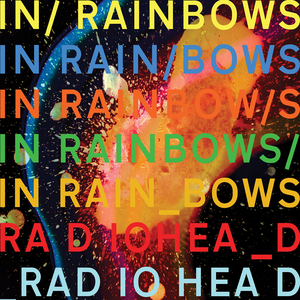


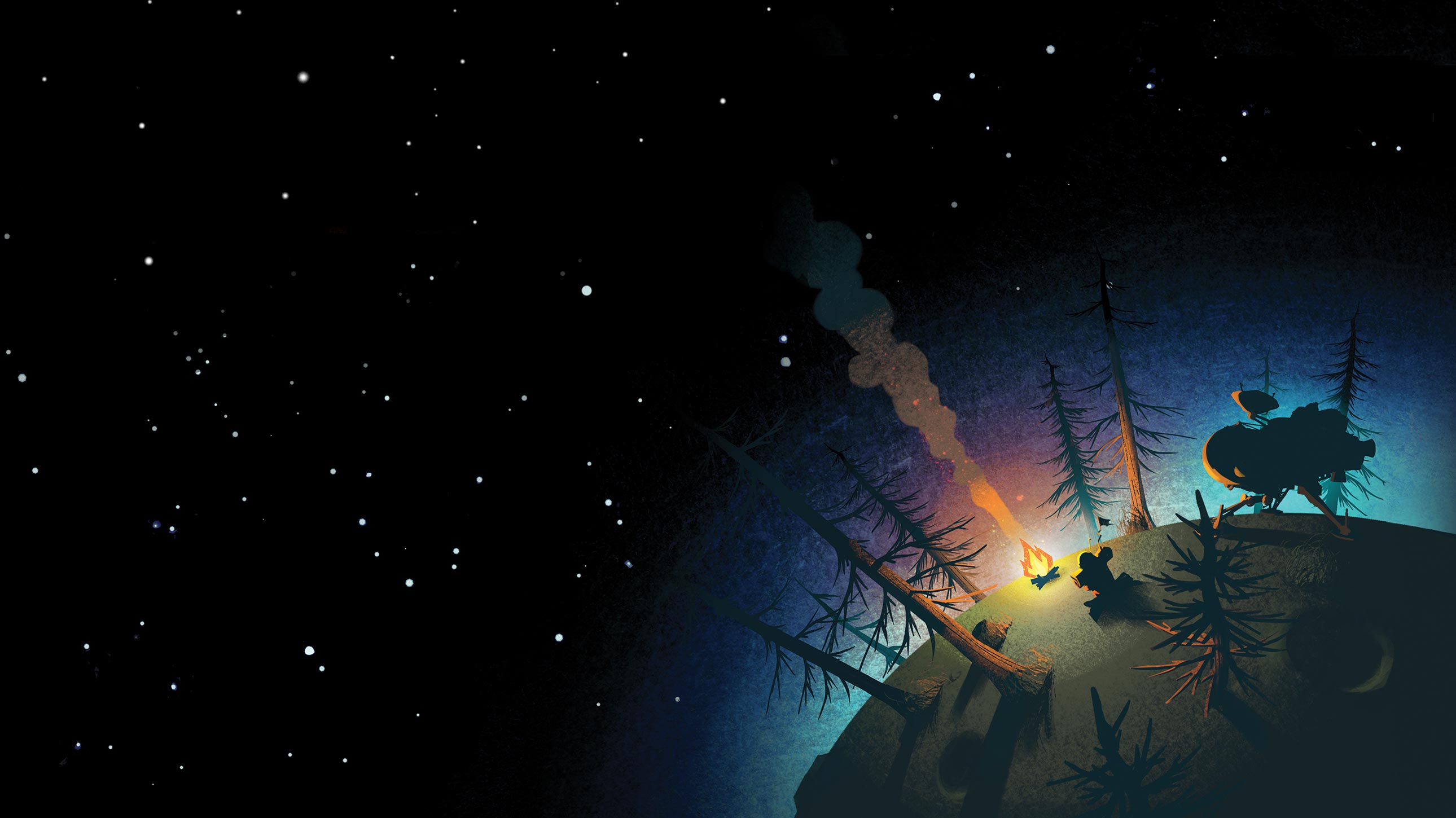
Spirited Away
In Rainbows
Middlemarch
Kyoto
Outer Wilds
Muse Spark 1.3Muse Spark 1.3
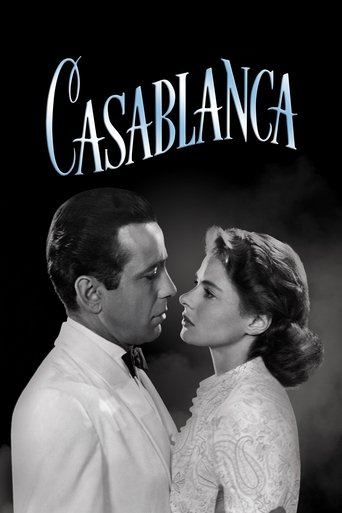
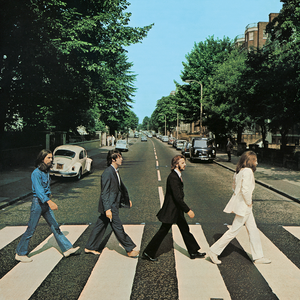

Casablanca
Abbey Road
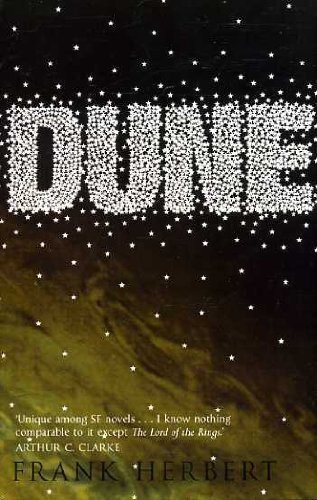
Dune
Tokyo
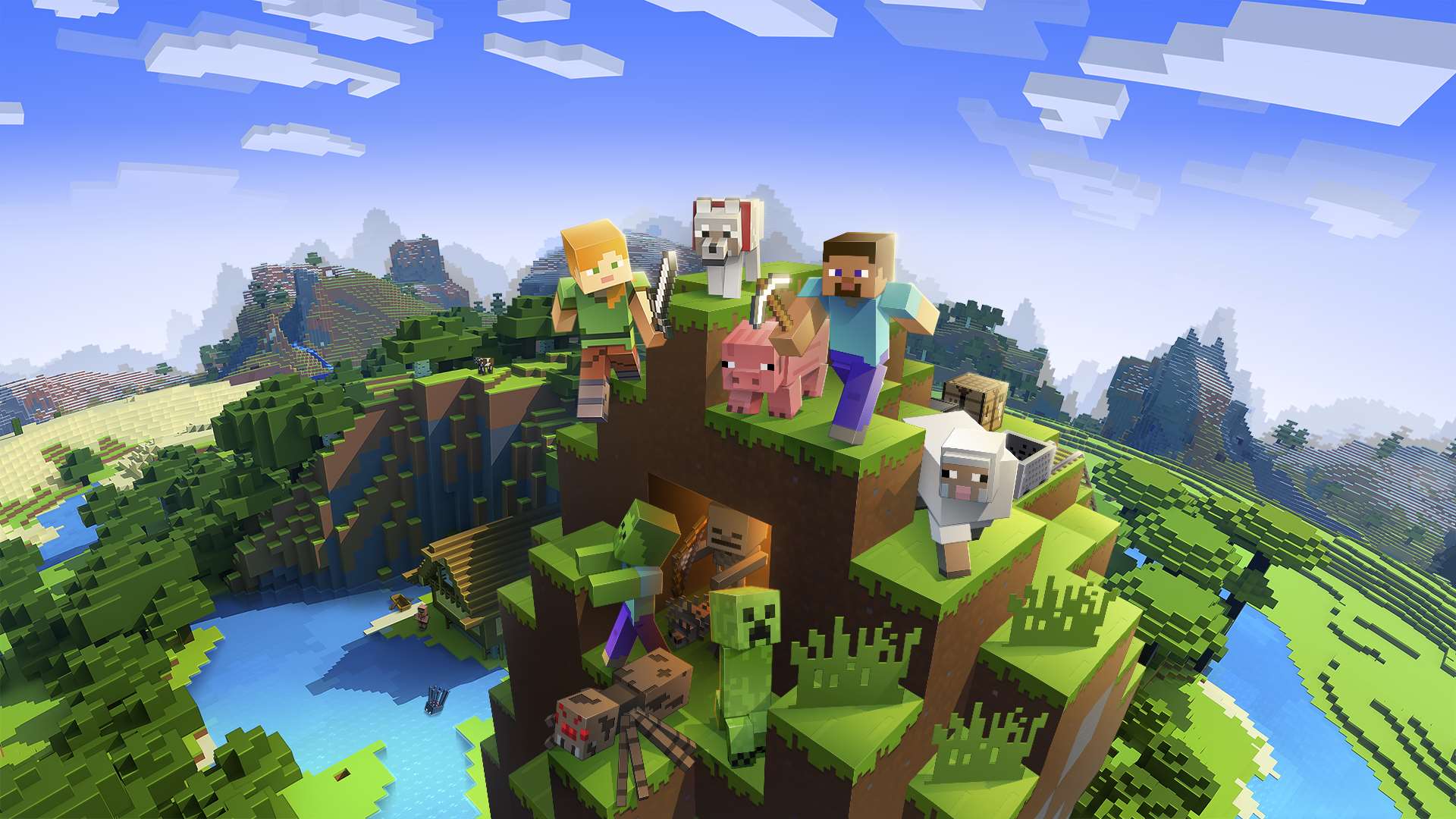
Minecraft
Price and specs
| Spec | GPT-6.1 Sol | Muse Spark 1.3 |
|---|---|---|
| Input price | $2/M tokens | $1.25/M tokens |
| Output price | $10/M tokens | $4.25/M tokens |
| Context window | 1.1M tokens | 1.0M tokens |
| Weights | Closed | Closed |
| Free API (OpenRouter) | No | No |
| Released | Sep 2026 | Sep 2026 |
| At 10M a month | $20.00 | $12.50 |
Input tokens at list price. No caching, no batch discount.
Where to run it


Muse Spark 1.31 host
Per million tokens. Prices and uptime via OpenRouter, checked 6 Oct 2026.
Common questions
What is the difference between GPT-6.1 Sol and Muse Spark 1.3?
GPT-6.1 Sol is developed by OpenAI while Muse Spark 1.3 is developed by Meta AI. GPT-6.1 Sol has a 1.1M token context window vs Muse Spark 1.3's 1.0M. You can compare their actual outputs across 54 challenges on Rival to see how they differ in practice.
Which is better, GPT-6.1 Sol or Muse Spark 1.3?
It depends on your use case. GPT-6.1 Sol and Muse Spark 1.3 each have strengths in different areas. Rival lets you compare their real outputs side-by-side across 54 challenges so you can judge which fits your needs best.
How much does GPT-6.1 Sol cost compared to Muse Spark 1.3?
GPT-6.1 Sol costs $2/M input tokens and Muse Spark 1.3 costs $1.25/M input tokens. Muse Spark 1.3 is $0.75/M cheaper per input. Check their side-by-side outputs on Rival to see if the price difference is justified by quality.
How can I compare GPT-6.1 Sol and Muse Spark 1.3 on Rival?
This page shows a side-by-side comparison of GPT-6.1 Sol and Muse Spark 1.3 across shared challenges. You can vote on which model produced the better output in a blind duel. Browsing and voting are free. No account is needed to look; signing in only saves your votes and likes.
More comparisons
Against the newest arrivals
- GPT-6.1 Sol vs Ling 3.1 FlashLanded Oct 2026
- Muse Spark 1.3 vs Mistral Large 4Landed Oct 2026
- GPT-6.1 Sol vs Claude Sonnet 5.5Landed Sep 2026
- Muse Spark 1.3 vs Solar Mini 4Landed Sep 2026
- GPT-6.1 Sol vs Qwen3.8 Max PrimeLanded Sep 2026
- Muse Spark 1.3 vs GLM 5.3 PrimeLanded Sep 2026
- GPT-6.1 Sol vs Qwen3.8 Omni FlashLanded Sep 2026
- Muse Spark 1.3 vs Command A+Landed Sep 2026


Same lab, same size, long tail
- GPT-6.1 Sol vs GPT-6 Astra ProVersion compare
- GPT-6.1 Sol vs GPT-6 Luna ProSame lab
- Muse Spark 1.3 vs Muse Glimmer 30BSame lab
- Muse Spark 1.3 vs Muse Spark 1.3 ContributorSame lab
- GPT-6.1 Sol vs Grok 4.5Same size
- GPT-6.1 Sol vs Grok 4.6Same size
- GPT-6.1 Sol vs Grok 4.7Same size
- GPT-6.1 Sol vs Grok Code Fast 1New provider
