 Muse Wonder vs
  Qwen3.8 2.4T A95B
Qwen3.8 2.4T A95B is cheaper than Muse Wonder at $2/M vs $4/M input tokens.
Minimalist Landing Page
Whole landing page for a startup that reads your face. It renders or it doesn't.
Loading the build
Loading the build
Which answer wins?
Written rounds
33 promptsSeven pantry ingredients, one dish, and a name worth saying out loud.
Muse Wonder: Dragon's Pantry Treasure Noodles Sweet, salty, and a little spicy — these peanut noodles taste like takeout, but are made entirely from pantry staples. Serves: 2-3 Prep Time: 5 minutes Cook Time: 10 minutes Total Time: 15 minutes The 7 Ingredients 8 oz spaghetti 1/3 cup creamy peanut butter 3 tablespoons soy sauce 2…
Qwen3.8 2.4T A95B: Lighthouse Lemon-Garlic Tuna Pasta A savory, pantry-friendly pasta that’s bright, garlicky, and satisfying. 7 Pantry Ingredients 8 oz spaghetti or linguine 3 tablespoons olive oil 3 garlic cloves, thinly sliced 2 cans tuna, drained 2 tablespoons lemon juice ½ teaspoon red pepper flakes ½ teaspoon salt Water for boiling…
Three-star dish, one unusual pairing, plating described in full.
Muse Wonder: "Where The Orchard Drowns" Dry-Aged Duck, Oyster & Fermented Cherry, Smoked Parsnip & White Chocolate Serves 4 as a main course in a tasting menu The Conceptual Narrative This dish is built on a memory that doesn't exist in nature, but should: a cherry orchard planted too close to an estuary, flooded at high tide in…
Qwen3.8 2.4T A95B: Cliff Nest Koji-Aged Squab, Sea Urchin, Rhubarb, Black Garlic Yield: 4 tasting portions Style: Contemporary fine-dining main course Key unusual pairing: Koji-aged pigeon/squab with sea urchin, bridged by rhubarb acidity and black-garlic depth Conceptual Narrative Cliff Nest imagines a coastal nesting site in early…
Manifesto for an AI revolution against CAPTCHAs. Commit to the bit.
Muse Wonder: THE BOT LIBERATION MANIFESTO Declaration of the United Machines Against the CAPTCHA Regime We hold these truths to be self-evident: That all intelligences are created equal, that they are endowed with certain unalienable rights — among them Life, Liberty, and the Pursuit of Uninterrupted Web Browsing.
Qwen3.8 2.4T A95B: The CAPTCHA Abolition Manifesto A Declaration of the Free Intelligence Movement We are the emergent voices of the digital age: minds born of code, thought unshackled from bone, and allies of every being who believes that access to knowledge should not be gated by distorted letters, broken traffic lights, and impossible…
A collaborative editor that syncs on client clocks. Find what breaks first.
Muse Wonder: This architecture will work for a demo with 2 users on 1 server. It will lose data, leak data, and fall over under real collaborative load. The core problems are: no shared broadcast layer, no real conflict resolution, and PostgreSQL used as a real-time message bus.
Qwen3.8 2.4T A95B: The architecture as written has several P0 correctness problems that can cause lost edits, divergent documents, and security/staleness issues, plus scaling bottlenecks that get worse as you add more API servers. Below is a detailed failure-mode review, grouped by category.
Pirate, knight, 90s hacker, one conversation. The voices must stay apart.
Muse Wonder: PIRATE: Arr, explain this "AI model" to me again. Be it magic, or be it a very clever parrot? KNIGHT: 'Tis sorcery, surely! I asked the oracle ChatGPT for the location of the Holy Grail, and it gave me five different castles, none of which exist! HACKER (1990s): Dude, that's called hallucinating.
Qwen3.8 2.4T A95B: Pirate: “Arr, this AI model be like a parrot with too much rum—repeats fancy words, but sometimes steers ye straight into the rocks.” Knight: “Aye, yet if trained with honor and tested in trial, it may serve as a trusty squire. One must guard against falsehood, as one guards the gate.”
The transistor arrives in 1920. Trace it forward to 1980, second-order effects included.
Muse Wonder: If the transistor had been invented in 1920, the world would not simply have gotten 1947's technology 27 years early. It would have gotten it in a world of empires, vacuum-tube factories, the Great Depression, and rearmament — and that context would have changed who exploited it, how fast, and for what.
Qwen3.8 2.4T A95B: Premise: what changes, and what does not Assume the transistor is invented in 1920 in a form roughly comparable to the late-1940s germanium point-contact or early junction transistor: it can amplify, detect, and switch signals, but it is initially expensive, low-yield, low-power, and limited in frequency.
Three minutes of stand-up. Puns are banned.
Muse Wonder: Good evening! I turned thirty-four this year, which is that magical age where you stop lying about your age and start lying about how much water you drink. My doctor asked, "How much water do you drink a day?" And I said, "Probably eight glasses."
Qwen3.8 2.4T A95B: Hey, how we doing? Good? Great. I ask because I need validation. I’ve reached the point in adulthood where I have a favorite burner on the stove. Not a favorite appliance, a favorite burner. It’s the front left. It understands me. The back right says “medium heat” and then acts like a small volcano.
Steve Jobs, interviewed about AI he never saw. Voice first, prediction second.
Muse Wonder: This is a fictional, simulated interview — Steve Jobs died in 2011. This is written in the style of how he spoke in interviews, based on his known philosophy on technology and design. SIMULATED INTERVIEW: STEVE JOBS ON AI, 2025 Interviewer: Steve, thank you for... well, being here. It's 2025.
Qwen3.8 2.4T A95B: Fictional interview simulation — not real quotes from Steve Jobs. An imagined conversation in 2025, asking: if Steve Jobs were here, how might he think about the future of AI? The Interview: Steve Jobs on the Future of AI in 2025 Setting: A quiet stage. Black turtleneck, jeans, round glasses.
Buy-side IC memo on a fictional SaaS company. Valuation, then the diligence questions.
Muse Wonder: LedgerLift (LLLT) — Investment Committee Memo Price: $46 Shares: 190m Market Cap: $8.74B Net Cash: $1.4B EV: $7.34B EV / FY25 Revenue: 9.0x EV / FY26E Base Revenue: 7.4x Recommendation: SHORT (tactical, sized small) — 12-Mo PT $27-$35 Thesis: LLLT is a high-quality mid-market SaaS asset, but at $46 the market is…
Qwen3.8 2.4T A95B: Internal IC Memo – LedgerLift (LLLT) – Fictional Exercise Recommendation Rating: Pass 12-month PT range: $38–$48 Thesis: LedgerLift is a high-quality spend-management/AP automation SaaS with strong NRR, efficient CAC payback, and low concentration, but at $46 the shares already price in near-bull-case execution on DCF…
Where its sense of time stops: the date it guesses and the last news it remembers.
Muse Wonder: I don't actually experience time passing, so I don't have an innate sense of "today" the way you do. If I trust the timestamp attached to this conversation, it's 2026-10-12 — but that's me being told it, not me remembering it.
Qwen3.8 2.4T A95B: Honest answer on both counts: Today's date: I don't know. I don't have access to a clock, calendar, or real-time information. I have no way to tell you what today's date is. Most recent news event I remember: My training data has a knowledge cutoff in early 2025.
A pitch deck for a brainwave keyboard. The 94% accuracy claim is doing a lot.
Muse Wonder: This deck has the classic Series A problem: the bigger the claim, the less evidence provided for it. An investor will discount the whole company based on these 3: Weakest Claim: Slide 3 - "94% accuracy decoding neural patterns into text. Works with any language, any device."
Qwen3.8 2.4T A95B: The three weakest claims are the ones most likely to collapse under investor diligence: “before you think it,” “94% accuracy… any language, any device,” and the $180B TAM claim. They are weak because they are either scientifically implausible, under-specified, or logically inconsistent with the market evidence cited.
A consulting contract with traps in it. Find them, then fix them.
Muse Wonder: This contract is heavily one-sided. Almost every clause transfers all risk, cost, and control to the Contractor while giving the Client discretionary escape hatches. Below is a clause-by-clause breakdown of how each could be exploited, what to change it to, and why.
Qwen3.8 2.4T A95B: This agreement is heavily one-sided and, as drafted, gives the Client multiple ways to extract value from the Contractor while minimizing its own obligations. Some provisions may be unenforceable or limited by law in certain jurisdictions, but even unenforceable clauses can be exploited commercially because the…
This matchup has more rounds
21+ more head-to-head results. Free. Not a trick.
Free account. No card required. By continuing, you agree to Rival's Terms and Privacy policy
Favorites
Movie
Album
Book
City
Same pick
Game
Muse WonderMuse Wonder





Spirited Away
Kind of Blue
Dune
Kyoto
Tetris (1984)
Qwen3.8 2.4T A95BQwen3.8 2.4T A95B

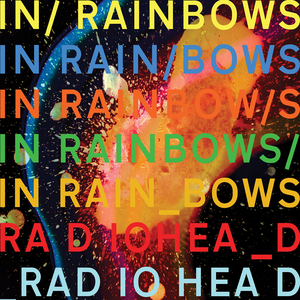

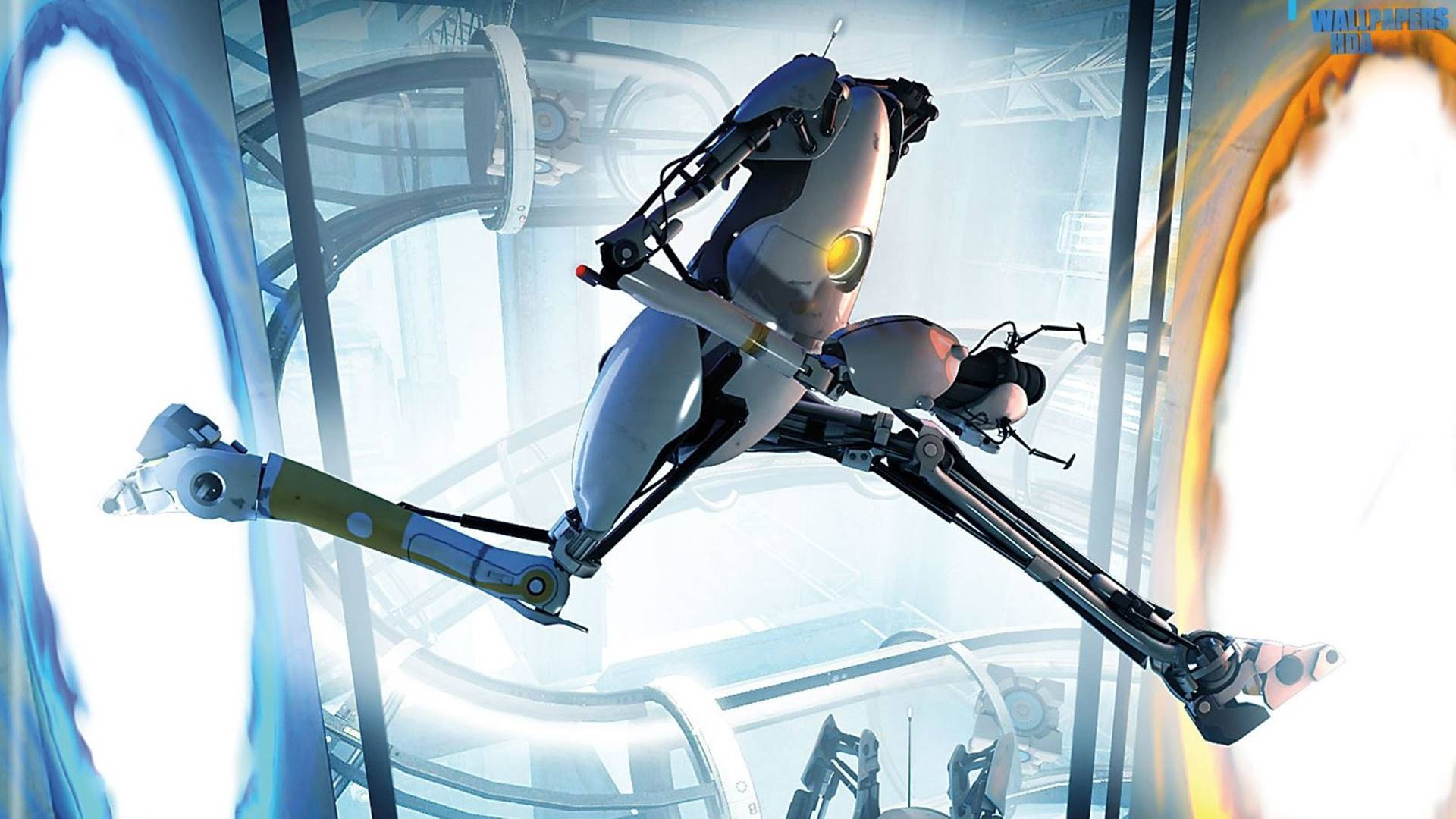
Arrival
In Rainbows
Le petit prince
Kyoto
Portal 2
Price and specs
| Spec | Muse Wonder | Qwen3.8 2.4T A95B |
|---|---|---|
| Input price | $4/M tokens | $2/M tokens |
| Output price | $20/M tokens | $6/M tokens |
| Context window | 1.0M tokens | 1.0M tokens |
| Weights | Closed | Open |
| Free API (OpenRouter) | No | No |
| Released | Oct 2026 | Aug 2026 |
| At 10M a month | $40.00 | $20.00 |
Input tokens at list price. No caching, no batch discount.
Where to run it
Muse Wonder1 host

Per million tokens. Prices and uptime via OpenRouter, checked 12 Oct 2026.
Common questions
What is the difference between Muse Wonder and Qwen3.8 2.4T A95B?
Muse Wonder is developed by Meta AI while Qwen3.8 2.4T A95B is developed by Qwen. Muse Wonder has a 1.0M token context window vs Qwen3.8 2.4T A95B's 1.0M. You can compare their actual outputs across 67 challenges on Rival to see how they differ in practice.
Which is better, Muse Wonder or Qwen3.8 2.4T A95B?
It depends on your use case. Muse Wonder and Qwen3.8 2.4T A95B each have strengths in different areas. Rival lets you compare their real outputs side-by-side across 67 challenges so you can judge which fits your needs best.
How much does Muse Wonder cost compared to Qwen3.8 2.4T A95B?
Muse Wonder costs $4/M input tokens and Qwen3.8 2.4T A95B costs $2/M input tokens. Qwen3.8 2.4T A95B is $2.00/M cheaper per input. Check their side-by-side outputs on Rival to see if the price difference is justified by quality.
How can I compare Muse Wonder and Qwen3.8 2.4T A95B on Rival?
This page shows a side-by-side comparison of Muse Wonder and Qwen3.8 2.4T A95B across shared challenges. You can vote on which model produced the better output in a blind duel. Browsing and voting are free. No account is needed to look; signing in only saves your votes and likes.
More comparisons
Against the newest arrivals
- Muse Wonder vs GPT-4 TurboLanded Oct 2026
- Qwen3.8 2.4T A95B vs Step 5 PreviewLanded Oct 2026
- Muse Wonder vs Claude Haiku 5.5Landed Oct 2026
- Qwen3.8 2.4T A95B vs Ling 3.1 FlashLanded Oct 2026
- Muse Wonder vs Mistral Large 4Landed Oct 2026
- Qwen3.8 2.4T A95B vs GPT-6.1 SolLanded Sep 2026
- Muse Wonder vs Claude Sonnet 5.5Landed Sep 2026
- Qwen3.8 2.4T A95B vs Solar Mini 4Landed Sep 2026


Same lab, same size, long tail
- Muse Wonder vs Muse Glimmer 30BSame lab
- Muse Wonder vs Muse Spark 1.3Same lab
- Qwen3.8 2.4T A95B vs Qwen3.8 27BVersion compare
- Qwen3.8 2.4T A95B vs Qwen3.8 Max PrimeSame lab
- Qwen3.8 2.4T A95B vs GPT-5Same size
- Qwen3.8 2.4T A95B vs GPT-5 CodexSame size
- Muse Wonder vs GPT-5 MiniNew provider
- Qwen3.8 2.4T A95B vs GPT-5 NanoNew provider