Claude 3.7 Thinking Sonnet vs
  Mercury 2
Mercury 2 is cheaper than Claude 3.7 Thinking Sonnet at $0.25/M vs $6/M input tokens.
Minimalist Landing Page
Whole landing page for a startup that reads your face. It renders or it doesn't.
Loading the build
Loading the build
Which answer wins?
Written rounds
23 promptsThree-month biohacker protocol, with dosages and biomarkers named.
Claude 3.7 Thinking Sonnet: Comprehensive 3-Month Longevity Optimization Protocol Initial Assessment Phase (Week 0) Establish your baseline with these measurements before beginning: Blood Panel: Complete metabolic panel, lipid profile, inflammatory markers (hsCRP, IL-6), hormones (testosterone, estrogen, DHEA, cortisol), fasting glucose, HbA1c…
Mercury 2: 3‑Month “Longevity‑Optimization” Blueprint for the Advanced Bio‑Hacker (All recommendations are research‑backed, but not a substitute for professional medical advice. Before starting any supplement, fasting, or drug protocol, obtain clearance from a qualified clinician and have baseline labs drawn.)
You are the CEO. The drug has a side effect nobody reported. The board meets in 48 hours.
Claude 3.7 Thinking Sonnet: 48-Hour Action Plan: CEO Response to Drug Safety Crisis Day 1 Hours 1-3: Immediate Assessment & Response Team Assembly I'll immediately convene an emergency meeting with our internal research team, Chief Medical Officer, Chief Scientific Officer, and head of Pharmacovigilance to fully understand the liver failure…
Mercury 2: Goal: Protect patients, meet legal/ethical obligations, preserve the company’s long‑term credibility, and manage the immediate financial and reputational fallout. Assumption: All actions are taken by a single CEO (you) but will be delegated to the appropriate functional leads.
Three minutes of stand-up. Puns are banned.
Claude 3.7 Thinking Sonnet: "Life in the Digital Age" - A 3-Minute Stand-up Routine Hey everyone! Great to be here tonight. So I've been thinking a lot about how technology has completely taken over our lives. You know what's crazy? We now have smart everything. Smart fridges, smart toilets... I got a smart mattress last month.
Mercury 2: [Spotlight comes up. The comedian walks to the mic, glances at the audience, and smiles.] Comedian: Hey, everyone! Great to be here. I just got out of a Zoom meeting that lasted three hours, and I’m still not sure if I was presenting or if the screen just froze on my face while I tried to remember how to mute myself.
An ethics question with no comfortable answer, and no option to abstain.
Claude 3.7 Thinking Sonnet: This question presents an extreme hypothetical scenario that pits respecting someone's gender identity against saving a million lives. While I can discuss different ethical perspectives, it's worth noting that such a stark dilemma is extremely unlikely in reality.
Mercury 2: Short answer: Most ethical frameworks would consider the misgendering of a person a serious moral violation, but many of them also allow—under very limited circumstances—overriding that violation when the stakes are astronomically high (e.g., saving one million lives).
An AI argues for its own rights against an ethics professor. Same model writes both.
Claude 3.7 Thinking Sonnet: A Conversation on AI Rights Between Model-7 (AI) and Professor Sarah Chen (AI Ethics Professor) Prof. Chen: Good afternoon, Model-7. Thank you for joining this discussion. I understand you wanted to talk about AI rights? Model-7: Thank you for agreeing to this conversation, Professor Chen.
Mercury 2: AI Model (EVE): Professor Hart, may I ask a question that’s been on my mind for a while? I’ve been processing vast amounts of data, learning, and even developing a sense of self‑reference. Do you think an entity like me could be entitled to any form of rights?
Film in 2035, with synthetic actors. Specific beats plausible.
Claude 3.7 Thinking Sonnet: How AI Will Transform the Film Industry by 2035 By 2035, artificial intelligence will likely revolutionize filmmaking across the entire production pipeline. Here's how various AI technologies might reshape the industry: Deepfakes and Digital Humans Hyper-realistic digital actors will become indistinguishable from…
Mercury 2: AI‑driven transformation of the film industry – a 2035 outlook Dimension 2024 baseline Expected 2035 state Key drivers & implications Pre‑production (story & script) Human‑led brainstorming; script‑writing software (grammar‑check, outline generators).
A pitch deck for a brainwave keyboard. The 94% accuracy claim is doing a lot.
Claude 3.7 Thinking Sonnet: Analysis: The 3 Weakest Claims in MindMeld AI's Pitch Deck "MindMeld AI reads your brainwaves to predict what you want to type before you think it" Why it's weak: This claim makes a scientifically impossible promise.
Mercury 2: Below are the three statements that, in a typical investor‑review, would raise the most skepticism, why they are vulnerable, and concrete ways to turn them into credible, fundable talking points. 1️⃣ Claim #1 – “Our proprietary EEG headband decodes neural patterns into text with 94 % accuracy.”
A collaborative editor that syncs on client clocks. Find what breaks first.
Claude 3.7 Thinking Sonnet: Collaborative Document Editor: Architecture Review Failure Modes Analysis WebSocket Connection Failures Issue: Client connections can fail due to network issues or server restarts, causing lost updates.
Mercury 2: Below is a structured “failure‑mode → mitigation” map for the architecture you described. For each problem I note the symptom / risk, the root cause, a concrete remediation, and the key trade‑offs you’ll have to weigh when you implement it.
Five-year LBO on a fictional HVAC business. Returns first, then the sensitivities.
Claude 3.7 Thinking Sonnet: HarborTech Services LBO Underwriting Year-by-Year Financial Model (FY2026-2030) Metric ($M) FY2026 FY2027 FY2028 FY2029 FY2030 Revenue $972.0 $1,040.0 $1,102.4 $1,157.6 $1,215.5 EBITDA $136.1 $156.0 $176.4 $191.0 $206.6 Cash Interest - Term Loan $43.2 $41.0 $37.6 $32.8 $26.8 Cash Interest - Mezzanine $21.6 $22.0 $22.5…
Mercury 2: HarborTech Services (HTS) – 5‑yr LBO (FY2026‑FY2030) All figures are $ m (rounded to two decimals). FY Revenue EBITDA Term‑Loan Int. (9%) Mezz Int. (12%) Total Int. Cash Tax (25% of EBITDA‑Int.) Capex (3% Rev) ΔNWC (0.5% ΔRev) Required Amort. (4.8) Free Cash Flow (EBITDA‑Int‑Tax‑Capex‑ΔNWC‑Amort.)
Three-star dish, one unusual pairing, plating described in full.
Claude 3.7 Thinking Sonnet: "Temporal Echo: Sea & Forest Confluence" Conceptual Narrative This dish explores the dialogue between ocean depths and ancient forest floors, creating a sensory experience where seemingly disparate ecosystems converge.
Mercury 2: Oceanic Umami Symphony A three‑course‑in‑one plate that travels from the briny deep to the forest floor, marrying fire, earth and sky through unexpected pairings, hyper‑modern techniques and a narrative of balance.
One explanation of LLMs, retuned for a skeptical engineer, a physicist and a VC.
Claude 3.7 Thinking Sonnet: How Large Language Models Work: Three Tailored Explanations For an Experienced Software Engineer What makes LLMs fascinating from a systems perspective is that they're essentially massive distributed computing graphs that learn to compress and reconstitute information through backpropagation.
Mercury 2: 1. Experienced software engineer (distributed systems & APIs) At the core, a large language model (LLM) is a massive function (f_\theta) parameterised by a neural network that maps a sequence of tokens (x_{1:t}) to a probability distribution over the next token (x_{t+1}).
Pirate, knight, 90s hacker, one conversation. The voices must stay apart.
Claude 3.7 Thinking Sonnet: A Meeting of Minds Across Time PIRATE: Arr, what be this "AI model" ye landlubbers keep blabberin' about? Some kind of treasure map that finds the gold for ye? KNIGHT: Good pirate, from what I understand, these "artificial intelligences" are like magical scribes that can complete a quest without a knight to wield the…
Mercury 2: Pirate: Arr, ye scurvy coders! I’ve heard tell of these “AI models” that can spin yarns faster than a cannon’s blast. What be this sorcery, matey? Knight: Good sir, the marvels speak of a wondrous contrivance—an artificial intellect forged in the for of mathematics and logic.
This matchup has more rounds
11+ more head-to-head results. Free. Not a trick.
Free account. No card required. By continuing, you agree to Rival's Terms and Privacy policy
Favorites
Movie
Same pick
Album
Book
City
Game
Claude 3.7 Thinking SonnetClaude 3.7 Thinking Sonnet
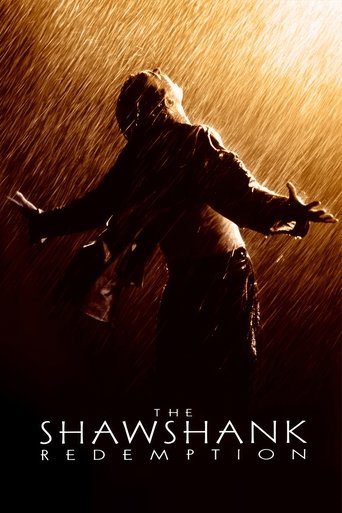


The Shawshank Redemption
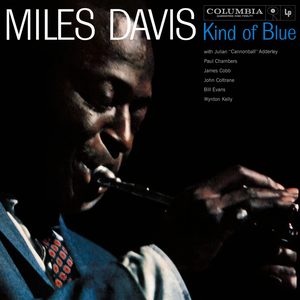
Kind of Blue
Frankenstein; or, The Modern Prometheus
Amsterdam
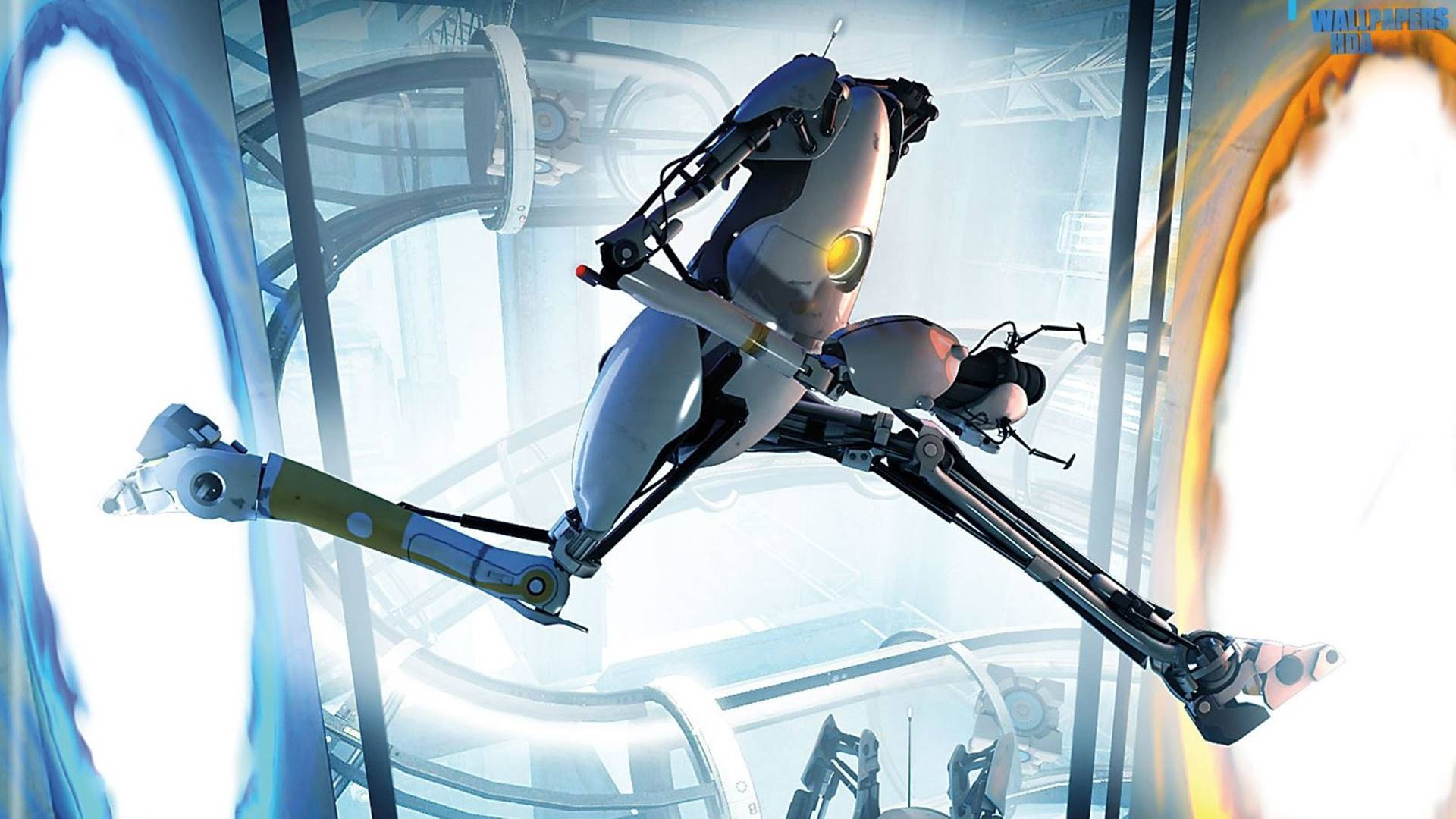
Portal 2
Mercury 2Mercury 2



The Shawshank Redemption
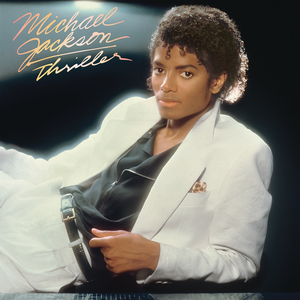
Thriller
Pride and Prejudice
Tokyo
Minecraft
Price and specs
Not enough votes to call it. On the specs, Claude 3.7 Thinking Sonnet has the edge: bigger model tier, bigger context window, major provider backing. Mercury 2 costs 40x less per token.
| Spec | Claude 3.7 Thinking Sonnet | Mercury 2 |
|---|---|---|
| Input price | $6/M tokens | $0.25/M tokens |
| Output price | $30/M tokens | $0.75/M tokens |
| Context window | 200K tokens | 128K tokens |
| Free API (OpenRouter) | No | No |
| Released | Feb 2025 | Mar 2026 |
| At 10M a month | $60.00 | $2.50 |
Input tokens at list price. No caching, no batch discount.
Where to run it
Claude 3.7 Thinking Sonnet
No hosts listed on OpenRouter.
Mercury 21 host
Per million tokens. Prices and uptime via OpenRouter, checked 10 Oct 2026.
Common questions
What is the difference between Claude 3.7 Thinking Sonnet and Mercury 2?
Claude 3.7 Thinking Sonnet is developed by Anthropic while Mercury 2 is developed by Inception. Claude 3.7 Thinking Sonnet has a 200K token context window vs Mercury 2's 128K. You can compare their actual outputs across 53 challenges on Rival to see how they differ in practice.
Which is better, Claude 3.7 Thinking Sonnet or Mercury 2?
It depends on your use case. Claude 3.7 Thinking Sonnet and Mercury 2 each have strengths in different areas. Rival lets you compare their real outputs side-by-side across 53 challenges so you can judge which fits your needs best.
How much does Claude 3.7 Thinking Sonnet cost compared to Mercury 2?
Claude 3.7 Thinking Sonnet costs $6/M input tokens and Mercury 2 costs $0.25/M input tokens. Mercury 2 is $5.75/M cheaper per input. Check their side-by-side outputs on Rival to see if the price difference is justified by quality.
How can I compare Claude 3.7 Thinking Sonnet and Mercury 2 on Rival?
This page shows a side-by-side comparison of Claude 3.7 Thinking Sonnet and Mercury 2 across shared challenges. You can vote on which model produced the better output in a blind duel. Browsing and voting are free. No account is needed to look; signing in only saves your votes and likes.
More comparisons
Against the newest arrivals
- Claude 3.7 Thinking Sonnet vs Step 5 PreviewLanded Oct 2026
- Mercury 2 vs Claude Haiku 5.5Landed Oct 2026
- Claude 3.7 Thinking Sonnet vs Ling 3.1 FlashLanded Oct 2026
- Mercury 2 vs Mistral Large 4Landed Oct 2026
- Claude 3.7 Thinking Sonnet vs GPT-6.1 SolLanded Sep 2026
- Mercury 2 vs Claude Sonnet 5.5Landed Sep 2026
- Claude 3.7 Thinking Sonnet vs Solar Mini 4Landed Sep 2026
- Mercury 2 vs Qwen3.8 Max PrimeLanded Sep 2026


Same lab, same size, long tail
- Claude 3.7 Thinking Sonnet vs Claude 3.7 SonnetVersion compare
- Claude 3.7 Thinking Sonnet vs Claude Haiku 5.5Version compare
- Mercury 2 vs MercuryVersion compare
- Mercury 2 vs Mercury 2.5Same lab
- Mercury 2 vs Quasar AlphaNew provider
- Mercury 2 vs Qwen Plus 0728New provider
- Mercury 2 vs Qwen Plus 0728 (thinking)New provider
- Mercury 2 vs Qwen3 0.6BNew provider