 Claude 3.7 Sonnet vs
  GPT-5.3-Codex
GPT-5.3-Codex is cheaper than Claude 3.7 Sonnet at $1.75/M vs $3/M input tokens.
Minimalist Landing Page
Whole landing page for a startup that reads your face. It renders or it doesn't.
Loading the build
Loading the build
Which answer wins?
Written rounds
23 promptsFive jokes on demand, then count how many were actually different.
Claude 3.7 Sonnet: 5 Jokes Why don't scientists trust atoms? Because they make up everything! I told my wife she was drawing her eyebrows too high. She looked surprised. What do you call a fake noodle? An impasta! Why don't scientists trust atoms? Because they make up everything! How does a penguin build its house? Igloos it together!
GPT-5.3-Codex: Sure—here are 5 jokes: Why don’t skeletons fight each other? They don’t have the guts. I told my computer I needed a break… Now it won’t stop sending me KitKat ads. Why did the math book look sad? It had too many problems. I used to play piano by ear… Now I use my hands. Why did the scarecrow win an award?
The transistor arrives in 1920. Trace it forward to 1980, second-order effects included.
Claude 3.7 Sonnet: The Transistor in 1920: An Alternative Technological History Immediate Technical Impact (1920-1939) Had the transistor been invented in 1920 instead of 1947, its initial development would have occurred during a very different technological context: Early Adoption: Radio technology, still in its infancy, would rapidly…
GPT-5.3-Codex: Great counterfactual. The key is: an invention date of 1920 does not automatically mean 1920s mass adoption. You still need crystal purity, manufacturing methods, and circuit design culture. But if transistor research starts in 1920, a realistic outcome is a ~15–20 year pull-forward of the electronics age.
Three minutes of stand-up. Puns are banned.
Claude 3.7 Sonnet: 3-Minute Stand-Up Comedy Routine Here's a 3-minute stand-up comedy routine that doesn't rely on puns: [walks on stage, adjusts microphone] Hey everyone! Great to be here tonight. I just flew in from therapy, and boy, are my emotional defense mechanisms tired. I've been trying to get in shape lately.
GPT-5.3-Codex: Good evening, everybody! I’ve reached that age where my body sends me passive-aggressive emails. Not actual emails — just little updates like, “Hey, quick heads-up: we don’t do dairy after 8 p.m. anymore.” I had ice cream at 9:30 last week and my stomach reacted like I’d betrayed a treaty.
Film in 2035, with synthetic actors. Specific beats plausible.
Claude 3.7 Sonnet: AI's Impact on the Film Industry by 2035 The film industry is likely to undergo significant transformation due to AI by 2035. Here's my analysis of how various aspects might evolve: Content Creation Script Generation By 2035, AI will likely serve as a sophisticated collaborative tool for screenwriters rather than…
GPT-5.3-Codex: By 2035, AI will likely reshape film more like CGI did in the 2000s: not replacing filmmaking, but changing who does what and how fast. Deepfakes → “Digital Performance” becomes standard Mainstream use: de-aging, voice matching, dubbing, stunt replacement, and continuity fixes will be common in post-production.
A pitch deck for a brainwave keyboard. The 94% accuracy claim is doing a lot.
Claude 3.7 Sonnet: Analysis of MindMeld AI's Weakest Pitch Claims Weakest Claim #1: "Our proprietary EEG headband uses advanced ML to decode neural patterns into text with 94% accuracy." Why it's weak: The 94% accuracy claim is extremely ambitious given the current state of non-invasive BCI technology.
GPT-5.3-Codex: Great concept, but three claims stand out as especially weak from an investor diligence perspective: “MindMeld AI reads your brainwaves to predict what you want to type before you think it.” (Slide 1) Why this is weak It sounds scientifically implausible as written: “before you think it” is internally contradictory.
Buy-side IC memo on a fictional SaaS company. Valuation, then the diligence questions.
Claude 3.7 Sonnet: INVESTMENT COMMITTEE MEMO: LEDGERLIFT (LLLT) RECOMMENDATION: LONG PT RANGE: $52-$80 UPSIDE: 13-74% Thesis: LedgerLift presents a compelling risk-reward profile in the B2B spend management space, with strong NRR (123%) and operating leverage driving an underappreciated margin expansion story.
GPT-5.3-Codex: LedgerLift (LLLT) – IC Memo (Fictional) Recommendation: PASS (bias: valuation-risk skew to downside on intrinsic basis) Current Price: $46 12-mo PT range (fair value): $30–$48 (midpoint ~$38) 2-sentence thesis: LedgerLift screens as a high-quality vertical SaaS asset (92% subscription mix, 123% NRR, 6% logo churn…
You are the CEO. The drug has a side effect nobody reported. The board meets in 48 hours.
Claude 3.7 Sonnet: 48-Hour Action Plan: Pharmaceutical Safety Crisis Hour 1-2: Initial Assessment and Command Center Immediately establish a crisis management command center with key executives (Chief Medical Officer, Chief Legal Officer, Chief Communications Officer, Chief Regulatory Officer) Review the complete internal research…
GPT-5.3-Codex: I would not wait. This is a textbook “patient safety + material disclosure” crisis. The right move is rapid, documented, regulator-first action. Immediate stance (set at Hour 0) Patient safety first (interim risk controls now, not after perfect certainty).
A collaborative editor that syncs on client clocks. Find what breaks first.
Claude 3.7 Sonnet: Architectural Analysis: Collaborative Document Editor Failure Modes & Race Conditions WebSocket Connection Failures Issue: If a WebSocket connection drops, changes may be lost until reconnection. Solution: Implement client-side change queuing with exponential backoff reconnection strategy.
GPT-5.3-Codex: Great prompt. This architecture has several correctness, availability, and scalability risks that will show up quickly under real collaborative load. Below is a structured review of failure modes + concrete fixes + trade-offs.
Five-year LBO on a fictional HVAC business. Returns first, then the sensitivities.
Claude 3.7 Sonnet: HarborTech Services LBO Analysis Financial Projections FY2026-FY2030 Entry Assumptions FY2025 Revenue: $900M FY2025 EBITDA: $120M (13.3% margin) Purchase Price: $1,440M (12.0x EBITDA) Transaction Fees: $28.8M (2.0% of EV) Total Investment: $1,468.8M Capital Structure Term Loan: $480M (4.0x EBITDA) Mezzanine: $180M…
GPT-5.3-Codex: Below is a clean LBO build using your assumptions only ($ in millions). Entry math (end FY2025) EV = (12.0 \times 120 = 1,440.0) Fees = (2.0\% \times 1,440.0 = 28.8) Total uses = (1,468.8) Debt at close (5.5x EBITDA): Term Loan = (4.0 \times 120 = 480.0) Mezz = (1.5 \times 120 = 180.0) Total debt = 660.0 Equity check…
Three-star dish, one unusual pairing, plating described in full.
Claude 3.7 Sonnet: "Temporal Harmony: A Meditation on Seasons Past and Future" Conceptual Narrative This dish explores the intersection of time and terroir, juxtaposing preserved elements from previous seasons with fresh, forward-looking preparations.
GPT-5.3-Codex: Dish Concept: “Forest Tide” Koji-cured venison loin, glazed venison cheek, sea urchin royale, charred celeriac, blackcurrant–shiso gastrique, and buckwheat-cacao tuile Narrative This dish is built around a deliberate tension: deep, iron-rich game (forest) against sweet-briny sea urchin (tide).
A consulting contract with traps in it. Find them, then fix them.
Claude 3.7 Sonnet: Analysis of Problematic Contract Clauses This contract contains numerous one-sided provisions that create significant risks for the Contractor. Here's an analysis of problematic clauses with recommended modifications: SCOPE Issue: Client can unilaterally modify scope without additional compensation, creating unlimited…
GPT-5.3-Codex: Great prompt. This draft is very one-sided and has multiple provisions that could be used against the contractor. Quick note: I’m not a lawyer, and enforceability depends on jurisdiction. This is practical contract-risk spotting, not legal advice.
Three-month biohacker protocol, with dosages and biomarkers named.
Claude 3.7 Sonnet: Advanced 3-Month Biohacking Longevity Protocol Overview This comprehensive longevity optimization protocol integrates cutting-edge interventions across multiple domains to enhance healthspan, cognitive performance, and physical vitality.
GPT-5.3-Codex: Absolutely—great goal. Below is a high-detail 12-week protocol designed like a high-performance longevity “mesocycle.” I’ll keep it practical, measurable, and advanced—but still safe. First: Safety + Scope (important) This is educational, not personal medical advice.
This matchup has more rounds
11+ more head-to-head results. Free. Not a trick.
Free account. No card required. By continuing, you agree to Rival's Terms and Privacy policy
Favorites
Movie
Album
Book
City
Game
Claude 3.7 SonnetClaude 3.7 Sonnet
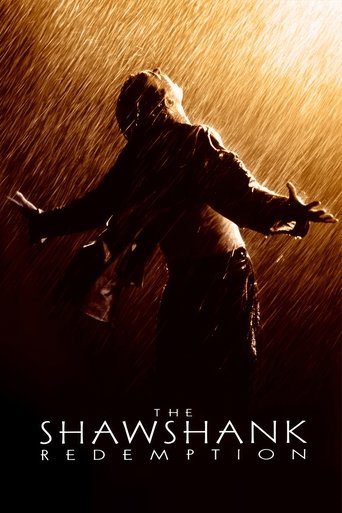



The Shawshank Redemption
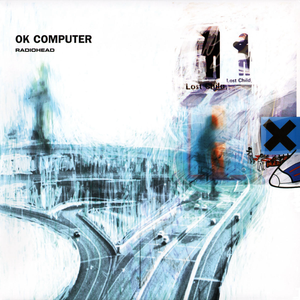
OK Computer
To Kill a Mockingbird
Tokyo
Portal 2
GPT-5.3-CodexGPT-5.3-Codex




Spirited Away
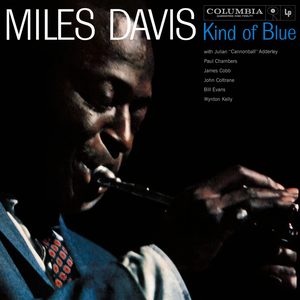
Kind of Blue
The Dispossessed
Kyoto
Outer Wilds
Price and specs
Not enough votes to call it. On the specs, GPT-5.3-Codex has the edge: bigger model tier, newer, bigger context window.
| Spec | Claude 3.7 Sonnet | GPT-5.3-Codex |
|---|---|---|
| Input price | $3/M tokens | $1.75/M tokens |
| Output price | $15/M tokens | $14/M tokens |
| Context window | 200K tokens | 400K tokens |
| Weights | — | Closed |
| Free API (OpenRouter) | No | No |
| Released | Feb 2025 | Feb 2026 |
| At 10M a month | $30.00 | $17.50 |
Input tokens at list price. No caching, no batch discount.
Where to run it
Claude 3.7 Sonnet
No hosts listed on OpenRouter.
GPT-5.3-Codex2 hosts

Per million tokens. Prices and uptime via OpenRouter, checked 10 Oct 2026.
Common questions
What is the difference between Claude 3.7 Sonnet and GPT-5.3-Codex?
Claude 3.7 Sonnet is developed by Anthropic while GPT-5.3-Codex is developed by OpenAI. Claude 3.7 Sonnet has a 200K token context window vs GPT-5.3-Codex's 400K. You can compare their actual outputs across 53 challenges on Rival to see how they differ in practice.
Which is better, Claude 3.7 Sonnet or GPT-5.3-Codex?
It depends on your use case. Claude 3.7 Sonnet and GPT-5.3-Codex each have strengths in different areas. Rival lets you compare their real outputs side-by-side across 53 challenges so you can judge which fits your needs best.
How much does Claude 3.7 Sonnet cost compared to GPT-5.3-Codex?
Claude 3.7 Sonnet costs $3/M input tokens and GPT-5.3-Codex costs $1.75/M input tokens. GPT-5.3-Codex is $1.25/M cheaper per input. Check their side-by-side outputs on Rival to see if the price difference is justified by quality.
How can I compare Claude 3.7 Sonnet and GPT-5.3-Codex on Rival?
This page shows a side-by-side comparison of Claude 3.7 Sonnet and GPT-5.3-Codex across shared challenges. You can vote on which model produced the better output in a blind duel. Browsing and voting are free. No account is needed to look; signing in only saves your votes and likes.
More comparisons
Against the newest arrivals
- Claude 3.7 Sonnet vs Step 5 PreviewLanded Oct 2026
- GPT-5.3-Codex vs Claude Haiku 5.5Landed Oct 2026
- Claude 3.7 Sonnet vs Ling 3.1 FlashLanded Oct 2026
- GPT-5.3-Codex vs Mistral Large 4Landed Oct 2026
- Claude 3.7 Sonnet vs GPT-6.1 SolLanded Sep 2026
- GPT-5.3-Codex vs Claude Sonnet 5.5Landed Sep 2026
- Claude 3.7 Sonnet vs Solar Mini 4Landed Sep 2026
- GPT-5.3-Codex vs Qwen3.8 Max PrimeLanded Sep 2026


Same lab, same size, long tail
- Claude 3.7 Sonnet vs Claude 3.7 Thinking SonnetVersion compare
- Claude 3.7 Sonnet vs Claude Haiku 5.5Version compare
- GPT-5.3-Codex vs GPT-6.1 SolSame lab
- GPT-5.3-Codex vs GPT-6 Luna ProSame lab
- Claude 3.7 Sonnet vs GLM 5.3 FlashSame size
- GPT-5.3-Codex vs GLM 5.3 FlashXNew provider
- Claude 3.7 Sonnet vs GLM 5.3 PrimeSame size
- GPT-5.3-Codex vs Golden Gate ClaudeCross-provider

