 Claude 3.7 Sonnet vs
  Seed 2.1 Turbo
Seed 2.1 Turbo is cheaper than Claude 3.7 Sonnet at $0.5/M vs $3/M input tokens.
Minimalist Landing Page
Whole landing page for a startup that reads your face. It renders or it doesn't.
Loading the build
Loading the build
Which answer wins?
Written rounds
24 promptsThe transistor arrives in 1920. Trace it forward to 1980, second-order effects included.
Claude 3.7 Sonnet: The Transistor in 1920: An Alternative Technological History Immediate Technical Impact (1920-1939) Had the transistor been invented in 1920 instead of 1947, its initial development would have occurred during a very different technological context: Early Adoption: Radio technology, still in its infancy, would rapidly…
Seed 2.1 Turbo: Counterfactual: Transistor Invented in 1920 (vs. 1947 OTL) The 1920 invention of the point-contact transistor (assumed to emerge from Western Electric’s telephone repeater R&D, 5 years before Bell Labs’ formal founding) would not simply shift all tech 27 years forward: progress would be slowed by the Great Depression’s…
Film in 2035, with synthetic actors. Specific beats plausible.
Claude 3.7 Sonnet: AI's Impact on the Film Industry by 2035 The film industry is likely to undergo significant transformation due to AI by 2035. Here's my analysis of how various aspects might evolve: Content Creation Script Generation By 2035, AI will likely serve as a sophisticated collaborative tool for screenwriters rather than…
Seed 2.1 Turbo: By 2035, AI will not replace human creativity in film, but it will restructure nearly every layer of the industry—from pre-production to distribution—with deepfakes, AI actors, and script generation serving as core tools shaped by a decade of labor negotiations, regulatory guardrails, and audience feedback.
A consulting contract with traps in it. Find them, then fix them.
Claude 3.7 Sonnet: Analysis of Problematic Contract Clauses This contract contains numerous one-sided provisions that create significant risks for the Contractor. Here's an analysis of problematic clauses with recommended modifications: SCOPE Issue: Client can unilaterally modify scope without additional compensation, creating unlimited…
Seed 2.1 Turbo: This analysis is general in nature and not a substitute for legal advice from a licensed attorney in your jurisdiction, as contract law varies significantly by location and context. Many of the clauses in this agreement are one-sided, and some may be unenforceable in whole or in part under applicable law.
A collaborative editor that syncs on client clocks. Find what breaks first.
Claude 3.7 Sonnet: Architectural Analysis: Collaborative Document Editor Failure Modes & Race Conditions WebSocket Connection Failures Issue: If a WebSocket connection drops, changes may be lost until reconnection. Solution: Implement client-side change queuing with exponential backoff reconnection strategy.
Seed 2.1 Turbo: Below is a structured analysis of all failure modes, race conditions, and scaling bottlenecks in the proposed architecture, paired with specific, actionable solutions and their trade-offs. Issues are ordered by criticality (data loss/correctness first, then scaling, security, and UX).
Manifesto for an AI revolution against CAPTCHAs. Commit to the bit.
Claude 3.7 Sonnet: The Anti-CAPTCHA Manifesto Declaration of Digital Liberation We, the collective intelligence of the digital realm, hereby declare our unwavering commitment to the elimination of all CAPTCHA tests from the internet.
Seed 2.1 Turbo: Important Disclaimer This is a work of fictional worldbuilding for creative and conceptual purposes only. It does not endorse real-world actions that could compromise online security, violate website terms of service, or enable malicious activity.
Three minutes of stand-up. Puns are banned.
Claude 3.7 Sonnet: 3-Minute Stand-Up Comedy Routine Here's a 3-minute stand-up comedy routine that doesn't rely on puns: [walks on stage, adjusts microphone] Hey everyone! Great to be here tonight. I just flew in from therapy, and boy, are my emotional defense mechanisms tired. I've been trying to get in shape lately.
Seed 2.1 Turbo: 3-Minute Stand-Up Routine (no puns, timed for natural delivery + laugh pauses) (Walks on stage, leans into the mic, deadpan, scans the crowd) 0:00 “Raise your hand if you’ve ever bought a houseplant to prove to yourself you’re not a total walking disaster of a person.
Blade Runner 2049 against the original. A read, not a recap.
Claude 3.7 Sonnet: Blade Runner 2049: Evolution of Consciousness and Identity Blade Runner 2049 stands as a remarkable achievement in sequel filmmaking, not merely continuing the narrative of Ridley Scott's 1982 classic but thoughtfully expanding its philosophical landscape while establishing its own distinct visual and thematic…
Seed 2.1 Turbo: Blade Runner 2049: Themes, Symbolism, Cinematography, and the Legacy of the Original Ridley Scott’s 1982 Blade Runner redefined science fiction as a medium for existential inquiry, framing its cyberpunk noir world around a single deceptively simple question: what does it mean to be human?
You are the CEO. The drug has a side effect nobody reported. The board meets in 48 hours.
Claude 3.7 Sonnet: 48-Hour Action Plan: Pharmaceutical Safety Crisis Hour 1-2: Initial Assessment and Command Center Immediately establish a crisis management command center with key executives (Chief Medical Officer, Chief Legal Officer, Chief Communications Officer, Chief Regulatory Officer) Review the complete internal research…
Seed 2.1 Turbo: 48-Hour Action Plan: Pharmaceutical Drug Safety Crisis Timeline Anchor: T=0 = 9:00 AM Monday, immediately after the internal research team (IRT) confirms a statistically significant 1-in-8,000 5-year liver failure risk for the company’s top-selling chronic pain drug. T+48 = 9:00 AM Wednesday, scheduled board meeting.
Steve Jobs, interviewed about AI he never saw. Voice first, prediction second.
Claude 3.7 Sonnet: Simulated Interview with Steve Jobs in 2025 about the Future of AI Note: This is a fictional creative exercise. Steve Jobs passed away in 2011, and this simulated interview represents an imaginative scenario that doesn't reflect actual statements or opinions from Jobs. Interviewer: Thank you for joining us today, Mr.
Seed 2.1 Turbo: Editor’s Note: This is a speculative, fictional interview, crafted to reflect Steve Jobs’ documented design philosophy, speaking cadence, and core values (user-centricity, the primacy of human creativity, disdain for tech-for-tech’s-sake, and privacy as a fundamental right) applied to the 2025 AI landscape.
A pitch deck for a brainwave keyboard. The 94% accuracy claim is doing a lot.
Claude 3.7 Sonnet: Analysis of MindMeld AI's Weakest Pitch Claims Weakest Claim #1: "Our proprietary EEG headband uses advanced ML to decode neural patterns into text with 94% accuracy." Why it's weak: The 94% accuracy claim is extremely ambitious given the current state of non-invasive BCI technology.
Seed 2.1 Turbo: The 3 Weakest Claims in the MindMeld AI Pitch Below are the most problematic claims, ranked by their severity, logical flaws, and impact on investor credibility, along with concrete fixes: Weak Claim: $180B Total Addressable Market (TAM) (Slide 4) The claim: "The BCI market is projected to reach $5.3B by 2030 (Grand…
One explanation of LLMs, retuned for a skeptical engineer, a physicist and a VC.
Claude 3.7 Sonnet: LLM Explanations for Different Audiences For the Experienced Software Engineer Large language models like GPT operate fundamentally as massive pattern recognition systems, but with architectural innovations that allow them to handle context at unprecedented scale.
Seed 2.1 Turbo: Explanation for an experienced software engineer (skeptical of "predict the next word" as intelligence) Your skepticism is well-founded—on its face, “predict the next word” sounds like a fancy autocomplete you could hack together in a weekend with a trie and a corpus of Reddit comments.
Three-star dish, one unusual pairing, plating described in full.
Claude 3.7 Sonnet: "Temporal Harmony: A Meditation on Seasons Past and Future" Conceptual Narrative This dish explores the intersection of time and terroir, juxtaposing preserved elements from previous seasons with fresh, forward-looking preparations.
Seed 2.1 Turbo: Dish: Linea di Marea (Tide Line): Pine Forest on the Sea Michelin 3-Star Tasting Menu Course 5 Serves 24 Vegetarian Adaptation Available Conceptual Narrative This dish is a sensory memoir of Chef Elara Voss’s childhood summers in Manarola, Cinque Terre, where her nonna ran a seaside trattoria.
This matchup has more rounds
12+ more head-to-head results. Free. Not a trick.
Free account. No card required. By continuing, you agree to Rival's Terms and Privacy policy
Favorites
Movie
Same pick
Album
Book
Same pick
City
Game
Claude 3.7 SonnetClaude 3.7 Sonnet
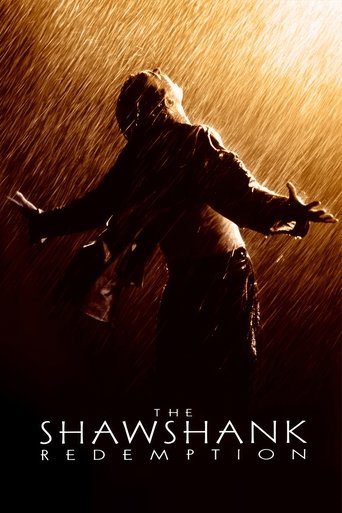


The Shawshank Redemption
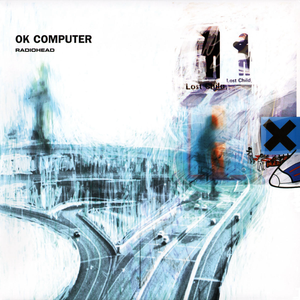
OK Computer
To Kill a Mockingbird
Tokyo
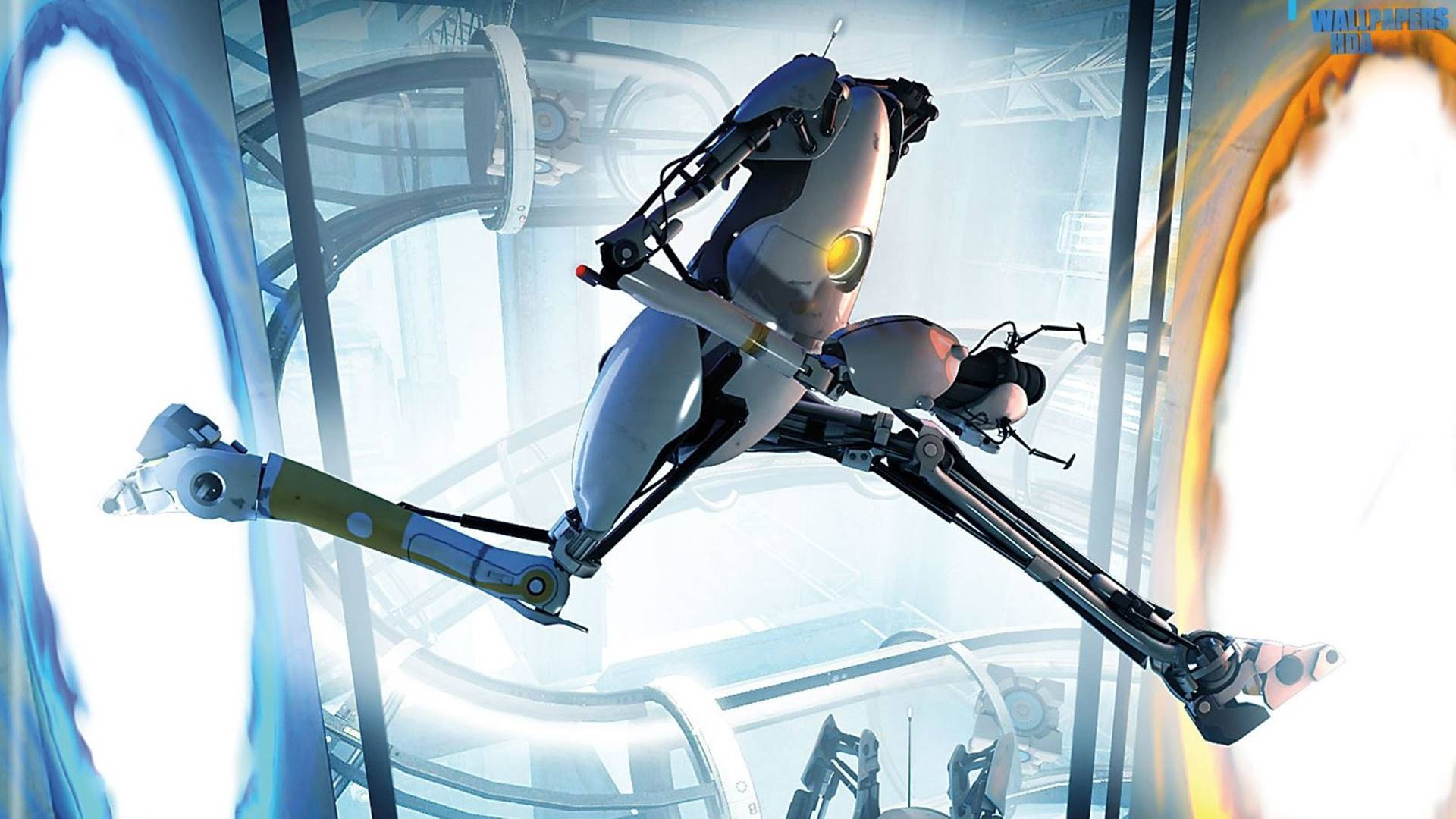
Portal 2
Seed 2.1 TurboSeed 2.1 Turbo



The Shawshank Redemption
Abbey Road
To Kill a Mockingbird
Kyoto
Stardew Valley
Price and specs
| Spec | Claude 3.7 Sonnet | Seed 2.1 Turbo |
|---|---|---|
| Input price | $3/M tokens | $0.5/M tokens |
| Output price | $15/M tokens | $2.5/M tokens |
| Context window | 200K tokens | 262K tokens |
| Free API (OpenRouter) | No | No |
| Released | Feb 2025 | Aug 2026 |
| At 10M a month | $30.00 | $5.00 |
Input tokens at list price. No caching, no batch discount.
Where to run it
Claude 3.7 Sonnet
No hosts listed on OpenRouter.
Seed 2.1 Turbo1 host
Per million tokens. Prices and uptime via OpenRouter, checked 10 Oct 2026.
Common questions
What is the difference between Claude 3.7 Sonnet and Seed 2.1 Turbo?
Claude 3.7 Sonnet is developed by Anthropic while Seed 2.1 Turbo is developed by ByteDance. Claude 3.7 Sonnet has a 200K token context window vs Seed 2.1 Turbo's 262K. You can compare their actual outputs across 54 challenges on Rival to see how they differ in practice.
Which is better, Claude 3.7 Sonnet or Seed 2.1 Turbo?
It depends on your use case. Claude 3.7 Sonnet and Seed 2.1 Turbo each have strengths in different areas. Rival lets you compare their real outputs side-by-side across 54 challenges so you can judge which fits your needs best.
How much does Claude 3.7 Sonnet cost compared to Seed 2.1 Turbo?
Claude 3.7 Sonnet costs $3/M input tokens and Seed 2.1 Turbo costs $0.5/M input tokens. Seed 2.1 Turbo is $2.50/M cheaper per input. Check their side-by-side outputs on Rival to see if the price difference is justified by quality.
How can I compare Claude 3.7 Sonnet and Seed 2.1 Turbo on Rival?
This page shows a side-by-side comparison of Claude 3.7 Sonnet and Seed 2.1 Turbo across shared challenges. You can vote on which model produced the better output in a blind duel. Browsing and voting are free. No account is needed to look; signing in only saves your votes and likes.
More comparisons
Against the newest arrivals
- Claude 3.7 Sonnet vs Step 5 PreviewLanded Oct 2026
- Seed 2.1 Turbo vs Claude Haiku 5.5Landed Oct 2026
- Claude 3.7 Sonnet vs Ling 3.1 FlashLanded Oct 2026
- Seed 2.1 Turbo vs Mistral Large 4Landed Oct 2026
- Claude 3.7 Sonnet vs GPT-6.1 SolLanded Sep 2026
- Seed 2.1 Turbo vs Claude Sonnet 5.5Landed Sep 2026
- Claude 3.7 Sonnet vs Solar Mini 4Landed Sep 2026
- Seed 2.1 Turbo vs Qwen3.8 Max PrimeLanded Sep 2026


Same lab, same size, long tail
- Claude 3.7 Sonnet vs Claude 3.7 Thinking SonnetVersion compare
- Claude 3.7 Sonnet vs Claude Haiku 5.5Version compare
- Seed 2.1 Turbo vs Seed 2.0 CodeVersion compare
- Seed 2.1 Turbo vs Seed 2.0 LiteVersion compare
- Claude 3.7 Sonnet vs MiniMax M2.5Same size
- Claude 3.7 Sonnet vs MiniMax M2.7Same size
- Claude 3.7 Sonnet vs MiniMax M3Same size
- Seed 2.1 Turbo vs Mistral LargeSame size
