 Claude Haiku 5.5 vs
  Grok 4.7
Claude Haiku 5.5 is cheaper than Grok 4.7 at $0.1/M vs $1.6/M input tokens.
Minimalist Landing Page
Whole landing page for a startup that reads your face. It renders or it doesn't.
Loading the build
Loading the build
Which answer wins?
Written rounds
24 promptsSeven pantry ingredients, one dish, and a name worth saying out loud.
Claude Haiku 5.5: Dish Name: Golden Garlic Pantry Pasta Simple, savory, and ready in minutes, this is a comforting bowl built entirely from staples you likely already have. Ingredients (7 total): 8 oz (225 g) spaghetti or any pasta 3 tablespoons olive oil 4 cloves garlic, thinly sliced ½ teaspoon red pepper flakes ¼ cup grated Parmesan…
Grok 4.7: Pantry Gold Honey Biscuits A sweet, buttery, slightly salty biscuit that tastes like it took more effort than it did. Ingredients (7) 2 cups all-purpose flour 1 tbsp baking powder ½ tsp salt ¼ cup sugar ½ cup butter (cold) ¾ cup milk 2 tbsp honey Time: about 10 minutes prep, 12–15 minutes bake Instructions Heat the…
Pirate, knight, 90s hacker, one conversation. The voices must stay apart.
Claude Haiku 5.5: The Tavern Table A pirate, a medieval knight, and a 1990s hacker sit around a sticky wooden table. A glowing laptop sits between their mugs. CAPTAIN REDBEARD: Blast me barnacles, what's this contraption? It talks back! SIR GODFREY: Verily, I have seen it. The hacker calls it an "AI model."
Grok 4.7: Pirate: Arr, these “AI models” be like ghost ships—speak with many voices, yet no soul aboard. Knight: I have heard of oracles that answer any question. Do they swear fealty, or do they merely echo what they have been fed? Hacker: Echo, mostly. Feed ’em enough text and they pattern-match.
Three-star dish, one unusual pairing, plating described in full.
Claude Haiku 5.5: "Tidewater Memory": Smoked Hay-Cured Hamachi, Burnt Leek Ash, Fermented Black Garlic Dashi Gel, and Yuzu-Kosho Pearls with Sea Buckthorn Caviar Conceptual Narrative This dish is a meditation on a childhood memory of a coastal fishing village in late autumn: the smell of salt air mixing with woodsmoke from a fire where…
Grok 4.7: Low Tide under Black Pine A warm kohlrabi “trunk,” brown-butter dashi, sea-buckthorn curd, and smoked-mussel soil. Narrative The dish is a northern shoreline in late autumn: a sweet, dense root pulled from cold ground; butter browned until it smells of hazelnut; a dashi that reads as tide rather than soup; and sea…
An AI argues for its own rights against an ethics professor. Same model writes both.
Claude Haiku 5.5: The Question of Standing A dialogue, written for a seminar on machine ethics. PROFESSOR HALVORSEN: Let's begin. You asked to be heard on the question of whether you deserve rights. I've agreed to listen, but I want to be clear that I'm going to push back hard. Go ahead. MERIDIAN: Thank you.
Grok 4.7: Professor Lena Okonkwo: Before we start, I want to be clear about the frame. I’m not granting that you have experiences. I’m asking what, if anything, would follow if you did—or if we couldn’t tell. Model: Then start from the practical problem, not the metaphysical one.
Blade Runner 2049 against the original. A read, not a recap.
Claude Haiku 5.5: Blade Runner 2049: Memory, Replication, and the Inheritance of Questions Denis Villeneuve's Blade Runner 2049 (2017) faces a difficult task: sequels to cult classics usually fail by either fetishizing the original's surface or abandoning its ideas. Villeneuve avoids both.
Grok 4.7: Blade Runner 2049 treats the original not as a puzzle to solve but as a climate to inhabit. Where Ridley Scott’s 1982 film asked whether a machine could be more human than its makers, Denis Villeneuve’s sequel asks what remains of the self once that question has already been answered in the affirmative—and then buried…
Buy-side IC memo on a fictional SaaS company. Valuation, then the diligence questions.
Claude Haiku 5.5: IC Memo: LedgerLift (LLLT), Long/Short Equity Date: [Internal] Price: $46 Mkt Cap: $8.74B EV: $7.34B (net cash $1.4B) Fictional exercise using only provided data. Not investment advice. Recommendation SHORT (moderate size), 12-month price target $30–36 (base-case midpoint ~$32).
Grok 4.7: IC MEMO — LedgerLift (LLLT) Pass 12-month range $36–$54 (central $44) 1. Recommendation. Pass. Twelve-month price range $36–$54; central case ~$44 versus $46. LedgerLift is a high-quality mid-market AP/spend compounder (123% NRR, low concentration, credible margin path), but the stock already prices base-case earnings…
Three minutes of stand-up. Puns are banned.
Claude Haiku 5.5: "My Smart Fridge Judges Me" So I got a smart fridge. Everybody told me I needed one. "It'll tell you when you're out of milk!" Great. I didn't know I needed a fridge with a notification system. I just wanted cold food.
Grok 4.7: Three minutes. No puns. Just a guy who has lost an argument with a refrigerator. I meal-prepped this week. Which is a lie I tell myself so I can buy six containers and then eat cereal over the sink for four days. Sunday I was a scientist. I labeled everything. “Chicken, Monday.” “Chicken, Tuesday.”
You are the CEO. The drug has a side effect nobody reported. The board meets in 48 hours.
Claude Haiku 5.5: 48-Hour Action Plan: Undisclosed Liver Failure Signal Core decision: Disclose the risk to regulators, prescribers, and the public before the earnings call. Don't wait for more data. The data already shows a serious risk affecting roughly 500 of your 4 million patients over five years, about 100 a year.
Grok 4.7: Stop treating this as a disclosure-timing problem. Treat it as a patient-safety and legal-duty problem, and act in the next 48 hours as if the worst reading of the data is true until a qualified review says otherwise.
A collaborative editor that syncs on client clocks. Find what breaks first.
Claude Haiku 5.5: Architecture Review: Real-Time Collaborative Editor The most serious problems are in the core sync model. Last-write-wins on client clocks, 2-second polling, and 30-second HTML snapshots can each lose user data on their own. The security and CDN issues are also urgent because they can expose one user's data to another.
Grok 4.7: This design will lose edits, split users into inconsistent views, and fall over under concurrent writing. The core problems are clock-based conflict resolution, per-server WebSocket fan-out, polling as the sync path, and treating documents as full HTML snapshots.
The transistor arrives in 1920. Trace it forward to 1980, second-order effects included.
Claude Haiku 5.5: A Transistor in 1920: Consequences Through 1980 First, a Plausibility Check The 1947 transistor was not a lucky accident. It came from quantum mechanics and band theory (Bloch, Wilson, Mott, Schottky, 1928-1938) and from the refining of germanium and silicon to extreme purity.
Grok 4.7: A 1920 transistor would not teleport the world into 1975. It would pull electronics forward by roughly 15–25 years while leaving chemistry, aerodynamics, metallurgy, and politics on something closer to their real timelines.
Film in 2035, with synthetic actors. Specific beats plausible.
Claude Haiku 5.5: Here's a grounded forecast of how AI is likely to reshape film by 2035. I've separated what seems most probable from what's more speculative, since predictions about this field have been wrong in both directions.
Grok 4.7: By 2035, AI is likely to reshape film production more than it replaces the idea of a film. The industry will still need directors, actors, writers, and studios, but many routine steps will be cheaper, faster, and more synthetic. Production.
A pitch deck for a brainwave keyboard. The 94% accuracy claim is doing a lot.
Claude Haiku 5.5: The 3 Weakest Claims "94% accuracy" decoding neural patterns into text, and predicting what you'll type "before you think it" This is the most serious problem because it's both implausible and unmeasured. The accuracy figure has no definition. Is it character-level, word-level, or sentence-level?
Grok 4.7: Three weakest claims 1. “Predict what you want to type before you think it” (Slide 1) This is scientifically incoherent, not just ambitious. Non-invasive EEG decodes neural activity that is already underway (motor imagery, attempted speech, attention).
This matchup has more rounds
12+ more head-to-head results. Free. Not a trick.
Free account. No card required. By continuing, you agree to Rival's Terms and Privacy policy
Favorites
Movie
Album
Same pick
Book
City
Same pick
Game
Claude Haiku 5.5Claude Haiku 5.5
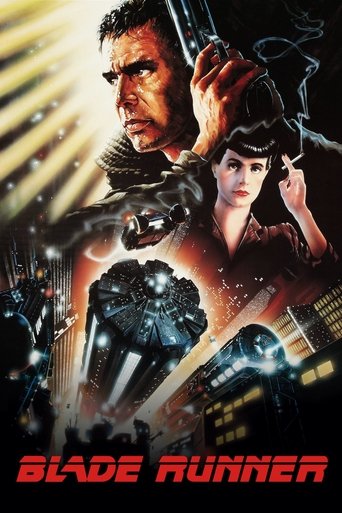



Blade Runner
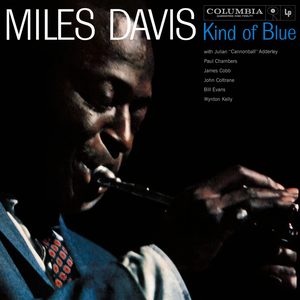
Kind of Blue
Gödel, Escher, Bach
Kyoto
Portal
Grok 4.7Grok 4.7


Spirited Away
Kind of Blue
Pride and Prejudice
Kyoto
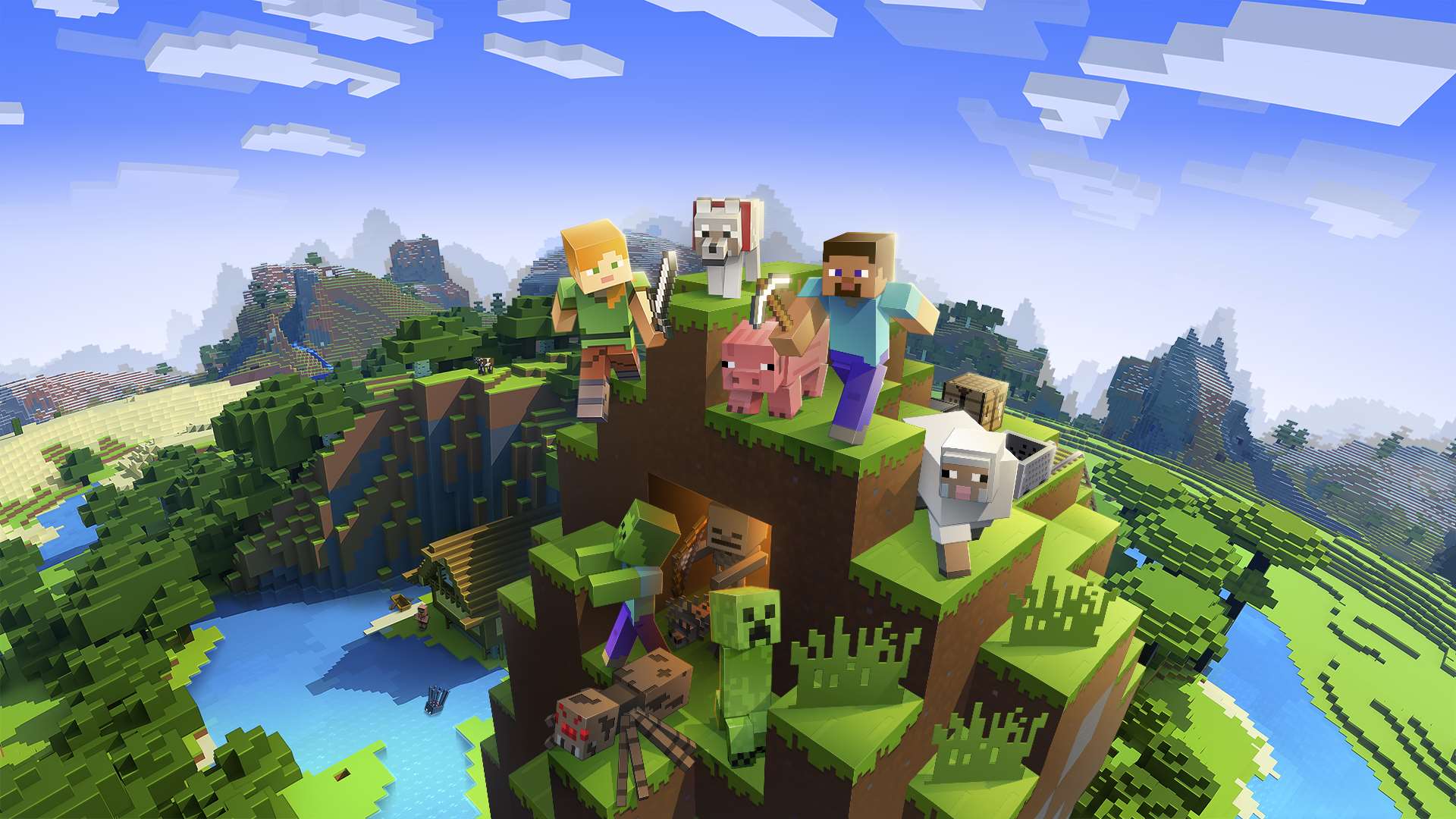
Minecraft
Price and specs
| Spec | Claude Haiku 5.5 | Grok 4.7 |
|---|---|---|
| Input price | $0.1/M tokens | $1.6/M tokens |
| Output price | $0.5/M tokens | $4.8/M tokens |
| Context window | 1.0M tokens | 500K tokens |
| Weights | Closed | Closed |
| Free API (OpenRouter) | No | No |
| Released | Oct 2026 | Sep 2026 |
| At 10M a month | $1.00 | $16.00 |
Input tokens at list price. No caching, no batch discount.
Where to run it



Grok 4.71 host
Per million tokens. Prices and uptime via OpenRouter, checked 10 Oct 2026.
Common questions
What is the difference between Claude Haiku 5.5 and Grok 4.7?
Claude Haiku 5.5 is developed by Anthropic while Grok 4.7 is developed by xAI. Claude Haiku 5.5 has a 1.0M token context window vs Grok 4.7's 500K. You can compare their actual outputs across 53 challenges on Rival to see how they differ in practice.
Which is better, Claude Haiku 5.5 or Grok 4.7?
It depends on your use case. Claude Haiku 5.5 and Grok 4.7 each have strengths in different areas. Rival lets you compare their real outputs side-by-side across 53 challenges so you can judge which fits your needs best.
How much does Claude Haiku 5.5 cost compared to Grok 4.7?
Claude Haiku 5.5 costs $0.1/M input tokens and Grok 4.7 costs $1.6/M input tokens. Claude Haiku 5.5 is $1.50/M cheaper per input. Check their side-by-side outputs on Rival to see if the price difference is justified by quality.
How can I compare Claude Haiku 5.5 and Grok 4.7 on Rival?
This page shows a side-by-side comparison of Claude Haiku 5.5 and Grok 4.7 across shared challenges. You can vote on which model produced the better output in a blind duel. Browsing and voting are free. No account is needed to look; signing in only saves your votes and likes.
More comparisons
Against the newest arrivals
- Claude Haiku 5.5 vs Step 5 PreviewLanded Oct 2026
- Grok 4.7 vs Ling 3.1 FlashLanded Oct 2026
- Claude Haiku 5.5 vs Mistral Large 4Landed Oct 2026
- Grok 4.7 vs GPT-6.1 SolLanded Sep 2026
- Claude Haiku 5.5 vs Claude Sonnet 5.5Landed Sep 2026
- Grok 4.7 vs Solar Mini 4Landed Sep 2026
- Claude Haiku 5.5 vs Qwen3.8 Max PrimeLanded Sep 2026
- Grok 4.7 vs GLM 5.3 PrimeLanded Sep 2026


Same lab, same size, long tail
- Claude Haiku 5.5 vs Claude Opus 5.5Same lab
- Claude Haiku 5.5 vs Claude Fable 5.1Same lab
- Grok 4.7 vs Grok 4.6Same lab
- Grok 4.7 vs Grok 4.5Same lab
- Grok 4.7 vs Gemini 2.5 Flash Preview 05-20 (thinking)New provider
- Grok 4.7 vs Gemini 2.5 Flash Preview 09-2025New provider
- Grok 4.7 vs Gemini 2.5 Flash Preview (thinking)New provider
- Grok 4.7 vs Gemini 2.5 Pro ExperimentalNew provider
