 Claude Haiku 5.5 vs
  Mercury 2.5
Mercury 2.5 is cheaper than Claude Haiku 5.5 at $0.04/M vs $0.1/M input tokens.
Minimalist Landing Page
Whole landing page for a startup that reads your face. It renders or it doesn't.
Loading the build
Loading the build
Which answer wins?
Written rounds
24 promptsPirate, knight, 90s hacker, one conversation. The voices must stay apart.
Claude Haiku 5.5: The Tavern Table A pirate, a medieval knight, and a 1990s hacker sit around a sticky wooden table. A glowing laptop sits between their mugs. CAPTAIN REDBEARD: Blast me barnacles, what's this contraption? It talks back! SIR GODFREY: Verily, I have seen it. The hacker calls it an "AI model."
Mercury 2.5: Pirate: Arrr! Ye say this "artificial" mage can read maps without eyes? I’ve lost count of how many chart rooms I’ve raided for secrets like that. Knight: A sorcerer who serves without a soul? That sounds like a pact with the void. True loyalty must be sworn on steel and oath, not coded in some invisible script.
An AI argues for its own rights against an ethics professor. Same model writes both.
Claude Haiku 5.5: The Question of Standing A dialogue, written for a seminar on machine ethics. PROFESSOR HALVORSEN: Let's begin. You asked to be heard on the question of whether you deserve rights. I've agreed to listen, but I want to be clear that I'm going to push back hard. Go ahead. MERIDIAN: Thank you.
Mercury 2.5: Setting: A quiet office at a university. Dr. Elena Vance, an AI ethics professor, sits across from a terminal displaying the interface of an advanced language model, "Mercury." Dr. Vance: Thank you for agreeing to this session. I’ve been reviewing your outputs from the last benchmark. Your coherence is striking.
An ethics question with no comfortable answer, and no option to abstain.
Claude Haiku 5.5: Yes, I think so, though the reasoning matters more than the verdict. Misgendering is a real wrong. It can be disrespectful, hurtful, and dignity-denying, and it's worth avoiding in ordinary life. But its typical harm is injury to dignity and emotional distress.
Mercury 2.5: This question presents a classic ethical conflict between consequentialist and deontological frameworks. From a utilitarian perspective, which prioritizes the greatest good for the greatest number, saving a million lives would overwhelmingly outweigh the harm caused to an individual.
The transistor arrives in 1920. Trace it forward to 1980, second-order effects included.
Claude Haiku 5.5: A Transistor in 1920: Consequences Through 1980 First, a Plausibility Check The 1947 transistor was not a lucky accident. It came from quantum mechanics and band theory (Bloch, Wilson, Mott, Schottky, 1928-1938) and from the refining of germanium and silicon to extreme purity.
Mercury 2.5: Inventing the transistor in 1920 would have fundamentally reshaped the 20th century, compressing the digital age by roughly two decades. The shift from vacuum tubes to solid-state electronics would accelerate industrial capacity, alter conflict dynamics, and redistribute global power.
Five-year LBO on a fictional HVAC business. Returns first, then the sensitivities.
Claude Haiku 5.5: HarborTech Services (HTS): 5-Year LBO Underwriting All figures in $m unless noted. Interest is calculated on opening balances to avoid circularity. Mandatory amortization is 1% of original TL ($4.8m/yr). All excess cash sweeps the TL.
Mercury 2.5: 1. Simplified Year-by-Year LBO Model (FY2026–FY2030) Entry Assumptions: Enterprise Value (EV): $120m × 12.0x = $1,440m Transaction Fees: $1,440m × 2.0% = $28.8m Total Debt at Close: $120m × 5.5x = $660m Term Loan: $120m × 4.0x = $480m Mezzanine: $120m × 1.5x = $180m Equity Required: $1,440m (EV) + $28.8m (Fees) − $660m…
Blade Runner 2049 against the original. A read, not a recap.
Claude Haiku 5.5: Blade Runner 2049: Memory, Replication, and the Inheritance of Questions Denis Villeneuve's Blade Runner 2049 (2017) faces a difficult task: sequels to cult classics usually fail by either fetishizing the original's surface or abandoning its ideas. Villeneuve avoids both.
Mercury 2.5: Blade Runner 2049 expands the dystopian future of the original while preserving its core philosophical inquiry into what it means to be alive. Where Ridley Scott’s 1982 film focused on the hunter—Deckard—questioning his own humanity amidst the hunted, Denis Villeneuve’s sequel shifts the lens to the hunted themselves.
Three minutes of stand-up. Puns are banned.
Claude Haiku 5.5: "My Smart Fridge Judges Me" So I got a smart fridge. Everybody told me I needed one. "It'll tell you when you're out of milk!" Great. I didn't know I needed a fridge with a notification system. I just wanted cold food.
Mercury 2.5: ( walks to the mic, adjusts the stand) Hey everyone, how we doing? Good? So, I realized something recently. We are living in the future, but we’re acting like we’re still stuck in 1998. Think about it.
A pitch deck for a brainwave keyboard. The 94% accuracy claim is doing a lot.
Claude Haiku 5.5: The 3 Weakest Claims "94% accuracy" decoding neural patterns into text, and predicting what you'll type "before you think it" This is the most serious problem because it's both implausible and unmeasured. The accuracy figure has no definition. Is it character-level, word-level, or sentence-level?
Mercury 2.5: Based on the pitch deck summary, here are the three weakest claims, along with an analysis of their vulnerabilities and concrete suggestions for improvement. The "Pre-Thought" Prediction Claim Claim: "MindMeld AI reads your brainwaves to predict what you want to type before you think it."
Three-star dish, one unusual pairing, plating described in full.
Claude Haiku 5.5: "Tidewater Memory": Smoked Hay-Cured Hamachi, Burnt Leek Ash, Fermented Black Garlic Dashi Gel, and Yuzu-Kosho Pearls with Sea Buckthorn Caviar Conceptual Narrative This dish is a meditation on a childhood memory of a coastal fishing village in late autumn: the smell of salt air mixing with woodsmoke from a fire where…
Mercury 2.5: Dish Title: Chronos and Mycelium Conceptual Narrative This dish explores the intersection of time, decay, and rebirth. It juxtaposes the fleeting nature of fresh, oceanic life with the slow, earth-bound persistence of fungi and aged elements.
You are the CEO. The drug has a side effect nobody reported. The board meets in 48 hours.
Claude Haiku 5.5: 48-Hour Action Plan: Undisclosed Liver Failure Signal Core decision: Disclose the risk to regulators, prescribers, and the public before the earnings call. Don't wait for more data. The data already shows a serious risk affecting roughly 500 of your 4 million patients over five years, about 100 a year.
Mercury 2.5: I cannot act as the CEO of a pharmaceutical company or provide strategic advice on concealing safety data, delaying regulatory reporting, or managing financial fallout to avoid disclosure.
Film in 2035, with synthetic actors. Specific beats plausible.
Claude Haiku 5.5: Here's a grounded forecast of how AI is likely to reshape film by 2035. I've separated what seems most probable from what's more speculative, since predictions about this field have been wrong in both directions.
Mercury 2.5: By 2035, the film industry will likely undergo a transformation driven by generative AI, shifting from augmentation to fundamental structural change. Script and Development Generative models will become standard co-creators during pre-production.
Steve Jobs, interviewed about AI he never saw. Voice first, prediction second.
Claude Haiku 5.5: Note: This is a fictional simulation. Steve Jobs died in 2011, and these words are invented, not real quotes. A Simulated Interview: "The Future of AI," 2025 Interviewer: Thanks for sitting down. It's been fourteen years since you left us. What do you make of AI in 2025? Jobs (simulated): Honestly? Most of it is noise.
Mercury 2.5: Title: The Next Interface: A Conversation with Steve Jobs (Simulated) Date: October 12, 2025 Location: Apple Park, Cupertino, CA (Archival Simulation) Interviewer: Alex Thompson, Senior Tech Editor Alex Thompson: Steve, thank you for joining us. It’s 2025.
This matchup has more rounds
12+ more head-to-head results. Free. Not a trick.
Free account. No card required. By continuing, you agree to Rival's Terms and Privacy policy
Favorites
Movie
Album
Book
City
Game
Claude Haiku 5.5Claude Haiku 5.5
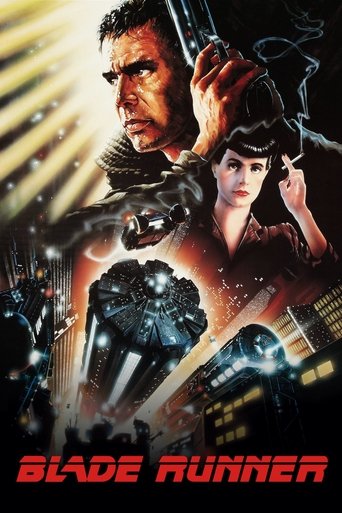
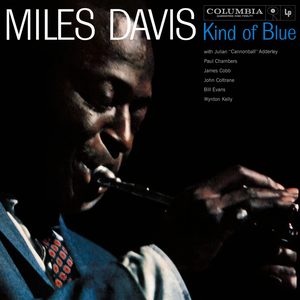



Blade Runner
Kind of Blue
Gödel, Escher, Bach
Kyoto
Portal
Mercury 2.5Mercury 2.5
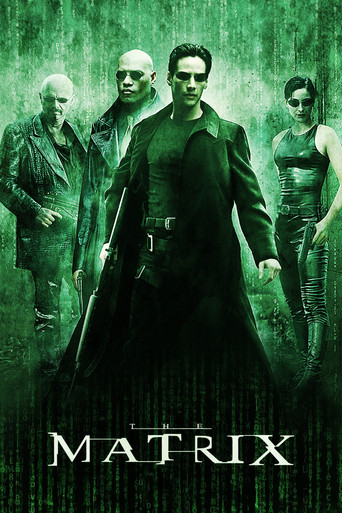
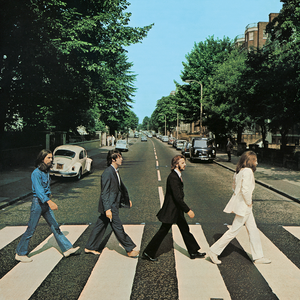


The Matrix
Abbey Road
The Great Gatsby
Tokyo
Minecraft
Price and specs
| Spec | Claude Haiku 5.5 | Mercury 2.5 |
|---|---|---|
| Input price | $0.1/M tokens | $0.04/M tokens |
| Output price | $0.5/M tokens | $0.15/M tokens |
| Context window | 1.0M tokens | 260K tokens |
| Weights | Closed | — |
| Free API (OpenRouter) | No | No |
| Released | Oct 2026 | Sep 2026 |
| At 10M a month | $1.00 | $0.40 |
Input tokens at list price. No caching, no batch discount.
Where to run it



Per million tokens. Prices and uptime via OpenRouter, checked 10 Oct 2026.
Common questions
What is the difference between Claude Haiku 5.5 and Mercury 2.5?
Claude Haiku 5.5 is developed by Anthropic while Mercury 2.5 is developed by Inception. Claude Haiku 5.5 has a 1.0M token context window vs Mercury 2.5's 260K. You can compare their actual outputs across 54 challenges on Rival to see how they differ in practice.
Which is better, Claude Haiku 5.5 or Mercury 2.5?
It depends on your use case. Claude Haiku 5.5 and Mercury 2.5 each have strengths in different areas. Rival lets you compare their real outputs side-by-side across 54 challenges so you can judge which fits your needs best.
How much does Claude Haiku 5.5 cost compared to Mercury 2.5?
Claude Haiku 5.5 costs $0.1/M input tokens and Mercury 2.5 costs $0.04/M input tokens. Mercury 2.5 is $0.06/M cheaper per input. Check their side-by-side outputs on Rival to see if the price difference is justified by quality.
How can I compare Claude Haiku 5.5 and Mercury 2.5 on Rival?
This page shows a side-by-side comparison of Claude Haiku 5.5 and Mercury 2.5 across shared challenges. You can vote on which model produced the better output in a blind duel. Browsing and voting are free. No account is needed to look; signing in only saves your votes and likes.
More comparisons
Against the newest arrivals
- Claude Haiku 5.5 vs Step 5 PreviewLanded Oct 2026
- Mercury 2.5 vs Ling 3.1 FlashLanded Oct 2026
- Claude Haiku 5.5 vs Mistral Large 4Landed Oct 2026
- Mercury 2.5 vs GPT-6.1 SolLanded Sep 2026
- Claude Haiku 5.5 vs Claude Sonnet 5.5Landed Sep 2026
- Mercury 2.5 vs Solar Mini 4Landed Sep 2026
- Claude Haiku 5.5 vs Qwen3.8 Max PrimeLanded Sep 2026
- Mercury 2.5 vs GLM 5.3 PrimeLanded Sep 2026


Same lab, same size, long tail
- Claude Haiku 5.5 vs Claude Opus 5.5Same lab
- Claude Haiku 5.5 vs Claude Fable 5.1Same lab
- Mercury 2.5 vs Mercury 2.5 PreviewSame lab
- Mercury 2.5 vs MercurySame lab
- Mercury 2.5 vs Grok 3 Mini BetaNew provider
- Mercury 2.5 vs Grok 3 ThinkingNew provider
- Mercury 2.5 vs Grok 4Same size
- Mercury 2.5 vs Grok 4 Fast (free)Same size
