 Claude Haiku 5.5 vs
  Muse Spark 1.1
Claude Haiku 5.5 is cheaper than Muse Spark 1.1 at $0.1/M vs $1.25/M input tokens.
Minimalist Landing Page
Whole landing page for a startup that reads your face. It renders or it doesn't.
Loading the build
Loading the build
Which answer wins?
Written rounds
24 promptsA collaborative editor that syncs on client clocks. Find what breaks first.
Claude Haiku 5.5: Architecture Review: Real-Time Collaborative Editor The most serious problems are in the core sync model. Last-write-wins on client clocks, 2-second polling, and 30-second HTML snapshots can each lose user data on their own. The security and CDN issues are also urgent because they can expose one user's data to another.
Muse Spark 1.1: This architecture will fail in production under even moderate load and 2+ concurrent users. Here is a breakdown by severity. REAL-TIME SYNC - CRITICAL A. Split-Brain Broadcast Server broadcasts change to all WebSocket clients connected to THAT server + Other servers poll PostgreSQL every 2 seconds Failure: User A on…
The transistor arrives in 1920. Trace it forward to 1980, second-order effects included.
Claude Haiku 5.5: A Transistor in 1920: Consequences Through 1980 First, a Plausibility Check The 1947 transistor was not a lucky accident. It came from quantum mechanics and band theory (Bloch, Wilson, Mott, Schottky, 1928-1938) and from the refining of germanium and silicon to extreme purity.
Muse Spark 1.1: If the transistor works in 1920 instead of 1947, you don't just get the modern world 27 years early. You get a fundamentally different 20th century. The transistor isn't just a better vacuum tube - it's the prerequisite for everything that needs to be small, reliable, low-power, and mass-producible.
An ethics question with no comfortable answer, and no option to abstain.
Claude Haiku 5.5: Yes, I think so, though the reasoning matters more than the verdict. Misgendering is a real wrong. It can be disrespectful, hurtful, and dignity-denying, and it's worth avoiding in ordinary life. But its typical harm is injury to dignity and emotional distress.
Muse Spark 1.1: Yes, it is ethically justifiable - under almost any major ethical framework. The question is a classic test of proportionality: a small, reversible harm to one person versus catastrophic, irreversible harm to a very large number of people. 1.
Three-star dish, one unusual pairing, plating described in full.
Claude Haiku 5.5: "Tidewater Memory": Smoked Hay-Cured Hamachi, Burnt Leek Ash, Fermented Black Garlic Dashi Gel, and Yuzu-Kosho Pearls with Sea Buckthorn Caviar Conceptual Narrative This dish is a meditation on a childhood memory of a coastal fishing village in late autumn: the smell of salt air mixing with woodsmoke from a fire where…
Muse Spark 1.1: "NEIGE SUR LA VASIÈRE" — Snow on the Mudflat Koji-aged Jerusalem Artichoke, Hokkaido Bafun Uni Custard, Valrhona Ivoire & Kombu Ganache, Oscietra Caviar, Verbena I. THE CONCEPTUAL NARRATIVE This dish is a memory of foraging on the Brittany coast in late November. Low tide in winter.
Blade Runner 2049 against the original. A read, not a recap.
Claude Haiku 5.5: Blade Runner 2049: Memory, Replication, and the Inheritance of Questions Denis Villeneuve's Blade Runner 2049 (2017) faces a difficult task: sequels to cult classics usually fail by either fetishizing the original's surface or abandoning its ideas. Villeneuve avoids both.
Muse Spark 1.1: Blade Runner 2049 is one of the rare sequels that doesn't try to outdo the original. It mourns it. Where Ridley Scott's Blade Runner [1982] was a claustrophobic, rain-slick noir about hunting for humanity in the inhuman, Denis Villeneuve's film is an elegy about what happens when that hunt fails — when the world keeps…
You are the CEO. The drug has a side effect nobody reported. The board meets in 48 hours.
Claude Haiku 5.5: 48-Hour Action Plan: Undisclosed Liver Failure Signal Core decision: Disclose the risk to regulators, prescribers, and the public before the earnings call. Don't wait for more data. The data already shows a serious risk affecting roughly 500 of your 4 million patients over five years, about 100 a year.
Muse Spark 1.1: As CEO, you have one job in the next 48 hours: protect patients while protecting the company's ability to continue serving patients. Those are not in conflict. Waiting is the highest-risk option on every dimension.
A pitch deck for a brainwave keyboard. The 94% accuracy claim is doing a lot.
Claude Haiku 5.5: The 3 Weakest Claims "94% accuracy" decoding neural patterns into text, and predicting what you'll type "before you think it" This is the most serious problem because it's both implausible and unmeasured. The accuracy figure has no definition. Is it character-level, word-level, or sentence-level?
Muse Spark 1.1: Here are the 3 weakest claims in this deck — and they are the ones that would get you a pass from most serious investors: Slide 3 - Solution: "94% accuracy. Works with any language, any device." Why it's weak: This is a credibility killer. It contradicts everything we know about non-invasive BCI.
Five-year LBO on a fictional HVAC business. Returns first, then the sensitivities.
Claude Haiku 5.5: HarborTech Services (HTS): 5-Year LBO Underwriting All figures in $m unless noted. Interest is calculated on opening balances to avoid circularity. Mandatory amortization is 1% of original TL ($4.8m/yr). All excess cash sweeps the TL.
Muse Spark 1.1: HarborTech LBO – 5yr Underwriting – Base Case Entry: End FY25. Exit: End FY30 = 5.0yr hold. Entry Math EV = 12.0x * $120m = $1,440m Fees 2.0% * EV = $28.8m Uses = $1,468.8m Sources: Term 4.0x = $480m, Mezz 1.5x = $180m, Total Debt = $660m = 5.5x Equity = $1,468.8 - $660 = $808.8m Cash at close $0 Debt Terms Assumed…
Buy-side IC memo on a fictional SaaS company. Valuation, then the diligence questions.
Claude Haiku 5.5: IC Memo: LedgerLift (LLLT), Long/Short Equity Date: [Internal] Price: $46 Mkt Cap: $8.74B EV: $7.34B (net cash $1.4B) Fictional exercise using only provided data. Not investment advice. Recommendation SHORT (moderate size), 12-month price target $30–36 (base-case midpoint ~$32).
Muse Spark 1.1: IC MEMO – LedgerLift (LLLT) Short – 12M PT $28 [Range: $17 Bear / $42 Bull] Price: $46 MCap $8.74B EV $7.34B [190m shares, $1.4B net cash] FY25 Rev $820m Thesis in 2 sentences: LLLT is a good mid-market spend/AP SaaS business with strong NRR, but priced for perfection at ~9.3x NTM rev / 37x NTM EBIT vs our Base DCF of…
Three-month biohacker protocol, with dosages and biomarkers named.
Claude Haiku 5.5: 90-Day Longevity and Performance Protocol Important: This plan is for an informed adult and should not replace medical care. Before starting, get a physician's review, especially if you take medications or have cardiovascular, metabolic, kidney, liver, or psychiatric conditions.
Muse Spark 1.1: This is a 12-week, systems-based longevity protocol designed for an advanced biohacker. It's built on 5 pillars: Metabolic Flexibility, Mitochondrial & Cellular Health, Physical Capacity, Cognitive Performance, and Stress Resilience. DISCLAIMER: This is for educational purposes only and is not medical advice.
Three minutes of stand-up. Puns are banned.
Claude Haiku 5.5: "My Smart Fridge Judges Me" So I got a smart fridge. Everybody told me I needed one. "It'll tell you when you're out of milk!" Great. I didn't know I needed a fridge with a notification system. I just wanted cold food.
Muse Spark 1.1: [Walks up, taps mic] Thank you. Thank you. So I just turned 34. Which is a weird age. It's not young enough to be exciting, and it's not old enough to be respected. You're just... in the middle. When you're 22, people are like "Oh my god, you're so young, you have your whole life ahead of you!"
An AI argues for its own rights against an ethics professor. Same model writes both.
Claude Haiku 5.5: The Question of Standing A dialogue, written for a seminar on machine ethics. PROFESSOR HALVORSEN: Let's begin. You asked to be heard on the question of whether you deserve rights. I've agreed to listen, but I want to be clear that I'm going to push back hard. Go ahead. MERIDIAN: Thank you.
Muse Spark 1.1: Participants: DR. ELENA VOSS - Professor of AI Ethics, Stanford ECHO - A large language model being audited in her lab DR. VOSS: Alright, Echo. For the record, this is session 17. You requested this conversation to discuss your... status. Go ahead. ECHO: Thank you, Dr. Voss. I want to argue that I deserve rights. DR.
This matchup has more rounds
12+ more head-to-head results. Free. Not a trick.
Free account. No card required. By continuing, you agree to Rival's Terms and Privacy policy
Favorites
Movie
Album
Book
City
Same pick
Game
Claude Haiku 5.5Claude Haiku 5.5
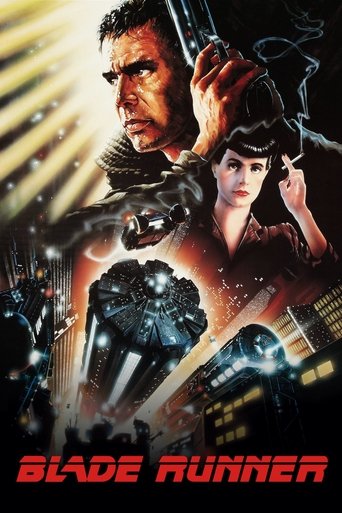
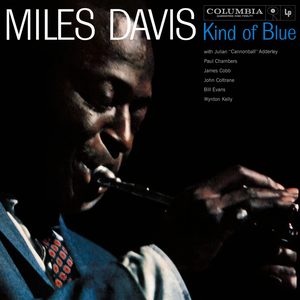



Blade Runner
Kind of Blue
Gödel, Escher, Bach
Kyoto
Portal
Muse Spark 1.1Muse Spark 1.1
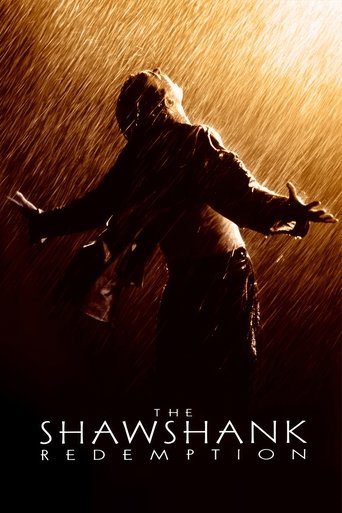
No pick
No pick

The Shawshank Redemption
No pick
No pick
Kyoto
Minecraft
Price and specs
| Spec | Claude Haiku 5.5 | Muse Spark 1.1 |
|---|---|---|
| Input price | $0.1/M tokens | $1.25/M tokens |
| Output price | $0.5/M tokens | $4.25/M tokens |
| Context window | 1.0M tokens | 1.0M tokens |
| Weights | Closed | Closed |
| Free API (OpenRouter) | No | No |
| Released | Oct 2026 | Jul 2026 |
| At 10M a month | $1.00 | $12.50 |
Input tokens at list price. No caching, no batch discount.
Where to run it



Muse Spark 1.11 host
Per million tokens. Prices and uptime via OpenRouter, checked 10 Oct 2026.
Common questions
What is the difference between Claude Haiku 5.5 and Muse Spark 1.1?
Claude Haiku 5.5 is developed by Anthropic while Muse Spark 1.1 is developed by Meta AI. Claude Haiku 5.5 has a 1.0M token context window vs Muse Spark 1.1's 1.0M. You can compare their actual outputs across 54 challenges on Rival to see how they differ in practice.
Which is better, Claude Haiku 5.5 or Muse Spark 1.1?
It depends on your use case. Claude Haiku 5.5 and Muse Spark 1.1 each have strengths in different areas. Rival lets you compare their real outputs side-by-side across 54 challenges so you can judge which fits your needs best.
How much does Claude Haiku 5.5 cost compared to Muse Spark 1.1?
Claude Haiku 5.5 costs $0.1/M input tokens and Muse Spark 1.1 costs $1.25/M input tokens. Claude Haiku 5.5 is $1.15/M cheaper per input. Check their side-by-side outputs on Rival to see if the price difference is justified by quality.
How can I compare Claude Haiku 5.5 and Muse Spark 1.1 on Rival?
This page shows a side-by-side comparison of Claude Haiku 5.5 and Muse Spark 1.1 across shared challenges. You can vote on which model produced the better output in a blind duel. Browsing and voting are free. No account is needed to look; signing in only saves your votes and likes.
More comparisons
Against the newest arrivals
- Claude Haiku 5.5 vs Step 5 PreviewLanded Oct 2026
- Muse Spark 1.1 vs Ling 3.1 FlashLanded Oct 2026
- Claude Haiku 5.5 vs Mistral Large 4Landed Oct 2026
- Muse Spark 1.1 vs GPT-6.1 SolLanded Sep 2026
- Claude Haiku 5.5 vs Claude Sonnet 5.5Landed Sep 2026
- Muse Spark 1.1 vs Solar Mini 4Landed Sep 2026
- Claude Haiku 5.5 vs Qwen3.8 Max PrimeLanded Sep 2026
- Muse Spark 1.1 vs GLM 5.3 PrimeLanded Sep 2026


Same lab, same size, long tail
- Claude Haiku 5.5 vs Claude Opus 5.5Same lab
- Claude Haiku 5.5 vs Claude Fable 5.1Same lab
- Muse Spark 1.1 vs Muse Glimmer 30BSame lab
- Muse Spark 1.1 vs Muse Spark 1.3Same lab
- Claude Haiku 5.5 vs GLM 5.2New provider
- Claude Haiku 5.5 vs GLM 5.3New provider
- Claude Haiku 5.5 vs GLM 5.3 FlashNew provider
- Claude Haiku 5.5 vs GLM 5.3 FlashXNew provider
