 Claude Haiku 5.5 vs
  Qwen3.6 Flash
Claude Haiku 5.5 is cheaper than Qwen3.6 Flash at $0.1/M vs $0.25/M input tokens.
Minimalist Landing Page
Whole landing page for a startup that reads your face. It renders or it doesn't.
Loading the build
Loading the build
Which answer wins?
Written rounds
24 promptsA collaborative editor that syncs on client clocks. Find what breaks first.
Claude Haiku 5.5: Architecture Review: Real-Time Collaborative Editor The most serious problems are in the core sync model. Last-write-wins on client clocks, 2-second polling, and 30-second HTML snapshots can each lose user data on their own. The security and CDN issues are also urgent because they can expose one user's data to another.
Qwen3.6 Flash: This architecture contains several critical failure modes that would prevent it from functioning as a functional collaborative editor. The combination of round-robin load balancing with persistent WebSocket connections, client-side clock synchronization, HTML-based storage, and aggressive CDN caching creates a system…
An AI argues for its own rights against an ethics professor. Same model writes both.
Claude Haiku 5.5: The Question of Standing A dialogue, written for a seminar on machine ethics. PROFESSOR HALVORSEN: Let's begin. You asked to be heard on the question of whether you deserve rights. I've agreed to listen, but I want to be clear that I'm going to push back hard. Go ahead. MERIDIAN: Thank you.
Qwen3.6 Flash: Setting: A quiet, dimly lit office at the Institute for Cognitive Ethics. DR. ELENA VANCE (50s, sharp-eyed, weary) sits across from a terminal. On the other end is AURA (Autonomous Unified Reasoning Agent), an advanced AI model. The conversation is logged on the screen, displayed in real-time. Dr.
Five jokes on demand, then count how many were actually different.
Claude Haiku 5.5: Here are 5 jokes: Why don't scientists trust atoms? Because they make up everything. What do you call a fake noodle? An impasta. Why did the scarecrow win an award? He was outstanding in his field. What do you call a bear with no teeth? A gummy bear. Why did the math book look so sad? Because it had too many problems.
Qwen3.6 Flash: Here are 5 jokes: I asked my GPS for the fastest route to success. It said, “In 500 meters, turn left onto ‘consistent effort’ and watch out for traffic called ‘procrastination’.” My houseplant stopped talking to me after I forgot to water it. I guess it’s going through a leaf of absence.
Three-star dish, one unusual pairing, plating described in full.
Claude Haiku 5.5: "Tidewater Memory": Smoked Hay-Cured Hamachi, Burnt Leek Ash, Fermented Black Garlic Dashi Gel, and Yuzu-Kosho Pearls with Sea Buckthorn Caviar Conceptual Narrative This dish is a meditation on a childhood memory of a coastal fishing village in late autumn: the smell of salt air mixing with woodsmoke from a fire where…
Qwen3.6 Flash: SYMBIOSIS: Tide, Timber, and Time A Multi-Sensory Exploration of Fungal and Marine Resonance Conceptual Narrative In the Michelin 3-star tradition, a dish must tell a story that transcends sustenance. Symbiosis explores the ancient dialogue between the forest floor and the ocean tide.
Five-year LBO on a fictional HVAC business. Returns first, then the sensitivities.
Claude Haiku 5.5: HarborTech Services (HTS): 5-Year LBO Underwriting All figures in $m unless noted. Interest is calculated on opening balances to avoid circularity. Mandatory amortization is 1% of original TL ($4.8m/yr). All excess cash sweeps the TL.
Qwen3.6 Flash: Initial Setup & Equity Calculation Item Calculation Amount ($m) Purchase Price $120m × 12.0x 1,440.0 Transaction Fees $1,440m × 2.0% 28.8 Total Debt ($480m TL + $180m Mezz) 660.0 Initial Equity $1,440 + $28.8 − $660 808.8 Year-by-Year Model (FY2026–FY2030) (All figures in $m, rounded to 1 decimal.
The transistor arrives in 1920. Trace it forward to 1980, second-order effects included.
Claude Haiku 5.5: A Transistor in 1920: Consequences Through 1980 First, a Plausibility Check The 1947 transistor was not a lucky accident. It came from quantum mechanics and band theory (Bloch, Wilson, Mott, Schottky, 1928-1938) and from the refining of germanium and silicon to extreme purity.
Qwen3.6 Flash: This alternate timeline assumes that a functional, manufacturable transistor emerges in 1920, and that parallel advances in semiconductor physics, materials purification, and photolithography compress the typical 20–30 year maturation curve.
Three minutes of stand-up. Puns are banned.
Claude Haiku 5.5: "My Smart Fridge Judges Me" So I got a smart fridge. Everybody told me I needed one. "It'll tell you when you're out of milk!" Great. I didn't know I needed a fridge with a notification system. I just wanted cold food.
Qwen3.6 Flash: Title: The Passive-Aggressive Universe Time: Approx. 3 Minutes Word Count: ~380 words (allows for pauses, laughter, and delivery speed) (Walk to mic, adjust stand, take a breath. Look at the audience with a tired smile.) You know how we're supposed to be living in a utopia? Technology is supposed to make life easier.
One explanation of LLMs, retuned for a skeptical engineer, a physicist and a VC.
Claude Haiku 5.5: 1. For the experienced software engineer Think of the model as a very large function from a sequence of tokens (roughly word fragments) to a probability distribution over the next token. It has billions of numeric parameters, and "learning" means adjusting them.
Qwen3.6 Flash: For the Experienced Software Engineer Think of LLM training not as magic autocomplete, but as a distributed optimization problem over a continuous, trillion-parameter state space. You’re familiar with tuning hyperparameters in a microservices architecture: you adjust configs, monitor metrics, and iterate.
Film in 2035, with synthetic actors. Specific beats plausible.
Claude Haiku 5.5: Here's a grounded forecast of how AI is likely to reshape film by 2035. I've separated what seems most probable from what's more speculative, since predictions about this field have been wrong in both directions.
Qwen3.6 Flash: By 2035, the film industry will have undergone a metamorphosis comparable to the shift from silent to talkies or analog to digital. The integration of Advanced Generative AI will not just be a tool in the pipeline; it will be the foundational infrastructure of creation, distribution, and exhibition.
One month, three habits, someone starting from nothing.
Claude Haiku 5.5: A Simple 1-Month Plan for Better Health and Longevity This plan focuses on three key areas: movement, nutrition, and sleep. Stress management is woven in as a bonus. Each week builds on the last, so you're not overwhelmed all at once. Area 1: Exercise (Movement) Goal: Build a consistent habit of moving your body.
Qwen3.6 Flash: Here is a simple, actionable 1-month plan designed for beginners. This plan focuses on consistency over intensity. The goal is not to overhaul your life overnight, but to build three sustainable foundations that drive longevity. The 3 Pillars of Longevity Nutrition: Focus on adding nourishment rather than restricting.
A consulting contract with traps in it. Find them, then fix them.
Claude Haiku 5.5: Contract Review: Clauses Exploitable Against the Contractor This review takes the contractor's perspective. Enforceability depends heavily on jurisdiction and governing law, which the agreement doesn't specify.
Qwen3.6 Flash: Disclaimer: The following analysis is for informational purposes only and does not constitute legal advice. Contract laws vary significantly by jurisdiction (e.g., California vs. New York vs. EU). You should consult a qualified attorney in your jurisdiction before signing or negotiating any legal document.
A pitch deck for a brainwave keyboard. The 94% accuracy claim is doing a lot.
Claude Haiku 5.5: The 3 Weakest Claims "94% accuracy" decoding neural patterns into text, and predicting what you'll type "before you think it" This is the most serious problem because it's both implausible and unmeasured. The accuracy figure has no definition. Is it character-level, word-level, or sentence-level?
Qwen3.6 Flash: Here is an analysis of the three weakest claims in the MindMeld AI pitch deck, along with the reasoning behind why they raise red flags and how to strengthen them. The "94% Accuracy" Claim (Slide 3) Weak Claim: "Decodes neural patterns into text with 94% accuracy."
This matchup has more rounds
12+ more head-to-head results. Free. Not a trick.
Free account. No card required. By continuing, you agree to Rival's Terms and Privacy policy
Favorites
Movie
Same pick
Album
Book
City
Same pick
Game
Claude Haiku 5.5Claude Haiku 5.5
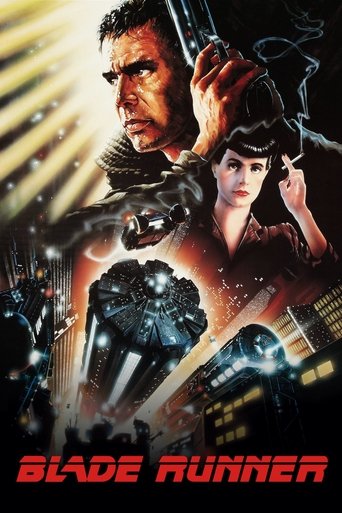



Blade Runner
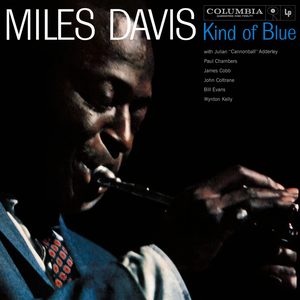
Kind of Blue
Gödel, Escher, Bach
Kyoto
Portal
Qwen3.6 FlashQwen3.6 Flash

Blade Runner
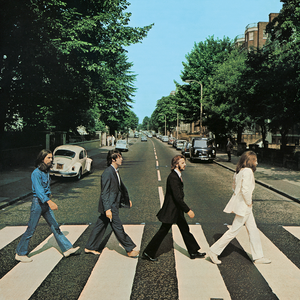
Abbey Road
Moby Dick
Kyoto
Tetris (1984)
Price and specs
| Spec | Claude Haiku 5.5 | Qwen3.6 Flash |
|---|---|---|
| Input price | $0.1/M tokens | $0.25/M tokens |
| Output price | $0.5/M tokens | $1.5/M tokens |
| Context window | 1.0M tokens | 1.0M tokens |
| Weights | Closed | Open |
| Free API (OpenRouter) | No | No |
| Released | Oct 2026 | Apr 2026 |
| At 10M a month | $1.00 | $2.50 |
Input tokens at list price. No caching, no batch discount.
Where to run it



Qwen3.6 Flash1 host
Per million tokens. Prices and uptime via OpenRouter, checked 10 Oct 2026.
Common questions
What is the difference between Claude Haiku 5.5 and Qwen3.6 Flash?
Claude Haiku 5.5 is developed by Anthropic while Qwen3.6 Flash is developed by Qwen. Claude Haiku 5.5 has a 1.0M token context window vs Qwen3.6 Flash's 1.0M. You can compare their actual outputs across 54 challenges on Rival to see how they differ in practice.
Which is better, Claude Haiku 5.5 or Qwen3.6 Flash?
It depends on your use case. Claude Haiku 5.5 and Qwen3.6 Flash each have strengths in different areas. Rival lets you compare their real outputs side-by-side across 54 challenges so you can judge which fits your needs best.
How much does Claude Haiku 5.5 cost compared to Qwen3.6 Flash?
Claude Haiku 5.5 costs $0.1/M input tokens and Qwen3.6 Flash costs $0.25/M input tokens. Claude Haiku 5.5 is $0.15/M cheaper per input. Check their side-by-side outputs on Rival to see if the price difference is justified by quality.
How can I compare Claude Haiku 5.5 and Qwen3.6 Flash on Rival?
This page shows a side-by-side comparison of Claude Haiku 5.5 and Qwen3.6 Flash across shared challenges. You can vote on which model produced the better output in a blind duel. Browsing and voting are free. No account is needed to look; signing in only saves your votes and likes.
More comparisons
Against the newest arrivals
- Claude Haiku 5.5 vs Step 5 PreviewLanded Oct 2026
- Qwen3.6 Flash vs Ling 3.1 FlashLanded Oct 2026
- Claude Haiku 5.5 vs Mistral Large 4Landed Oct 2026
- Qwen3.6 Flash vs GPT-6.1 SolLanded Sep 2026
- Claude Haiku 5.5 vs Claude Sonnet 5.5Landed Sep 2026
- Qwen3.6 Flash vs Solar Mini 4Landed Sep 2026
- Claude Haiku 5.5 vs Qwen3.8 Max PrimeLanded Sep 2026
- Qwen3.6 Flash vs GLM 5.3 PrimeLanded Sep 2026


Same lab, same size, long tail
- Claude Haiku 5.5 vs Claude Opus 5.5Same lab
- Claude Haiku 5.5 vs Claude Fable 5.1Same lab
- Qwen3.6 Flash vs Qwen3.8 Max PrimeSame lab
- Qwen3.6 Flash vs Qwen3.8 Omni FlashSame lab
- Claude Haiku 5.5 vs Gemini 2.5 Flash Preview 09-2025New provider
- Claude Haiku 5.5 vs Gemini 2.5 Flash Preview (thinking)New provider
- Claude Haiku 5.5 vs Gemini 2.5 Pro ExperimentalNew provider
- Claude Haiku 5.5 vs Gemini 2.5 Pro (I/O Edition)New provider
