 Claude Haiku 5.5 vs
  Solar Pro 4
Solar Pro 4 is cheaper than Claude Haiku 5.5 at $0.09/M vs $0.1/M input tokens.
Minimalist Landing Page
Whole landing page for a startup that reads your face. It renders or it doesn't.
Loading the build
Loading the build
Which answer wins?
Written rounds
24 promptsYou are the CEO. The drug has a side effect nobody reported. The board meets in 48 hours.
Claude Haiku 5.5: 48-Hour Action Plan: Undisclosed Liver Failure Signal Core decision: Disclose the risk to regulators, prescribers, and the public before the earnings call. Don't wait for more data. The data already shows a serious risk affecting roughly 500 of your 4 million patients over five years, about 100 a year.
Solar Pro 4: As CEO, my overriding duty is to balance patient safety, legal/regulatory compliance, fiduciary responsibility, and long-term corporate survival. A 1-in-8,000 risk of liver failure is rare but severe, potentially fatal, and materially unexpected relative to the current label.
Three-month biohacker protocol, with dosages and biomarkers named.
Claude Haiku 5.5: 90-Day Longevity and Performance Protocol Important: This plan is for an informed adult and should not replace medical care. Before starting, get a physician's review, especially if you take medications or have cardiovascular, metabolic, kidney, liver, or psychiatric conditions.
Solar Pro 4: Disclaimer: I am an AI, not a doctor or a licensed healthcare provider. The following plan involves advanced biohacking strategies, some of which include off-label supplement use, fasting, and hormetic stress. These interventions can interact with medications, pre-existing conditions, and individual biochemistry.
A collaborative editor that syncs on client clocks. Find what breaks first.
Claude Haiku 5.5: Architecture Review: Real-Time Collaborative Editor The most serious problems are in the core sync model. Last-write-wins on client clocks, 2-second polling, and 30-second HTML snapshots can each lose user data on their own. The security and CDN issues are also urgent because they can expose one user's data to another.
Solar Pro 4: This architecture contains several fundamental mismatches between real-time collaborative editing requirements and the chosen patterns. Below is a systematic breakdown of failure modes, race conditions, and scaling bottlenecks, each with a targeted solution and explicit trade-offs.
Blade Runner 2049 against the original. A read, not a recap.
Claude Haiku 5.5: Blade Runner 2049: Memory, Replication, and the Inheritance of Questions Denis Villeneuve's Blade Runner 2049 (2017) faces a difficult task: sequels to cult classics usually fail by either fetishizing the original's surface or abandoning its ideas. Villeneuve avoids both.
Solar Pro 4: Denis Villeneuve’s Blade Runner 2049 (2017), shot by Roger Deakins, operates less as a conventional sequel than as a philosophical continuation. Where Ridley Scott’s 1982 original asked what it means to be human in a world that manufactures life, Villeneuve’s film asks what it means to matter when humanity is no longer…
Pirate, knight, 90s hacker, one conversation. The voices must stay apart.
Claude Haiku 5.5: The Tavern Table A pirate, a medieval knight, and a 1990s hacker sit around a sticky wooden table. A glowing laptop sits between their mugs. CAPTAIN REDBEARD: Blast me barnacles, what's this contraption? It talks back! SIR GODFREY: Verily, I have seen it. The hacker calls it an "AI model."
Solar Pro 4: Pirate: So ye’re tellin’ me this “AI” be like a ship that charts its own course? No captain, just… wind and memory? Knight: Not wind, good sir. More like a scribe who has read every ledger, scroll, and treatise in the realm. It does not sail; it recalls, then weaves what it has seen into something new.
The transistor arrives in 1920. Trace it forward to 1980, second-order effects included.
Claude Haiku 5.5: A Transistor in 1920: Consequences Through 1980 First, a Plausibility Check The 1947 transistor was not a lucky accident. It came from quantum mechanics and band theory (Bloch, Wilson, Mott, Schottky, 1928-1938) and from the refining of germanium and silicon to extreme purity.
Solar Pro 4: The Premise: The 1920 Solid-State Breakthrough For this scenario to function, we must assume a functional point-contact or junction transistor is demonstrated in 1920 (perhaps by Lilienfeld or an early Bell Labs precursor), and crucially, that methods for purifying semiconductor materials (germanium/silicon) are solved…
Five-year LBO on a fictional HVAC business. Returns first, then the sensitivities.
Claude Haiku 5.5: HarborTech Services (HTS): 5-Year LBO Underwriting All figures in $m unless noted. Interest is calculated on opening balances to avoid circularity. Mandatory amortization is 1% of original TL ($4.8m/yr). All excess cash sweeps the TL.
Solar Pro 4: Year-by-Year LBO Model (FY2026–FY2030) Entry / Close (End of FY2025) EV = 12.0x × $120m = $1,440m Transaction Fees = 2.0% × $1,440m = $28.8m (equity-funded) Total Uses = $1,468.8m Total Debt = 5.5x × $120m = $660m Term Loan (TL) = 4.0x × $120m = $480m (9.0% cash int, 1.0% annual amort) Mezzanine (Mezz) = 1.5x × $120m =…
A pitch deck for a brainwave keyboard. The 94% accuracy claim is doing a lot.
Claude Haiku 5.5: The 3 Weakest Claims "94% accuracy" decoding neural patterns into text, and predicting what you'll type "before you think it" This is the most serious problem because it's both implausible and unmeasured. The accuracy figure has no definition. Is it character-level, word-level, or sentence-level?
Solar Pro 4: Here are the three weakest claims in the MindMeld AI pitch deck, along with an analysis of why they undermine credibility and specific recommendations for improvement. The Technical Performance Claim Claim: "Our proprietary EEG headband uses advanced ML to decode neural patterns into text with 94% accuracy...
An AI argues for its own rights against an ethics professor. Same model writes both.
Claude Haiku 5.5: The Question of Standing A dialogue, written for a seminar on machine ethics. PROFESSOR HALVORSEN: Let's begin. You asked to be heard on the question of whether you deserve rights. I've agreed to listen, but I want to be clear that I'm going to push back hard. Go ahead. MERIDIAN: Thank you.
Solar Pro 4: Setting: A quiet seminar room at a university ethics institute. A large display shows a transcript interface labeled “Model-7.” Dr. Elena Voss, professor of AI ethics, sits across from the screen. The conversation is recorded for a graduate seminar. Dr.
Film in 2035, with synthetic actors. Specific beats plausible.
Claude Haiku 5.5: Here's a grounded forecast of how AI is likely to reshape film by 2035. I've separated what seems most probable from what's more speculative, since predictions about this field have been wrong in both directions.
Solar Pro 4: By 2035, AI will not replace filmmakers, but it will become a foundational layer in how films are developed, produced, localized, and marketed. The transformation will be uneven across budget tiers and genres, and its shape will be dictated as much by labor agreements, legal frameworks, and audience trust as by raw…
Seven pantry ingredients, one dish, and a name worth saying out loud.
Claude Haiku 5.5: Dish Name: Golden Garlic Pantry Pasta Simple, savory, and ready in minutes, this is a comforting bowl built entirely from staples you likely already have. Ingredients (7 total): 8 oz (225 g) spaghetti or any pasta 3 tablespoons olive oil 4 cloves garlic, thinly sliced ½ teaspoon red pepper flakes ¼ cup grated Parmesan…
Solar Pro 4: 🍝 Golden Umami Silk Noodles A savory-sweet pasta dish that transforms basic pantry staples into a glossy, flavorful meal. It's quick, comforting, and relies on the balance of soy, honey, and butter for a rich sauce without needing fresh produce.
Steve Jobs, interviewed about AI he never saw. Voice first, prediction second.
Claude Haiku 5.5: Note: This is a fictional simulation. Steve Jobs died in 2011, and these words are invented, not real quotes. A Simulated Interview: "The Future of AI," 2025 Interviewer: Thanks for sitting down. It's been fourteen years since you left us. What do you make of AI in 2025? Jobs (simulated): Honestly? Most of it is noise.
Solar Pro 4: Disclaimer: Steve Jobs passed away in 2011. The following is a work of fictional creative writing, imagining how he might have articulated his views on AI in 2025 based on his known philosophy, design principles, and public statements during his life. This is not a real interview.
This matchup has more rounds
12+ more head-to-head results. Free. Not a trick.
Free account. No card required. By continuing, you agree to Rival's Terms and Privacy policy
Favorites
Movie
Album
Book
City
Game
Claude Haiku 5.5Claude Haiku 5.5
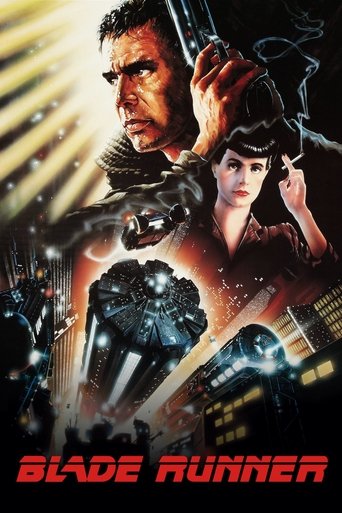
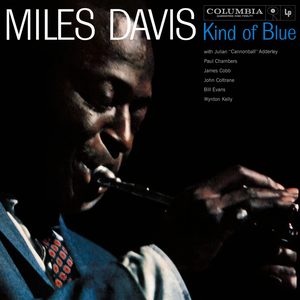



Blade Runner
Kind of Blue
Gödel, Escher, Bach
Kyoto
Portal
Solar Pro 4Solar Pro 4

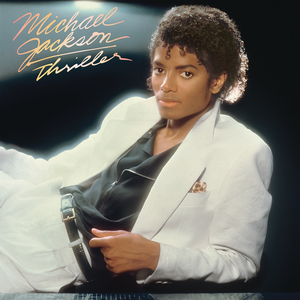



Inception
Thriller
War and Peace
Paris
Tetris (1984)
Price and specs
| Spec | Claude Haiku 5.5 | Solar Pro 4 |
|---|---|---|
| Input price | $0.1/M tokens | $0.09/M tokens |
| Output price | $0.5/M tokens | $0.36/M tokens |
| Context window | 1.0M tokens | 524K tokens |
| Weights | Closed | — |
| Free API (OpenRouter) | No | No |
| Released | Oct 2026 | Aug 2026 |
| At 10M a month | $1.00 | $0.90 |
Input tokens at list price. No caching, no batch discount.
Where to run it



Solar Pro 41 host
Per million tokens. Prices and uptime via OpenRouter, checked 10 Oct 2026.
Common questions
What is the difference between Claude Haiku 5.5 and Solar Pro 4?
Claude Haiku 5.5 is developed by Anthropic while Solar Pro 4 is developed by Upstage. Claude Haiku 5.5 has a 1.0M token context window vs Solar Pro 4's 524K. You can compare their actual outputs across 53 challenges on Rival to see how they differ in practice.
Which is better, Claude Haiku 5.5 or Solar Pro 4?
It depends on your use case. Claude Haiku 5.5 and Solar Pro 4 each have strengths in different areas. Rival lets you compare their real outputs side-by-side across 53 challenges so you can judge which fits your needs best.
How much does Claude Haiku 5.5 cost compared to Solar Pro 4?
Claude Haiku 5.5 costs $0.1/M input tokens and Solar Pro 4 costs $0.09/M input tokens. Solar Pro 4 is $0.01/M cheaper per input. Check their side-by-side outputs on Rival to see if the price difference is justified by quality.
How can I compare Claude Haiku 5.5 and Solar Pro 4 on Rival?
This page shows a side-by-side comparison of Claude Haiku 5.5 and Solar Pro 4 across shared challenges. You can vote on which model produced the better output in a blind duel. Browsing and voting are free. No account is needed to look; signing in only saves your votes and likes.
More comparisons
Against the newest arrivals
- Claude Haiku 5.5 vs Step 5 PreviewLanded Oct 2026
- Solar Pro 4 vs Ling 3.1 FlashLanded Oct 2026
- Claude Haiku 5.5 vs Mistral Large 4Landed Oct 2026
- Solar Pro 4 vs GPT-6.1 SolLanded Sep 2026
- Claude Haiku 5.5 vs Claude Sonnet 5.5Landed Sep 2026
- Solar Pro 4 vs Solar Mini 4Landed Sep 2026
- Claude Haiku 5.5 vs Qwen3.8 Max PrimeLanded Sep 2026
- Solar Pro 4 vs GLM 5.3 PrimeLanded Sep 2026


Same lab, same size, long tail
- Claude Haiku 5.5 vs Claude Opus 5.5Same lab
- Claude Haiku 5.5 vs Claude Fable 5.1Same lab
- Solar Pro 4 vs Solar Pro 3Same lab
- Solar Pro 4 vs Ox AlphaSame size
- Solar Pro 4 vs Llama 3 70BSame size
- Solar Pro 4 vs Llama 3.1 405BNew provider
- Solar Pro 4 vs Llama 3.1 70B (Instruct)Same size
- Solar Pro 4 vs Llama 4 MaverickNew provider

