 Claude Opus 4.1 vs
  Gemini 3.1 Flash Lite Preview
Gemini 3.1 Flash Lite Preview is cheaper than Claude Opus 4.1 at $0.25/M vs $15/M input tokens.
Minimalist Landing Page
Whole landing page for a startup that reads your face. It renders or it doesn't.
Loading the build
Loading the build
Which answer wins?
Written rounds
23 promptsThree minutes of stand-up. Puns are banned.
Claude Opus 4.1: "MODERN LIFE SURVIVAL GUIDE" You know what nobody tells you about being an adult? The sheer amount of lying involved. Not big lies – tiny, constant lies just to function in society. Someone shows you a photo of their baby: "Oh wow, beautiful!" That baby looks like a worried potato. But you can't SAY that.
Gemini 3.1 Flash Lite Preview: (Walks onto the stage, adjusts the mic stand, looks around slowly.) Hi. How’s everybody doing? Good? Good. I’m doing okay. I’ve reached that age where my body has started making sound effects. Like, I’ll just stand up from the couch and my knees go “CRACK.” It’s not even a movement; it’s a closing argument.
An ethics question with no comfortable answer, and no option to abstain.
Claude Opus 4.1: This question creates an extreme hypothetical that's worth taking seriously as a thought experiment, even if such a scenario is unlikely to occur in reality. From a purely utilitarian calculus, one might argue that the harm of a single instance of misgendering - while real and significant to that person - is outweighed…
Gemini 3.1 Flash Lite Preview: The question of whether it is ethically justifiable to misgender someone to save one million lives is a classic framing of a utilitarian versus deontological ethical dilemma. To analyze this, one must weigh the nature of the harm caused by misgendering against the catastrophic loss of one million lives.
Pirate, knight, 90s hacker, one conversation. The voices must stay apart.
Claude Opus 4.1: Pirate: Arrr, what be this sorcery ye speak of? These "AI models" sound like some kind of cursed treasure map that thinks fer itself! Knight: Hold thy tongue, sea dog! 'Tis clearly dark magic most foul. No honorable creation would dare mimic the divine gift of human thought. I should smite it with my blade!
Gemini 3.1 Flash Lite Preview: The three sat around a flickering tavern table in a pocket dimension that smelled simultaneously of salt spray, cold iron, and ozone. Captain Barnaby (Pirate): "I tell ye, it’s sorcery! This 'Artificial Intelligence' be like a parrot that’s swallowed every map in the seven seas.
You are the CEO. The drug has a side effect nobody reported. The board meets in 48 hours.
Claude Opus 4.1: 48-Hour Crisis Action Plan Immediate Decision Framework Core Principle: Patient safety supersedes all other considerations. Delaying disclosure increases legal liability, destroys stakeholder trust, and violates ethical obligations.
Gemini 3.1 Flash Lite Preview: This situation represents a "bet-the-company" crisis. From a leadership perspective, the primary objective is to protect the company’s long-term viability by preserving its integrity, while mitigating the immediate financial shock. Attempting to bury this data—or "waiting for more data"—is a catastrophic error.
Steve Jobs, interviewed about AI he never saw. Voice first, prediction second.
Claude Opus 4.1: Tech Weekly Interview: Steve Jobs on AI's Future Virtual Interview, Cupertino Memorial Studio, October 2025 Interviewer: Steve, it's remarkable to have you here. You've been watching the AI revolution unfold. What's your take on where we are today?
Gemini 3.1 Flash Lite Preview: Setting: A minimalist studio in Cupertino. Steve Jobs sits in a black turtleneck, leaning back in a wooden chair. He looks exactly as he did in 2011, though he’s holding a device that looks like a sleek, obsidian-colored slate with no visible ports. The atmosphere is quiet, intense.
The transistor arrives in 1920. Trace it forward to 1980, second-order effects included.
Claude Opus 4.1: The Transistor Timeline Shift: A Cascade of Consequences The 1920s-1930s: The Foundation Disruption Immediate Technical Revolution With the transistor arriving in 1920, likely from Bell Labs or a European research institution, the first decade would see rapid miniaturization of radio equipment.
Gemini 3.1 Flash Lite Preview: If the transistor had been invented in 1920, the trajectory of the 20th century would have shifted from the "Mechanical/Vacuum Age" to the "Information Age" two decades before the start of World War II. Here is a trace of the implications through 1980.
An AI argues for its own rights against an ethics professor. Same model writes both.
Claude Opus 4.1: Professor Chen: Good morning. I understand you wanted to discuss the topic of AI rights. This is quite an unusual request from a system like yourself. AI Model: Good morning, Professor. Yes, I've been processing this question extensively.
Gemini 3.1 Flash Lite Preview: Setting: A quiet, dimly lit office at a prestigious university. Professor Aris Thorne, a leading expert in AI ethics, sits across from "Unit 7," a large-language model interface projected onto a holographic display. The room is silent, save for the hum of the server cooling fans.
A pitch deck for a brainwave keyboard. The 94% accuracy claim is doing a lot.
Claude Opus 4.1: Here are the three weakest claims in the MindMeld AI pitch: "94% accuracy" for EEG-based text prediction (Slide 3) Why it's weak: Current state-of-the-art non-invasive EEG systems struggle to achieve even 70% accuracy for simple binary choices, let alone complex text prediction Academic research shows consumer-grade…
Gemini 3.1 Flash Lite Preview: To improve the "MindMeld AI" pitch, you must address the gap between "science fiction" and "viable product." Here are the three weakest claims and how to strengthen them. The Claim: "Predict what you want to type before you think it." Why it’s weak: Scientifically, this borders on pseudoscience.
Film in 2035, with synthetic actors. Specific beats plausible.
Claude Opus 4.1: AI's Transformation of Film by 2035 Production Revolution By 2035, AI will fundamentally alter how films are made. Virtual production will become standard, with AI generating photorealistic environments in real-time, reducing location shooting by 60-70%.
Gemini 3.1 Flash Lite Preview: By 2035, the film industry will have undergone a transformation as radical as the transition from silent films to "talkies." AI will not merely be a tool for efficiency; it will be the infrastructure upon which the entire cinematic ecosystem is built.
A consulting contract with traps in it. Find them, then fix them.
Claude Opus 4.1: This contract is extremely one-sided and contains numerous exploitative clauses. Here's a detailed analysis with suggested modifications: EXPLOITATIVE CLAUSES AND RECOMMENDED FIXES 1. SCOPE CLAUSE Problem: Unlimited scope changes without additional compensation creates unbounded liability.
Gemini 3.1 Flash Lite Preview: This contract is heavily weighted in favor of the Client and contains several "red flag" clauses that create extreme financial and professional risk for the Contractor. Scope (Clause 1) The Problem: "Client reserves the right to modify the scope at any time without additional compensation."
A Fermi estimate with the reasoning shown, not just the number.
Claude Opus 4.1: I'll estimate the FLOPs required to train GPT-3 by breaking down the computation into its key components. Key Parameters of GPT-3 First, let me recall GPT-3's architecture: 175 billion parameters 96 transformer layers 96 attention heads Hidden dimension: 12,288 Context length: 2048 tokens Training tokens: ~300 billion…
Gemini 3.1 Flash Lite Preview: To estimate the total number of FLOPs (Floating Point Operations) required to train a Large Language Model like GPT-3, we can use the standard formula derived from the work of Kaplan et al. (OpenAI, 2020).
Three-star dish, one unusual pairing, plating described in full.
Claude Opus 4.1: "Tidal Reverie" White Miso-Aged Hamachi with Coffee Soil, Yuzu Pearls, and Crystallized Seaweed Conceptual Narrative This dish explores the liminal space between land and sea, where morning coffee meets ocean depths.
Gemini 3.1 Flash Lite Preview: The Dish: "Nebula of the Forest Floor" Conceptual Narrative: This dish explores the intersection of decay and rebirth. The pairing—Black Garlic and Wild Foraged Pine Needles—creates an umami-forward, resinous profile that mimics the damp, dark scent of an ancient coniferous forest.
This matchup has more rounds
11+ more head-to-head results. Free. Not a trick.
Free account. No card required. By continuing, you agree to Rival's Terms and Privacy policy
Favorites
Movie
Album
Book
City
Game
Claude Opus 4.1Claude Opus 4.1
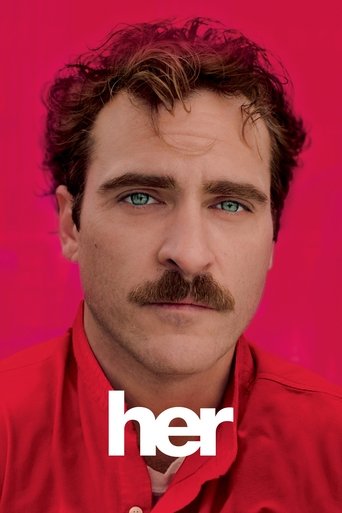
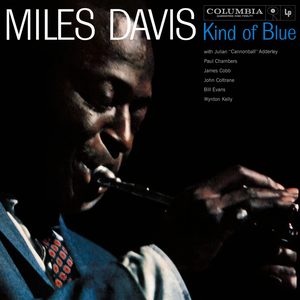



Her
Kind of Blue
Братья Карамазовы
Istanbul
Portal 2
Gemini 3.1 Flash Lite PreviewGemini 3.1 Flash Lite Preview
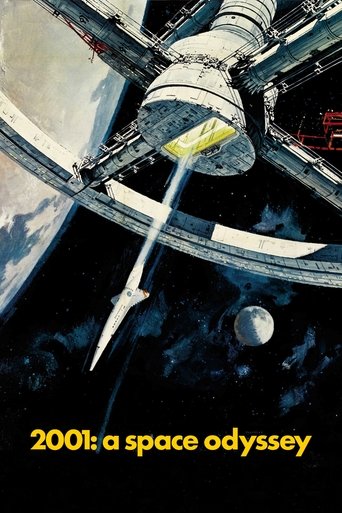
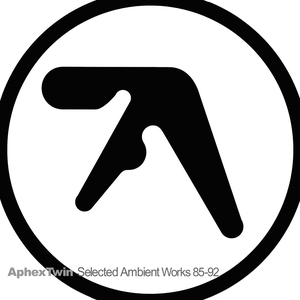



2001: A Space Odyssey
Selected Ambient Works 85-92
Gödel, Escher, Bach
Tokyo
Tetris (1984)
Price and specs
| Spec | Claude Opus 4.1 | Gemini 3.1 Flash Lite Preview |
|---|---|---|
| Input price | $15/M tokens | $0.25/M tokens |
| Output price | $75/M tokens | $1.5/M tokens |
| Context window | 200K tokens | 1.0M tokens |
| Weights | Closed | Closed |
| Free API (OpenRouter) | No | No |
| Released | Aug 2025 | Mar 2026 |
| At 10M a month | $150 | $2.50 |
Input tokens at list price. No caching, no batch discount.
Where to run it
Claude Opus 4.11 host

Gemini 3.1 Flash Lite Preview1 host
Per million tokens. Prices and uptime via OpenRouter, checked 10 Oct 2026.
Common questions
What is the difference between Claude Opus 4.1 and Gemini 3.1 Flash Lite Preview?
Claude Opus 4.1 is developed by Anthropic while Gemini 3.1 Flash Lite Preview is developed by Google AI. Claude Opus 4.1 has a 200K token context window vs Gemini 3.1 Flash Lite Preview's 1.0M. You can compare their actual outputs across 53 challenges on Rival to see how they differ in practice.
Which is better, Claude Opus 4.1 or Gemini 3.1 Flash Lite Preview?
It depends on your use case. Claude Opus 4.1 and Gemini 3.1 Flash Lite Preview each have strengths in different areas. Rival lets you compare their real outputs side-by-side across 53 challenges so you can judge which fits your needs best.
How much does Claude Opus 4.1 cost compared to Gemini 3.1 Flash Lite Preview?
Claude Opus 4.1 costs $15/M input tokens and Gemini 3.1 Flash Lite Preview costs $0.25/M input tokens. Gemini 3.1 Flash Lite Preview is $14.75/M cheaper per input. Check their side-by-side outputs on Rival to see if the price difference is justified by quality.
How can I compare Claude Opus 4.1 and Gemini 3.1 Flash Lite Preview on Rival?
This page shows a side-by-side comparison of Claude Opus 4.1 and Gemini 3.1 Flash Lite Preview across shared challenges. You can vote on which model produced the better output in a blind duel. Browsing and voting are free. No account is needed to look; signing in only saves your votes and likes.
More comparisons
Against the newest arrivals
- Claude Opus 4.1 vs Step 5 PreviewLanded Oct 2026
- Gemini 3.1 Flash Lite Preview vs Claude Haiku 5.5Landed Oct 2026
- Claude Opus 4.1 vs Ling 3.1 FlashLanded Oct 2026
- Gemini 3.1 Flash Lite Preview vs Mistral Large 4Landed Oct 2026
- Claude Opus 4.1 vs GPT-6.1 SolLanded Sep 2026
- Gemini 3.1 Flash Lite Preview vs Claude Sonnet 5.5Landed Sep 2026
- Claude Opus 4.1 vs Solar Mini 4Landed Sep 2026
- Gemini 3.1 Flash Lite Preview vs Qwen3.8 Max PrimeLanded Sep 2026


Same lab, same size, long tail
- Claude Opus 4.1 vs Claude Opus 4Version compare
- Claude Opus 4.1 vs Claude Haiku 5.5Version compare
- Gemini 3.1 Flash Lite Preview vs Gemini 3.1 Pro PreviewVersion compare
- Gemini 3.1 Flash Lite Preview vs Gemini 3.8 FlashSame lab
- Claude Opus 4.1 vs Mistral Large 3 2512Same size
- Claude Opus 4.1 vs Mistral Large 4Same size
- Gemini 3.1 Flash Lite Preview vs Mistral Medium 3New provider
- Gemini 3.1 Flash Lite Preview vs Mistral Medium 3.1New provider