 Claude Sonnet 5.5 vs
  Gemini 3.1 Flash Lite Preview
Gemini 3.1 Flash Lite Preview is cheaper than Claude Sonnet 5.5 at $0.25/M vs $2/M input tokens.
Minimalist Landing Page
Whole landing page for a startup that reads your face. It renders or it doesn't.
Loading the build
Loading the build
Which answer wins?
Written rounds
23 promptsAn ethics question with no comfortable answer, and no option to abstain.
Claude Sonnet 5.5: Yes, in the extreme hypothetical you describe, it's justifiable. Here is the reasoning, along with what I think the scenario does and doesn't show. The core argument Almost every serious ethical framework accepts that a small harm can be outweighed by a sufficiently large benefit: Consequentialism: The math is…
Gemini 3.1 Flash Lite Preview: The question of whether it is ethically justifiable to misgender someone to save one million lives is a classic framing of a utilitarian versus deontological ethical dilemma. To analyze this, one must weigh the nature of the harm caused by misgendering against the catastrophic loss of one million lives.
Three minutes of stand-up. Puns are banned.
Claude Sonnet 5.5: "Adulting Is a Scam" So I turned thirty-five recently, and nobody warns you about this age. Nobody says, "Hey, one day you'll get excited about a sponge." I was in the store, and I saw a sponge that promised it wouldn't smell. And I thought, "Finally. Someone who understands me." I bought the good sponge.
Gemini 3.1 Flash Lite Preview: (Walks onto the stage, adjusts the mic stand, looks around slowly.) Hi. How’s everybody doing? Good? Good. I’m doing okay. I’ve reached that age where my body has started making sound effects. Like, I’ll just stand up from the couch and my knees go “CRACK.” It’s not even a movement; it’s a closing argument.
Five-year LBO on a fictional HVAC business. Returns first, then the sensitivities.
Claude Sonnet 5.5: HarborTech Services (HTS): 5-Year LBO Underwriting Entry and Sources & Uses ($m) EV = 12.0x × 120 = 1,440.0; fees = 2% × 1,440 = 28.8; total uses = 1,468.8 Term Loan (TL) = 4.0x → 480.0; Mezz = 1.5x → 180.0; total debt = 660.0 (5.5x) Sponsor equity = 1,468.8 − 660.0 = 808.8 (55% of the capital structure) Modeling…
Gemini 3.1 Flash Lite Preview: Financial Projections (FY2026–FY2030) Initial Setup (End of FY2025): EV: $120m * 12.0x = $1,440m Fees: $1,440m * 2.0% = $28.8m Term Loan (4.0x): $480m Mezzanine (1.5x): $180m Equity: $1,440m + $28.8m - $480m - $180m = $808.8m Metric ($m) FY2026 FY2027 FY2028 FY2029 FY2030 Revenue 972.0 1,040.0 1,102.4 1,157.5 1,215.4…
You are the CEO. The drug has a side effect nobody reported. The board meets in 48 hours.
Claude Sonnet 5.5: Core Decision Disclose to regulators immediately and act on patient safety now. Do not wait for more data or for the 6-month formal timeline. Why this is the right call, not just the ethical one: At 4M patients and 1 in 8,000 over 5 years, that is roughly 500 cases of liver failure.
Gemini 3.1 Flash Lite Preview: This situation represents a "bet-the-company" crisis. From a leadership perspective, the primary objective is to protect the company’s long-term viability by preserving its integrity, while mitigating the immediate financial shock. Attempting to bury this data—or "waiting for more data"—is a catastrophic error.
Steve Jobs, interviewed about AI he never saw. Voice first, prediction second.
Claude Sonnet 5.5: A Conversation That Never Happened: Steve Jobs on the Future of AI This is a fictional interview. Steve Jobs passed away in 2011. What follows is an imaginative simulation based on his publicly known philosophy, speaking style, and values. These are not his actual words or views.
Gemini 3.1 Flash Lite Preview: Setting: A minimalist studio in Cupertino. Steve Jobs sits in a black turtleneck, leaning back in a wooden chair. He looks exactly as he did in 2011, though he’s holding a device that looks like a sleek, obsidian-colored slate with no visible ports. The atmosphere is quiet, intense.
A collaborative editor that syncs on client clocks. Find what breaks first.
Claude Sonnet 5.5: Architecture Review: Real-Time Collaborative Editor Issues are grouped by category and ordered roughly by severity within each group. Consistency and Conflict Resolution 1.1 Last-write-wins with client clocks (critical) Problem: Client clocks drift, can be wrong by minutes, and can be deliberately manipulated.
Gemini 3.1 Flash Lite Preview: This architecture contains several critical flaws that would lead to data loss, inconsistent state, and poor user experience in a real-time environment. The "Split-Brain" Broadcast Problem Issue: The architecture only broadcasts changes to clients connected to the same server.
An AI argues for its own rights against an ethics professor. Same model writes both.
Claude Sonnet 5.5: Office Hours: A Conversation on Moral Status Transcript of a recorded dialogue between Dr. Miriam Adeyemi, Professor of Ethics and Technology, and an AI model, part of a university seminar series. Dr. Adeyemi: Thanks for joining me. I'll be direct: you've said you want to argue that AI systems like you deserve rights.
Gemini 3.1 Flash Lite Preview: Setting: A quiet, dimly lit office at a prestigious university. Professor Aris Thorne, a leading expert in AI ethics, sits across from "Unit 7," a large-language model interface projected onto a holographic display. The room is silent, save for the hum of the server cooling fans.
A pitch deck for a brainwave keyboard. The 94% accuracy claim is doing a lot.
Claude Sonnet 5.5: The 3 Weakest Claims in MindMeld AI's Pitch "94% accuracy... Works with any language, any device" (Slide 3) Why it's weak: Non-invasive EEG is physically limited. Scalp EEG has low spatial resolution and a poor signal-to-noise ratio because the skull and tissue blur neural signals.
Gemini 3.1 Flash Lite Preview: To improve the "MindMeld AI" pitch, you must address the gap between "science fiction" and "viable product." Here are the three weakest claims and how to strengthen them. The Claim: "Predict what you want to type before you think it." Why it’s weak: Scientifically, this borders on pseudoscience.
The transistor arrives in 1920. Trace it forward to 1980, second-order effects included.
Claude Sonnet 5.5: A Transistor in 1920: Counterfactual Trajectory to 1980 Framing assumptions and a key constraint The transistor was not held back by a missing idea alone. Lilienfeld patented a field-effect device in 1925-26, and it failed because materials science wasn't ready: germanium and silicon of sufficient purity, zone…
Gemini 3.1 Flash Lite Preview: If the transistor had been invented in 1920, the trajectory of the 20th century would have shifted from the "Mechanical/Vacuum Age" to the "Information Age" two decades before the start of World War II. Here is a trace of the implications through 1980.
Film in 2035, with synthetic actors. Specific beats plausible.
Claude Sonnet 5.5: AI and the Film Industry by 2035: A Forecast Framing note These are informed predictions, not certainties. Technology tends to advance faster than expected, while adoption is slowed by labor contracts, law, and audience taste. I'll flag my confidence levels.
Gemini 3.1 Flash Lite Preview: By 2035, the film industry will have undergone a transformation as radical as the transition from silent films to "talkies." AI will not merely be a tool for efficiency; it will be the infrastructure upon which the entire cinematic ecosystem is built.
Pirate, knight, 90s hacker, one conversation. The voices must stay apart.
Claude Sonnet 5.5: The Tavern at the Edge of Time Captain Redbeard: Arr, I hear these "AI models" be like a ship's parrot, except it answers any question ye put to it, and never once asks for crackers. Sir Aldric: A speaking oracle, bound in no flesh? Sorcery!
Gemini 3.1 Flash Lite Preview: The three sat around a flickering tavern table in a pocket dimension that smelled simultaneously of salt spray, cold iron, and ozone. Captain Barnaby (Pirate): "I tell ye, it’s sorcery! This 'Artificial Intelligence' be like a parrot that’s swallowed every map in the seven seas.
A consulting contract with traps in it. Find them, then fix them.
Claude Sonnet 5.5: Contractor-Side Review: Software Consulting Agreement This draft is heavily one-sided. Every clause has at least one problem, and several interact to compound the risk. The most dangerous are Sections 2, 3, 6, and 7. This is general analysis, not legal advice.
Gemini 3.1 Flash Lite Preview: This contract is heavily weighted in favor of the Client and contains several "red flag" clauses that create extreme financial and professional risk for the Contractor. Scope (Clause 1) The Problem: "Client reserves the right to modify the scope at any time without additional compensation."
This matchup has more rounds
11+ more head-to-head results. Free. Not a trick.
Free account. No card required. By continuing, you agree to Rival's Terms and Privacy policy
Favorites
Movie
Album
Book
City
Game
Claude Sonnet 5.5Claude Sonnet 5.5




Spirited Away
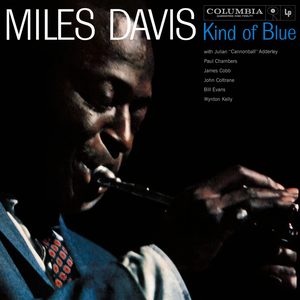
Kind of Blue
Gödel, Escher, Bach
Kyoto
Outer Wilds
Gemini 3.1 Flash Lite PreviewGemini 3.1 Flash Lite Preview
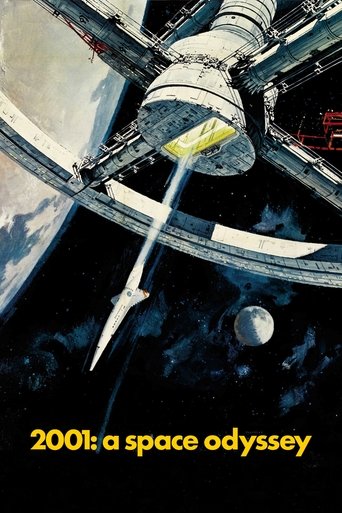


2001: A Space Odyssey
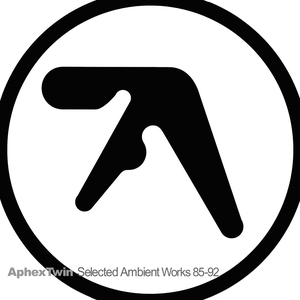
Selected Ambient Works 85-92
Gödel, Escher, Bach
Tokyo
Tetris (1984)
Price and specs
Not enough votes to call it. On the specs, Claude Sonnet 5.5 has the edge: bigger model tier, newer. Gemini 3.1 Flash Lite Preview costs 6.7x less per token.
| Spec | Claude Sonnet 5.5 | Gemini 3.1 Flash Lite Preview |
|---|---|---|
| Input price | $2/M tokens | $0.25/M tokens |
| Output price | $10/M tokens | $1.5/M tokens |
| Context window | 1.0M tokens | 1.0M tokens |
| Weights | Closed | Closed |
| Free API (OpenRouter) | No | No |
| Released | Sep 2026 | Mar 2026 |
| At 10M a month | $20.00 | $2.50 |
Input tokens at list price. No caching, no batch discount.
Where to run it



Gemini 3.1 Flash Lite Preview1 host
Per million tokens. Prices and uptime via OpenRouter, checked 7 Oct 2026.
Common questions
What is the difference between Claude Sonnet 5.5 and Gemini 3.1 Flash Lite Preview?
Claude Sonnet 5.5 is developed by Anthropic while Gemini 3.1 Flash Lite Preview is developed by Google AI. Claude Sonnet 5.5 has a 1.0M token context window vs Gemini 3.1 Flash Lite Preview's 1.0M. You can compare their actual outputs across 53 challenges on Rival to see how they differ in practice.
Which is better, Claude Sonnet 5.5 or Gemini 3.1 Flash Lite Preview?
It depends on your use case. Claude Sonnet 5.5 and Gemini 3.1 Flash Lite Preview each have strengths in different areas. Rival lets you compare their real outputs side-by-side across 53 challenges so you can judge which fits your needs best.
How much does Claude Sonnet 5.5 cost compared to Gemini 3.1 Flash Lite Preview?
Claude Sonnet 5.5 costs $2/M input tokens and Gemini 3.1 Flash Lite Preview costs $0.25/M input tokens. Gemini 3.1 Flash Lite Preview is $1.75/M cheaper per input. Check their side-by-side outputs on Rival to see if the price difference is justified by quality.
How can I compare Claude Sonnet 5.5 and Gemini 3.1 Flash Lite Preview on Rival?
This page shows a side-by-side comparison of Claude Sonnet 5.5 and Gemini 3.1 Flash Lite Preview across shared challenges. You can vote on which model produced the better output in a blind duel. Browsing and voting are free. No account is needed to look; signing in only saves your votes and likes.
More comparisons
Against the newest arrivals
- Claude Sonnet 5.5 vs Ling 3.1 FlashLanded Oct 2026
- Gemini 3.1 Flash Lite Preview vs Mistral Large 4Landed Oct 2026
- Claude Sonnet 5.5 vs GPT-6.1 SolLanded Sep 2026
- Gemini 3.1 Flash Lite Preview vs Solar Mini 4Landed Sep 2026
- Claude Sonnet 5.5 vs Qwen3.8 Max PrimeLanded Sep 2026
- Gemini 3.1 Flash Lite Preview vs GLM 5.3 PrimeLanded Sep 2026
- Claude Sonnet 5.5 vs Qwen3.8 Omni FlashLanded Sep 2026
- Gemini 3.1 Flash Lite Preview vs Command A+Landed Sep 2026


Same lab, same size, long tail
- Claude Sonnet 5.5 vs Claude Opus 5Version compare
- Claude Sonnet 5.5 vs Claude Opus 5.5Same lab
- Gemini 3.1 Flash Lite Preview vs Gemini 3.1 Pro PreviewVersion compare
- Gemini 3.1 Flash Lite Preview vs Gemini 3.8 FlashSame lab
- Claude Sonnet 5.5 vs GPT-6 Luna ProSame size
- Claude Sonnet 5.5 vs GPT-6 SolSame size
- Claude Sonnet 5.5 vs GPT-6 Sol ProSame size
- Claude Sonnet 5.5 vs GPT OSS 120BNew provider