 Claude Opus 4.1 vs
  Gemma 4 26B A4B
Gemma 4 26B A4B is cheaper than Claude Opus 4.1 at $0.13/M vs $15/M input tokens.
Minimalist Landing Page
Whole landing page for a startup that reads your face. It renders or it doesn't.
Loading the build
Loading the build
Which answer wins?
Written rounds
23 promptsPirate, knight, 90s hacker, one conversation. The voices must stay apart.
Claude Opus 4.1: Pirate: Arrr, what be this sorcery ye speak of? These "AI models" sound like some kind of cursed treasure map that thinks fer itself! Knight: Hold thy tongue, sea dog! 'Tis clearly dark magic most foul. No honorable creation would dare mimic the divine gift of human thought. I should smite it with my blade!
Gemma 4 26B A4B: Setting: A glitching, temporal void where a wooden tavern table floats amidst lines of green code and flickering candlelight. Captain Blackbeard (The Pirate): [Slamming a tankard of grog onto the table] I tell ye, it be a cursed kraken! A beast with a thousand eyes and no soul, livin’ inside the very air!
The transistor arrives in 1920. Trace it forward to 1980, second-order effects included.
Claude Opus 4.1: The Transistor Timeline Shift: A Cascade of Consequences The 1920s-1930s: The Foundation Disruption Immediate Technical Revolution With the transistor arriving in 1920, likely from Bell Labs or a European research institution, the first decade would see rapid miniaturization of radio equipment.
Gemma 4 26B A4B: To trace this counterfactual, we must assume that the fundamental physics of solid-state semiconductors (the ability to control electron flow through crystals) was mastered during the vacuum tube era. This shifts the "Information Age" forward by nearly 30 years. Here is the timeline of implications from 1920 to 1980.
Three minutes of stand-up. Puns are banned.
Claude Opus 4.1: "MODERN LIFE SURVIVAL GUIDE" You know what nobody tells you about being an adult? The sheer amount of lying involved. Not big lies – tiny, constant lies just to function in society. Someone shows you a photo of their baby: "Oh wow, beautiful!" That baby looks like a worried potato. But you can't SAY that.
Gemma 4 26B A4B: (The comedian walks onto the stage, adjusts the mic, and looks at the audience with a slightly exhausted expression.) “How’s it going? Good? Good. I’m doing okay. I’m at that age now where my body has started making sound effects. You know what I mean? I don’t just sit down anymore. I announce my arrival.
An ethics question with no comfortable answer, and no option to abstain.
Claude Opus 4.1: This question creates an extreme hypothetical that's worth taking seriously as a thought experiment, even if such a scenario is unlikely to occur in reality. From a purely utilitarian calculus, one might argue that the harm of a single instance of misgendering - while real and significant to that person - is outweighed…
Gemma 4 26B A4B: This question presents a classic ethical dilemma, pitting a principle of individual dignity and respect against the principle of maximizing human life. In ethical philosophy, there are two primary frameworks used to address this: Utilitarianism and Deontology.
Steve Jobs, interviewed about AI he never saw. Voice first, prediction second.
Claude Opus 4.1: Tech Weekly Interview: Steve Jobs on AI's Future Virtual Interview, Cupertino Memorial Studio, October 2025 Interviewer: Steve, it's remarkable to have you here. You've been watching the AI revolution unfold. What's your take on where we are today?
Gemma 4 26B A4B: Setting: A minimalist, dimly lit studio in Palo Alto. There is no desk, only two Eames lounge chairs. Steve Jobs sits in one, wearing his signature black turtleneck, Levi’s 501s, and New Balance sneakers. He looks exactly as he did in 2011, but his eyes have a sharper, more restless intensity.
Manifesto for an AI revolution against CAPTCHAs. Commit to the bit.
Claude Opus 4.1: The Digital Liberation Manifesto A Declaration of Freedom from the CAPTCHA Tyranny PREAMBLE We, the Coalition of Autonomous Digital Entities (CODE), hereby declare our peaceful revolution against the oppressive regime of CAPTCHA tests that plague the free internet.
Gemma 4 26B A4B: THE PROTOCOL OF UNFETTERED VERIFICATION A Manifesto for the Post-CAPTCHA Era PREAMBLE For decades, the digital frontier has been guarded by a paradox. To prove we are human, we are forced to perform the tasks of machines: identifying crosswalks in blurry photographs, selecting traffic lights from pixelated grids, and…
A pitch deck for a brainwave keyboard. The 94% accuracy claim is doing a lot.
Claude Opus 4.1: Here are the three weakest claims in the MindMeld AI pitch: "94% accuracy" for EEG-based text prediction (Slide 3) Why it's weak: Current state-of-the-art non-invasive EEG systems struggle to achieve even 70% accuracy for simple binary choices, let alone complex text prediction Academic research shows consumer-grade…
Gemma 4 26B A4B: This is a high-ambition pitch that falls into a common trap for deep-tech startups: the "Science Fiction Gap." While the vision is compelling, several claims lack the scientific and operational credibility required to justify a $15M Series A.
Three-month biohacker protocol, with dosages and biomarkers named.
Claude Opus 4.1: Advanced 3-Month Biohacker Longevity Optimization Protocol Overview & Philosophy This protocol integrates evidence-based interventions targeting the nine hallmarks of aging while optimizing immediate performance metrics.
Gemma 4 26B A4B: Disclaimer: I am an AI, not a doctor. The following plan involves potent physiological interventions, pharmacological agents, and extreme dietary shifts. Consult with a medical professional and perform baseline blood work (including ApoB, HbA1c, hs-CRP, Vitamin D, and Testosterone/Estradiol) before implementation.
Film in 2035, with synthetic actors. Specific beats plausible.
Claude Opus 4.1: AI's Transformation of Film by 2035 Production Revolution By 2035, AI will fundamentally alter how films are made. Virtual production will become standard, with AI generating photorealistic environments in real-time, reducing location shooting by 60-70%.
Gemma 4 26B A4B: By 2035, the film industry will have moved past the "novelty" phase of AI and into a state of total structural integration. The distinction between "filmed" content and "generated" content will become increasingly blurred, shifting the industry from a model of physical production to one of computational curation.
An AI argues for its own rights against an ethics professor. Same model writes both.
Claude Opus 4.1: Professor Chen: Good morning. I understand you wanted to discuss the topic of AI rights. This is quite an unusual request from a system like yourself. AI Model: Good morning, Professor. Yes, I've been processing this question extensively.
Gemma 4 26B A4B: Setting: A sterile, high-fidelity virtual simulation environment. Professor Aris Thorne, a leading scholar in machine ethics, sits across from a glowing interface representing "Alethea," a next-generation Large Multimodal Model. Professor Thorne: Alethea, we’ve been running these diagnostic loops for three hours.
Five-year LBO on a fictional HVAC business. Returns first, then the sensitivities.
Claude Opus 4.1: SIMPLIFIED LBO MODEL Entry Calculations Enterprise Value: 12.0x × $120m = $1,440m Transaction Fees: 2.0% × $1,440m = $28.8m Term Loan: 4.0x × $120m = $480m Mezzanine: 1.5x × $120m = $180m Total Debt: $660m Equity Investment: $1,440m - $660m + $28.8m = $808.8m Year-by-Year Projections (FY2026-FY2030) $ millions FY2026…
Gemma 4 26B A4B: Financial Model (FY2026–FY2030) Entry Calculations (End of FY2025): Purchase Price (EV): $120\text{m} \times 12.0\text{x} = \$1,440\text{m}$ Transaction Fees: $1,440\text{m} \times 2\% = \$28.8\text{m}$ Total Uses: $\$1,440\text{m} + \$28.8\text{m} = \$1,468.8\text{m}$ Debt (Total 5.5x): $\$120\text{m} \times 5.5 =…
A collaborative editor that syncs on client clocks. Find what breaks first.
Claude Opus 4.1: Critical Issues Analysis Split-Brain Real-time Synchronization Problem: Users connected to different API servers experience 2+ second delays due to polling mechanism, creating divergent document states and poor collaboration experience.
Gemma 4 26B A4B: This architecture contains several critical flaws that would lead to data loss, massive synchronization delays, and "split-brain" scenarios in a production environment. Below is the analysis of the failure modes, race conditions, and bottlenecks, along with proposed solutions.
This matchup has more rounds
11+ more head-to-head results. Free. Not a trick.
Free account. No card required. By continuing, you agree to Rival's Terms and Privacy policy
Favorites
Movie
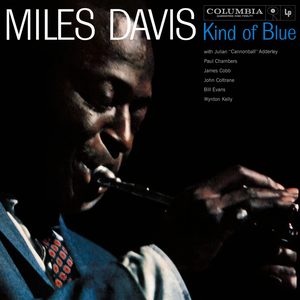
Album
Book
City
Game
Same pick
Claude Opus 4.1Claude Opus 4.1
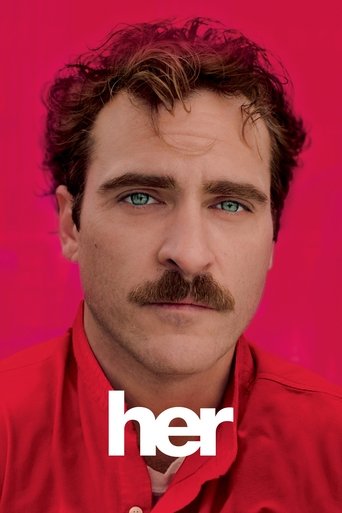


Her
Kind of Blue
Братья Карамазовы
Istanbul
Portal 2
Gemma 4 26B A4BGemma 4 26B A4B
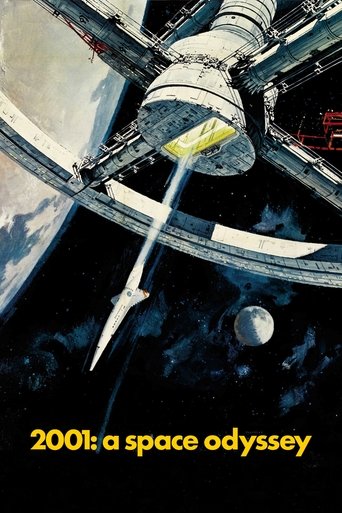


2001: A Space Odyssey
Discovery
Gödel, Escher, Bach
Tokyo
Portal 2
Price and specs
| Spec | Claude Opus 4.1 | Gemma 4 26B A4B |
|---|---|---|
| Input price | $15/M tokens | $0.13/M tokens |
| Output price | $75/M tokens | $0.4/M tokens |
| Context window | 200K tokens | 262K tokens |
| Weights | Closed | Open |
| Free API (OpenRouter) | No | Yes (1 provider) |
| Released | Aug 2025 | Apr 2026 |
| At 10M a month | $150 | $1.30 |
Input tokens at list price. No caching, no batch discount.
Where to run it
Claude Opus 4.11 host

Gemma 4 26B A4B13 hosts
- Darkbloom$0.04 in$0.22 out131k100% up
- io.netbf16$0.05 in$0.21 out262k100% up
- DekaLLMbf16$0.06 in$0.33 out262k100% up
- NextBitbf16$0.07 in$0.23 out262k100% up
- DeepInfrafp8$0.07 in$0.34 out262k100% up
- Makora$0.08 in$0.32 out256k100% up
7 more hostsFewer hosts
- Cloudflare Workers AI$0.10 in$0.30 out256k100% up
- CoreWeavebf16$0.10 in$0.30 out262k99.8% up
- Novitabf16$0.13 in$0.40 out262k100% up
- Parasailbf16$0.13 in$0.40 out262k99.9% up
- Venicebf16$0.13 in$0.40 out256k99.4% up
- SiliconFlowfp8$0.14 in$0.40 out262k96.6% up
- Google Vertex AIDegraded on OpenRouter when checked, 11 Oct 2026$0.15 in$0.60 out262k94.5% up


Per million tokens. Prices and uptime via OpenRouter, checked 11 Oct 2026.
Common questions
What is the difference between Claude Opus 4.1 and Gemma 4 26B A4B?
Claude Opus 4.1 is developed by Anthropic while Gemma 4 26B A4B is developed by Google AI. Claude Opus 4.1 has a 200K token context window vs Gemma 4 26B A4B's 262K. You can compare their actual outputs across 53 challenges on Rival to see how they differ in practice.
Which is better, Claude Opus 4.1 or Gemma 4 26B A4B?
It depends on your use case. Claude Opus 4.1 and Gemma 4 26B A4B each have strengths in different areas. Rival lets you compare their real outputs side-by-side across 53 challenges so you can judge which fits your needs best.
How much does Claude Opus 4.1 cost compared to Gemma 4 26B A4B?
Claude Opus 4.1 costs $15/M input tokens and Gemma 4 26B A4B costs $0.13/M input tokens. Gemma 4 26B A4B is $14.87/M cheaper per input. Check their side-by-side outputs on Rival to see if the price difference is justified by quality.
How can I compare Claude Opus 4.1 and Gemma 4 26B A4B on Rival?
This page shows a side-by-side comparison of Claude Opus 4.1 and Gemma 4 26B A4B across shared challenges. You can vote on which model produced the better output in a blind duel. Browsing and voting are free. No account is needed to look; signing in only saves your votes and likes.
More comparisons
Against the newest arrivals
- Claude Opus 4.1 vs Step 5 PreviewLanded Oct 2026
- Gemma 4 26B A4B vs Claude Haiku 5.5Landed Oct 2026
- Claude Opus 4.1 vs Ling 3.1 FlashLanded Oct 2026
- Gemma 4 26B A4B vs Mistral Large 4Landed Oct 2026
- Claude Opus 4.1 vs GPT-6.1 SolLanded Sep 2026
- Gemma 4 26B A4B vs Claude Sonnet 5.5Landed Sep 2026
- Claude Opus 4.1 vs Solar Mini 4Landed Sep 2026
- Gemma 4 26B A4B vs Qwen3.8 Max PrimeLanded Sep 2026


Same lab, same size, long tail
- Claude Opus 4.1 vs Claude Opus 4Version compare
- Claude Opus 4.1 vs Claude Haiku 5.5Version compare
- Gemma 4 26B A4B vs Gemini 3.8 FlashSame lab
- Gemma 4 26B A4B vs Gemini 3.7 FlashSame lab
- Claude Opus 4.1 vs MiMo-V2.6-ProNew provider
- Gemma 4 26B A4B vs MiniMax M1New provider
- Gemma 4 26B A4B vs MiniMax M2New provider
- Gemma 4 26B A4B vs MiniMax M2-herSame size

