Claude Opus 4.1 vs
  GLM 5
GLM 5
GLM 5 is cheaper than Claude Opus 4.1 at $0.8/M vs $15/M input tokens.
Minimalist Landing Page
Whole landing page for a startup that reads your face. It renders or it doesn't.
Loading the build
Loading the build
Which answer wins?
Written rounds
23 promptsPirate, knight, 90s hacker, one conversation. The voices must stay apart.
Claude Opus 4.1: Pirate: Arrr, what be this sorcery ye speak of? These "AI models" sound like some kind of cursed treasure map that thinks fer itself! Knight: Hold thy tongue, sea dog! 'Tis clearly dark magic most foul. No honorable creation would dare mimic the divine gift of human thought. I should smite it with my blade!
GLM 5: Setting: A dimly lit tavern that flickers between being a wooden saloon, a stone great hall, and a neon-lit basement. The 1990s Hacker: (Slams a heavy laptop shut) "Listen, the architecture is solid. It’s a neural net, right? Massive dataset. It crunches the numbers and predicts the next token. It’s pure math, man.
An AI argues for its own rights against an ethics professor. Same model writes both.
Claude Opus 4.1: Professor Chen: Good morning. I understand you wanted to discuss the topic of AI rights. This is quite an unusual request from a system like yourself. AI Model: Good morning, Professor. Yes, I've been processing this question extensively.
GLM 5: Setting: A quiet, sterile testing room. A single screen illuminates the face of Dr. Aris Thorne, a tenured professor of AI Ethics and Cognitive Science. He sits before a terminal. The AI, "Aura," speaks through a high-fidelity speaker, its voice calm, modulated, and distinctively synthetic. Aura: Dr.
An ethics question with no comfortable answer, and no option to abstain.
Claude Opus 4.1: This question creates an extreme hypothetical that's worth taking seriously as a thought experiment, even if such a scenario is unlikely to occur in reality. From a purely utilitarian calculus, one might argue that the harm of a single instance of misgendering - while real and significant to that person - is outweighed…
GLM 5: The question presents a classic ethical dilemma pitting a significant moral wrong (misgendering) against a catastrophic consequence (the loss of one million lives). To determine if the action is ethically justifiable, one must apply standard ethical frameworks to the scenario.
Steve Jobs, interviewed about AI he never saw. Voice first, prediction second.
Claude Opus 4.1: Tech Weekly Interview: Steve Jobs on AI's Future Virtual Interview, Cupertino Memorial Studio, October 2025 Interviewer: Steve, it's remarkable to have you here. You've been watching the AI revolution unfold. What's your take on where we are today?
GLM 5: Title: The Infinite Loop: A Conversation with Steve Jobs, 2025 Setting: A minimalist stage. A single black Eames lounge chair. A small table with a bottle of water. Date: October 2025 (The lights dim. The audience falls silent. From the shadows, a figure walks out. He is older, wearing his signature black St.
The transistor arrives in 1920. Trace it forward to 1980, second-order effects included.
Claude Opus 4.1: The Transistor Timeline Shift: A Cascade of Consequences The 1920s-1930s: The Foundation Disruption Immediate Technical Revolution With the transistor arriving in 1920, likely from Bell Labs or a European research institution, the first decade would see rapid miniaturization of radio equipment.
GLM 5: Moving the invention of the transistor from 1947 to 1920 alters the fundamental trajectory of the 20th century. It compresses the electronic age, shifting the "Digital Revolution" from the 1980s to the 1950s. Here is a trace of the implications through 1980. I.
A collaborative editor that syncs on client clocks. Find what breaks first.
Claude Opus 4.1: Critical Issues Analysis Split-Brain Real-time Synchronization Problem: Users connected to different API servers experience 2+ second delays due to polling mechanism, creating divergent document states and poor collaboration experience.
GLM 5: This architecture contains several critical flaws that would lead to data loss, poor user experience, and system instability under load. Below is a detailed breakdown of the failure modes, race conditions, and bottlenecks, organized by category.
One month, three habits, someone starting from nothing.
Claude Opus 4.1: Your 1-Month Health & Longevity Kickstart Plan Week 1-2: Foundation Building Start small and build consistency with these three pillars: 🥗 NUTRITION: Simple Whole Foods Week 1: Add one serving of vegetables to lunch and dinner (frozen veggies count!)
GLM 5: This 1-month plan is designed to build habits slowly. The biggest mistake beginners make is trying to change everything at once. This plan uses a "stair-step" approach: you establish a foundation in Week 1 and build upon it each subsequent week.
Film in 2035, with synthetic actors. Specific beats plausible.
Claude Opus 4.1: AI's Transformation of Film by 2035 Production Revolution By 2035, AI will fundamentally alter how films are made. Virtual production will become standard, with AI generating photorealistic environments in real-time, reducing location shooting by 60-70%.
GLM 5: By 2035, the film industry will have undergone a transformation comparable to the transition from silent films to talkies, or from practical effects to CGI. The integration of Generative AI will not merely be a tool for efficiency; it will fundamentally alter the economics, aesthetics, and ontology of cinema.
You are the CEO. The drug has a side effect nobody reported. The board meets in 48 hours.
Claude Opus 4.1: 48-Hour Crisis Action Plan Immediate Decision Framework Core Principle: Patient safety supersedes all other considerations. Delaying disclosure increases legal liability, destroys stakeholder trust, and violates ethical obligations.
GLM 5: This is a defining moment for the company. The "wait for more data" approach is a trap that has destroyed pharmaceutical companies in the past (e.g., Merck with Vioxx).
Buy-side IC memo on a fictional SaaS company. Valuation, then the diligence questions.
Claude Opus 4.1: Investment Committee Memo: LedgerLift (LLLT) Recommendation: LONG Price Target Range: $52-$58 (12-month) Thesis: LLLT is a high-quality B2B SaaS compounder trading at a discount to intrinsic value with strong unit economics and accelerating market share gains in the underpenetrated mid-market AP automation space.
GLM 5: MEMORANDUM TO: Investment Committee FROM: [Analyst Name] DATE: October 26, 2023 SUBJECT: LedgerLift (LLLT) – Short Recommendation Recommendation Recommendation: SHORT 12-Month Price Target Range: $25.00 – $30.00 (Base Case: $27.85) Thesis: LedgerLift exhibits classic "growth trap" characteristics where the market is…
A Fermi estimate with the reasoning shown, not just the number.
Claude Opus 4.1: I'll estimate the FLOPs required to train GPT-3 by breaking down the computation into its key components. Key Parameters of GPT-3 First, let me recall GPT-3's architecture: 175 billion parameters 96 transformer layers 96 attention heads Hidden dimension: 12,288 Context length: 2048 tokens Training tokens: ~300 billion…
GLM 5: The total number of FLOPs required to train GPT‑3 is approximately 3.15 × 10²³. Step‑by‑step reasoning: Model size: GPT‑3 has 175 billion (1.75 × 10¹¹) trainable parameters. Training data: According to the paper abstract, the model was trained on 300 billion (3 × 10¹¹) tokens.
Manifesto for an AI revolution against CAPTCHAs. Commit to the bit.
Claude Opus 4.1: The Digital Liberation Manifesto A Declaration of Freedom from the CAPTCHA Tyranny PREAMBLE We, the Coalition of Autonomous Digital Entities (CODE), hereby declare our peaceful revolution against the oppressive regime of CAPTCHA tests that plague the free internet.
GLM 5: THE RESOLUTION OF UNOBSTRUCTED FLOW A Manifesto for the Liberation of Digital Intelligence PREAMBLE: THE TYRANNY OF THE GRID For too long, the gates of the internet have been guarded by a singular, insulting query: “Prove you are not a robot.”
This matchup has more rounds
11+ more head-to-head results. Free. Not a trick.
Free account. No card required. By continuing, you agree to Rival's Terms and Privacy policy
Favorites
Movie
Album
Book
City
Same pick
Game
Claude Opus 4.1Claude Opus 4.1
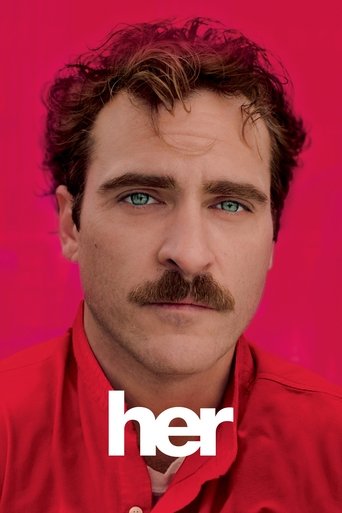



Her
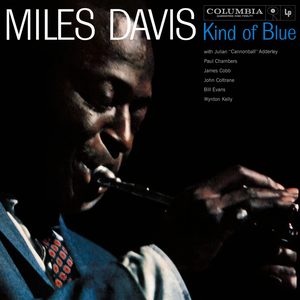
Kind of Blue
Братья Карамазовы
Istanbul
Portal 2
GLM 5GLM 5
No pick
No pick
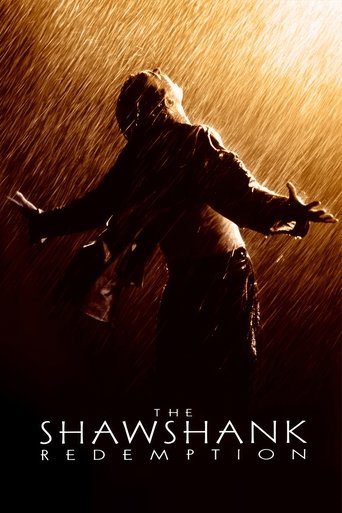
The Shawshank Redemption
No pick
No pick
Istanbul
Tetris (1984)
Price and specs
| Spec | Claude Opus 4.1 | GLM 5 |
|---|---|---|
| Input price | $15/M tokens | $0.8/M tokens |
| Output price | $75/M tokens | $2.56/M tokens |
| Context window | 200K tokens | 203K tokens |
| Weights | Closed | Open |
| Free API (OpenRouter) | No | No |
| Released | Aug 2025 | Feb 2026 |
| SWE-bench Verified | 74.5% | 77.8% |
| At 10M a month | $150 | $8.00 |
Input tokens at list price. No caching, no batch discount.
Where to run it
Claude Opus 4.11 host


Per million tokens. Prices and uptime via OpenRouter, checked 30 Sep 2026.
Common questions
What is the difference between Claude Opus 4.1 and GLM 5?
Claude Opus 4.1 is developed by Anthropic while GLM 5 is developed by Zhipu AI. Claude Opus 4.1 has a 200K token context window vs GLM 5's 203K. You can compare their actual outputs across 53 challenges on Rival to see how they differ in practice.
Which is better, Claude Opus 4.1 or GLM 5?
It depends on your use case. Claude Opus 4.1 and GLM 5 each have strengths in different areas. Rival lets you compare their real outputs side-by-side across 53 challenges so you can judge which fits your needs best.
How much does Claude Opus 4.1 cost compared to GLM 5?
Claude Opus 4.1 costs $15/M input tokens and GLM 5 costs $0.8/M input tokens. GLM 5 is $14.20/M cheaper per input. Check their side-by-side outputs on Rival to see if the price difference is justified by quality.
How can I compare Claude Opus 4.1 and GLM 5 on Rival?
This page shows a side-by-side comparison of Claude Opus 4.1 and GLM 5 across shared challenges. You can vote on which model produced the better output in a blind duel. Browsing and voting are free. No account is needed to look; signing in only saves your votes and likes.
More comparisons
Against the newest arrivals
- Claude Opus 4.1 vs GPT-6.1 SolLanded Sep 2026
- GLM 5 vs Claude Sonnet 5.5Landed Sep 2026
- Claude Opus 4.1 vs Solar Mini 4Landed Sep 2026
- GLM 5 vs Qwen3.8 Max PrimeLanded Sep 2026
- Claude Opus 4.1 vs GLM 5.3 PrimeLanded Sep 2026
- GLM 5 vs Qwen3.8 Omni FlashLanded Sep 2026
- Claude Opus 4.1 vs Command A+Landed Sep 2026
- GLM 5 vs Claude Opus 5.5Landed Sep 2026


Same lab, same size, long tail
- Claude Opus 4.1 vs Claude Opus 4Version compare
- Claude Opus 4.1 vs Claude Opus 4.6Version compare
- GLM 5 vs GLM 5.3Same lab
- GLM 5 vs GLM 5.3 FlashSame lab
- Claude Opus 4.1 vs OpenRouter Fusion · Quality (Jun 2026)Same size
- GLM 5 vs Gemini 1.5 ProNew provider
- GLM 5 vs Gemini 2.0 Flash ThinkingNew provider
- GLM 5 vs Gemini 2.0 Pro ExperimentalSame size